"Dozens" of Facebook employees staged a "virtual walkout" Monday over the company's decision not to take action against President Trump's provocative messages in the face of nationwide protests against police violence, the New York Times reports.
Why it matters: While Twitter added fact-check labels and hid the president's most inflammatory tweet — "when the looting starts, the shooting starts" — Facebook has said Trump's statements do not violate its policies and that the platform aims to promote free speech.
Zynga agreed to buy Turkish mobile-game maker Peak for $1.8 billion, split evenly between cash and stock.
Why it matters: It's the largest acquisition ever for Zynga, once one of the hottest Web 2.0 names in Silicon Valley, and has helped surge its stock to levels not seen since 2012.
This week is expected to be the busiest for U.S. IPOs since February, with Warner Music leading a group of four companies that could raise over $3 billion.
Why it matters: This shouldn't be happening, under any traditional rubric for how markets work.
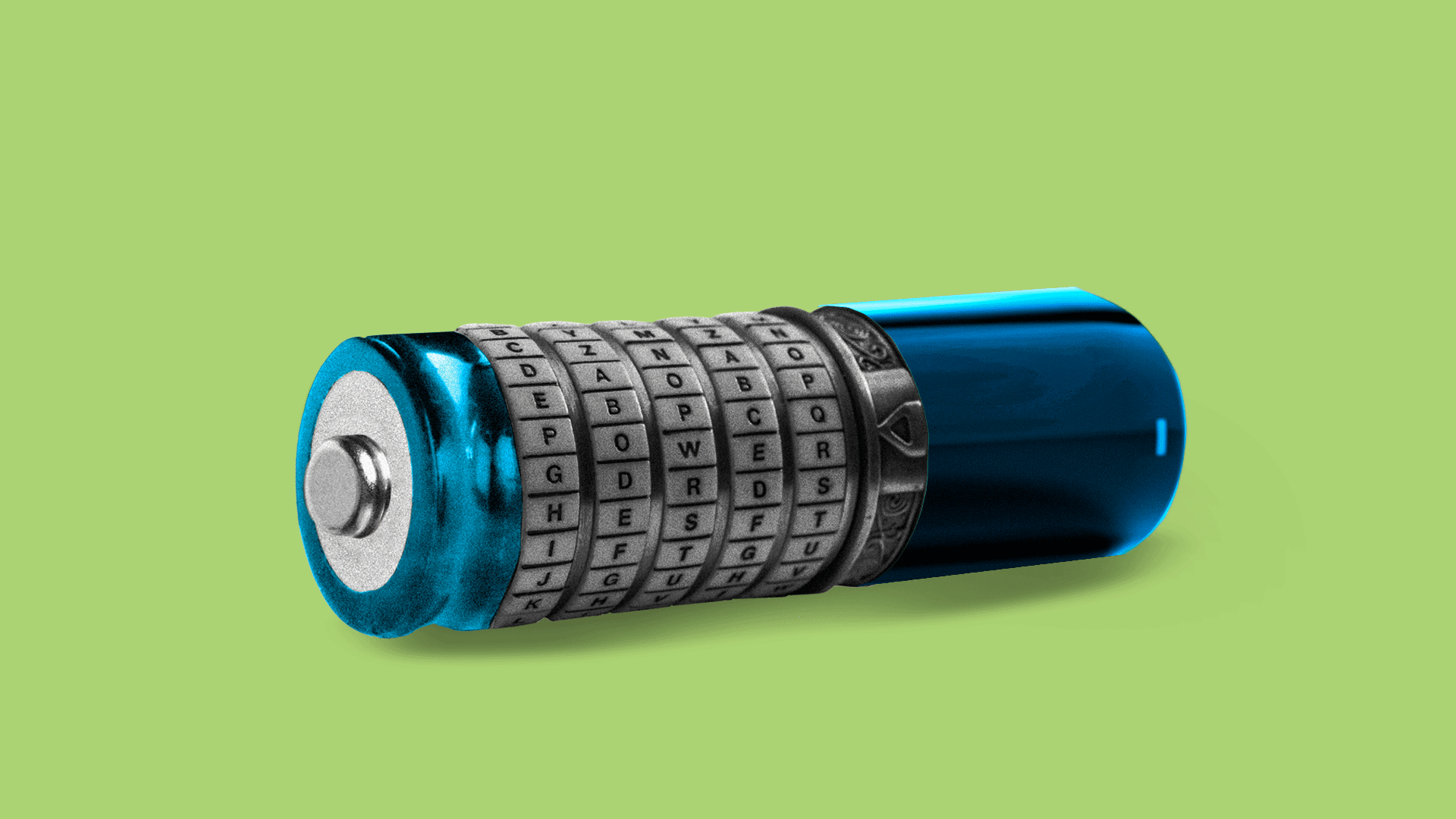
Two European industrial firms announced on Monday a joint venture to recycle battery materials and aluminum from electric vehicles in Norway, where EVs are gaining substantial market share.
Driving the news: The Swedish company Northvolt and the Norwegian aluminum giant Norsk Hydro plan to establish initial recycling operations next year.
Coins and bills in circulation make up only 10% of the money supply today, Deutsche Bank Securities chief economist Torsten Sløk points out in a note to clients.
What it means: The majority of the money supply is now used by the Fed for its balance sheet and in the banking sector to purchase financial assets.
Oil edged lower in overnight trading Monday after five straight weeks of gains, including a 5% rise on Friday, pausing after a record 88% increase from its low point in May.
What happened: Last month's surge brought oil back from negative pricing thanks in large part to increasing expectations for consumer demand to return and a deal to cut production by the Organization of the Petroleum Exporting Countries and major producers like Russia.
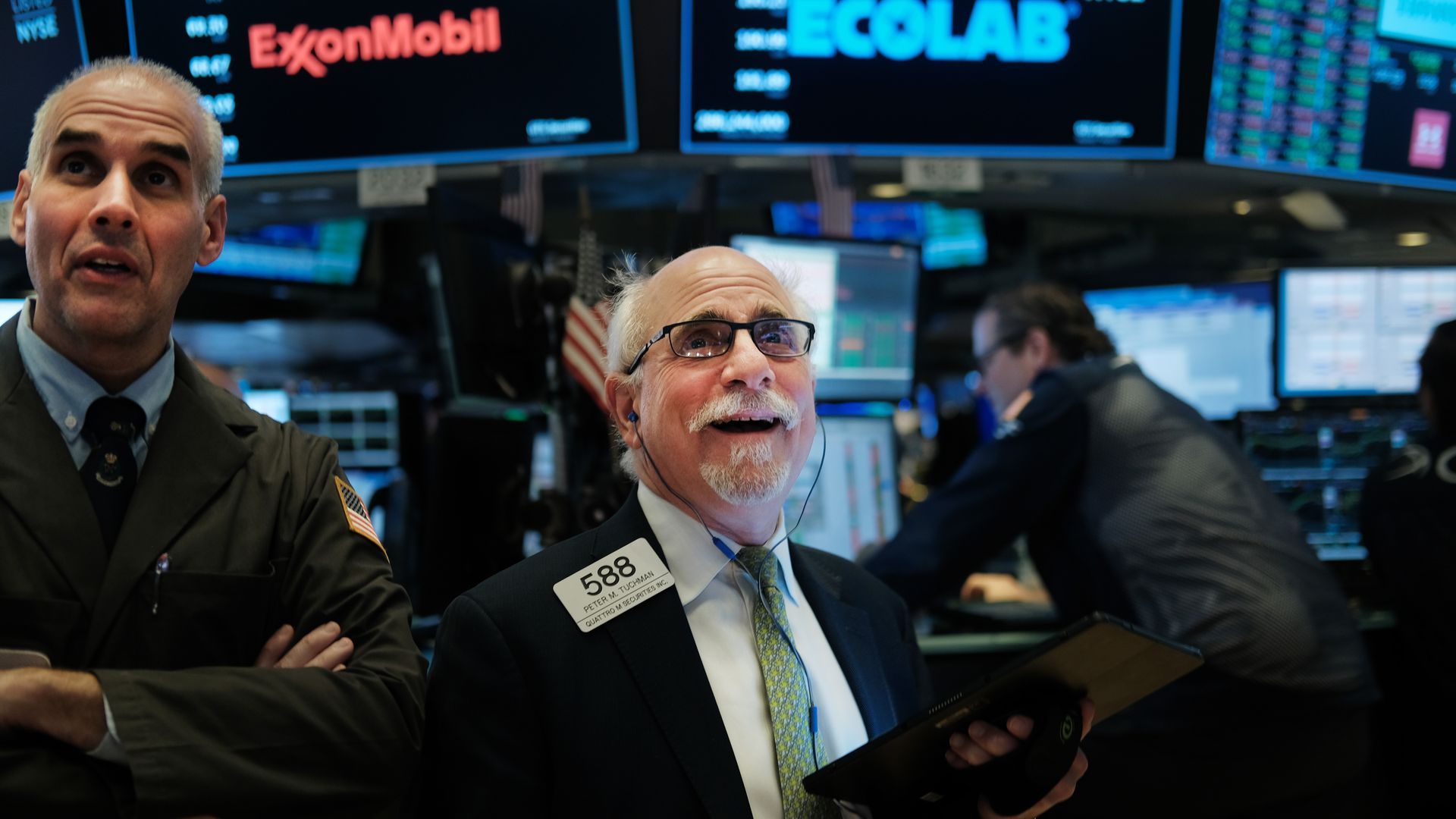
United States equities opened higher Monday following big gains in Asia and Europe and a risk-on bid in currency markets.
Why it matters: Stock markets could continue to rise despite an unprecedented global pandemic, violent protests over police violence in the U.S. not seen since the 1960s, and spiking tensions between the world's two largest economies.
Ride-hailing and delivery companies Uber, Lyft, DoorDash, and Postmates suspended service in some cities at the request of local officials during this weekend's curfews amid protests over the death of George Floyd and other police-related killings of black people.
Why it matters: Curfews are stricter than shelter-in-place orders, which remain effective in several cities, and could be enforced more rigorously.
The CEOs of 179 health care companies took home almost $2.5 billion in 2019, a majority of which came from cashing out stock, according to an Axios analysis of financial filings.
The big picture: That amount is four times what the Centers for Disease Control and Prevention had to study and prepare for all "emerging and zoonotic infectious diseases" last year, right before the novel coronavirus outbreak turned into a global pandemic.