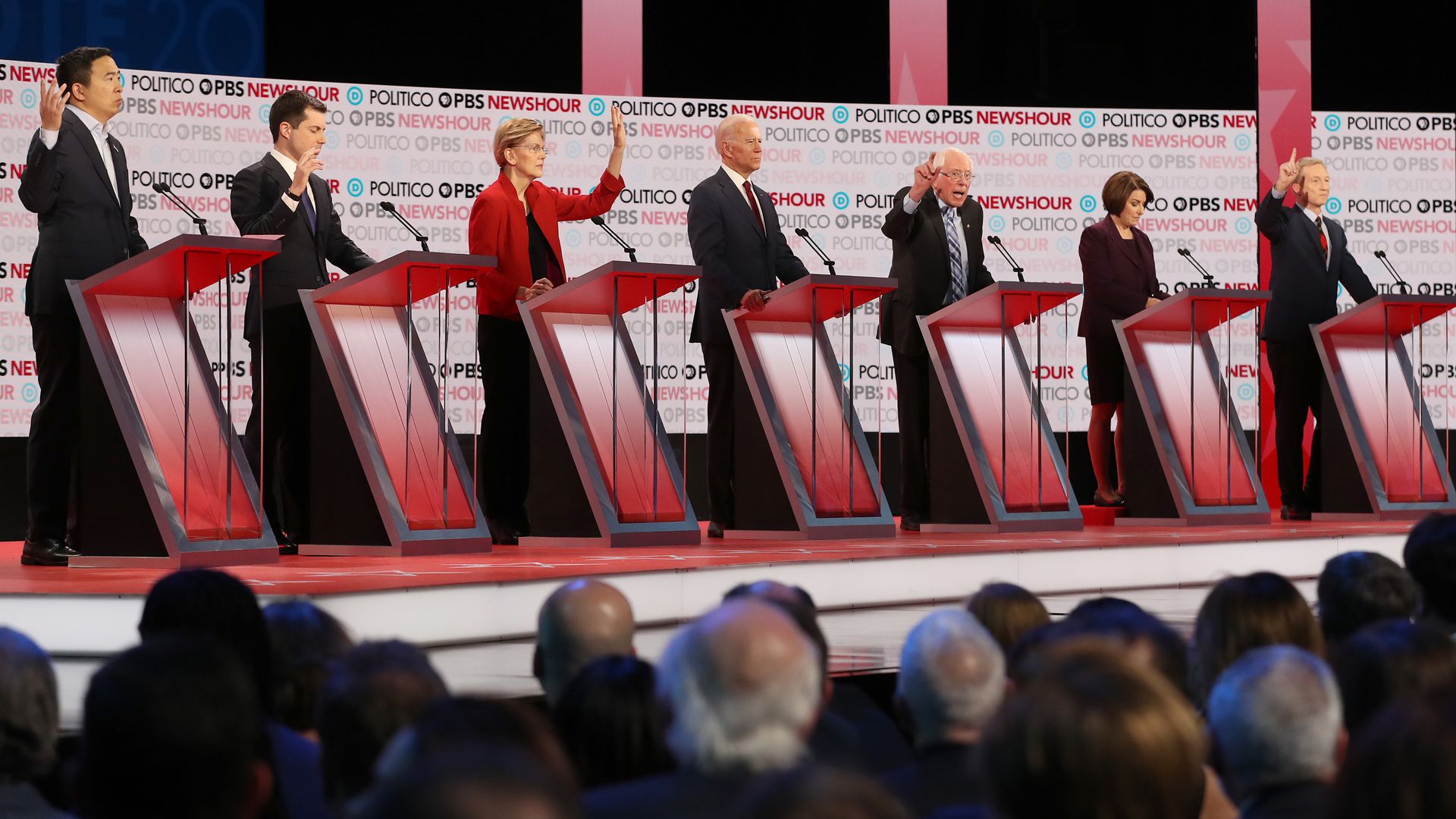
About 6.171 million people watched December's Democratic debate hosted by CNN, Politico and PBS NewsHour on Thursday, according to Nielsen data cited by CNN on Friday.
The big picture: That makes Thursday's debate the least-watched of this election cycle, The Hollywood Reporter notes. The second night of the first debate, hosted by NBC, MSNBC and Telemundo in June, was the most-watched Democratic primary debate of all time, with 18.1 million people tuning in.
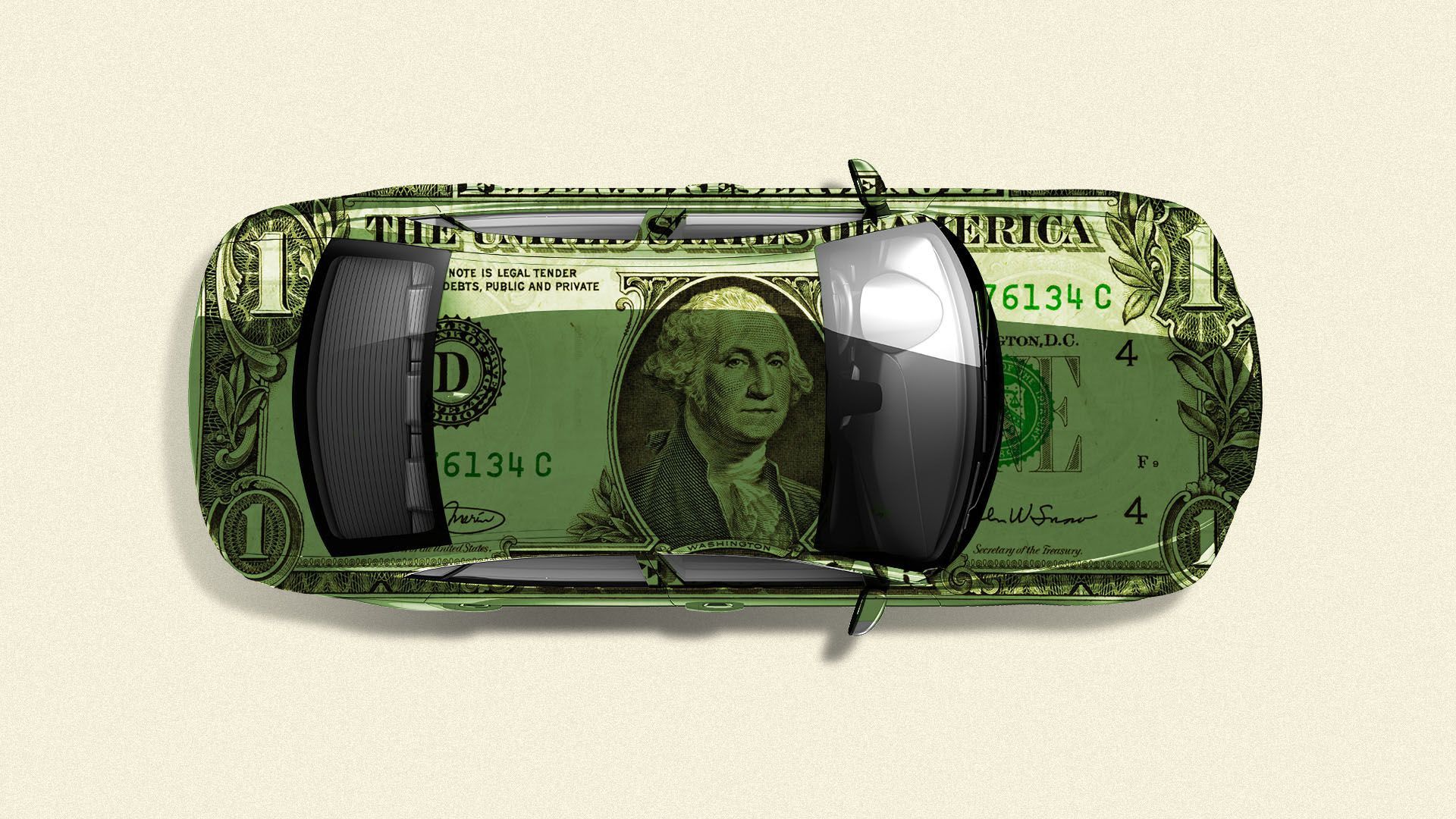
Detroit automakers are facing technological disruption, whipsawing government policies and economic uncertainty.
Driving the news: Just-completed labor contracts between Detroit automakers and the United Auto Workers union yielded $22.7 billion in planned investment in U.S. factories over the next four years, adding or securing 25,400 jobs.
ViacomCBS announced Friday a $375 million deal to acquire a 49% stake in Miramax, the television and movie production company founded by Hollywood producer Harvey Weinstein, from Qatar-based beIN Media Group.
Why it matters: It’s ViacomCBS’s first post-merger deal, and it will strengthen the library and resources of the company’s movie studio, Paramount Pictures.
A U.S. District Court jury on Thursday found Cox Communications, a telecom company, liable for the piracy infringement of more than 10,000 pieces of music, awarding $1 billion in statutory damages to the plaintiffs Sony Music, Universal Music Group, Warner Music Group and EMI, according to Billboard.
Why it matters via Axios' Ina Fried: In general, it has been individuals not internet service providers that have been held liable for piracy. "[S]imilar lawsuits ... have been filed against Charter, Charter subsidiary Bright House Networks, RCN, and Grande Communications," The Verge writes.
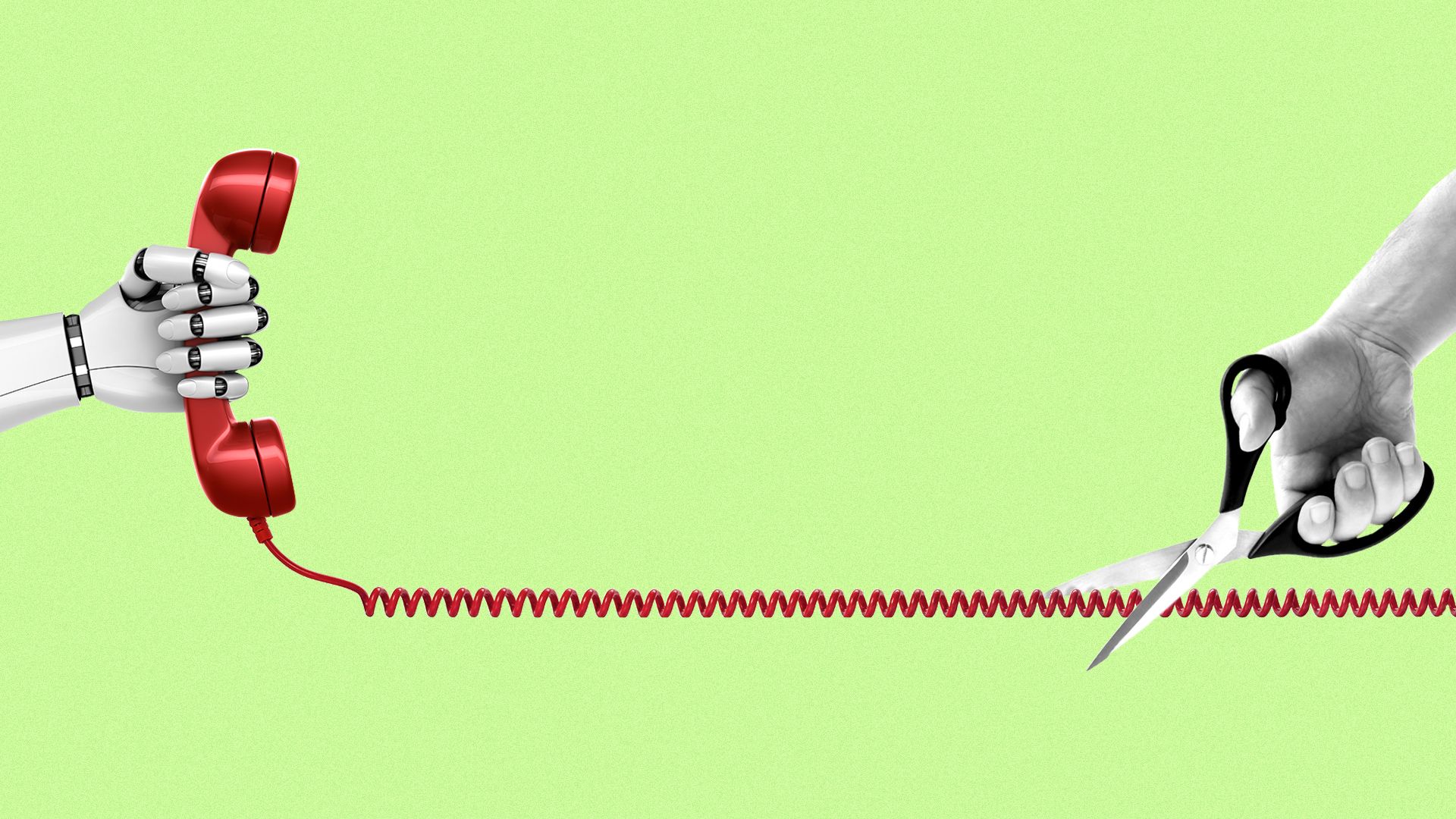
Congress on Thursday approved legislation aimed at deterring the flood of robocalls hitting consumers' phones, sending the bill to the president's desk.
Driving the news: The Pallone-Thune TRACED Act unanimously cleared the Senate after the House approved it earlier this month.
Details: The bill requires carriers to verify that calls are legitimate before they reach consumers; ensures providers make robocall-blocking services available for free; and bolsters the federal government's ability to impose and collect fines for illegal calls.
"I look forward to the president's signature on this TRACED Act in the near future, and hope, as this bill gets implemented, that it will once again be safe to answer your phone in this country," Republican Sen. John Thune said in remarks on the Senate floor.
As 2019 comes to a close, we've been in a boom period, but what happens next?
The big picture: This question was partly answered when the first stampede of private unicorns hit the public market in the spring. The results were mixed — but mostly not good. (Uber, anyone?) And of course, WeWork didn't even make it to the Nasdaq bell-ringing, instead breaking down shortly after it filed its S-1.
A new study helps to show that experts are all over the map when it comes to gaming out the rise of electric vehicles in the global marketplace.
Why it matters: The speed at which EVs become truly mainstream is one variable affecting the future of oil demand and carbon emissions. Passenger cars account for roughly a fourth of world oil demand.
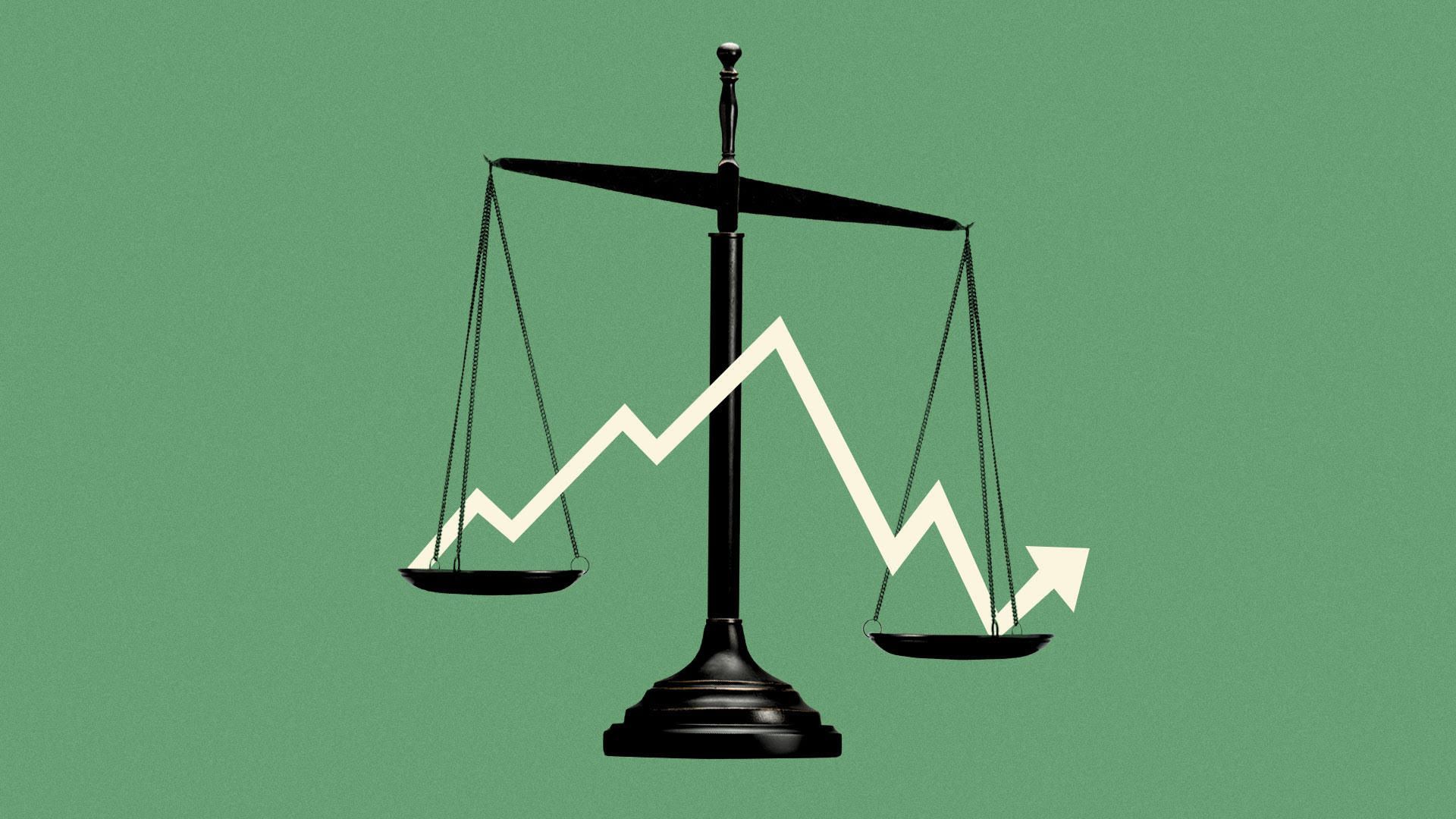
It's normal for regulators to take on the companies it oversees. What's rarer is the opposite: entities taking their regulators to court — but that might be changing.
Why it matters: The legal showdowns between companies and regulators show just how far big business is willing to go to fight regulations that could dent profits.
NBC News has created a new editorial team to report on issues related to U.S. election security and voting called "Vote Watch."
Why it matters: Most news organizations were caught off guard by the 2016 election manipulation attempts by foreign governments. Even though NBC News already invests heavily in investigative coverage on things like misinformation, cybersecurity and national security, the outlet wants to get ahead of these issues even more before 2020.
The U.S. economy is besting expectations for job growth, and the unemployment rate is at its lowest in several decades — but the other side of the story is that millions of jobs out there just aren't good enough.
Why it matters: Almost half of all American workers are stuck in low-wage jobs that often don't pay enough to support their lives, lack benefits and sit squarely inside the automation bullseye.
Boeing's plan to suspend production of its 737 MAX jets in January is expected to hit Q1 GDP growth, assuming the suspension lasts through the first quarter and that suppliers slow production.
By the numbers: Wall Street firms estimate the suspension could shave off as much as 0.6 percentage points from Q1 GDP.