In the wake of 2 mass shootings at Walmart stores in recent months, the company said Tuesday it plans to discontinue handgun ammunition and all sales of short-barrel rifle ammunition that can be used with military-style assault weapons, CNBC reports.
Why it matters: Walmart is the world's largest retailer. So while this move is incremental, it's one of the strongest statements yet from the business community on the issue of gun violence.
President Trump's political allies are seeking to discredit reporters, media outlets and social media platforms using both formal andad hoc efforts. Dan digs in with Axios' Mike Allen.
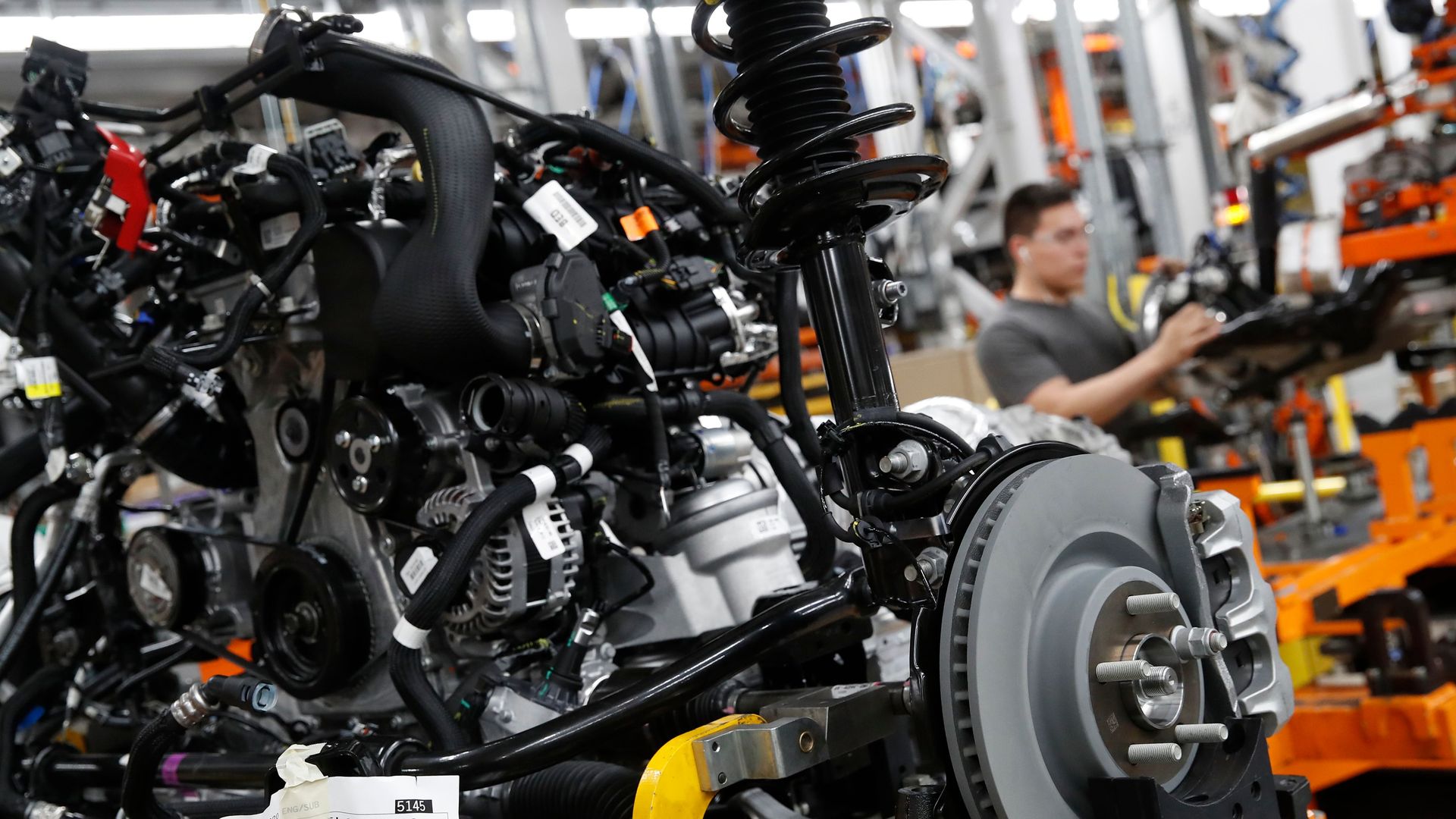
Two closely-watched surveys on Tuesday showed a bigger-than-expected slowdown in the U.S. manufacturing sector in August — including one by the Institute for Supply Management that indicated the industry contracted for the first time since 2016.
Why it matters: The trade war, cited as a top concern among manufacturing firms, is viewed as a big factor driving the global economic slowdown. This is particularly true in the manufacturing sector, which has retreated significantly from its initial "Trump bump" after the election.
There's new evidence that Saudi Arabia is serious about moving ahead with a mammoth IPO of shares in state oil giant Aramco after years of delays and uncertainty.
Driving the news: Energy Minister Khalid al-Falih will be replaced as chairman of Aramco by Yasir al-Rumayyan, head of the kingdom's sovereign wealth fund.
EQT Partners, a Sweden-based private equity firm, formally announced plans to IPO on the Nasdaq Stockholm.
Why it matters: It would be the largest European private equity firm listing in over two decades, and the first major global buyout firm listing since The Carlyle Group in 2012.
Summer box office revenues were down 2% this year from the same period (beginning of May to beginning of September) as last year, per Comscore.
Why it matters: Mega hits like "The Lion King," "Aladdin" and "Toy Story 4" were supposed to keep the box office alive this summer, but broader economic trends and less-than-compelling storylines kept audiences from turning out in droves.
Consumer sentiment fell to its lowest level since October 2016 and dropped by the most since December 2012, according to a survey by the University of Michigan.
Why it matters: The decline in sentiment was attributed largely to negative references to tariffs and the U.S.-China trade war, said Richard Curtin, the survey’s chief economist. Tariffs were mentioned "spontaneously" as a negative force by 1 in 3 respondents.
The Washington Post will unveil a new masthead on Tuesday that for the first time in its 141-year-old history will include a vice president of product — Kat Downs Mulder, executives tell Axios.
What's new: As part of its product push, the company will launch a series of new, personalized newsletter products this fall, as well as a more responsive paywall, with Downs Mulder at the helm.
One byproduct of the techlash: After years of frustration that Silicon Valley companies seemed to get special treatment in Washington, telecom giants are finally gaining the upper hand.
Between the lines: Telecom companies like Comcast, Verizon and AT&T are now starting to feel more able to compete with tech giants like Facebook, Google and Amazon as they all jockey to dominate how we communicate and access information.
Despite polling in the top 6 of the Democratic primary and getting plenty of online attention, businessman Andrew Yang is being treated by the media like a bottom-tier candidate.
Why it matters: The discrepancy between demonstrated voter support and the level of media coverage — both on cable and in the online world — shows that the press is in unfamiliar territory in covering a candidate from outside the political world who keeps a low profile.
President Trump's trade war has led to even bigger trade deficits with China, even though it was intended to improve the trade balance. But it's not just China — the deficit has increased with most of our other major trade partners, too.
Why it matters: While economists agree that trade deficits aren't a good way to measure a trade relationship, they are the metric Trump fixates on, made campaign promises about and uses to evaluate relationships with other countries.