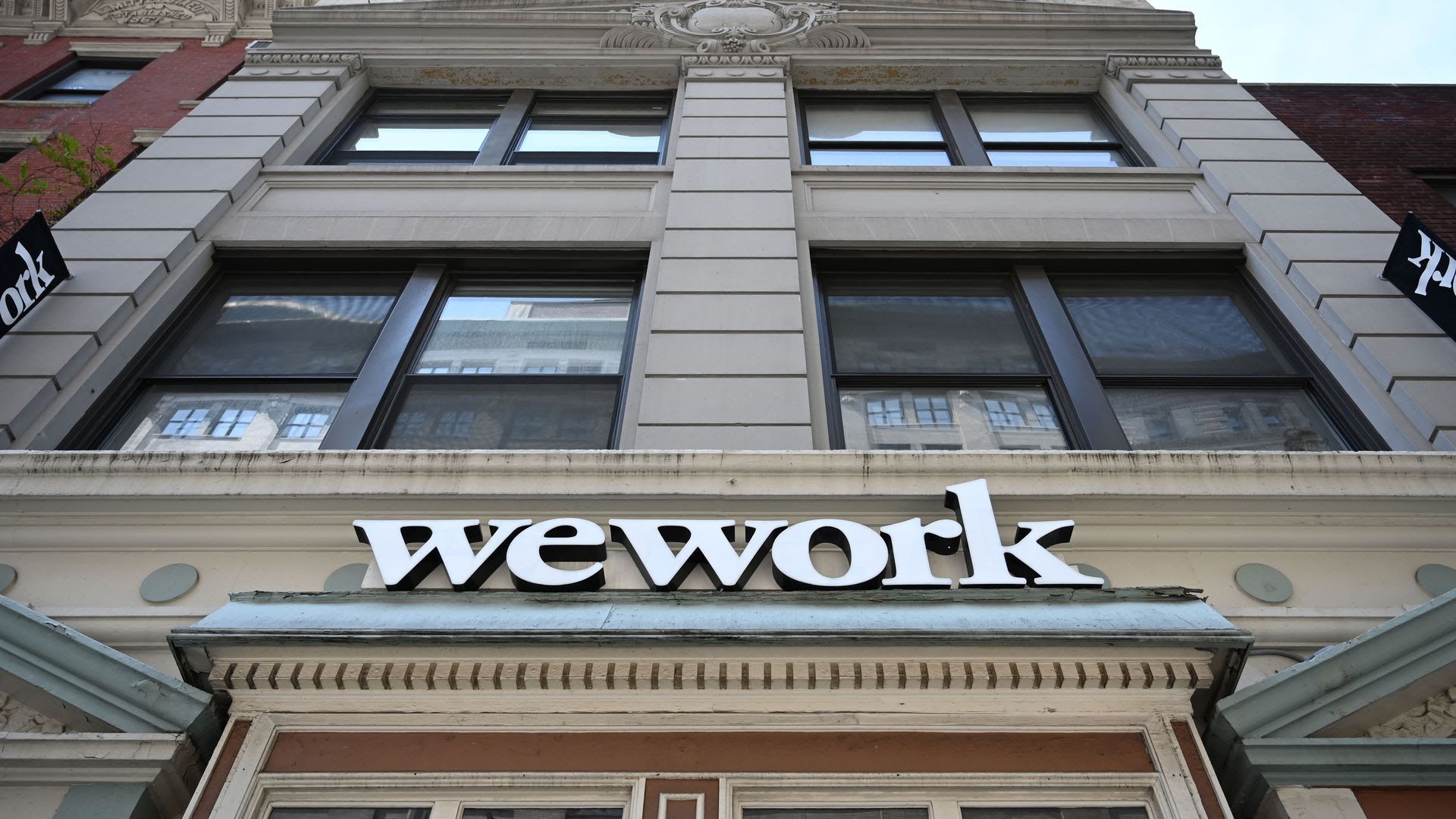
WeWork has long bet that it can wed the mundane efficiencies of commercial real estate with the lofty ideals of mission-driven tech. That would resolve the age-old contradiction between hard-nosed profit-seeking and high-minded world-changing — and its IPO prospectus aims to prove it right.
The big picture: WeWork knows it looks like an aggregator of coworking office space rentals, but it aims to persuade the public it is instead "reinventing the way people work," helping them "make a life, not just a living."
U.S. consumers spent more in July than economists expected, the federal government said on Thursday, as retail sales rose 0.7% vs. the 0.3% estimated. Excluding automobile sales, a more volatile component, retail sales rose 1% — double what economists anticipated.
Investors were nervous about a recession before Wednesday's selloff, with a third of fund managers polled in the latest Bank of America Merrill Lynch survey saying a recession is likely to happen in the next 12 months.
Why it matters: It's the highest recession probability since October 2011. However, a large majority of surveyed fund managers, 64%, says a recession is unlikely.
The Dow's 800-point fall grabbed headlines, but the real warning about the global economy's dire health comes from Europe. The German economy shrank in the second quarter, showing negative growth for the second time in 4 quarters.
Why it matters: Germany is being decimated by the global downturn in manufacturing and trade that has weighed extensively on major exporting countries. The downturn is likely coming for other economies as well, experts say.
It was 20 months ago that we told you about the highly unusual dynamic of synchronized global growth — the world’s 10 biggest economies growing at once.
The state of play: Now, we seem headed for the Synchronized Slump — and we had the rise of inward-looking, finger-pointing nationalism in relatively good times. Imagine the world as things go south.
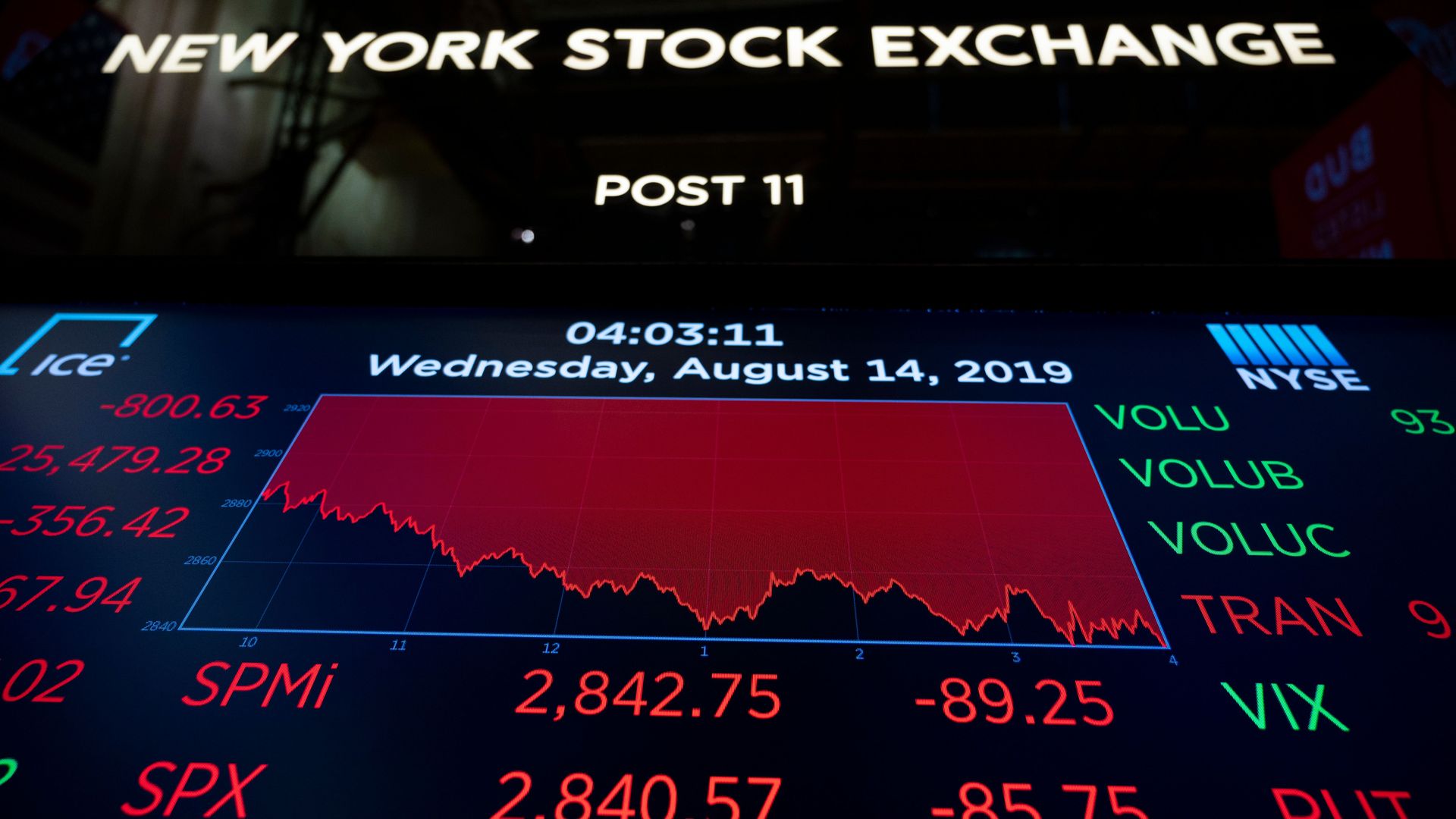
The Dow Jones Industrial Average fell 800 points — or 3.05% — on Wednesday, after the bond market flashed a warning sign that's predated every recession for the past 50 years.
Why it matters: Wednesday was the stock market's single worst day of 2019. The "yield curve inversion" — which President Trump called "crazy" — comes when short-term Treasury bonds yield a higher rate than the long-term variety.
WeWork filed for what could be the year's most polarizing IPO on Wednesday. Dan digs into the numbers with Axios' Kia Kokalitcheva. Plus Facebook endures yet another privacy fumble, and China's trade tensions bubble up north of the border.
WeWork on Wednesday filed to raise $1 billion in an initial public offering, although the ultimate offering amount is expected to be at least three times larger.
My thought bubble: There is a ton of investor skepticism over WeWork's business model, with expectations that it could receive Tesla-like treatment from public shorts. That's one reason why the company plans to increase its cash cushion by securing a $6 billion credit facility in conjunction with the IPO.
Bond investors were unfazed by Tuesday's consumer price index reading, which showed inflation picked up meaningfully in July.
By the numbers: The U.S. consumer price index rose a seasonally adjusted 0.3% last month from June and 1.8% from a year earlier. The core reading excludes volatile food and energy categories, up 2.2% year over year.








/2019/08/12/1565617797540.gif?w=3840)
/2019/08/14/1565783124469.gif?w=3840)