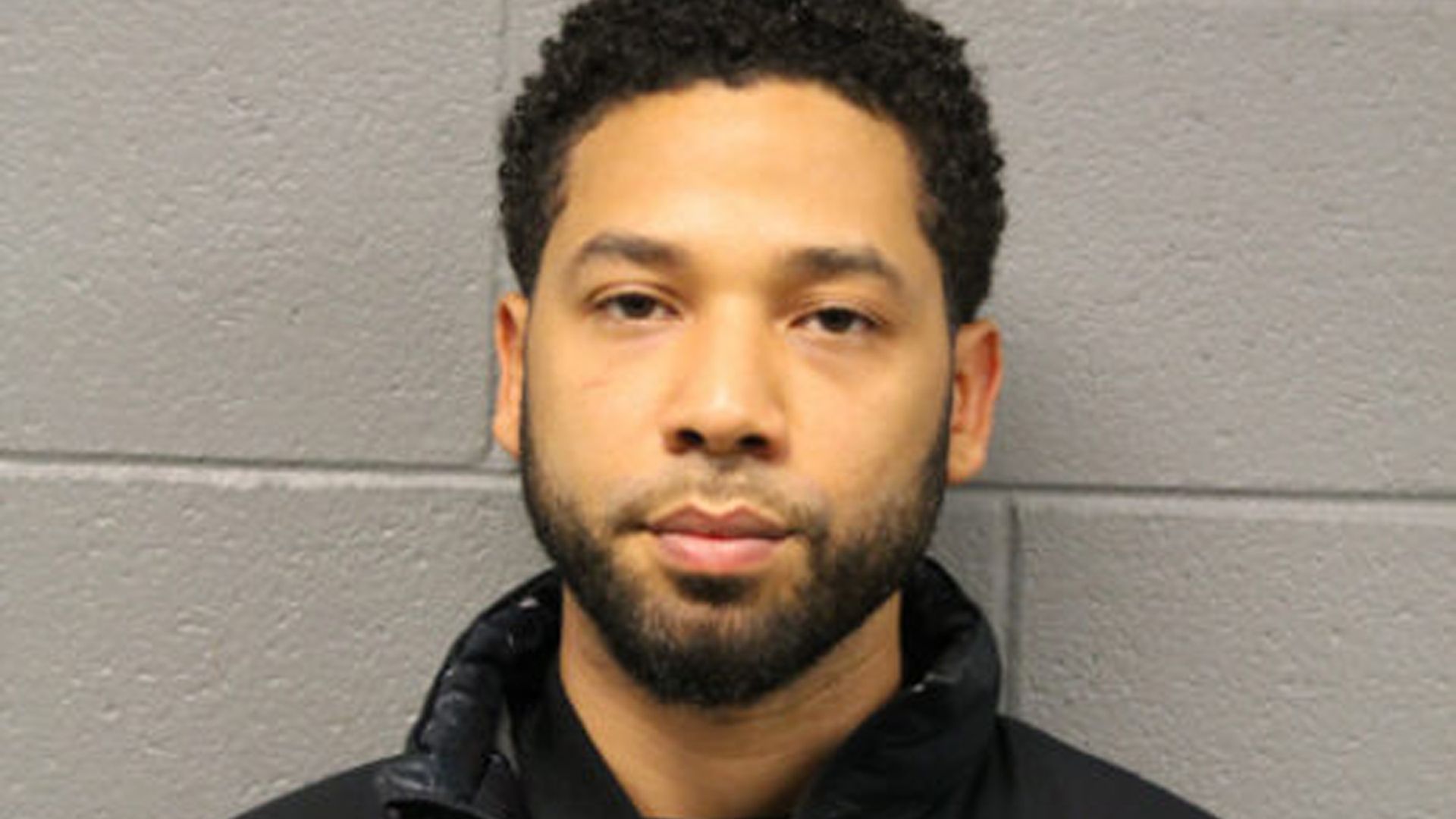
Actor Jussie Smollett paid two men $3,500 to stage an assault he says was racist and homophobic because he was unhappy with his "Empire" salary, police said Thursday.
Economists at ratings agency S&P Global raised the probability of a U.S. recession in 2019 to 20–25% on Wednesday, in large part because of the flattening U.S. Treasury yield curve.
Flashback: Its previous assessment was 15–20%, 3 months ago.
The Nasdaq, NYSE and the Cboe are seeking to block their regulator, the SEC, from implementing a new pricing program. The 3 exchanges say the program would harm investors by driving up trading costs, but those who are in favor of the rule say investors are better off.
Why it matters: The SEC says what's been called the "biggest stock market experiment in more than a decade" is designed to benefit retail investors. But the stock exchanges are fighting back against a major prong in Trump appointee Jay Clayton's push to re-regulate stock exchanges.
Federal regulations require drug companies to include both major and minor side effects in their direct-to-consumer advertising — the risk of heart attacks as well as, say, dry mouth.
Why it matters: All of that information may be overwhelming consumers, causing them not to internalize the most significant risks, according to Scientific American.
Private equity's retail apocalypse hit another miserable milestone yesterday, with Payless ShoeSource refiling for Chapter 11 bankruptcy. The shoe store chain also plans to liquidate all 2,500 of its North American locations, costing around 16,000 people their jobs.
The bottom line: Physical retail is under severe stress, regardless of ownership structure, but private equity is almost always buying into mature industries that are prone to disruption. Engaging in large dividend recaps only makes the margin for error that much smaller, and the likelihood for failure that much larger.
Maggie Haberman, a New York Times' White House correspondent, called President Trump's claim that reporters don't reach out to the White House for comment "a lie" during an appearance on CNN on Wednesday. "We went through a detailed list of what we were planning on reporting. They chose not to engage," she said.
Backdrop: Haberman and a team of other journalists at the Times reported yesterday that Trump called acting Attorney General Matthew Whitaker last year to ask whether a Trump-appointed attorney could "unrecuse" himself in order to lead the Southern District of New York's investigation into hush money payments during the 2016 presidential election.
Non-financial S&P 500 companies with the least cash are piling on the biggest loads of debt.
By the numbers: More than half of the S&P 500's total cash is held within just 25 companies — or the top 5% — while the bottom 95% of companies hold 73% of the index's debt, according to the Wells Fargo Investment Institute.
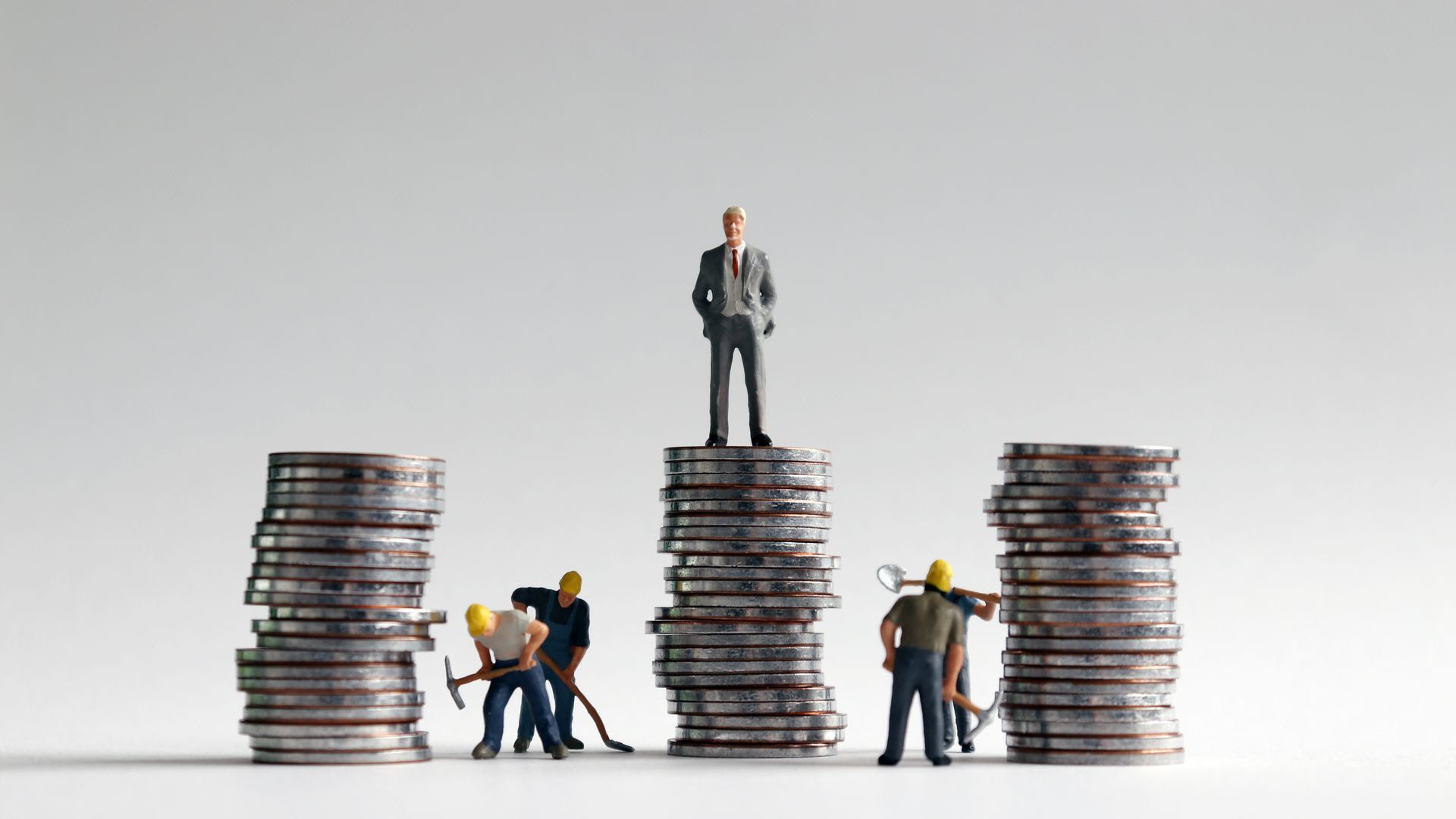
The issue driving income inequality in the U.S. has not been a lack of productivity by American workers, a new report from the Economic Policy Institute finds. Instead it is that the lion's share of gains from increased productivity have gone to a tiny segment of wage earners at the top.
The big picture: After tracking closely in the three decades following World War II, from 1979 to 2017 productivity grew 70.3%, while hourly compensation of production and nonsupervisory workers grew just 11.1%. That means productivity grew six times faster than typical worker pay.
U.S. ad dollars spent this year on digital channels, including desktop, mobile, search, and social media, will surpass the total spent on non-digital ad channels, like television, out-of-home (billboards), radio, newspapers and magazines, according to a new projection from eMarketer.
Why it matters: 2017 was the first year that digital ad spending passed the television ad spend in the U.S. Now, digital is growing so quickly that it's slated to surpass revenue from all of the old-school mediums that for decades dominated the entertainment landscape.