U.S. stocks saw gains for November, capping a month of volatility.
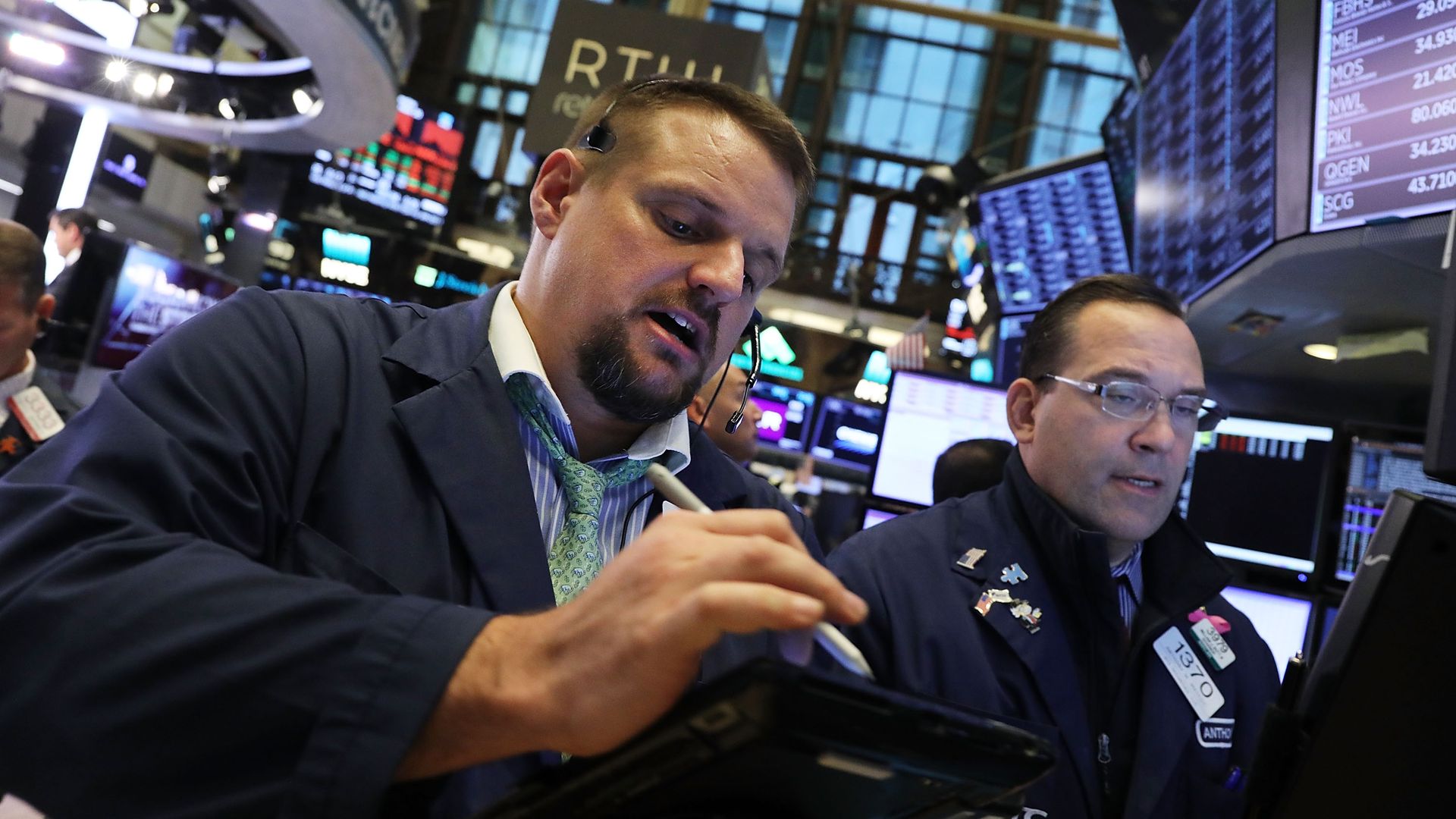
Details: U.S. stocks jumped on the final trading day of November, with the Dow Jones Industrial Average closing up 199 points, and the S&P 500 and Nasdaq Composite each rising less than 1%. This was the best week for the Dow since 2016, and the best for the S&P 500 since 2011, per CNBC.
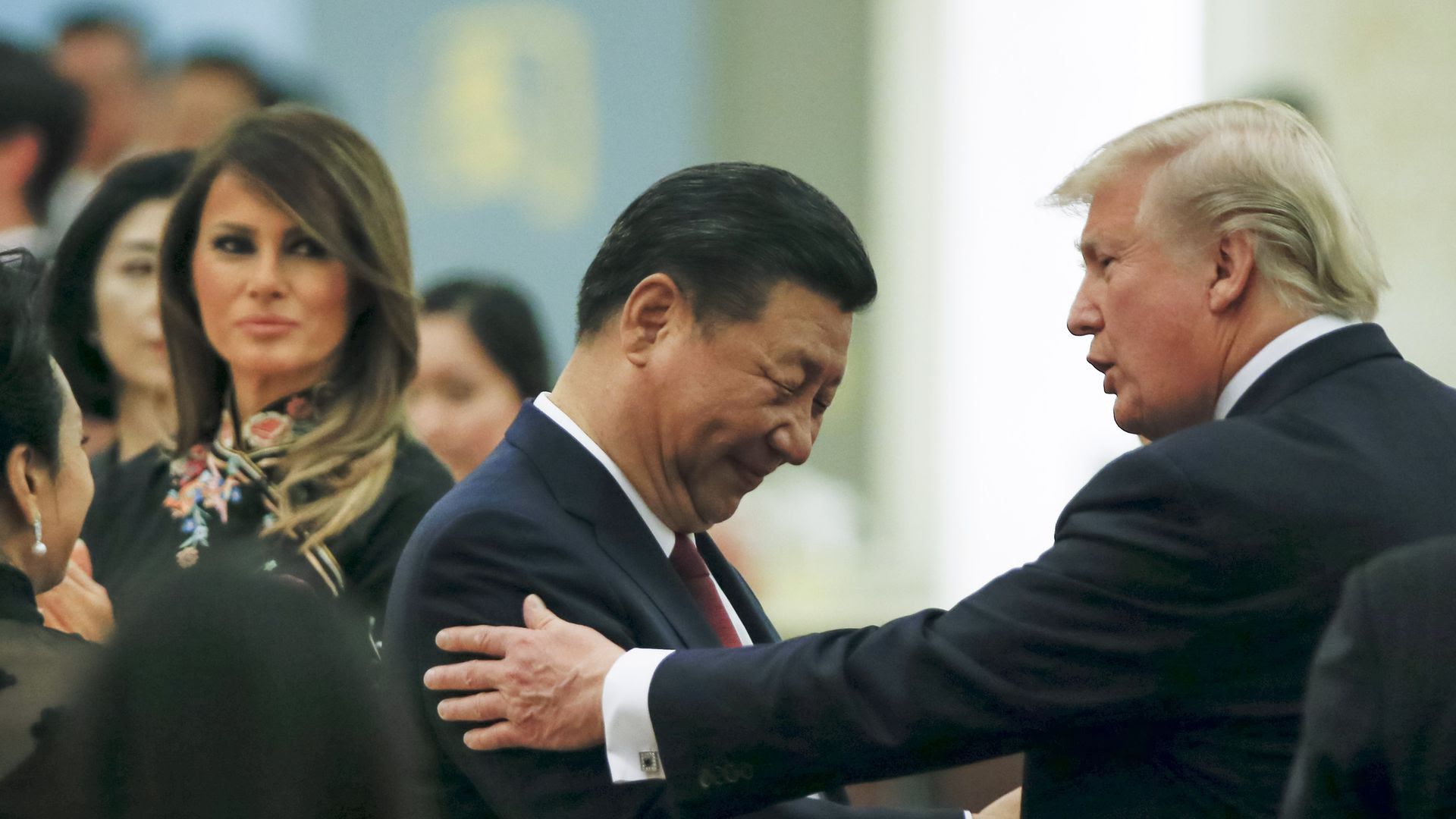
Both the Wall Street Journal and Bloomberg have stories suggesting that the U.S. and China may reach a deal during the dinner between President Trump, General Secretary Xi and their respective teams.
Driving the news: Outlines of this supposed deal have been discussed for weeks, mainly because it is perhaps the only possible arrangement the two sides can agree to right now.
Bayer announced plans on Thursday to sell multiple assets, including its animal health unit, sunscreen brand Coppertone, foot-care brand Dr. Scholl's and its majority stake in German chemical park operator Currenta. It also will cut 10% of its workforce, representing around 12,000 jobs.
Why it matters: It's an admission that Bayer bit off more than it could chew when it paid $14 billion to buy Merck in 2014 and another $63 billion to buy Monsanto earlier this year. And it's yet another conglomerate eager to shrink its footprint. "Bayer seems to have flunked its due diligence twice," write Stephen Wilmot and Charley Grant for the Wall Street Journal.
AT&T says that the new streaming service it plans to launch during the fourth quarter of 2019 will have three tiers to target all types of customers.
Why it matters: The service would provide similar flexibility to rival Netflix, which also offers three different streaming tiers, allowing it to lure customers to better compete against its more-established competitor.
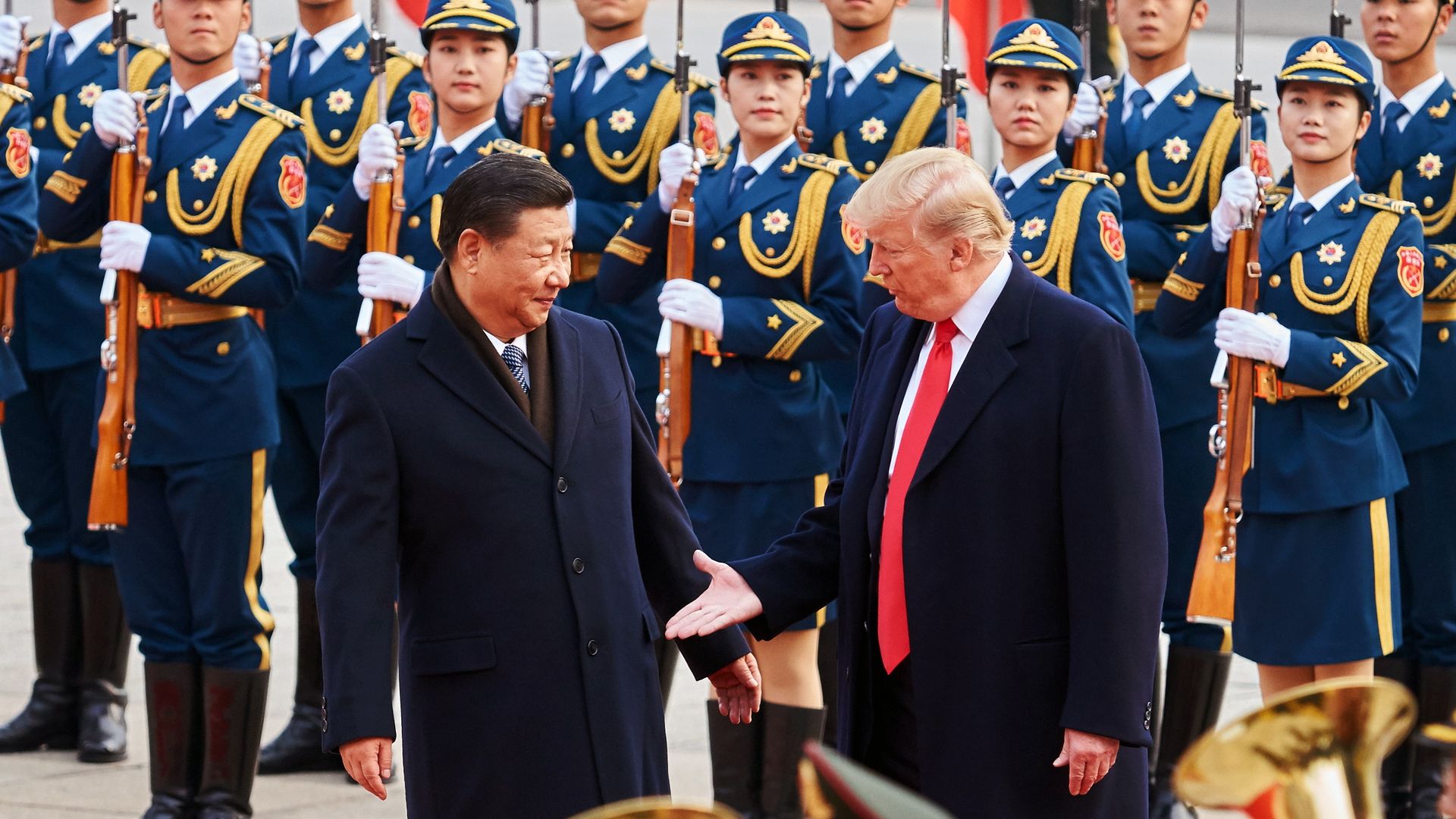
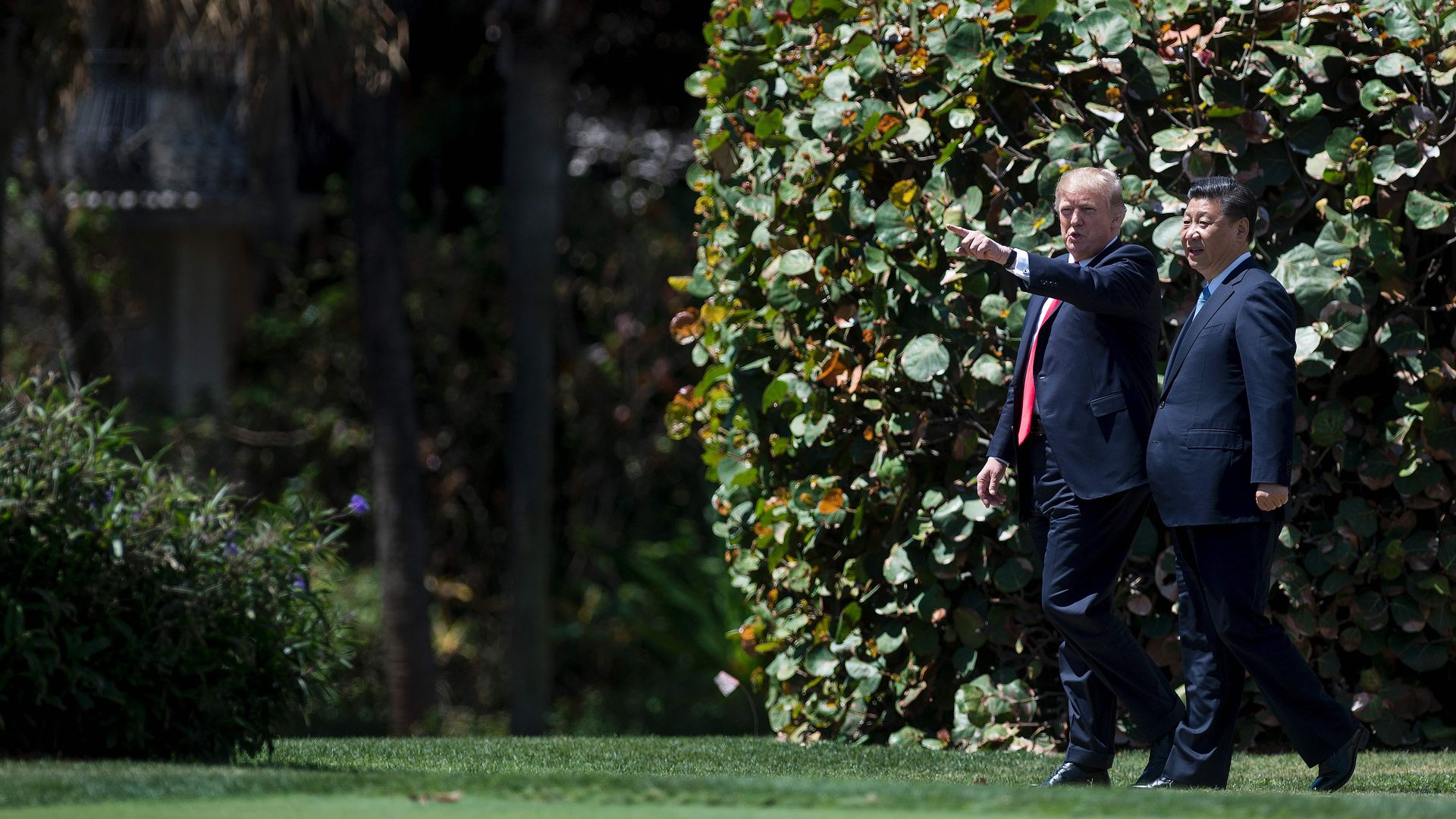
The consequences of President Trump’s meeting with Chinese President Xi Jinping at the G20 summit in Argentina this weekend will extend far beyond trade. Whatever the president says for a domestic political audience or to calm markets will be watched closely, from Europe to Asia.
Why it matters: Any successful U.S. strategy to establish guardrails for China’s rise will rely heavily on U.S. allies, who are making their own calculations about American staying power and resolve. Many regional partners were disturbed by the optics of Trump's first meeting with Xi at Mar-a-Lago in April 2017 — after which Trump claimed to have "a terrific relationship with Xi" — and his visit to China that November, when he tweeted about his "unforgettable" time.
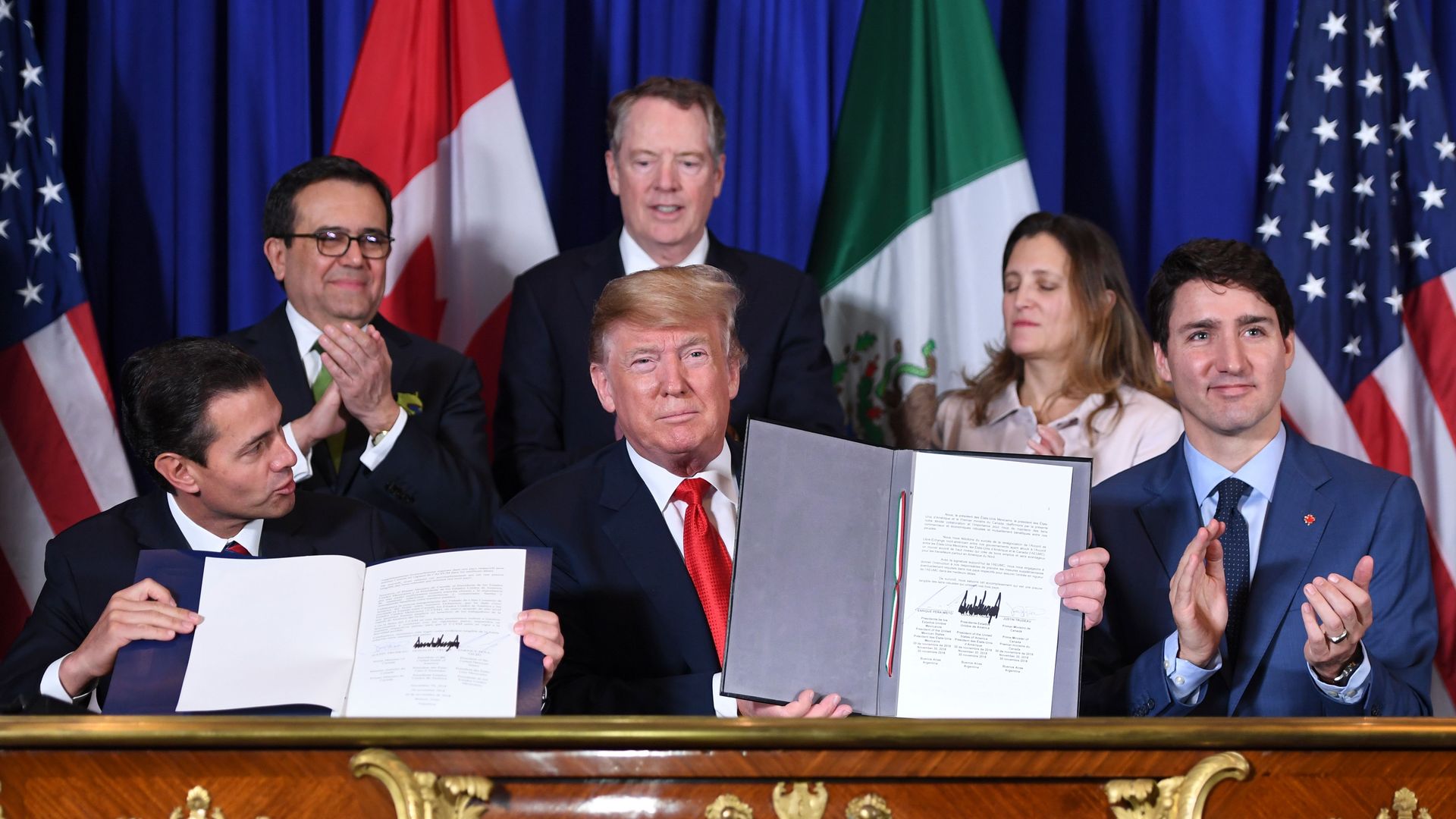
President Trump, Canadian Prime Minister Justin Trudeau and Mexican President Enrique Peña Nieto signed onto USMCA — the United States-Mexico-Canada Agreement, a revamped version of NAFTA — at the G20 summit in Buenos Aires on Friday.
If President Trump’s dinner with Chinese President Xi Jinping on Saturday at the G20 summit is make-or-break, Trump is giving every indication he’s prepared for, or even prefers, the latter option.
Between the lines: Trump told reporters before taking off for Argentina that while China is interested in striking a deal, “I don't know if I want to do it” because “I like the deal we have now.” He says he’s already planning to raise existing tariffs from 10% to 25% on Jan. 1 — and impose a huge swathe of new ones if the meeting doesn’t go well. Absent a breakthrough, this trade war is about to get brutal.
Millennial-focused content site Mic has laid off most of its staffers amid a rumored acquisition by Bustle Digital Group, whose brands include Bustle and Elite Daily.
Why it matters: Mic has been struggling to survive in the wake of Facebook's 2017 algorithm change, which essentially stopped driving traffic to publishers.
Dick's Sporting Goods saw its in-store and online sales fall 3.9% in the quarter ending Nov. 3, driven by losses in its hunting and electronics departments, per the Wall Street Journal.
Why it matters: The chain announced a change in its firearm sales policies earlier this year after the Parkland shooting that included ending the sale of high-capacity magazine sales and assault-style rifle sales as well as a ban on firearms sales to people under 21 years old. Dick's executives attributed the decline to both the new policy and the fact that a general slowdown in gun sales tends to occur under Republican presidents.