A global survey of C-suite executives by IBM's Institute for Business Value found most expect AI spending to shift over the next four years from efficiency to a new wave of innovation.
64% of the surveyed executives think that by 2030, their AI edge will come from innovation rather than resource optimization.
Global perceptions of AI are improving, but the U.S. remains skeptical, according to a new poll from Google and Ipsos.
Why it matters: AI is moving quickly into work, education and daily life, but Americans trail much of the world in usage, excitement and confidence — gaps that could shape who sets the rules and norms for AI's future.
American politics has gotten dirty — and so have officials' mouths.
The big picture: In the era of politics often defined by the in-your-face style of President Trump, lawmakers are dropping f-bombs like "The Wolf of Wall Street" went to Washington.
President Trump announced Saturday he would impose a 10% tariff on imports from eight NATO allies — including Denmark — until a deal is reached for the U.S. to purchase Greenland.
Why it matters: The threat marks the most significant step yet in Trump's campaign to acquire the vast Arctic territory, which has been controlled by Denmark for centuries.
Senior Trump political adviser Chris LaCivita and The Daily Beast have reached a settlement agreement stemming from a defamation suit LaCivita brought against the news outlet last year.
Why it matters: LaCivita's lawsuit was one of several that figures in Trump's orbit brought against news organizations in the wake of the 2024 election.
Everyone seems to be getting into the advertising business these days as more industries realize they can turn attention into revenue.
Why it matters: The industry needs new strategies and standards for an era where new players like AI firms and ride-sharing apps join traditional advertisers in monetizing attention.
The onslaught of AI slop has made it easier for bad actors to game digital platforms with spam and scams designed to make money.
Why it matters: The spam economy has been a part of the internet ecosystem since its inception more than three decades ago. But now it's reached a level of whack-a-mole that's made it hard for consumers to trust what's real.
Streaming platforms are moving beyond running basic ad-supported tiers to developing more sophisticated interactive and measurable ad products.
Why it matters: As subscription growth plateaus and streamers make advertising a core business, pressure is building to establish consistent, reliable standards.
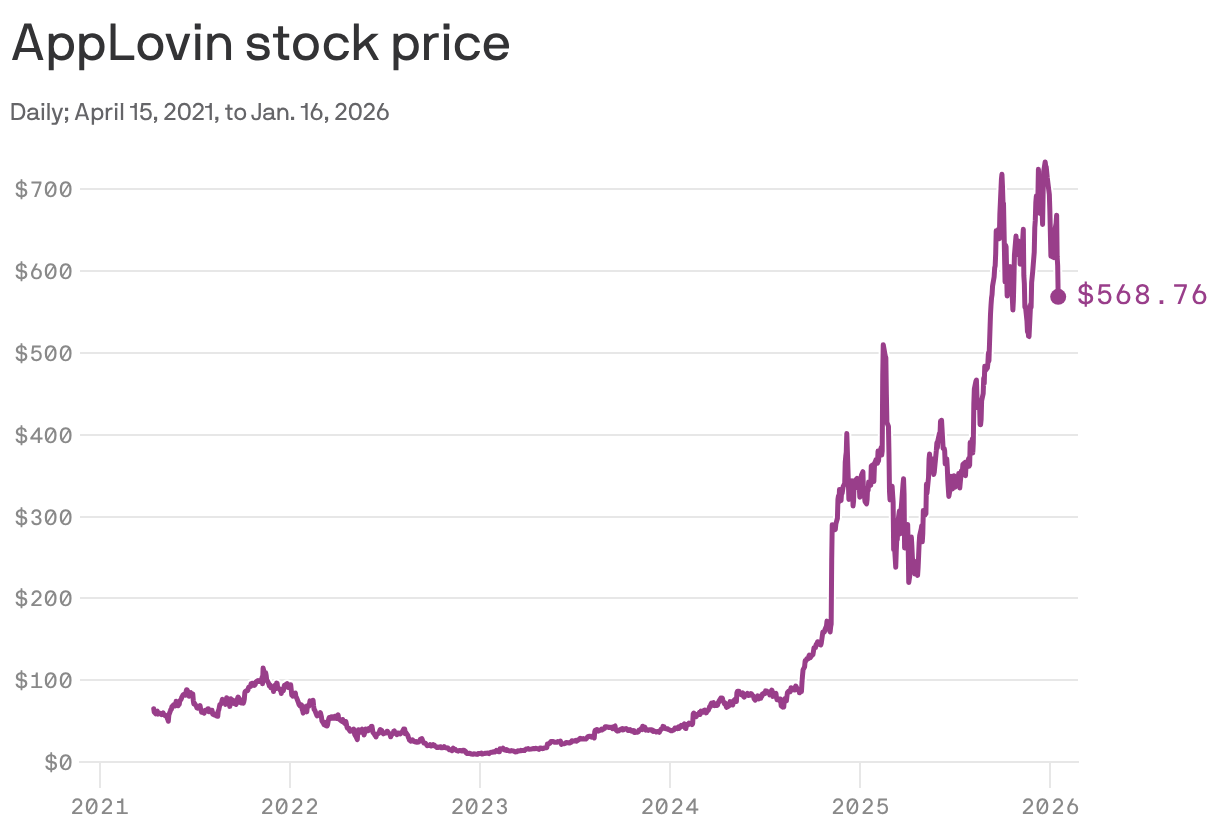
Over the past two years, AppLovin has become a rare ad tech darling on Wall Street, with its stock surging over 1,200% to $568 per share as of Jan. 16.
Why it matters: The company's investments in AI have made its ad tech platform the go-to monetization tool for mobile gaming marketers and beyond.
In officially killing its Privacy Sandbox initiative, Google has signaled to the ad industry that a unified privacy standard is too difficult to coalesce around.
Why it matters: Without a national privacy law or industry standard, the ad market is self-governing by moving toward contextual-based marketing strategies that don't require internet tracking cookies.
In finding Google guilty for abusing its ad tech monopoly last year, a U.S. district judge must now determine which remedies to impose on the tech giant, possibly redefining the power balance across the digital ad ecosystem.
Why it matters: Sell-side platforms, such as Magnite, PubMatic and OpenX, all stand to benefit significantly should Google be forced to spin off its "network" ad business, which sells ads on other publishers' inventory.
Amazon's ad empire is expanding fast, with its demand-side platform landing a slew of big publishing partners in recent months.
Why it matters: The momentum, combined with its first-party data and AI-powered tools, has put pressure on and caused investor skepticism of incumbents like The Trade Desk.
The ever-expanding definition of an ad network, combined with the convergence of digital and traditional marketing, is putting pressure on Madison Avenue to redefine itself.
Why it matters: Sprawling interests across an array of companies have forced the industry's leading trade group, Interactive Advertising Bureau, to change the way it engages members.
It was a busy week in the always-shifting AI race, with OpenAI signaling ads are coming to ChatGPT and Anthropic debuting a tool that could dramatically reshape the workplace.
The big picture: Decisions by OpenAI, Anthropic and Google are starting to shape how consumers, workers and investors experience the AI boom.
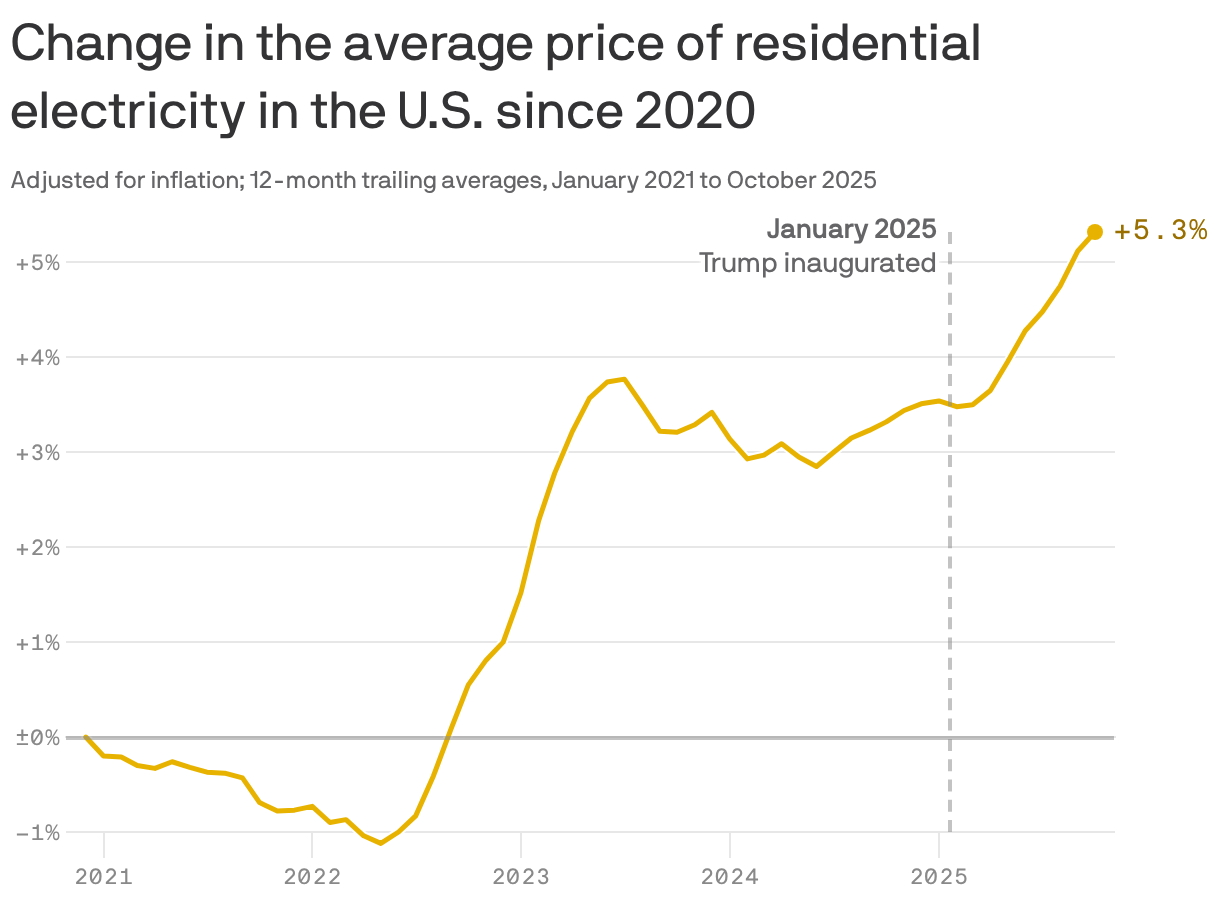
Yes, national average power prices have risen, but no, not as much as President Trump said.
Why it matters: With plug prices the political term du jour this election year, sifting through arcane power price data will be important to find the facts.
A federal judge ordered ICE agents to stop retaliating against peaceful protesters and observers in Minnesota.
Why it matters: Minnesota officials have banked on federal courts stepping in to deescalate tensions around the Trump administration's increasingly forceful immigration enforcement campaign in the Twin Cities.