The U.S. C-suite has seen record turnover this year, with a sharp jump in CEO exits across sectors and regions.
Why it matters: More turnover creates more uncertainty, and a big jump in companies naming interim leaders only compounds that.
The big picture: From January through November of this year, 1,991 CEOs announced their departures, according to a recent report from Challenger, Gray & Christmas.
With a month left of tracking, that's the highest figure since Challenger began tracking CEO changes in 2002, surpassing the previous peak of 1,914 exits in all of 2023.
Government/non-profit sector companies saw the highest turnover, clocking 438 exits year-to-date, up from 425 last year.
The Health Care/Products industry was close behind, recording 230 CEO exits so far this year, a significant bump from 165 in 2023.
What we're watching: The rate of new female CEOs fell slightly.
The number ticked down to 27.7% from 28.0% during the same period last year.
It's a stat worth watching, however. After a surge in 2020 and 2021, companies are now appointing fewer women and people of color to their boards, Axios' Emily Peck reported earlier this month.
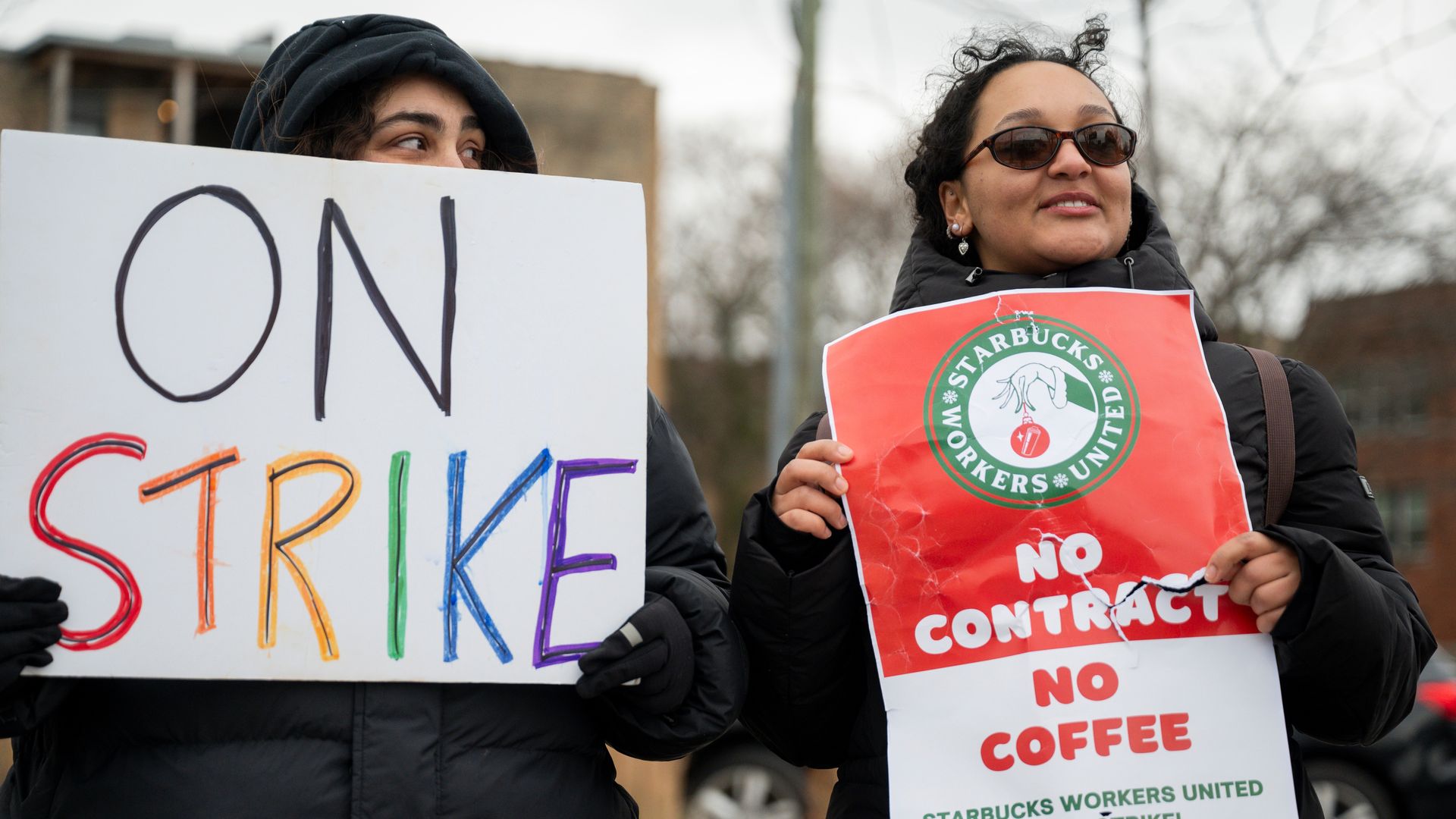
A handful of unionized Starbucks workers in three cities went on strike Friday morning, the first day of a work stoppage meant to last through Christmas Eve.
Why it matters: The strikes are timed for one of the coffee giant's busiest seasons of the year at stores in three big markets: Chicago, Los Angeles and Seattle.
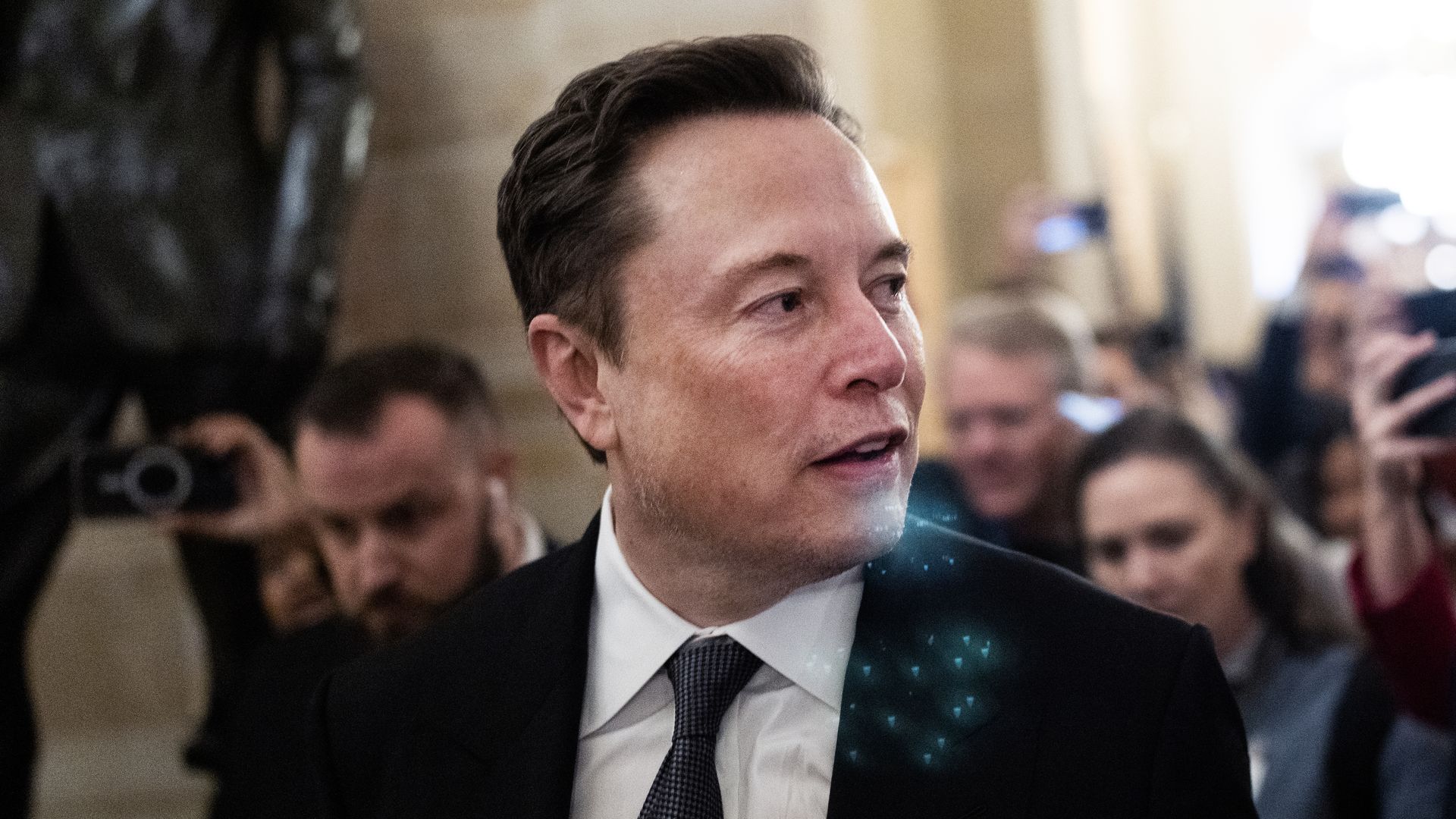
The big picture: The X owner has used his social media platform to promote his own ideologies. Since gaining more influence in the incoming Trump administration, the billionaire CEO appears to be exercising that power over politics in the U.S. and abroad.
Once again, nearly 600 readers answered the call, offering your projections for the economy of 2025. You're a notch more worried about the outlook than you were one year ago.
Why it matters: It suggests lurking risks for the year ahead that aren't reflected in a buoyant stock market and the generally sunny forecasts from mainstream forecasters and government officials.
Three editors at the crypto news site CoinDesk were let go this week, in a move that's being framed as a restructuring, a newsroom source familiar with the messaging to staff tells Axios.
Why it matters: The award-winning news organization, widely credited with the downfall of FTX and Alameda Research, went through a tumultuous period after rocky crypto markets hit the balance sheet of its former parent, the Digital Currency Group.
Zelle's operator and three major bank co-owners aren't protecting consumers from fraud on the platform, the Consumer Financial Protection Bureau alleged in a lawsuit Friday.
Why it matters: Customers of JPMorgan Chase, Bank of America, and Wells Fargo have lost more than $870 million collectively since Zelle launched in 2017, the suit claims.
Netflix will exclusively stream the next two Women's World Cups in the U.S. as part of a new media rights deal with FIFA.
Why it matters: It's another huge move into live sports for the streaming giant and signals Netflix could be a bigger player than executives publicly let on.
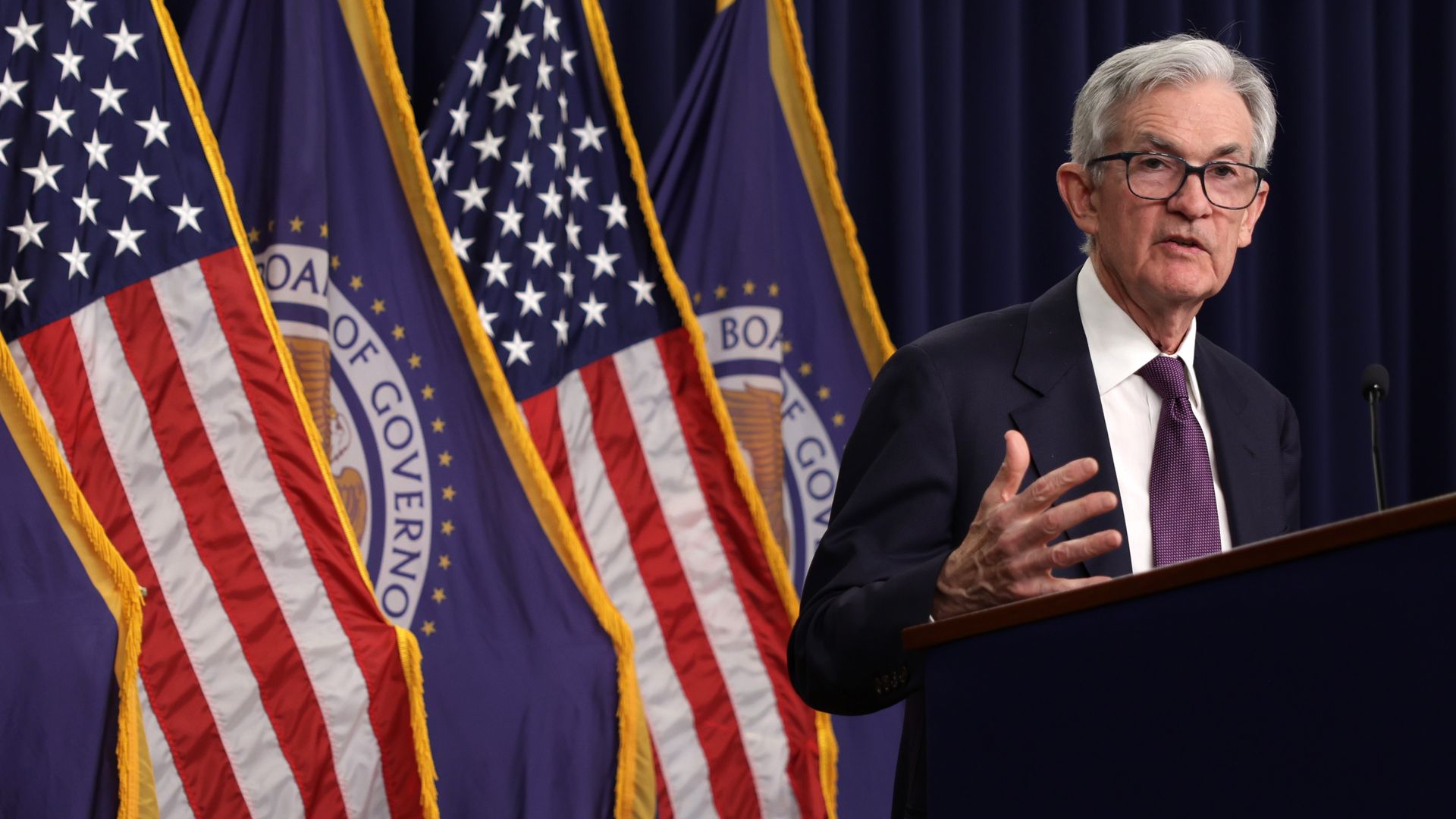
The Federal Reserve's preferred inflation gauge slowed in November, the Commerce Department said on Friday — the first indication of cooling price pressures in months.
Why it matters: Inflation remains too high for policymakers' comfort, but the data offers hope that progress bringing it down might just be bumpy, not completely stalling out.
Why it matters: The Columbus, Ohio-based company had about 27,700 employees and more than 1,300 stores in 48 states when it filed for Chapter 11 bankruptcy protection in September.
The big picture: The increase goes into effect Jan. 1, 2025, bringing the IRS rate to 70 cents per mile driven for business use, the federal agency announced in a statement Thursday.
The value of the stock market is more heavily concentrated than ever in a handful of companies — making its performance as a whole a function of how just a few megacap tech stocks are faring.
Why it matters: When a few companies dominate the market, that makes passive index investors less diversified, and therefore makes their portfolios riskier.
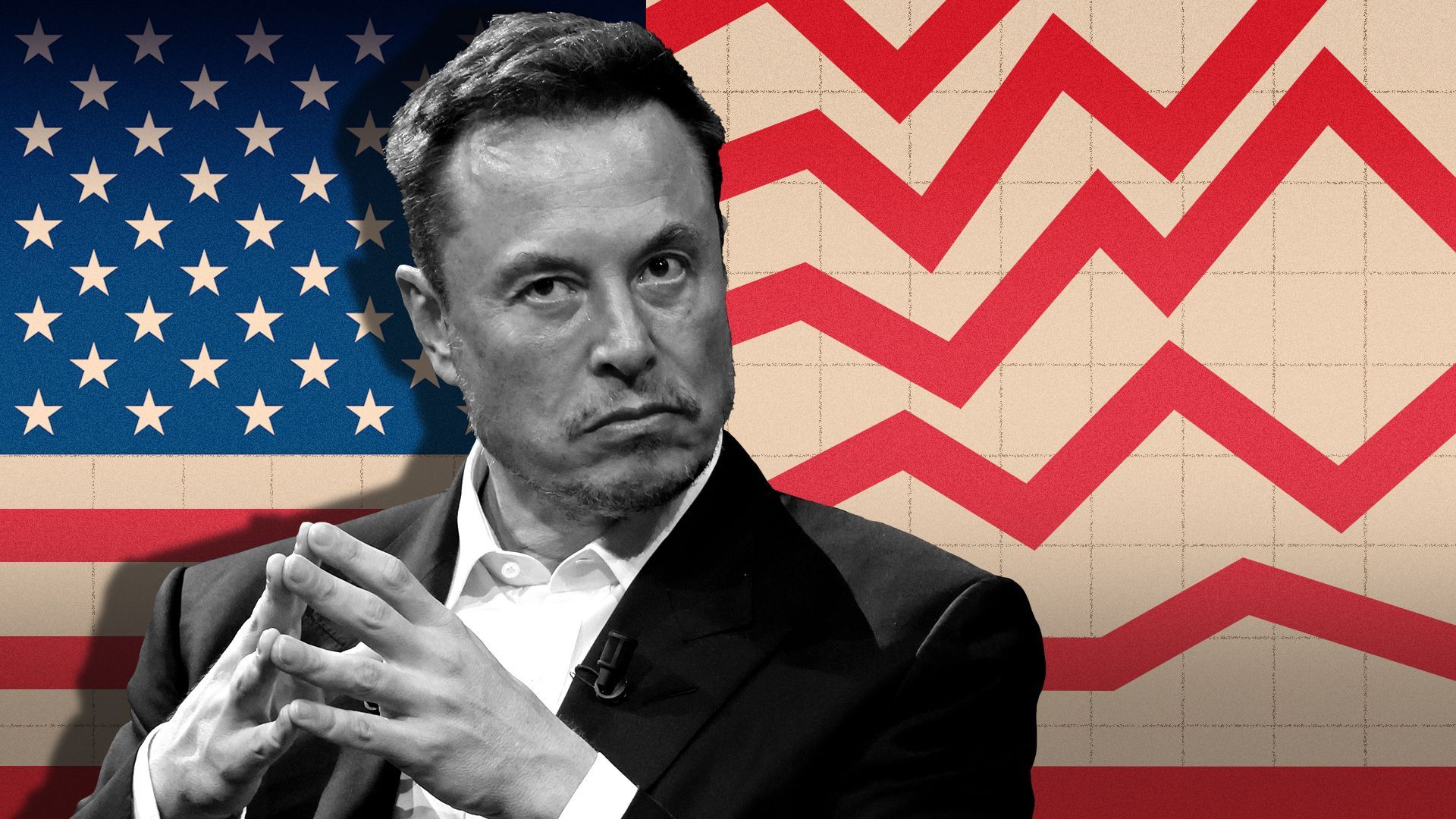
When things are going fine, blow everything up and risk it all. That principle has made Elon Musk the richest human alive — and he's now applying it to the government of the United States.
Why it matters: High risk can mean high return — or it can mean ruin.
Kara Swisher, the popular podcaster and pioneering tech journalist, is trying to round up a group of rich people to fund a bid for the Washington Post, she told us.
One big problem: Jeff Bezos, the owner, has shown no interest in selling.
This week's epic fight over funding the government captures the power — and flaws — of the new information ecosystem.
Why it matters: Elon Musk and his followers on X proved they dominate the Republican media industrial complex — using a digital revolt to kill a spending bill, and open the door to a government shutdown. That revolt was powered by some false information, tweeted with total self-certainty.
Why it matters: The holiday season is one of the company's busiest times of year, and the stoppages will hit three big markets — Los Angeles, Chicago and Seattle.






/2024/12/20/1734707971732.gif?w=3840)