Fed's go-to measure shows cooling inflation in November

Add Axios as your preferred source to
see more of our stories on Google.
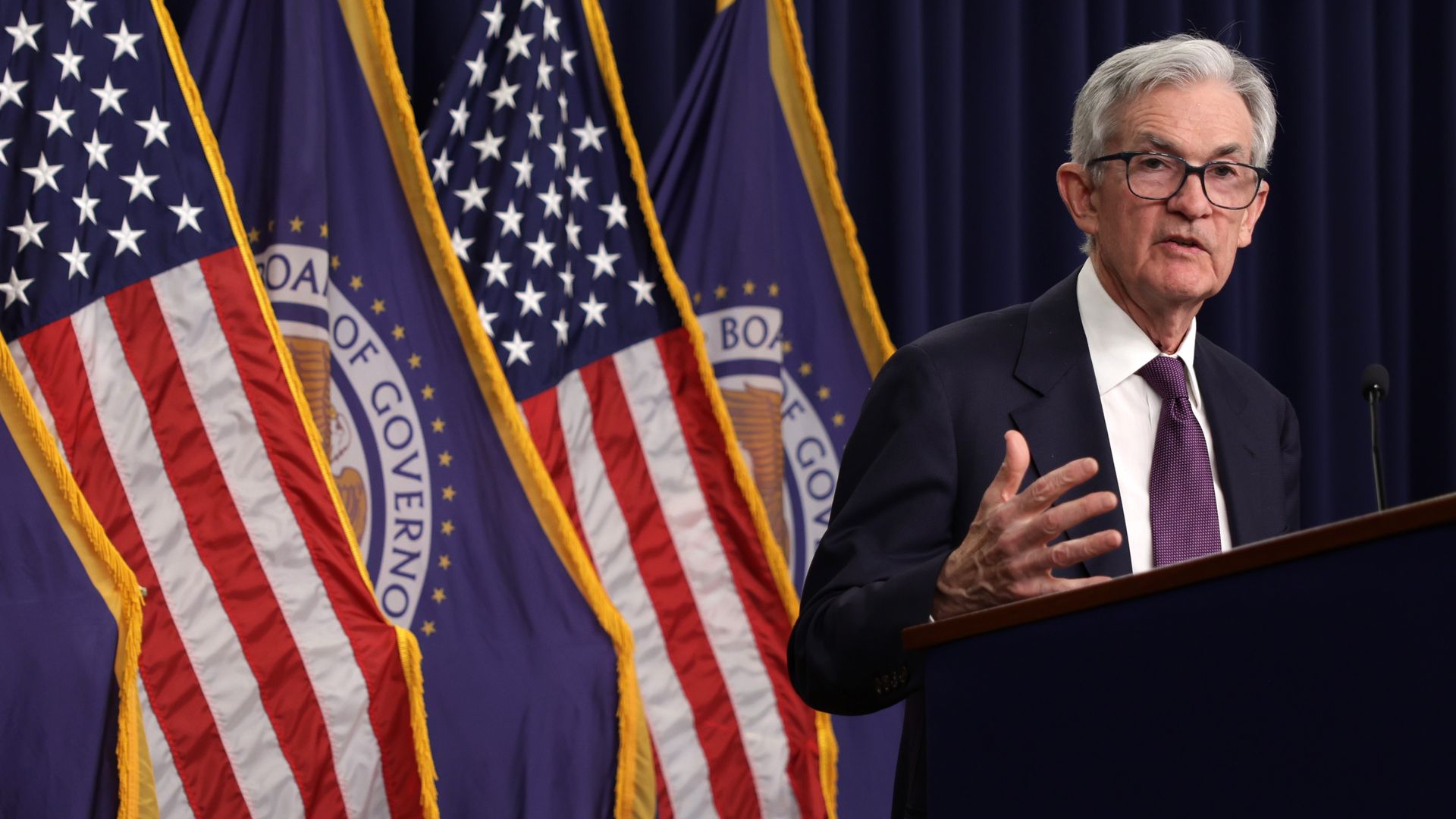
Federal Reserve chair Jerome Powell speaks during a press conference on Wednesday. Photo: Alex Wong/Getty Images
The Federal Reserve's preferred inflation gauge slowed in November, the Commerce Department said on Friday — the first indication of cooling price pressures in months.
Why it matters: Inflation remains too high for policymakers' comfort, but the data offers hope that progress bringing it down might just be bumpy, not completely stalling out.
By the numbers: The Personal Consumption Expenditures Price Index rose 0.1% last month, the smallest increase since August.
- The core measure watched closely by economists, which excludes energy and food prices, rose by a similar amount — the slowest pick-up in prices since May.
- Relief from the report was evident in the bond market. Yields on the 10-year bond fell back to 4.5% after nearly hitting 4.6% on Thursday, following a run-up driven by the Fed's pullback on rate cuts.
Yes, but: There was less inflation progress when compared to the same period a year ago.
- From the same month one year ago, the PCE price index increased 2.4%, a tick up from October. Core PCE held at 2.8%.
The big picture: The PCE data came alongside updates on disposable income and spending.
- Disposable income rose 0.3% in November, compared to the 0.7% increase the prior month. Adjusted for inflation, income rose 0.2% compared to the 0.5% increase in October.
- Personal consumption expenditures (a measure of consumer spending) was stronger last month, rising 0.4%, up a tick from October. In real terms, the increase was 0.3%, up from 0.1%.
What to watch: The Fed cut interest rates for the third time this week, but signaled fewer cuts in 2025 because of stickier inflation. The Consumer Price Index, a separate measure of inflation released last week, came in hot again for November.
- Cleveland Fed president Beth Hammack — who dissented against the decision to cut rates, preferring instead to keep rates steady — on Friday flagged risks of higher inflation in the months ahead.
- "The economy's momentum and recent elevated inflation readings caused me to revise up my inflation forecast for next year," Hammack wrote in a blog post explaining the reasoning behind her dissent.
