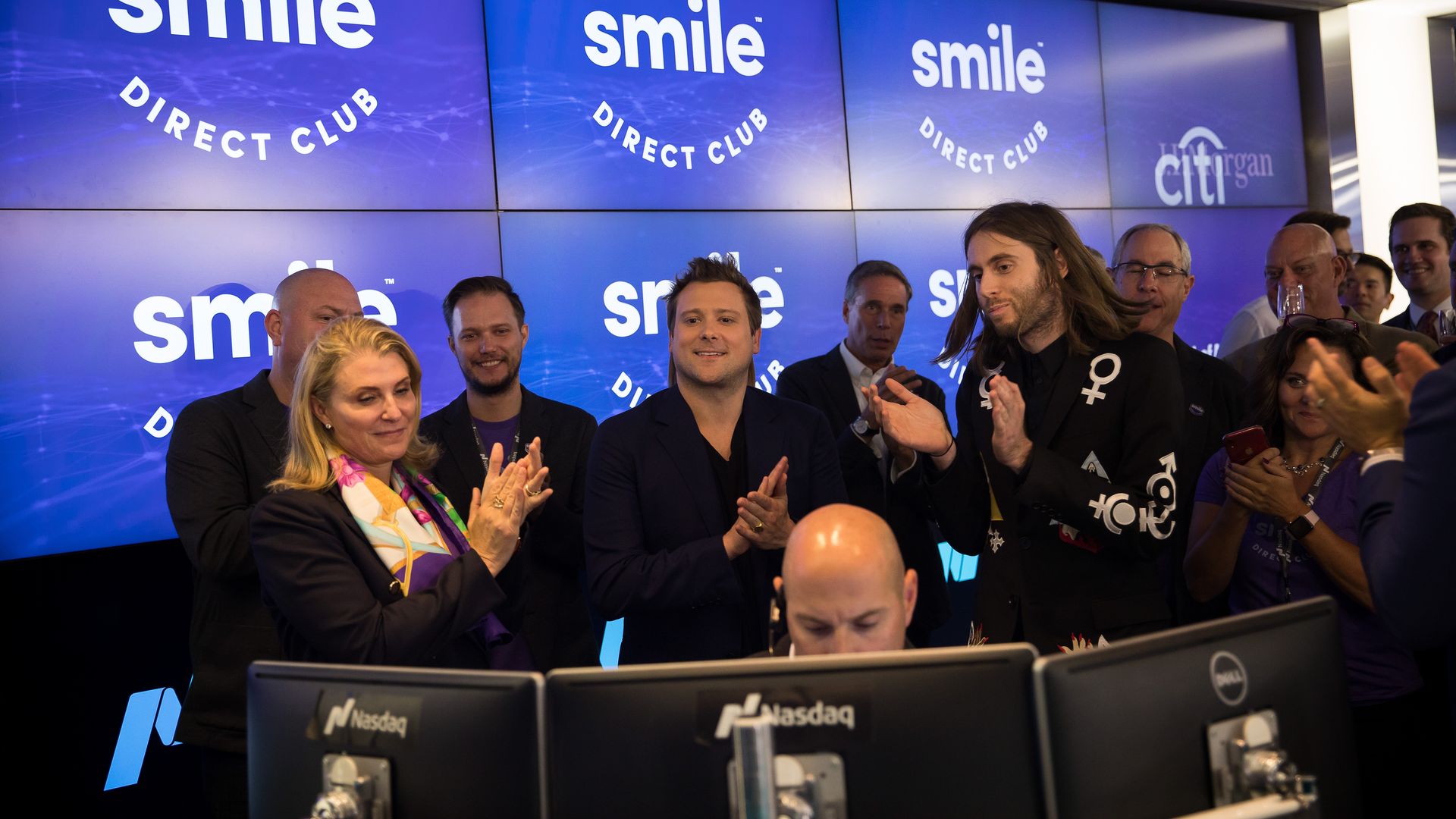
Why it matters: SmileDirectClub filed for Chapter 11 bankruptcy protection in September, having failed to profitably corner the promising but highly competitive world of removable, clear-plastic teeth aligners.
Carrier on Friday said that it's agreed to sell its building security business to Honeywell for $4.95 billion in cash.
Why it matters: This affirms that both Carrier and Honeywell, which have a combined $175 billion market cap, are moving forward with strategic transformation plans announced earlier this year.
The Biden administration announced Friday the largest federal investment in passenger trains in decades, with $8.2 billion in new funding for high-speed rail and other projects nationwide.
Why it matters: Rail travel is considered a relatively clean way to get lots of people from point A to B, especially compared with aviation — but the U.S. rail network is sorely lagging behind that of peer nations in Europe and Asia.
Alaska Airlines' proposed merger with Hawaiian Airlines would mark the latest in a decades-long run of industry consolidation that's left travelers with just five major carriers to choose from, per an Axios analysis of Airlines for America data.
Driving the news: Today's five biggest airlines — Delta Air Lines, American Airlines, United Airlines, Alaska Airlines and Southwest Airlines — have gobbled up 42 others since 1960.
The U.S. labor market added 199,000 jobs in November, while the unemployment rate fell to 3.7% from 3.9%, the Labor Department said on Friday.
Why it matters: The jobs market surprised to the upside, with more jobs than economists anticipated, easing concerns that the labor market is rapidly cooling.
If your apps have been bombarding you with stats about your year in music, food, books, or even language learning, there's a simple explanation — they're trying to capture a little bit of Spotify's marketing magic.
Why it matters: Spotify Wrapped — a year-end analysis of your listening habits — is the Holy Grail of digital advertising, marketing experts say. Other companies are trying to mimic its success, but few have come close.
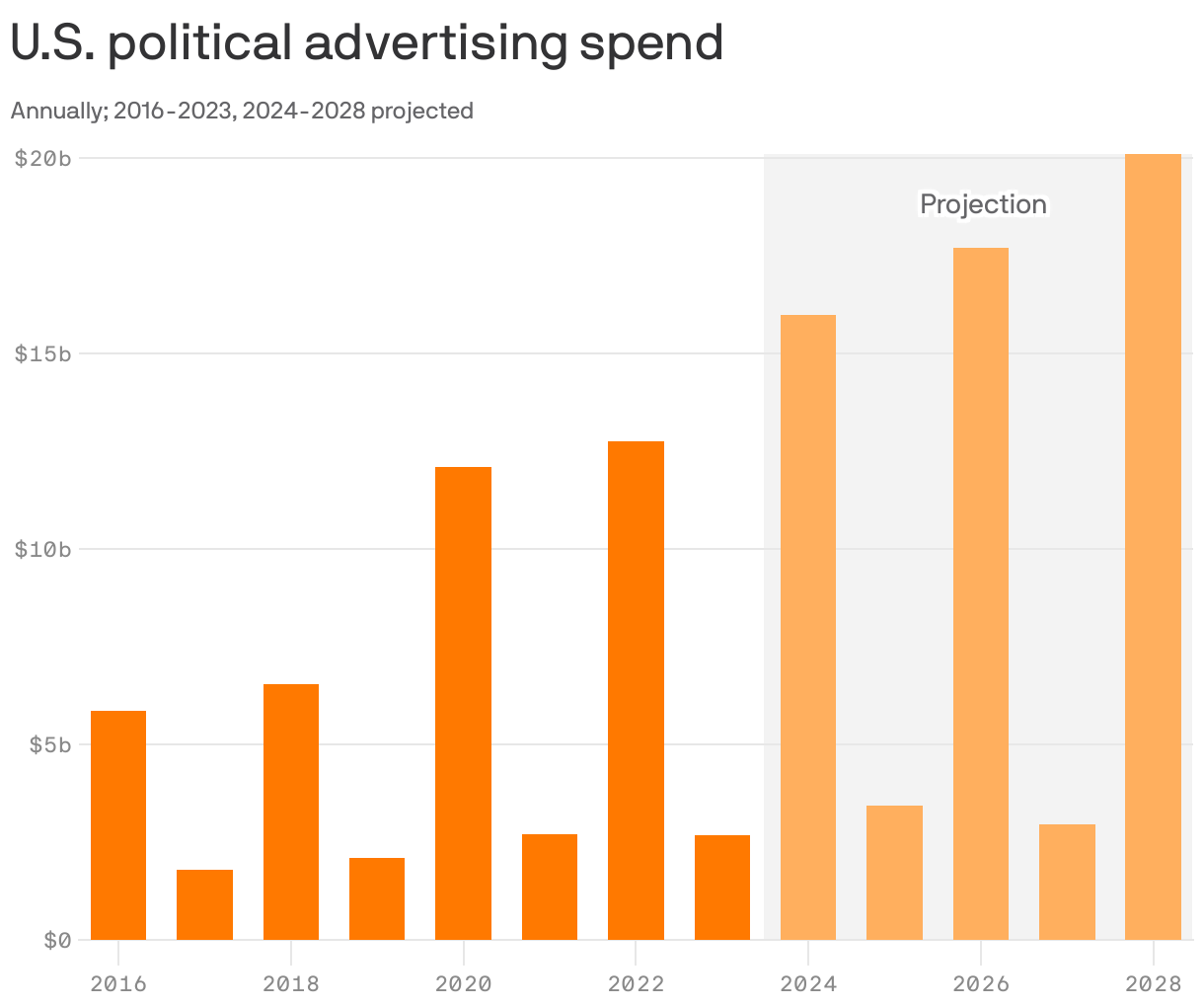
The advertising dollars spent on U.S. elections and advocacy issues will grow to roughly $16 billion next year, up 31.2% compared to the last presidential election in 2020, according to a new forecast.
Why it matters: The U.S. political ad market has gotten so big that next year it’s expected to become the 10th largest ad market in the world, surpassing all of Australia.