Retiring FBI chief on "60 Minutes" addresses criticism from Trump, Biden

Add Axios as your preferred source to
see more of our stories on Google.
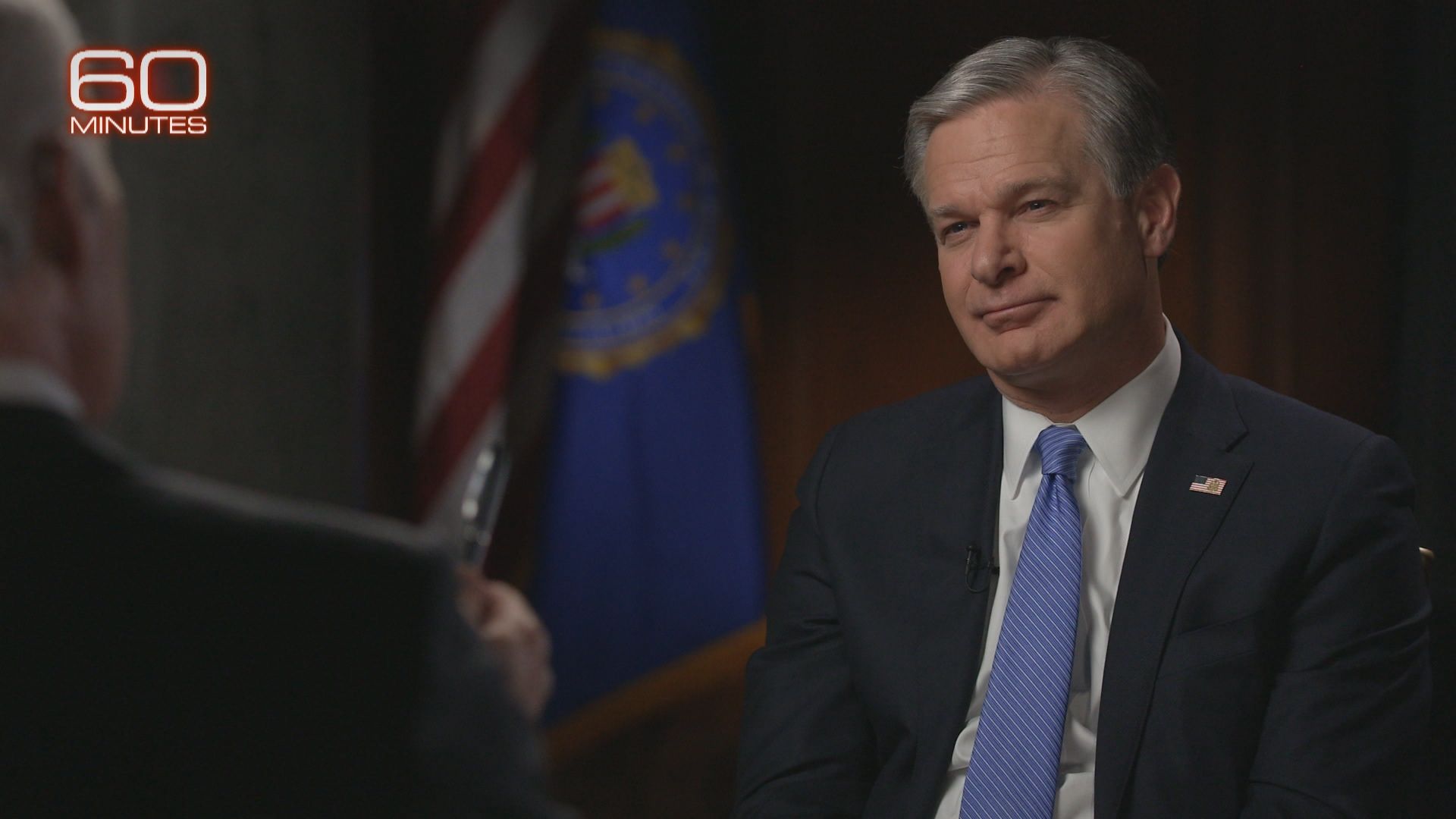
FBI director Christopher Wray being interviewed on CBS News' "60 Minutes." Screenshot: CBS News/"60 Minutes"
FBI director Christopher Wray said in a "60 Minutes" interview airing Sunday he's retiring early because he didn't want to thrust the bureau "deeper into the fray" after facing intense criticism from President-elect Trump.
Why it matters: Trump nominated Wray in 2017 for what's typically a 10-year term, but the FBI chief has in recent years been criticized by the Republican leader and his allies over issues related to Trump and President Biden.
- During the "60 Minutes" interview, Wray addressed being criticized over FBI investigations by both a Republican and a Democratic president.
Context: The president said after issuing a presidential pardon for his son Hunter Biden following his conviction on felony gun charges and guilty plea on felony tax charges that he believed "raw politics has infected this process and it led to a miscarriage of justice."
What he's saying: "This is a hard job. You're inevitably going to make different people angry, often very powerful people," Wray said on "60 Minutes."
- "But part of the essence of the rule of law is to make sure that facts, and the law, and proper predication drive investigations, not who's in power, not who wants it to be so or not so," he told CBS' Scott Pelley.
- On his relationship with Trump souring after the FBI investigated alleged attempts to overturn the 2020 election results, Wray said an investigator's job was to "follow the facts wherever they lead, no matter who likes it."
Zoom in: Wray faced criticism following the FBI's search of Trump's Mar-a-Lago home in 2022, part of an investigation into the storage of classified documents. The search ultimately led to one of two since-dismissed federal criminal cases involving the president-elect.
- Wray told Pelley the FBI strived to follow the rules throughout their investigation, and he believed they did this.
- A search warrant is "not anybody's first choice" and investigators always try less intrusive means, like receiving information voluntarily or, if not, via a subpoena, said Wray, who described himself during the interview as a "conservative Republican."
- "Only if, after all that, we learn that the agents haven't been given all of the classified material and in fact those efforts have been frustrated, even obstructed, then our agents are left with no choice but to go to a federal judge, make a probable cause showing, and get a search warrant," he said. "That's what happened here."
- Wray said he hadn't had "any interaction with the Biden White House about investigations into the former president and neither to his knowledge had anyone else from the FBI.
The bottom line: Wray said in his 7.5 years of experience as FBI chief he'd seen "people often claim to be very interested in independence and objectivity until independence and objectivity lead to an outcome they don't like."
- He added: "Truth is truth, not necessarily what either side wants it to be. And ultimately all we can do at the FBI is make sure that we stay focused on doing the work in the right way. Following our rules and not letting preferences, partisan or otherwise drive or taint the approach."
Threat level: Wray told Pelley that China's government targeting U.S. civilian critical infrastructure was the biggest threat the incoming Trump administration faced.
Meanwhile, "the most challenging type of terrorist threat we face" is online radicalization from extremist groups.
- Wray noted the FBI's investigation into the New Orleans New Year's Day terrorist attack indicated the suspect was "radicalized online" and he "appears to have been inspired — from afar — by ISIS."
Flashback: House GOP drops plan to hold FBI director in contempt
Editor's note: This article has been updated with new details throughout.
