What to know about Hezbollah's ties to Iran and its conflict with Israel


Add Axios as your preferred source to
see more of our stories on Google.
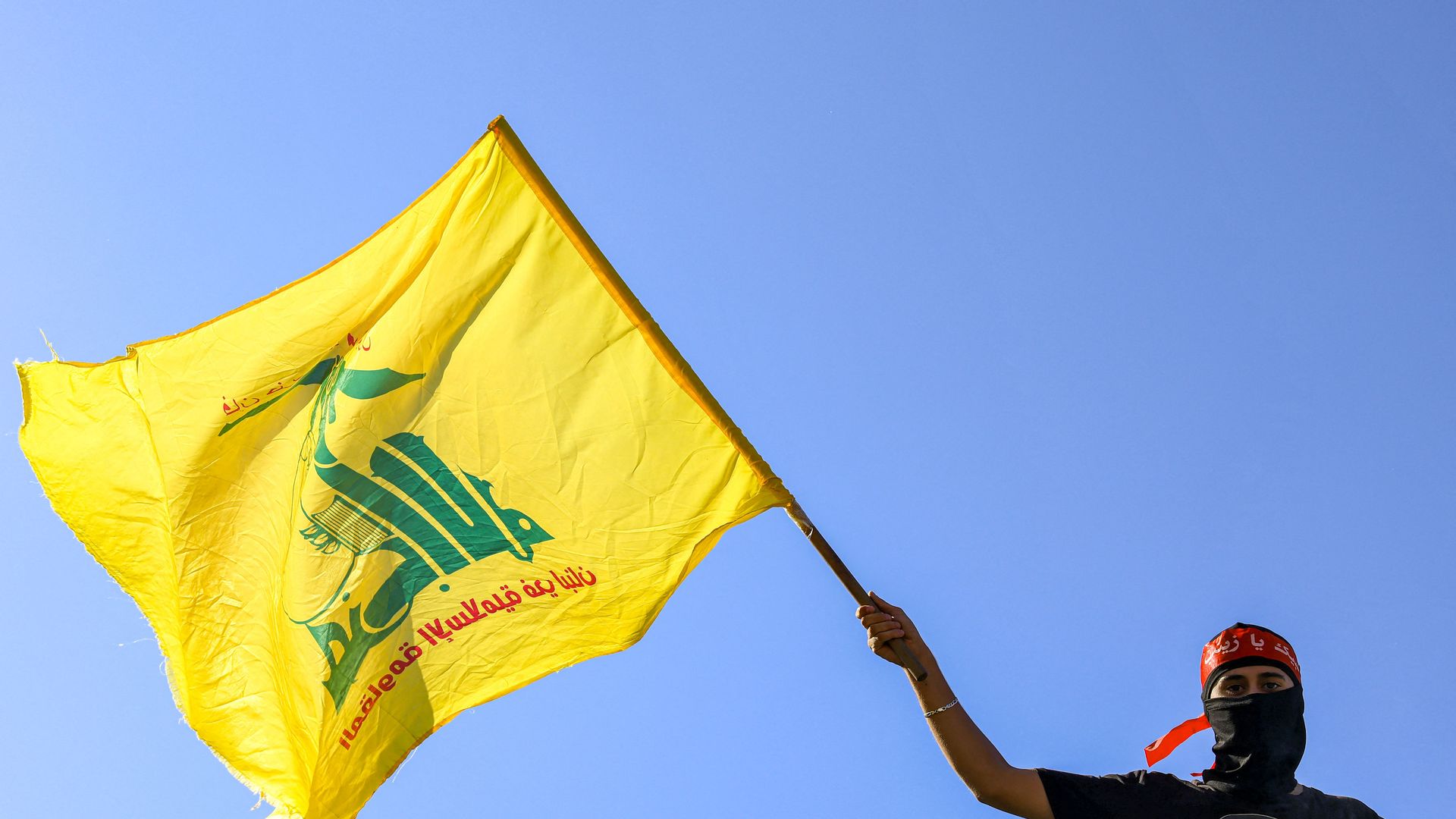
A masked demonstrator waves a Hezbollah flag during a demonstration supporting the Palestinians in Beirut on Oct. 20. Photo: Joseph Eid/AFP via Getty Images
Hezbollah, the Iran-backed Shia Muslim militant and political group based in Lebanon, looms large in U.S. concerns about a dramatic escalation in the conflict unfolding in the Middle East.
The latest: Israel launched a ground operation into southern Lebanon Tuesday, days after killing Hezbollah's leader Hassan Nasrallah in an airstrike in Beirut.
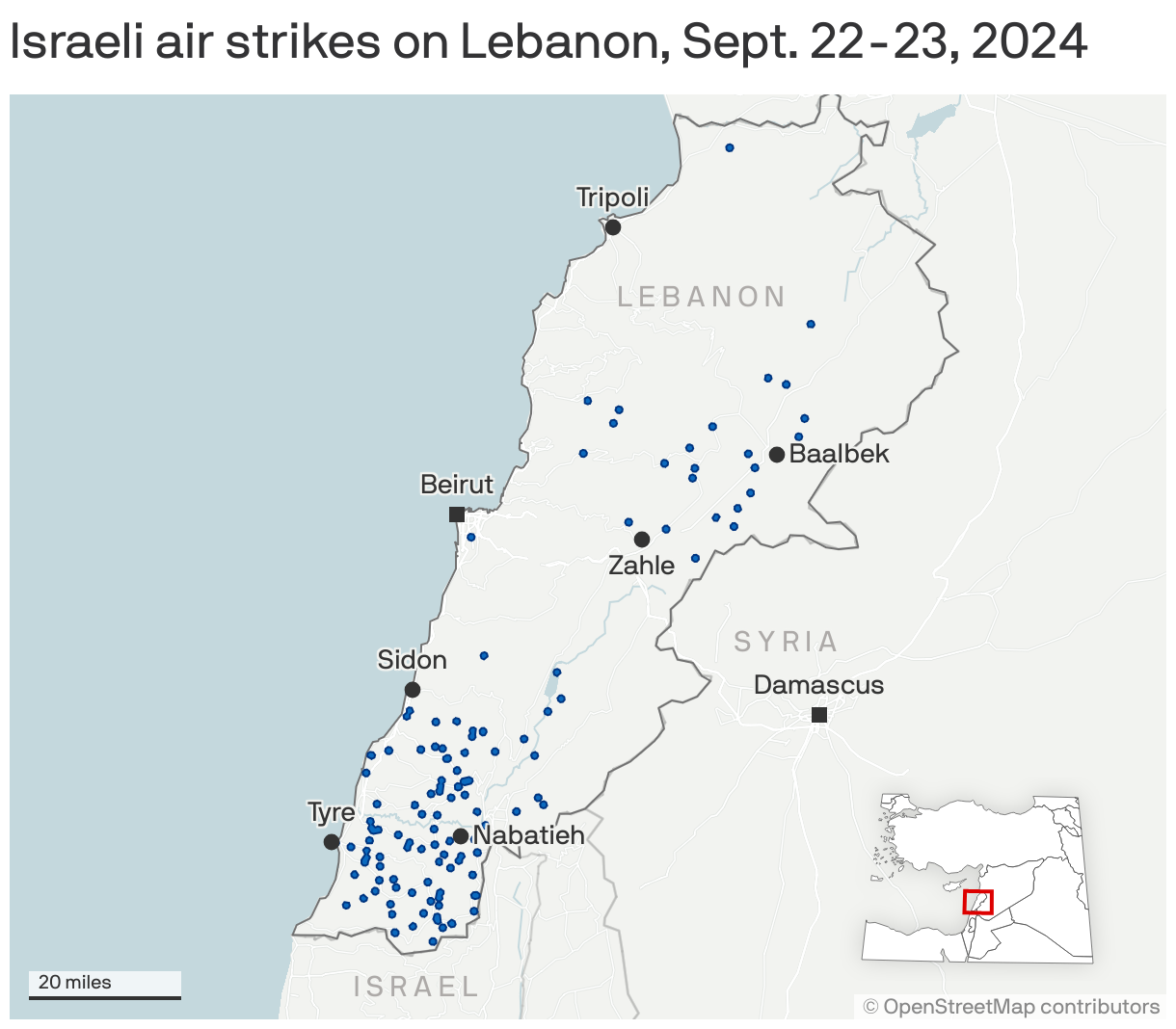
State of play: In September, Israel launched the most wide-ranging and deadly barrage of strikes on Lebanon since the 2006 war between Israel and Hezbollah, heightening fears of all-out war.
- The escalating conflict has killed more than 1,000 people since mid-September, many of them civilians. There has also been a massive displacement of civilians in southern Lebanon.
- Hezbollah has also fired missiles towards Israel, including medium-range rockets that reached farther into Israel than previous attacks since Oct. 8.
- That followed a stunning Israeli intelligence operation that involved the remote detonation of pagers and Walkie-Talkies used by Hezbollah, and killed more than 40 people and wounded thousands of others.
The big picture: Since the war in Gaza began on Oct. 7, Israel and Hezbollah have launched scores of cross-border strikes against each other, but the recent fighting is a dramatic escalation.
- The Biden administration is highly concerned it is escalating into an all-out war between Israel and Hezbollah — and potentially even a regional war involving Iran.
Hezbollah's founding and resistance to Israel
Founded following the 1982 Lebanon War, Hezbollah opposes Israel and Western powers operating in the Middle East and functions as a proxy of its biggest benefactor, Iran.
- Receiving military training and hundreds of millions of dollars annually from Iran's Islamic Revolutionary Guard Corps, Hezbollah was initially made up of fighters recruited from various Shia factions that had resisted the Israeli invasion of Lebanon.
- For its first nearly two decades, Hezbollah fought to push the Israel Defense Forces (IDF) from southern Lebanon by attacking Israeli military targets and civilians. Israel withdrew from Lebanon in 2000.
It also formed a political party, called the Loyalty to the Resistance Bloc, which participated in its first election in 1992.
- Hezbollah's political wing is now a leading political player in the country, including in the current parliament.
- Hezbollah and Hamas, a predominantly Sunni group with a militant wing that carried out the Oct. 7 attack on Israel, have had a turbulent relationship in the past. The two have been divided by sectarian differences and rival regional alliances.
- But even before they began to restore relations in the late 2010s after Hamas renewed its connection with Iran, they were united in their opposition to the existence of the state of Israel.
Hezbollah's military capabilities
Hezbollah's military arm now has an estimated 20,000 fighters and 30,000 reservists.
- A 2018 report from the Center for Strategic and International Studies called Hezbollah "the world's most heavily armed non-state actor."
- Estimates suggest the paramilitary group has between 150,000 and 200,000 rockets, mortar bombs and missiles. The arsenal may include medium-to long-range precision missiles and anti-tank and anti-aircraft missiles.
- Its fighters are also believed to be equipped with drones and self-produced UAVs with ranges of up to around 250 miles for attack and intelligence missions.
Enmity with Israel and the U.S.
Though the group has previously stated it rejects violence as a way to gain power and promote Islam, Hezbollah leader Hassan Nasrallah openly called for the destruction of Israel and for combatting Western powers through militant means before his death.
- "Israel is our enemy. This is an aggressive, illegal, and illegitimate entity, which has no future in our land," Nasrallah said in 2005. "Its destiny is manifested in our motto: 'Death to Israel.'"
Hezbollah has been deemed responsible for multiple international terrorist attacks against Israeli civilians and diplomats, including two bombings in Buenos Aires in the 1990s that killed 115 people in total and a 2012 bus bombing in Bulgaria that killed 6.
- It has also been accused of carrying out terrorist attacks against U.S. targets, including two separate bombings against the U.S. embassy and a Marine Corps barracks in Beirut in 1983 that killed 63 people and 241 service members, respectively.
The U.S., U.K., Germany, most members of the Arab League and Israel have designated Hezbollah a terrorist organization, while the European Union describes only its military wing as a terrorist group.
- Nasrallah and other Hezbollah members are also designated global terrorists and subject to U.S. sanctions.
Hezbollah's response to the 2023 Israel-Hamas war
Hezbollah leaders have repeatedly vowed that Israel will pay a price for a ground offensive into the Gaza Strip, and have said Hezbollah's rocket attacks into Israel are an attempt to keep the IDF from focusing its full attention on Gaza.
- Hamas officials have publicly called for stronger actions from Hezbollah since the war in Gaza began.
- On Oct. 25 2023, Hezbollah leaders including Nasrallah met with officials from Hamas and Palestinian Islamic Jihad to discuss next steps to achieve an "all-out victory" over Israel.
Nasrallah warned in a speech last November that daily skirmishes along the Israeli-Lebanese border could escalate into an all-out war.
- Nasrallah said the escalation would depend on what is going on in Gaza and Israel's actions against Lebanon, cautioning that a preemptive strike on Hezbollah's forces would be "the most foolish thing Israel could do."
- He also said victory for Gaza was the main goal of the war and that such a victory is in Lebanon's and the rest of the Arab world's interest.
Israel targets Hezbollah leaders
The Israeli airstrike that killed Nasrallah in late September came shortly after Netanyahu addressed the UN General Assembly in New York. Nasrallah was the latest in a series of high-ranking Hezbollah leaders that Israel has targeted this year.
- The IDF killed Hezbollah's top military commander, Fuad Shukr, in July in what it called a "targeted airstrike" in retaliation for a rocket attack from Lebanon that killed 12 children and teens in Israel.
- Hezbollah's head of military operations, Ibrahim Aqil, and 15 other senior commanders were killed in September in an airstrike on a Beirut neighborhood. Lebanon's health ministry said left at least a dozen others were killed in that strike.
- Israel attempted to kill another senior Hezbollah military commander, Ali Karaki, in an airstrike later that week, but failed to do so, according to Hezbollah.
War could further devastate Lebanon
It's unclear if Hezbollah has broad domestic support within Lebanon to intervene in the Israel-Gaza war, or if Lebanon could afford being dragged into another war between Hezbollah and Israel.
- The country has been rocked by multiple crises in recent years, including the COVID-19 pandemic and a massive fertilizer explosion in the Port of Beirut in 2020 that killed more than 200 people and left roughly 250,000 others homeless.
- It has also experienced one of the worst economic crises in recent world history, with GDP per capita dropping by 36.5% between 2019 and 2021.
- Severe fighting between Hezbollah and Israel, which has already forced thousands to flee from the south, would exacerbate dire conditions for ordinary Lebanese citizens and strain its already over-stretched public services, including its fragile health care system.
- Israel's advanced military capabilities also make escalation a dangerous proposition for Hezbollah itself.
Zoom out: Hezbollah's ties to Syria and Yemen
Hezbollah for years has helped Syrian President Bashar al-Assad — another key ally to Tehran — solidify his hold on power amid the ongoing Syrian civil war. Many of its fighters are veterans of Syria's brutal civil war.
- Hezbollah's actions in Syria caused a breakdown in its relationship with Hamas, which opposed Assad, though the relationship appears to be at least partially repaired.
- Iran supplies arms to Hezbollah in Lebanon via Syria — one likely reason for Israel's strikes inside Syria after the war began.
- Hezbollah has also been accused of providing weapons, technology and training to the Yemen-based Houthis rebels, which are also backed by Iran.
Go deeper:
- What to know about the Gaza Strip and who controls it
- How the Israel-Hamas war is affecting neighboring countries
- What to know about Hamas' tunnel system beneath Gaza
- What to know about Israel's military strength
Editor's note: This story was updated with additional developments.
