Hezbollah leader Hassan Nasrallah killed in Israeli airstrike

Add Axios as your preferred source to
see more of our stories on Google.
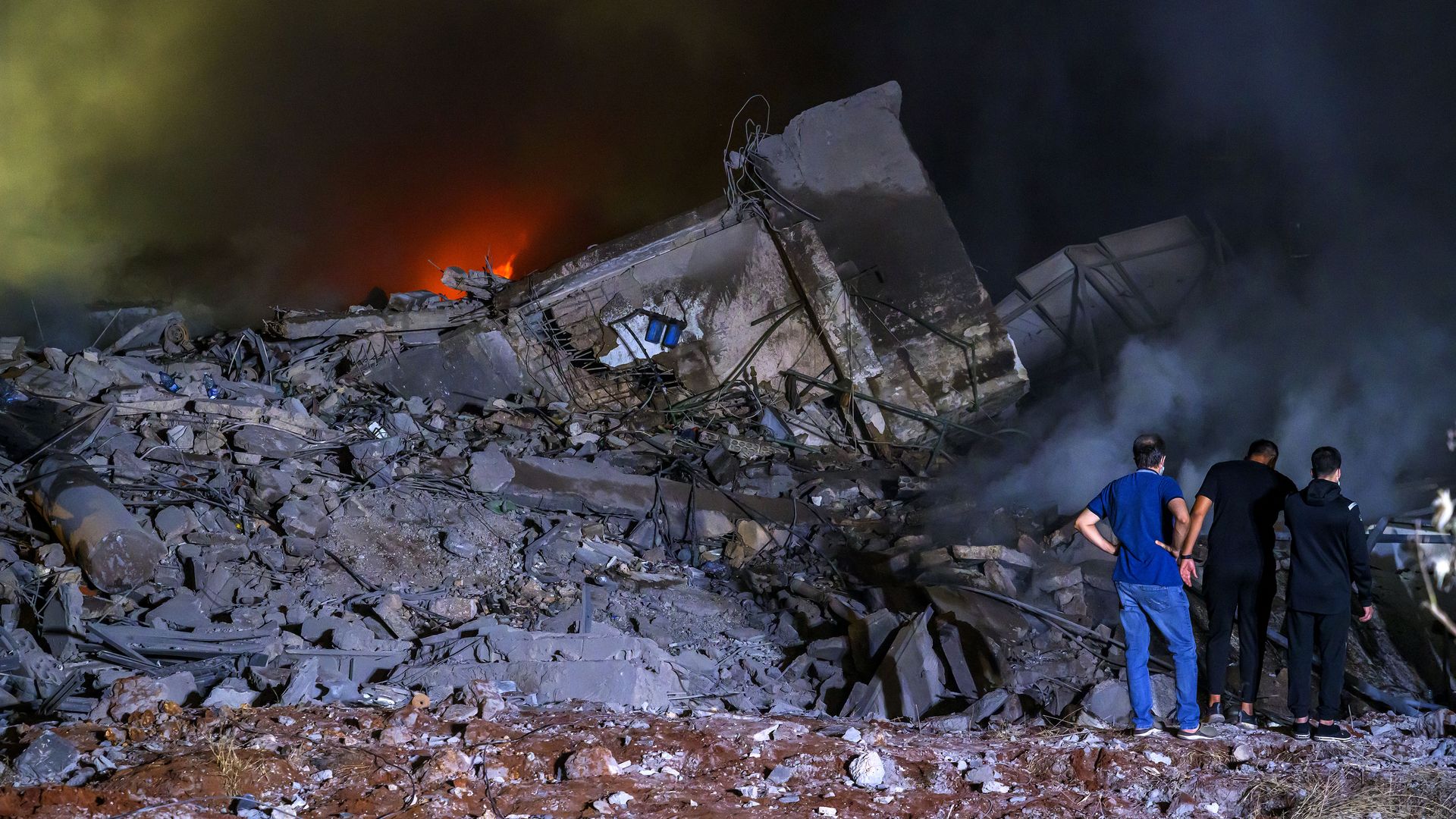
Rescue workers at the site of Israel's bombing of Hezbollah central headquarters in Beirut. Photo: Marwan Naaman/picture alliance via Getty Images
Hezbollah leader Hassan Nasrallah was killed in the Israeli airstrike on the militia's central headquarters in Beirut on Friday, the militant group confirmed.
Why it matters: Nasrallah was arguably the most powerful figure in Lebanon, one of the most influential in the Middle East, and Iran's closest ally in the region.
- Hezbollah said in a statement it is going to continue its struggle against Israel and stressed that Nasrallah's death "will only make the resistance stronger."
- Israel Defense Forces also said Hezbollah's southern front commander, Ali Karaki, was killed. Karaki had survived another Israeli assassination attempt days earlier.
- The Islamic Revolutionary Guards Corps confirmed on Saturday that its commander in Lebanon, Brigadier Gen. Abbas Nilforoushan, was killed in the strike.
How it happened: In an operation codenamed "New Order," the IDF dropped dozens of 2000-lb. bunker-buster bombs on Hezbollah central headquarters, which it said was located in an underground bunker below a compound of six residential buildings in southern Beirut.
- Lebanon's health ministry said at least six people were killed and 91 wounded in the massive strike, which leveled multiple large apartment buildings. That toll is likely to increase.
Zoom out: More than 720 people have been killed in Lebanon as 11 days of intense fighting between Israel and Hezbollah has escalated into war.
- The White House had been pushing for an Israel-Hezbollah ceasefire prior to the Israeli strike, and President Biden and other top officials denied an Israeli claim that they were notified prior to the attack.
- IDF Chief of Staff Gen. Herzi Halevi said Nasrallah's killing "is not the end of our toolbox. The message is simple: anyone who threatens the citizens of Israel — we will know how to reach them."
The big picture: Nasrallah was appointed Hezbollah leader in 1992 at just 32, and over three decades turned his militia into a formidable military and political force.
- Nasrallah became a kingmaker in Lebanon with effective veto power over senior political appointments.
- Hezbollah also extended its regional influence, sending thousands of fighters to Syria to help save President Bashar al-Assad's regime, to Iraq to fight with Shia militias, and to Yemen to fight alongside the Houthis and against Saudi Arabia.
- Under Nasrallah, Iran armed Hezbollah with sophisticated weapons including rockets, missiles and drones, making the militia a larger and better-equipped military than many controlled by nation states.
- Nasrallah's close ties Iran's supreme leader, Ali Khamenei, make it likely that Iran will seek to retaliate, particularly if an Iranian general is confirmed to have been killed alongside him.
What's next: One potential successor for Nasrallah is Hashim Safi al-Din, who heads Hezbollah's executive council. It's unclear if he was in the bunker during the Israeli attack.
Editor's note: This story has been updated with Hezbollah's statement confirming Nasrallah's death and to reflect that the Islamic Revolutionary Guards Corps confirmed Nilforoushan was killed in the strike.
