Israeli strikes kill 492 in Lebanon: Lebanese Health Ministry

Add Axios as your preferred source to
see more of our stories on Google.
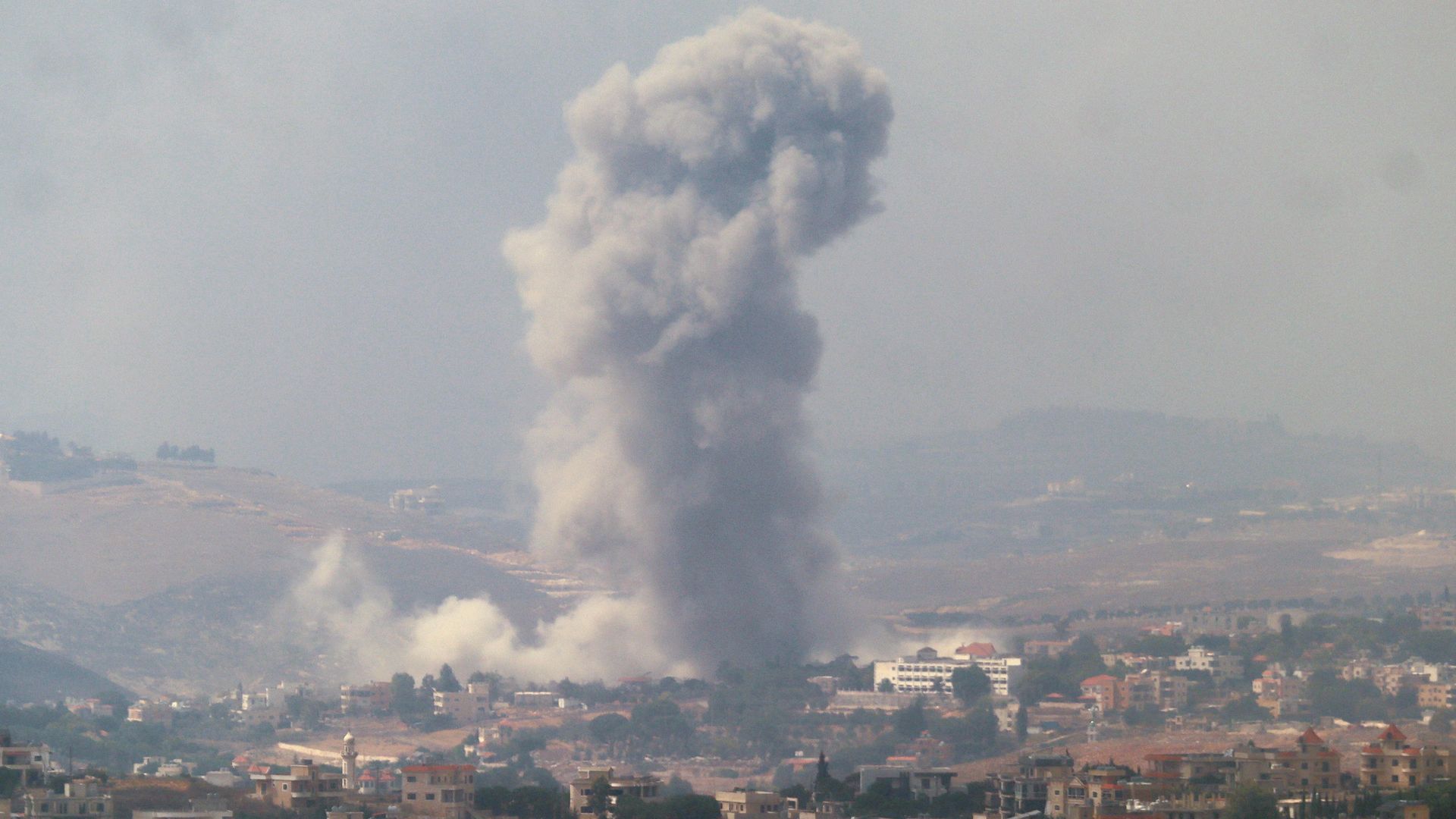
Smoke billows from a site targeted by Israeli shelling in the southern Lebanese village of Khiam. Photo: Rabih Daher/AFP via Getty Images
Lebanon's health ministry said at least 492 people were killed and more than 1,600 wounded in a massive wave of Israeli airstrikes in southern Lebanon on Monday.
Why it matters: The barrage of strikes come with Israel and Hezbollah staring down the possibility of all-out war. They were the most wide-ranging and deadliest the Israel Defense Forces have launched inside Lebanon since the 2006 war between Israel and the militant group.
The latest: Lebanon's health minister said there is a massive displacement of civilians from southern Lebanon after the Israeli airstrikes. Those killed in the attacks included women, children, and paramedics.
- The IDF said 200 rockets were fired by Hezbollah on Monday. Dozens of rockets were launched toward the Haifa area and farther south in Israel. Sirens went off in Israeli settlements in the occupied West Bank about 60 miles south of the border with Lebanon.
- The Israeli cabinet decided to announce an emergency across the country in preparation for potentially even longer-range rocket attacks from Lebanon.
Driving the news: The IDF said the strikes were directed at Hezbollah rockets and cruise missiles hidden inside civilian homes in southern Lebanon.
- While it's unclear how many of those killed were Hezbollah militants, a mass casualty event in Shia villages in southern Lebanon — the militia's base of support — will likely lead to further escalation.
- U.S. officials have been warning the Israelis that causing mass civilian casualties on the Lebanese side would push Hezbollah to increase its attacks and continue the slide down the slippery slope towards war.
- The attacks come a day after Hezbollah fired medium-range rockets toward the Israeli city of Haifa, in response to a series of deadly Israeli attacks last week. Israel said at least 10 civilians were wounded but most of the rockets were intercepted. Israel retaliated, killing at least three people in Lebanon, including a Hezbollah member, and wounding several others, according to the Lebanese health ministry and to Hezbollah.
How it happened: On Monday morning local time, the IDF called on Lebanese civilians in southern Lebanon to leave houses where Hezbollah had positioned rockets and cruise missiles.
- The IDF said it then sent text messages and conducted phone calls to thousands of Lebanese civilians asking them to leave certain areas in their villages, which were close to Hezbollah weapons caches and rocket positions inside civilian homes.
- The IDF said it attacked 1,100 targets on Monday morning local time based on intelligence that it claimed showed Hezbollah was planning to use these rockets and cruise missiles for an imminent attack.
- The IDF also issued a public warning to Lebanese civilians in the Beqaa Valley, where Hezbollah has many of its key military facilities, and said it was going to attack Hezbollah weapons depots. The attacks began 30 minutes later.
Thousands of Lebanese civilians started fleeing southern Lebanon to the north on Monday.
- An Israeli defense official claimed to Axios that hundreds of cruise missiles were destroyed, and that Hezbollah would struggle to respond because many of its missiles had been knocked out.
- Israeli defense minister Yoav Gallant said in a statement that Israel is "decimating" the capabilities Hezbollah has built for 20 years. Tens of thousands of rockets, including precision missiles, were destroyed in the Israeli airstrikes on Monday, the statement continued.
What they're saying: Israeli Prime Minister Benjamin Netanyahu said in a statement on Monday after visiting the Israeli Air Force command center that Israel's policy is to eliminate any threat before it materializes.
- "Whoever tries to hurt us, we hurt him even more. I promised that we would change the balance of power in the north — this is exactly what we are doing," Netanyahu said.
Editor's note: This story has been updated throughout with new details.
