Israel begins ground operation in southern Lebanon

Add Axios as your preferred source to
see more of our stories on Google.
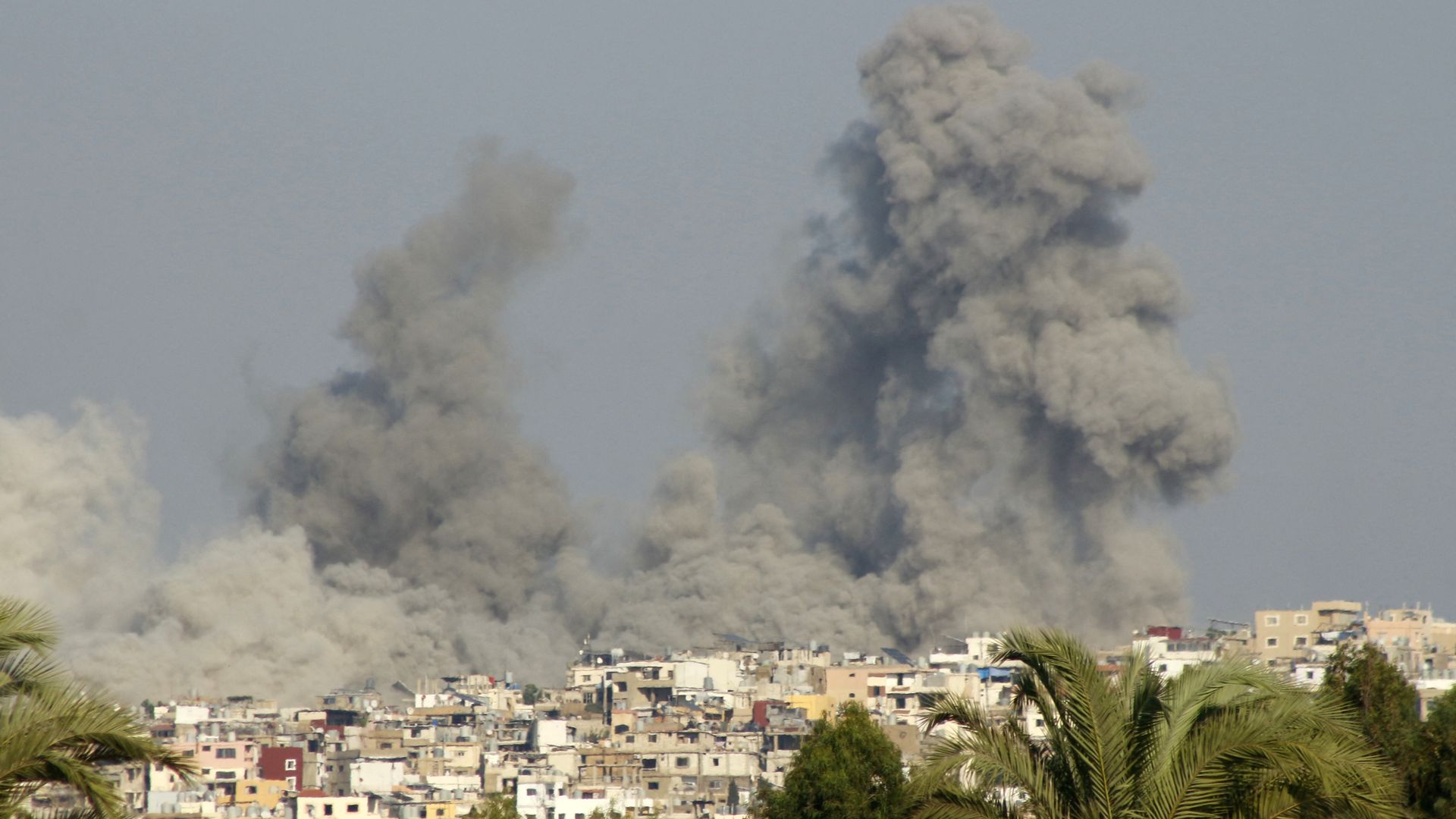
Smoke billows after an Israeli strike on a village near the southern Lebanese city of Tyre on September 29. Photo: Kawnat Haju/AFP via Getty
Israel launched a ground operation into southern Lebanon early on Tuesday local time, the IDF said in a statement.
Why it matters: Just days after killing Hezbollah leader Hassan Nasrallah, Israel is launching a dangerous new phase of its escalating conflict with the militant group by undertaking its first ground invasion of Lebanon since 2006.
Driving the news: Israel Defense Forces said troops began "limited, localized and targeted raids" against Hezbollah along the border area of southern Lebanon.
- "These targets are located in villages close to the border and pose an immediate threat to Israeli communities in northern Israel," the IDF said in a statement, adding that the Israeli Air Force and IDF Artillery are supporting the ground forces.
- The IDF's Operation "Northern Arrows" will continue "according to the situational assessment and in parallel to combat in Gaza and in other arenas," the statement continued.
The ground operation was approved at the Israeli security cabinet meeting on Monday evening local time.
- Two Israeli officials said the cabinet decision emphasized that the operation is targeted and limited in time and scope and is not intended to occupy southern Lebanon.
The latest: U.S. Secretary of Defense Lloyd Austin spoke to his Israeli counterpart defense minister Yoav Gallant on Monday and they "agreed on the necessity of dismantling attack infrastructure along the border," according to a readout from Pentagon press secretary Maj. Gen. Pat Ryder.
- They also "discussed the importance of ultimately pivoting from military operations to a diplomatic pathway to provide security and stability as soon as feasible," per the statement.
- Austin and Gallant also spoke about "serious consequences for Iran" if it were to directly attack Israel.
Behind the scenes: The White House believes it has reached understandings with Israel that the scope of the Israeli ground invasion will be limited to border areas in southern Lebanon, two sources with knowledge of the issue tell Axios.
- One of the sources said the White House was concerned over the weekend that Israel was preparing a major ground invasion, and raised those concerns with the Israelis.
- During 48 hours of high-level conversations between U.S. and Israeli officials, the Israelis assured the White House that the plan is more narrowly targeted, focused on clearing out Hezbollah infrastructure near the Israeli border and then pulling IDF forces back, the source said.
- The Biden administration does not expect an invasion on the scale of the 2006 Lebanon War, the source added.
- The source said that the White House believes it has influence on the Israeli military planning. However, a senior Israeli official stressed to Axios that plans for Israel's operation were limited in scope in the first place.
Israeli officials say the objective is to "clean up" military positions and infrastructure Hezbollah had established close to the border.
- Only once Hezbollah's presence near the border is eliminated will the tens of thousands of Israeli citizens who were displaced during cross-border strikes after Oct. 7 be able to return to their homes, the officials say.
Friction point: The Biden Administration understands the strategic purpose of the ground operation and the need to make sure Hezbollah cannot maintain the capacity to attack Israeli communities from the immediate opposite side of the border, the sources said.
- But White House officials told their Israeli counterparts they're concerned that — as in previous wars in Lebanon — what starts as a time-limited and geographically limited operation slides into something larger and longer-term, the source said.
- The Biden administration has also privately warned that an invasion will increase support for Hezbollah among ordinary Lebanese people, U.S. officials say.
- "I'm comfortable with [Israel] stopping," President Biden said on Monday, when asked about a potential invasion. "We should have a ceasefire now."
The big picture: Over the last three weeks, the IDF has moved many infantry and tank units from Gaza to the northern border and mobilized several reserve brigades.
- Israeli Defense Minister Yoav Gallant alluded to the possibility of an imminent ground invasion in a meeting with soldiers in a tank unit on the border on Monday.
- "The elimination of Nasrallah is an important step, but it is not the final one. In order to ensure the return of Israel's northern communities, we will employ all of our capabilities, and this includes you," Gallant said.
- In a meeting with the heads of municipalities which are located on the northern border, Gallant said "the next phase in the war against Hezbollah will begin soon and it will be a significant factor in changing the security situation and will allow us to return the residents to their homes."
State of play: The Israeli security cabinet convened on Monday to discuss the ground invasion, Israeli officials said.
- State Department spokesperson Matthew Miller didn't express opposition to a possible limited ground operation in a briefing with reporters on Monday and said while the U.S. still supports a ceasefire, "military pressure can at times enable diplomacy."
- Over 1,000 people have been killed in the fighting between Israel and Hezbollah over the past two weeks.
Editor's note: This story has been updated throughout with new details.
