Hezbollah's top military commander killed in Beirut airstrike

Add Axios as your preferred source to
see more of our stories on Google.
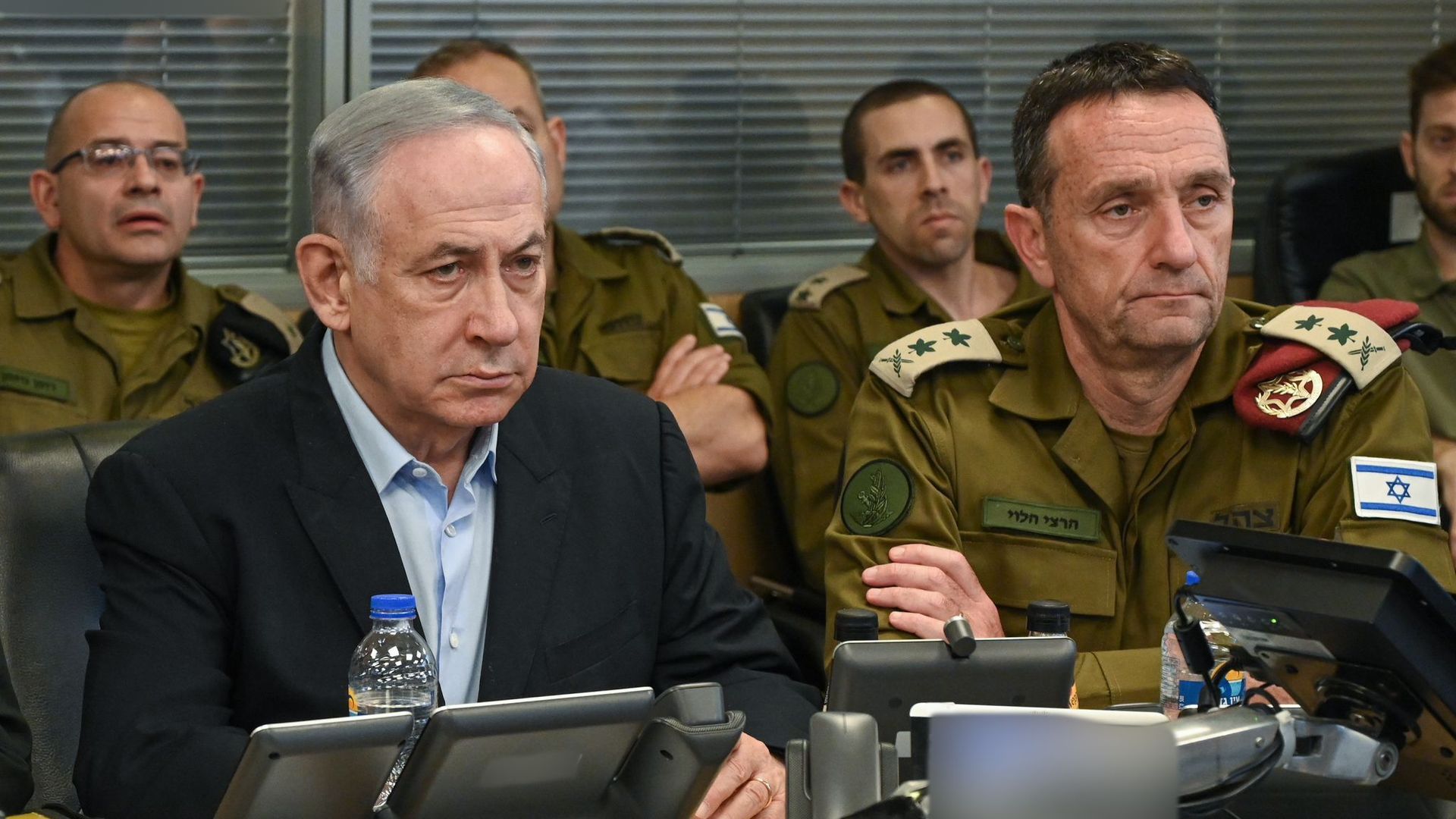
Israeli Prime Minister Benjamin Netanyahu with senior IDF officers during an Israeli operation in Yemen. Photo: Israeli Prime Minister's Office Handout via Getty
The Israel Defense Forces said Tuesday that it killed Hezbollah's top military commander, Fuad Shukr, in a "targeted airstrike" in Beirut in retaliation for the rocket attack that killed 12 children and teenagers in northern Israel last Saturday.
Why it matters: This is the first IDF airstrike against a Hezbollah target in the Lebanese capital since the war in Gaza began on Oct. 7. The Biden administration privately warned Israel against targeting Beirut, stressing that could lead to uncontrollable escalation.
- The airstrike is the most significant Israeli operation against Hezbollah since the assassination of its top military commander Imad Mughniyeh in Syria by the Israeli Mossad in 2008.
The latest: Shukr, also known as al-Hajj Mohsin, is a senior adviser on military affairs to Lebanon's Hezbollah leader Hasan Nasrallah and is in charge of all Hezbollah's military operations.
- The IDF said Shukr "led Hezbollah's fighting against Israel since Oct. 8" and was "entrusted with Hezbollah's most advanced weapons, in particular the precision missiles, cruise missiles, coastal missiles, long-range rockets and unmanned aerial vehicles."
- Shukr is also wanted by the FBI for his involvement in the bombing of the Marine barracks in Beirut in 1983, which killed 241 U.S. service members.
- The Lebanese Health Ministry said one person was killed in the airstrike on Beirut and 70 people were wounded.
- On Wednesday, Hezbollah confirmed Shukr was killed in the strike.
The U.S. State Department raised its travel advisory for Lebanon to "Do Not Travel" and said U.S. citizens shouldn't travel to Lebanon "due to rising tensions between Hezbollah and Israel."
- It advised Americans in Lebanon to be prepared to shelter in place "should the situation deteriorate."
- The U.S. Embassy "strongly encourages U.S. citizens who are already in Southern Lebanon, near the borders with Syria, and/or in refugee settlements to depart."
Behind the scenes: A senior Israeli official said Israeli military officers notified their U.S. counterparts several minutes before the strike and briefed them on the target of the attack.
- IDF spokesperson Rear Adm. Daniel Hagari said the IDF was in constant communication with the U.S. military central command on Tuesday before and after the strike.
What they're saying: "We attacked the Hezbollah commander responsible for the murder of the children in Majdal Shams and for the killing of many other Israelis," the IDF said in a statement.
- Israeli Minister of Defense Yoav Gallant tweeted minutes after the strike: "Hezbollah crossed our red line."
- Hagari said, "Israel doesn't want war but is fully prepared for it."
- Acting Lebanese Prime Minister Najib Mikatti condemned the strike. Lebanon's Foreign Minister Abdallah Bou Habib said he hopes Hezbollah's response will be proportionate and that the killing would stop.
- Vice President Kamala Harris told reporters Israel has a right to defend itself, "In particular, it has the right to defend itself against the terrorist organization, which is exactly what Hezbollah is."
- "But all of that being said, we still must work on a diplomatic solution to end these attacks," she said.
The big picture: Israel and the U.S. blamed Hezbollah for Saturday's deadly strike that hit a soccer field in the Druze village of Majdal Shams in the Golan Heights, killing 12 children and teens and wounding more than 30 other people.
- Hezbollah denied being involved but White House spokesperson John Kirby said in a briefing with reporters on Monday that the U.S. is convinced the group was responsible.
Editor's note: This story was updated with Hezbollah's confirmation of Shukr's death and State Department travel advisory information.
