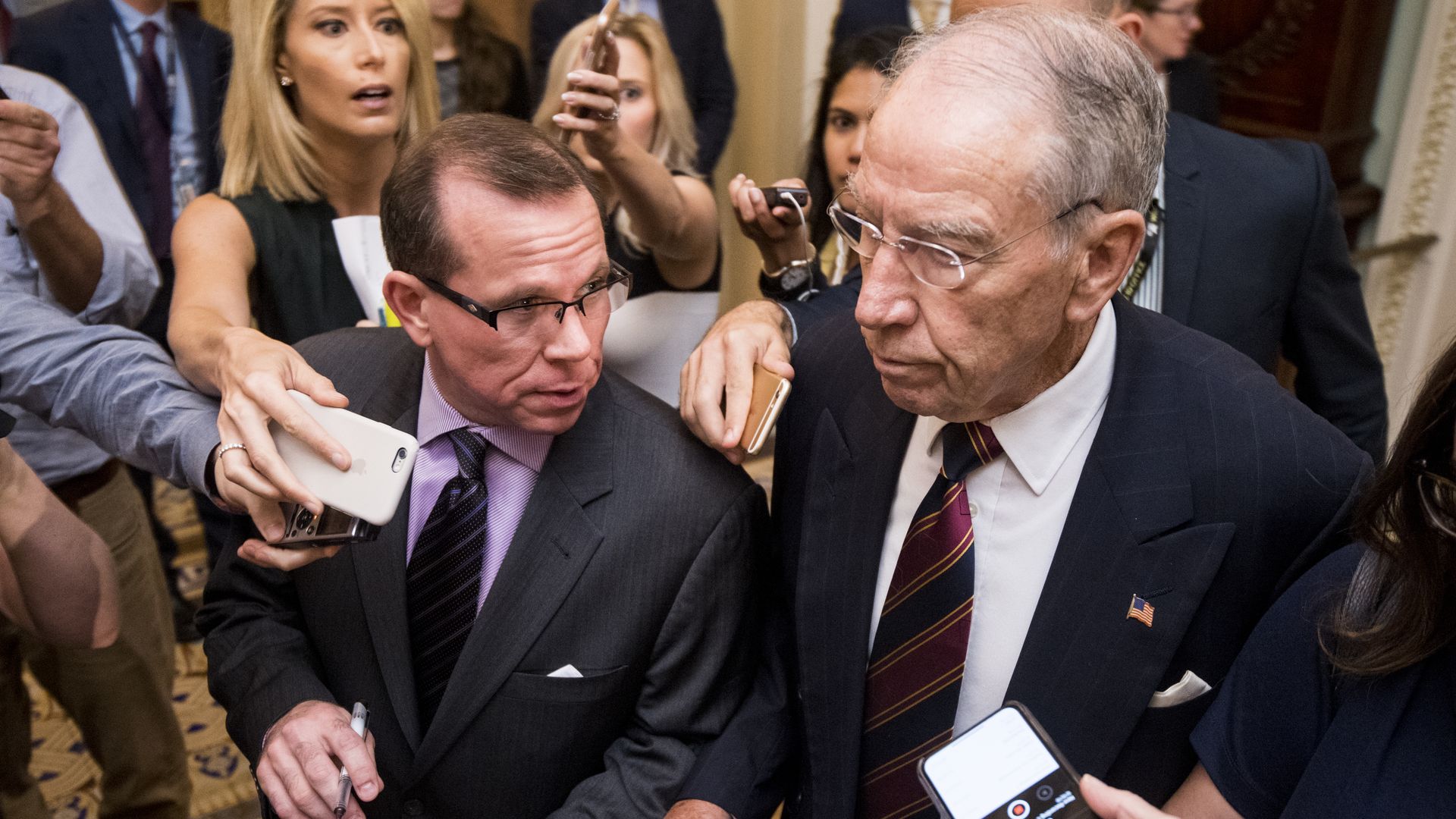
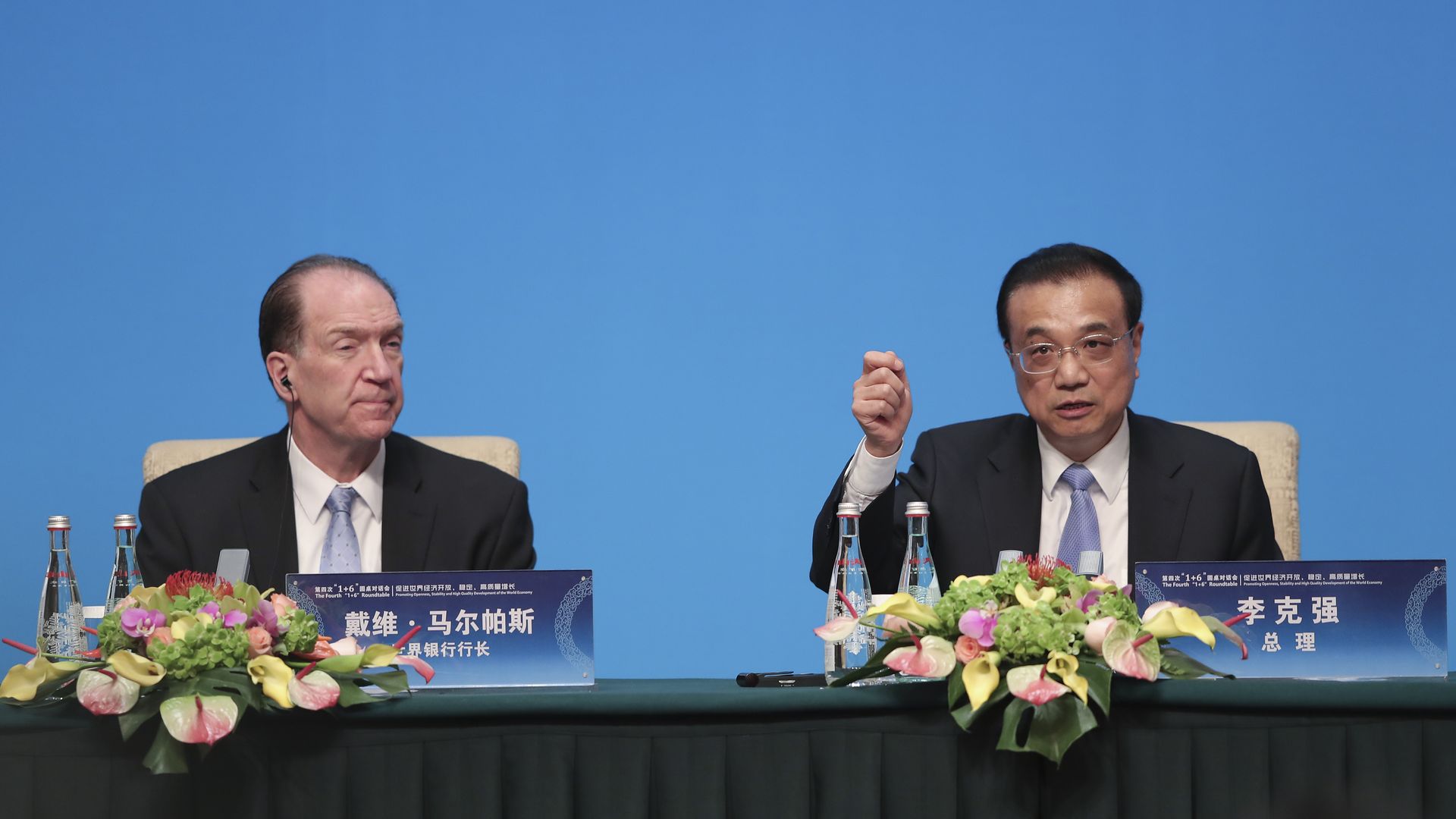
Sen. Chuck Grassley (R-Iowa) delivered a speech on the floor of the Senate Thursday calling for scrutiny into the World Bank's $50 million loan approved for China's Xinjiang region, where nearly a million Uighur Muslims have been detained in internment camps.
Why it matters: The speech comes days after the House voted overwhelmingly in favor of a bill pushing for sanctions on China over its mass detention of the ethnic minority, as Congress continues to pressure U.S.-based organizations that may be complicit.
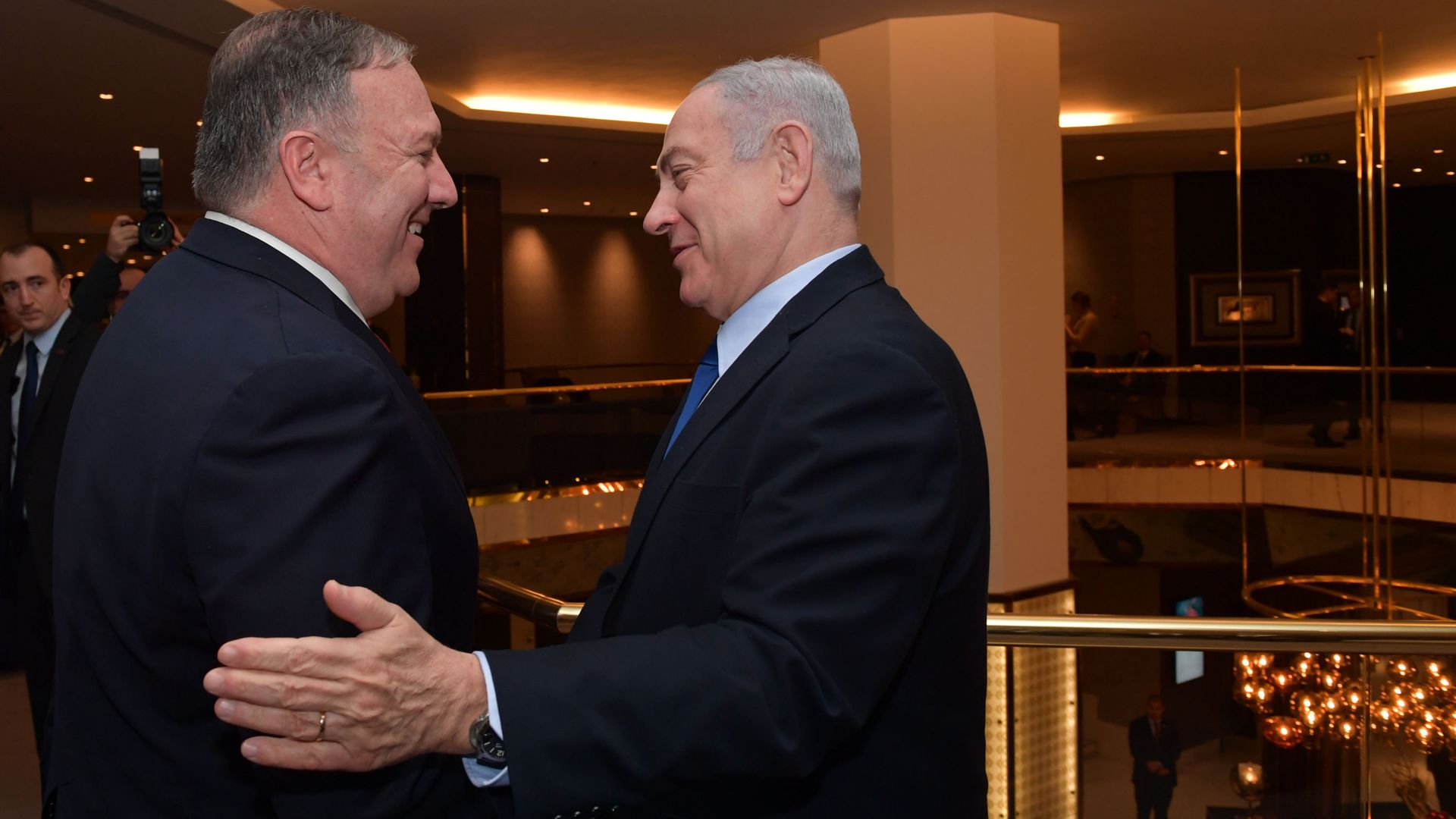
Lisbon — Israeli Prime Minister Benjamin Netanyahu said in a briefing to reporters in Lisbon that in a meeting with U.S. Secretary of State Mike Pompeo on Wednesday, they discussed the issue of Israeli annexation of the Jordan Valley in the West Bank and they agreed to push the issue of a U.S.-Israeli defense treaty.
Why it matters: Both issues were prominent in Netanyahu's campaign last September and are expected to be focal points in his upcoming campaign that could launch in less than a week.
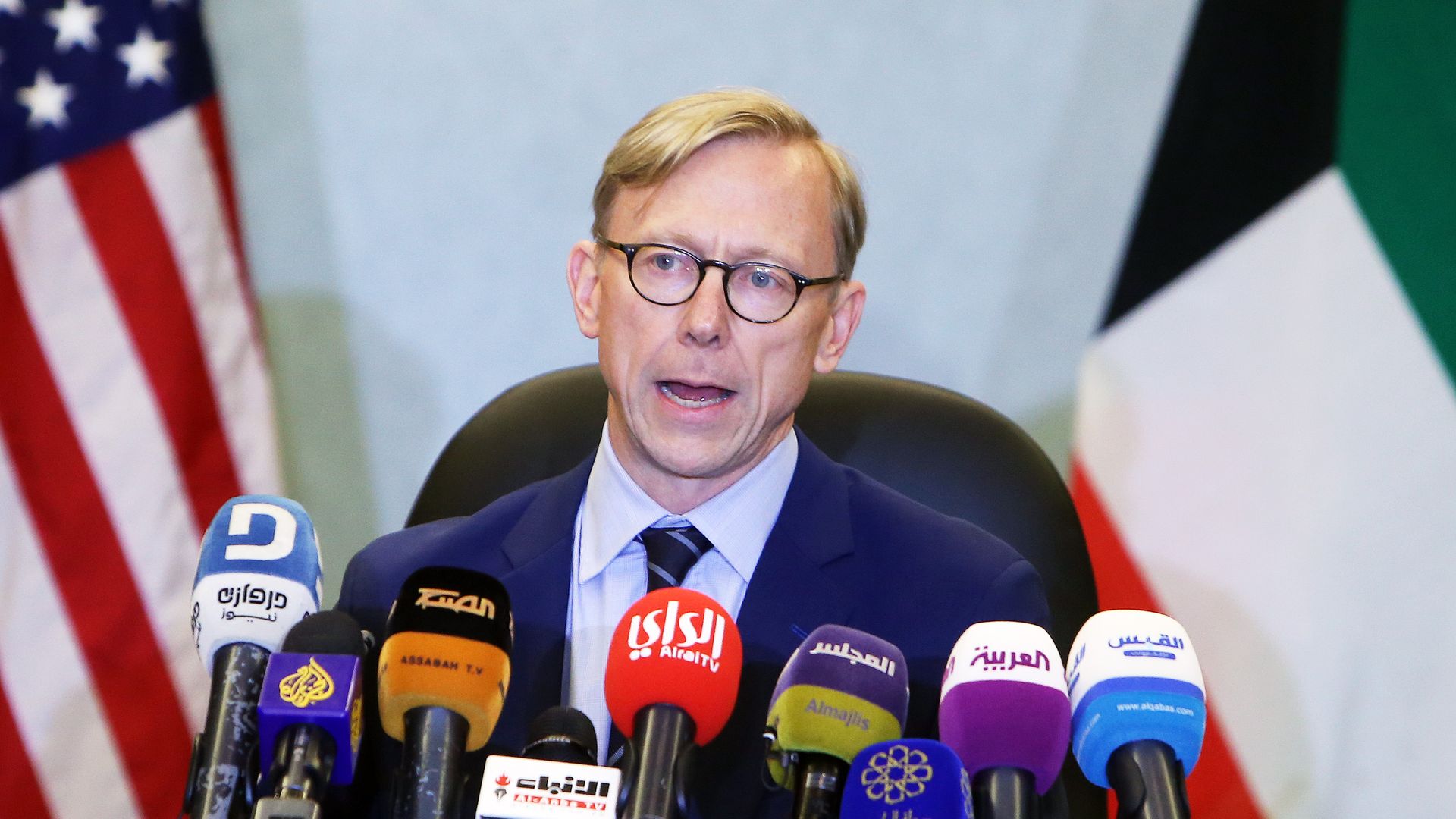
U.S. Iran envoy Brian Hook said at a press conference Thursday that the Iranian government "could have murdered over 1,000 Iranian citizens" during a crackdown on protests in recent weeks, calling it "the worst political crisis the regime has faced in its 40 years."
Why it matters: While the Iranian government appears to have carried out its deadliest crackdown since the 1979 Islamic Revolution, Hook's number is far higher than most other credible estimates. Amnesty International has confirmed 208 deaths.
Chinese tech companies have ramped up efforts to set technical standards for facial recognition, raising concerns among business competitors, political observers and humanitarian advocates.
Why it matters: China has long made a systematic effort to set international standards on data and hardware compatibility across brands so that the standards reflect how Chinese products already work — giving its domestic industries a leg up in engineering races.
Senate Intelligence Committee Chairman Richard Burr (R-N.C.) said this week that Ukraine meets the standard for election meddling that people first held Russia to. But that's not what the numbers show.
Why it matters: While Burr didn't draw a moral equivalence between Russia — which committed several crimes on U.S. soil during the 2016 election — and what we know about Ukraine, he muddled the debate in that direction.
The Department of Justice announced Thursday that Russian nationals Maksim Yakubets and Igor Turashev have been charged with causing tens of millions of dollars in damages stemming from their use of the "Bugat" malware. Neither has been arrested.
Why it matters: Bugat (also frequently called dridex) was one of the most successful theft operations of its type, stealing usernames and passwords from infected computers as they attempted to log on to bank websites. The State Department and FBI are offering $5 million for information that would lead to their arrest, the largest reward offer for a cyber criminal to date.
Senate Finance Committee Chairman Chuck Grassley has requested a meeting with the World Bank over a $50 million loan approved for China's Xinjiang region, where upwards of one million ethnic minorities have been detained, in a letter obtained exclusively by Axios.
Why it matters: Congress is ramping up scrutiny of China's mass internment in Xinjiang — with a special eye on any U.S.-based organization that might be complicit.
MIT Technology Review released excerpts of Chinese scientist He Jiankui's unpublished research on Tuesday, underscoring massive ethical and practical oversights in his claim that he successfully used the gene-editing tool CRISPR to create genetically engineered children.
The bottom line: A primary goal of the experiment was to test if cells could be gene-edited to become HIV resistant. This could have been done without creating human test subjects, MIT notes.
The House overwhelmingly passed a bill on Tuesday that would push for sanctions against China over its mass detention of Uighur Muslims. The bill would also restrict U.S. technology and AI exports to China that could be used to facilitate detentions.
Driving the news: President Trump signed a bill to reaffirm U.S. support for Hong Kong's autonomy last week in the face of massive pro-democracy protests. In the midst of critical trade talks, China warned that it would take retaliatory measures over the Hong Kong bill if it became law.