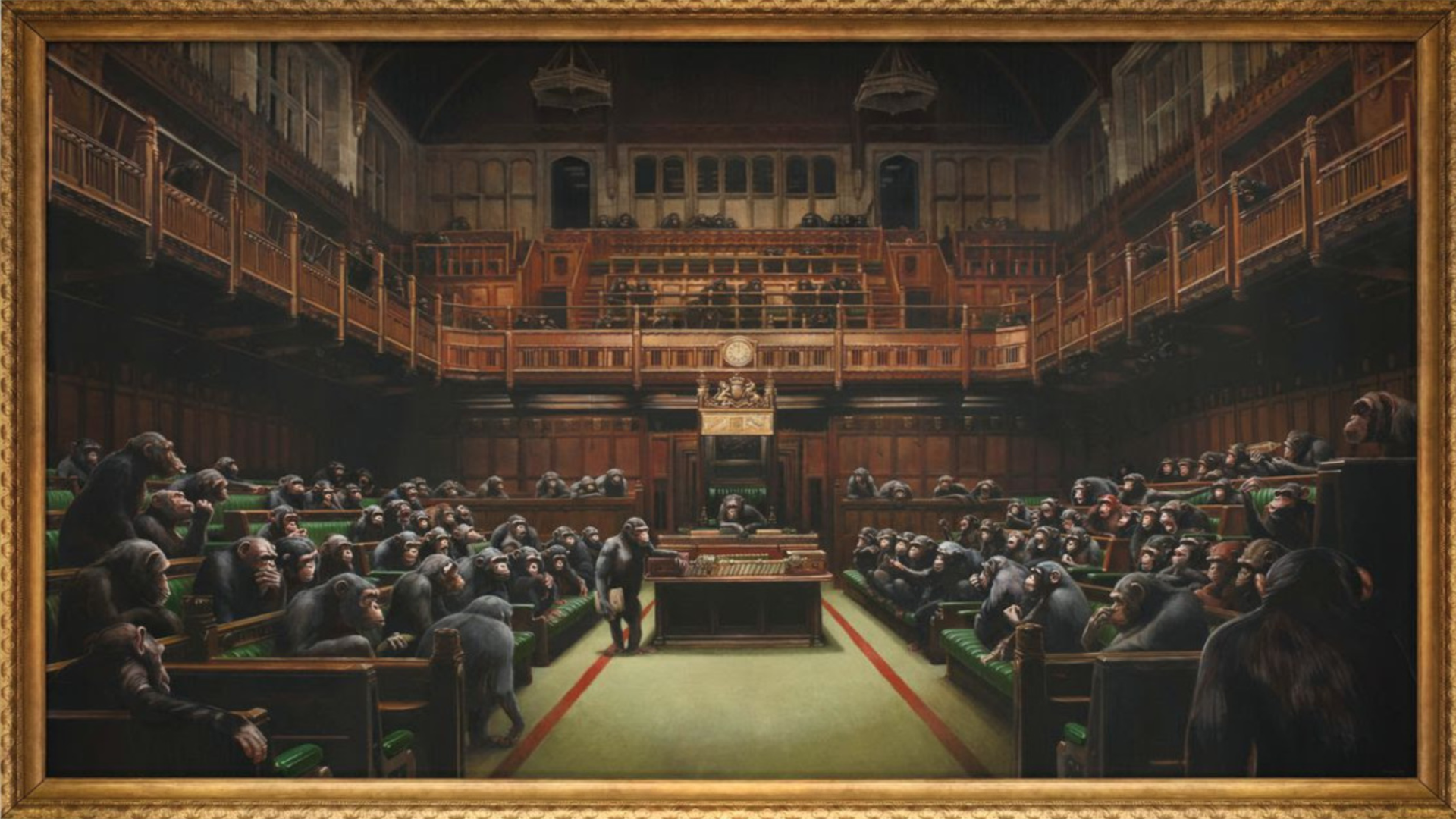
One of the few winners from the Brexit mess was the anonymous consignor of “Devolved Parliament,” a Banksy painting that sold for £9.9 million, or $12.1 million, a few days ago at Sotheby’s in London.
The big picture: The painting is a decade old, but it has never been more timely, given that the only politician disliked more than Prime Minister Boris Johnson is the leader of the opposition, Jeremy Corbyn.
What's happening: CEOs-turned-activists are experimenting with taking bold stances on social and political issues at home — but that activity stops at the nation's borders. It certainly doesn't reach as far as China.
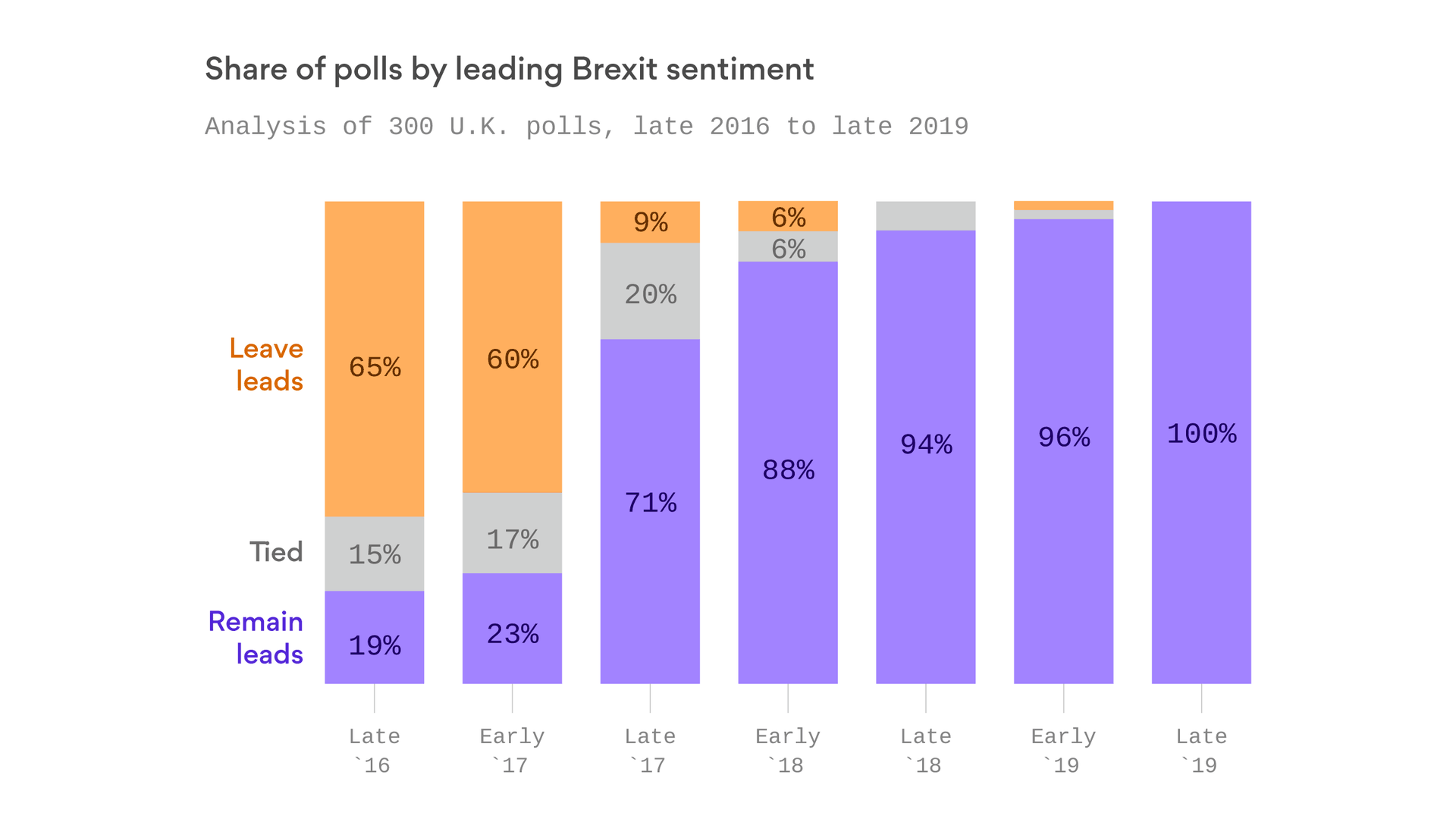
The Brexit omnishambles continues. The chance of Britain agreeing to any kind of a deal with the European Union seems to have fallen to zero, and no one has a clue what will happen after Oct. 17, the date of the last EU summit before the Oct. 31 deadline.
Why it matters: By law, U.K. Prime Minister Boris Johnson is going to have to officially ask the EU for yet another extension. Whether he'll do so, however, is unclear; he certainly doesn't want to.
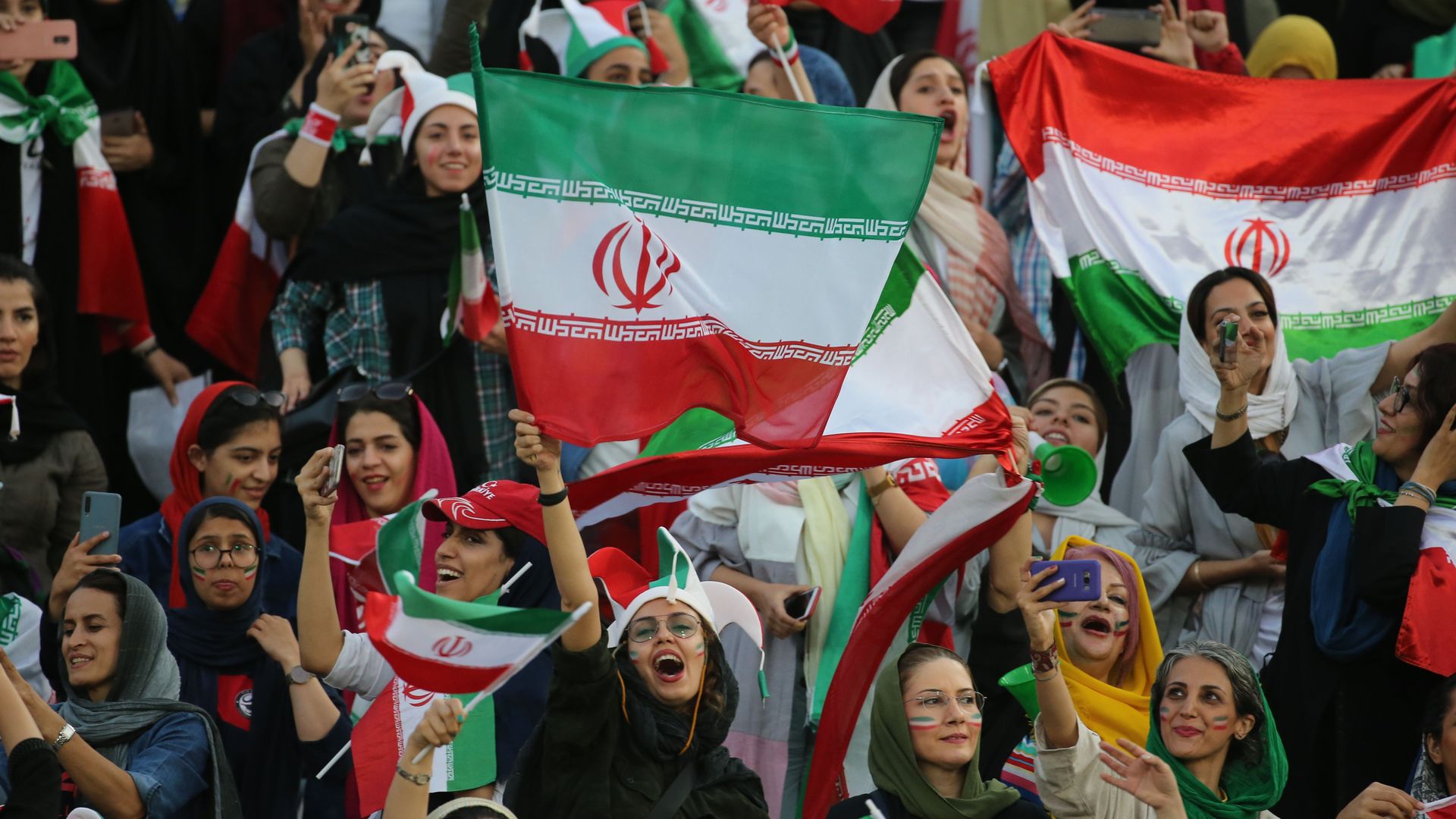
Iranian women were freely allowed Thursday to attend a World Cup qualifying soccer match in Tehran for the first time since 1981, reports the New York Times.
Why it matters: It marks a significant step in the push for increased gender equality in Iran and turned the team's throttling of Cambodia (final score: 14-0) into what the Times branded one of "the most consequential sporting events to be played in years."
Distributing flu vaccines each annual season is a complex process, but the threat of a no-deal Brexit is only adding further complications, Bloomberg reports.
The big picture: The prospect of the U.K. leaving the European Union on Oct. 31 without a withdrawal agreement has brought on fears of food and medicine shortages. That could mean lacking vaccines, leaving the elderly and young especially susceptible to the flu and other illnesses.
In less than 48 hours, three American companies in the business of mass entertainment have found themselves at the center of a political storm about China's aggressive censorship.
Why it matters: Media and entertainment have long acted as extensions of free speech with a mass reach, making them both vehicles for public expressions of controversial views and targets of government censorship.








/2019/10/09/1570598909938.gif?w=3840)