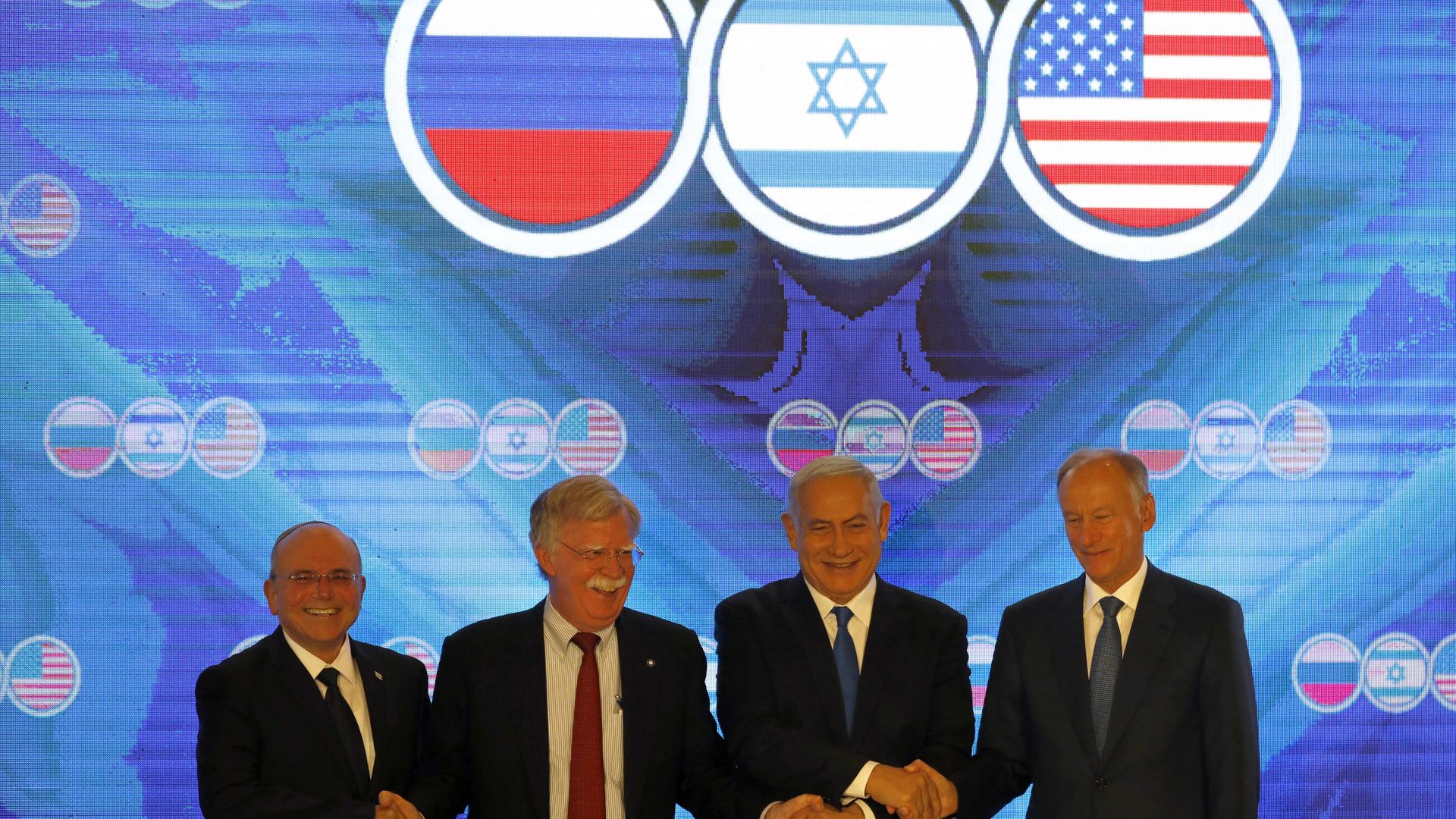
During a trilateral summit in Jerusalem last month, the U.S. and Israel told Russia that any deal on the future of Syria must include an Iranian military withdrawal not just from that country but also from Lebanon and Iraq, U.S. officials who were involved in the discussions tell me.
Why it matters: Israel and the Trump administration are concerned that a future deal in Syria could export the Iranian problem to Iraq and Lebanon.
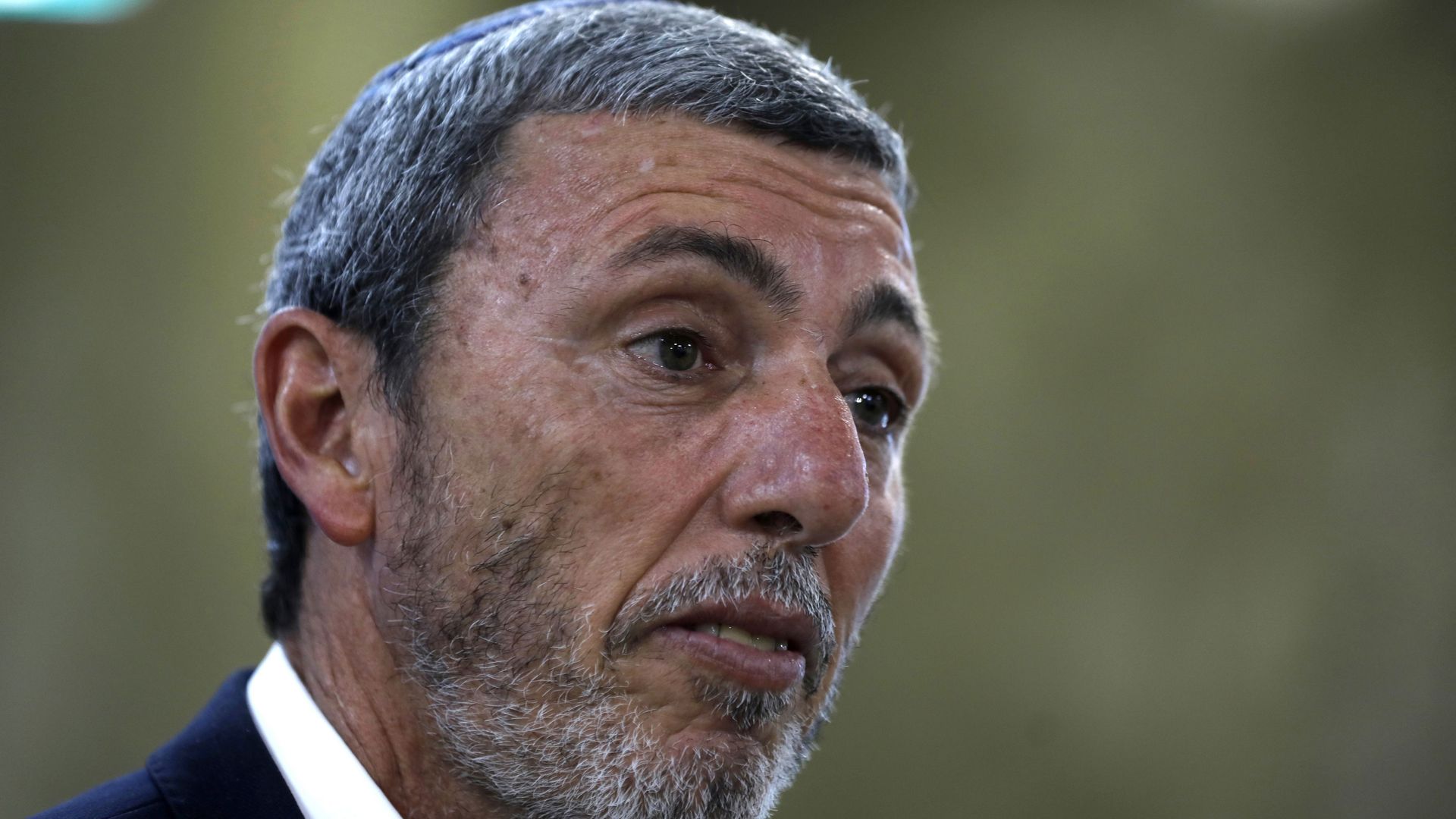
Israeli Education Minister Rafi Peretz is backing off his characterization of intermarriage by Jewish people in the U.S. as a "second Holocaust." In a letter, Peretz asked Isaac Herzog, chairman of the Jewish Agency for Israel, to convey his regret to Jewish communities around the world.
Why it matters: Peretz's remarks came during an Israeli Cabinet meeting and sparked a wave of condemnations from Jewish organizations in the U.S. after they were reported by Axios. Peretz had claimed that due to intermarriages over the last 70 years, Judaism "lost 6 million people."
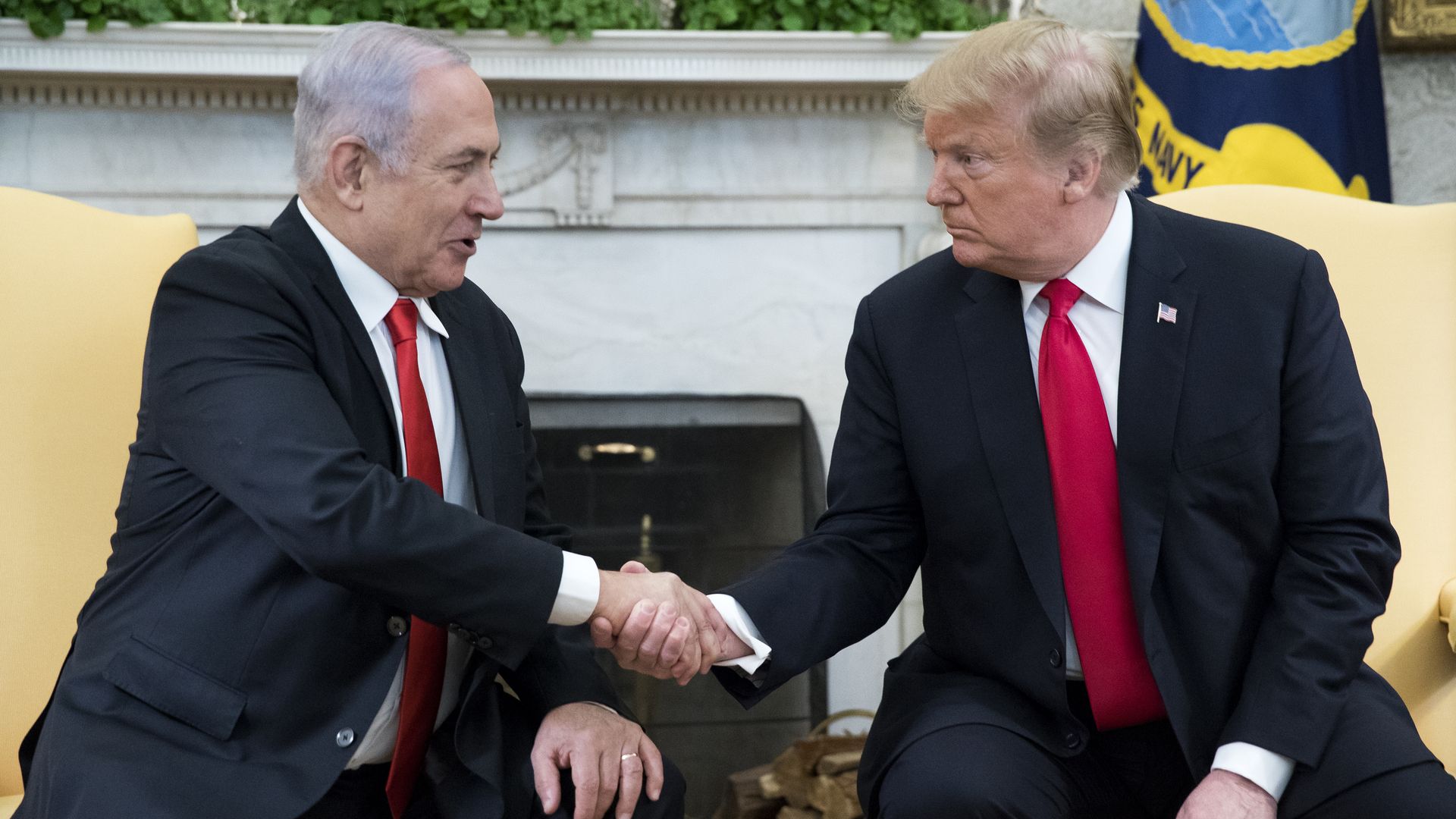
Israeli Prime Minister Benjamin Netanyahu and his advisers told Trump administration officials they have reservations about the proposal for a passage connecting the West Bank and Gaza as part of the White House Middle East peace plan, sources briefed on the matter tell me.
Why it matters: The proposal was part of the economic portion of the U.S. plan. It was revealed by the White House to Netanyahu and his aides two weeks before the plan was made public, Israeli officials say. Netanyahu has publicly stressed several times that Israel will keep an open mind about the plan.
China has enlisted some of the world’s foremost human rights abusers to defend its mass detention of more than 1 million Muslims.
Data: Axios research; Map: Harry Stevens/Axios
Why it matters: A letter supporting China — with signatures from Saudi Arabia, Russia, North Korea and 34 other mostly authoritarian states — comes after 22 countries formally condemned abuses in the Xinjiang region. It reveals growing frustration and defensiveness over the issue from Beijing, says Sophie Richardson, China director for Human Rights Watch.
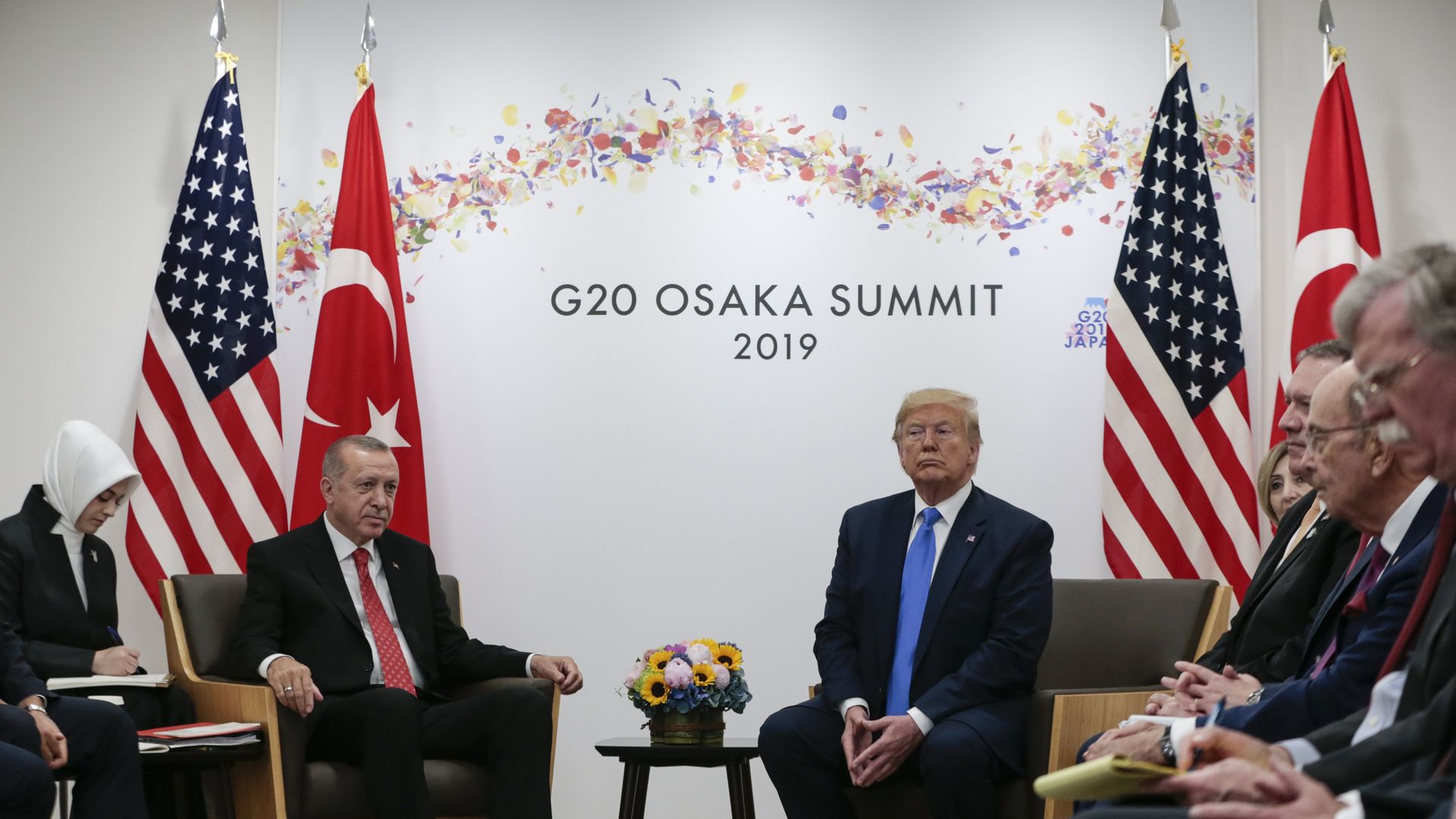
Turkey has received “the first group of equipment” from a Russian S-400 air defense system despite warnings from the U.S. and other NATO allies who say the system could compromise the alliance's security.
Between the lines: "Turkey sees the balance of power shifting away from Europe and the U.S. and envisions itself as a more independent actor in a changing global order," two senior Turkish officials tell Bloomberg.
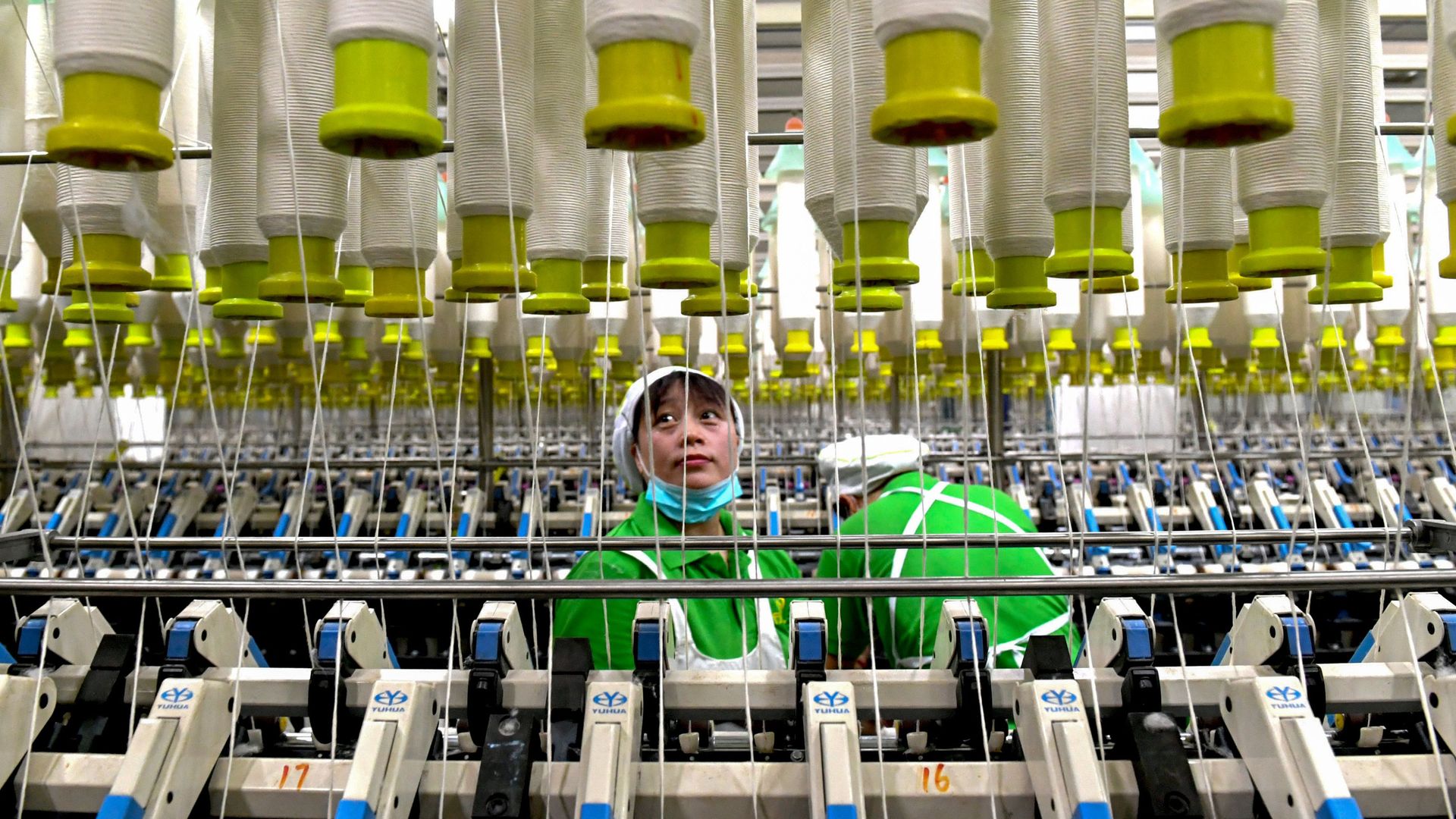
China’s economy expanded at the slowest rate in nearly 30 years in the 2nd quarter, thanks to heightened U.S.-China trade tensions and weakening trade demand from other fragile economies.
By the numbers: The figures released by the Chinese government show the GDP came in at 6.2% — a deceleration from the previous quarter’s 6.4% annualized rate and the weakest pace of growth since the government started releasing quarterly data in 1992, per Reuters.