Palestinian president Mahmoud Abbas said today at a ceremony in Ramallah that the Trump administration's Israeli-Palestinian peace plan "will go to hell."
Why it matters: The White House peace team, led by Trump's senior adviser Jared Kushner, is planning to launch the economic part of the peace plan at a conference in Bahrain less than a month from now. Abbas's harsh language against the peace plan and his lobbying against the Bahrain conference show the deep crisis in U.S.-Palestinian relations, which are probably broken beyond repair as long as Trump or Abbas are in office.
Russia and China are going to boycott the U.S.-led Bahrain conference which will launch the economic part of the Trump administration's peace plan, Palestinian and Chinese officials say.
Why it matters: The U.S. is trying to get countries to attend, while the Palestinians — who are boycotting the conference — are trying to convince countries not to show up. The Russian and Chinese decision is a big achievement for the Palestinians, although it is mainly driven by Russian and Chinese tensions with the U.S. rather than by Palestinian interests.
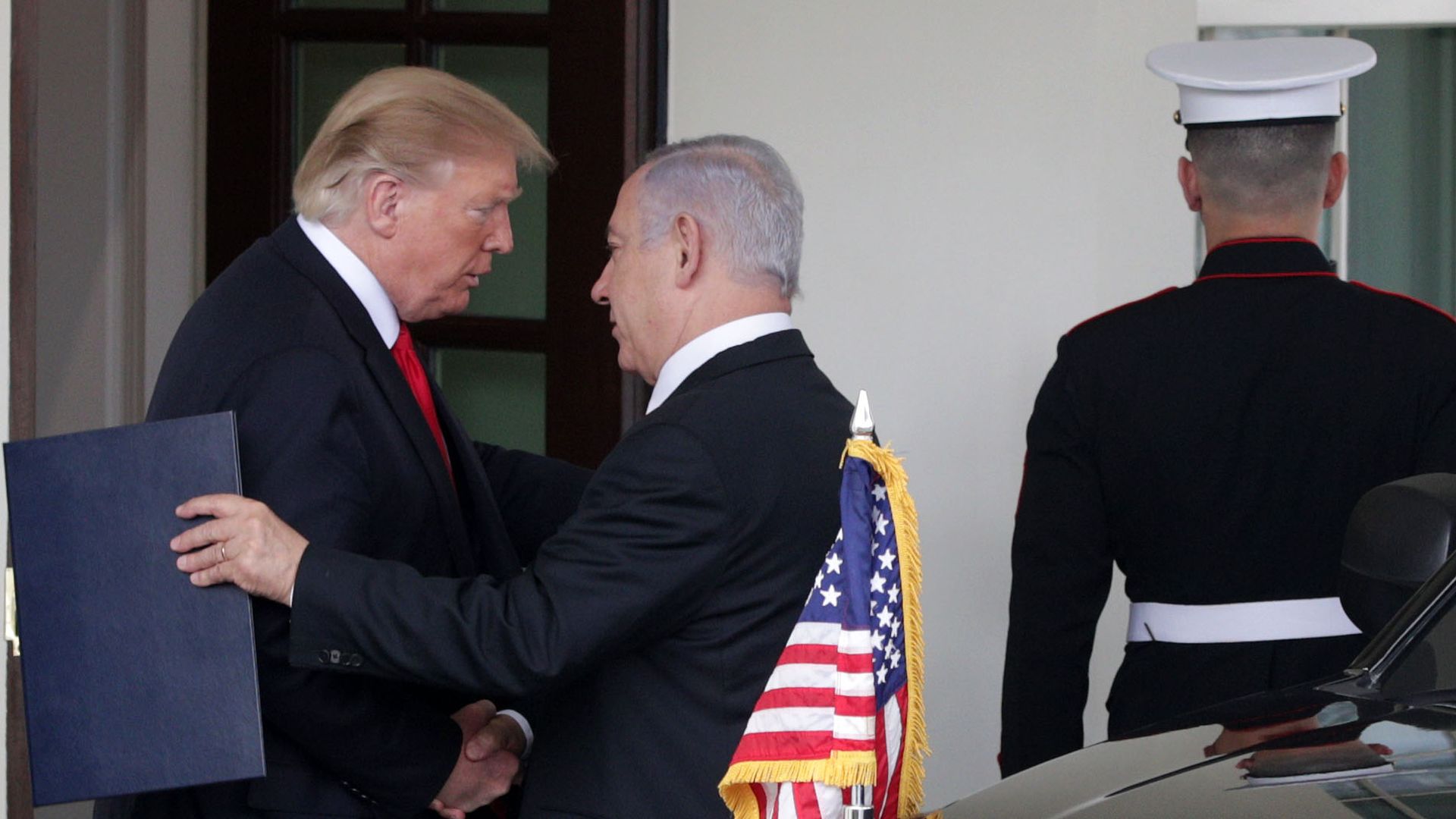
In an unprecedented move, President Trump publicly intervened in the domestic political crisis in Israel and backed Prime Minister Netanyahu's efforts to form a coalition 48 hours before the deadline for putting together a new government.
Why it matters: Trump's move is unprecedented because it is an intervention in coalition negotiations in a different country in order to help one the political players, and more so because it is done publicly.
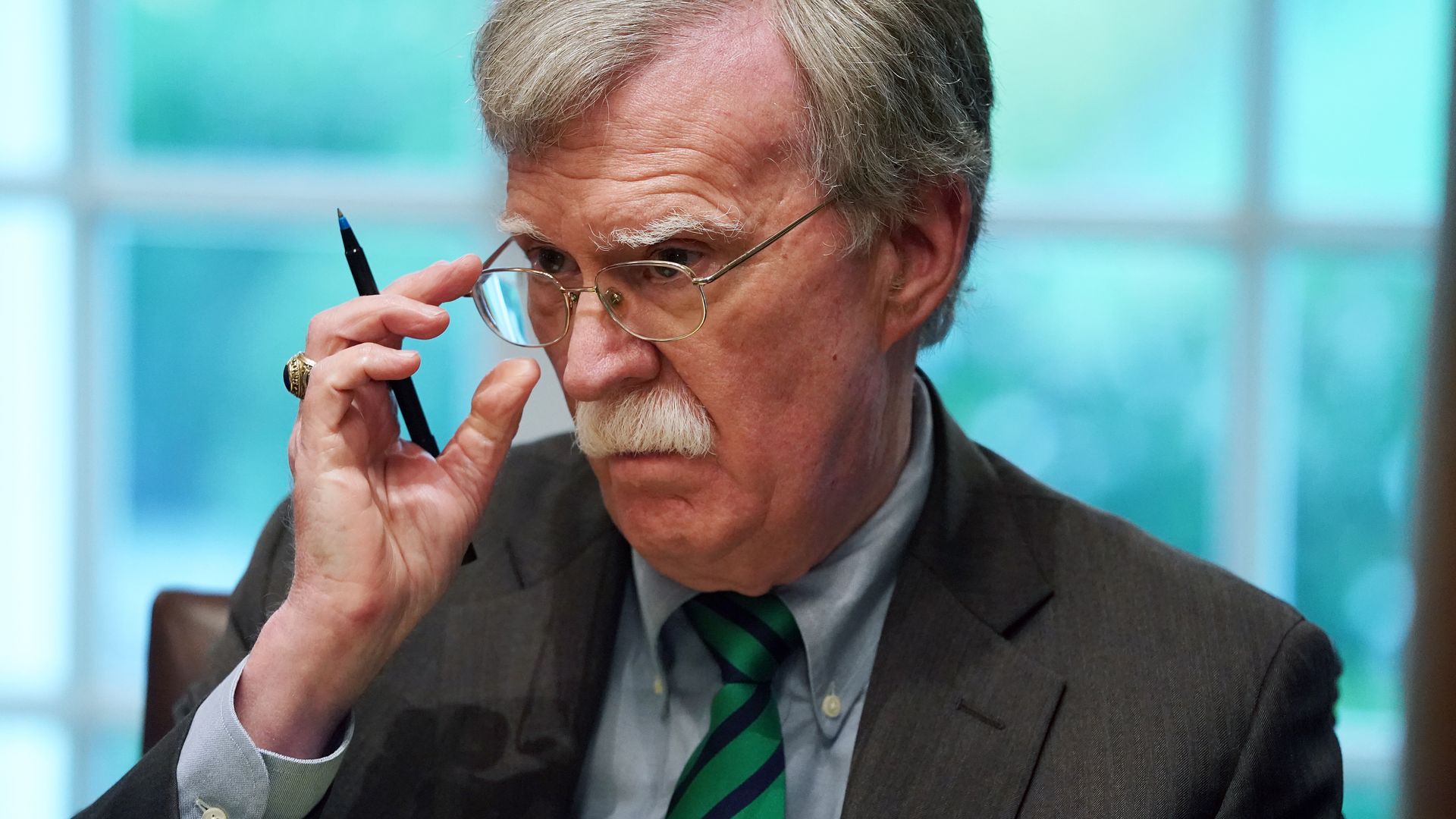
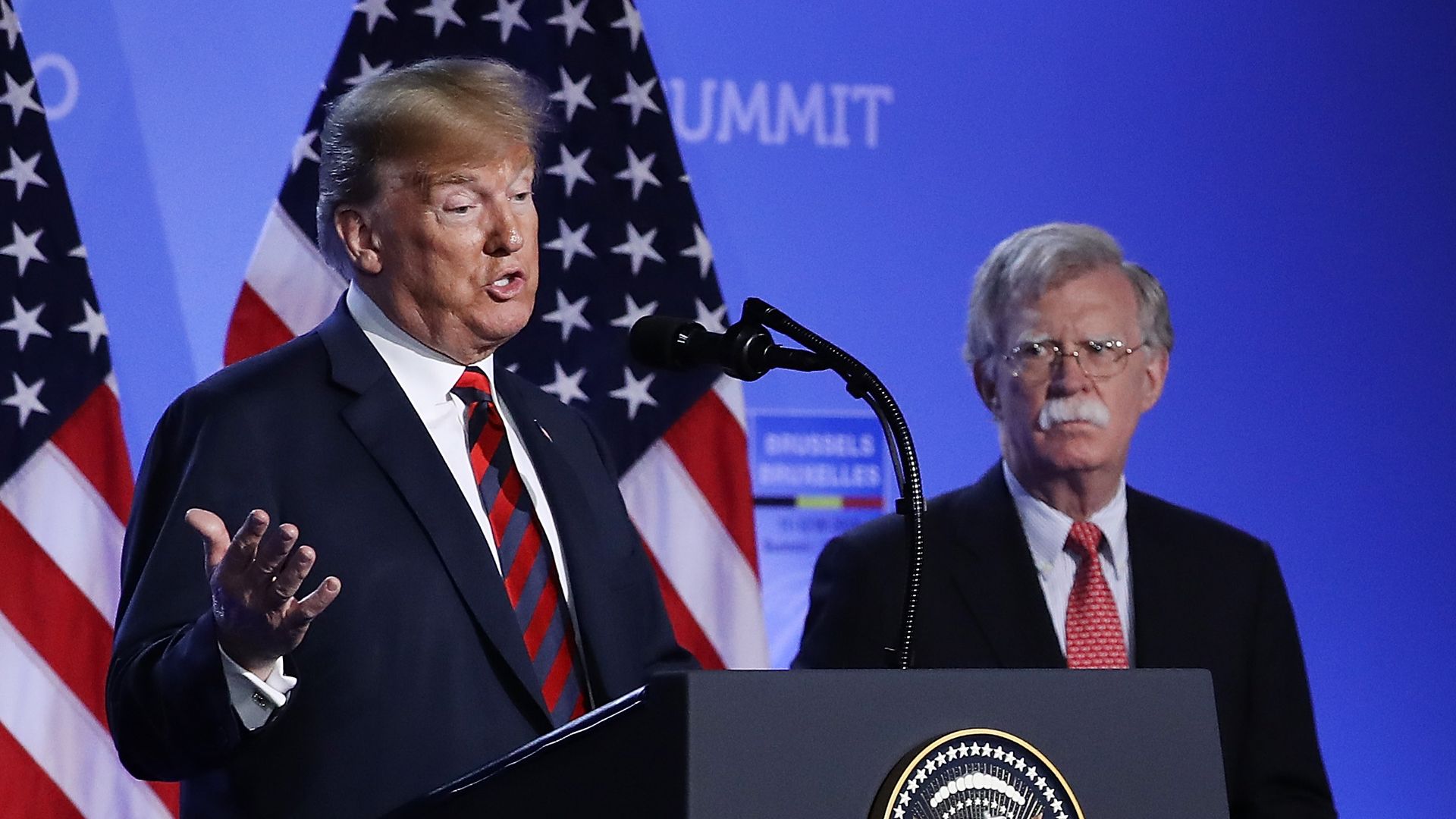
North Korea called U.S. National Security Adviser John Bolton a "war monger" and "defective human product" Monday for saying Pyongyang's recent missile tests violated UN Security Council resolutions, AP reports, citing state media.
Why it matters: As North Korea criticized Bolton for his comments, President Trump said at a news conference in Tokyo "good respect" has been built between the U.S. and North Korea. "I personally think lots of good things will come with North Korea. I may be right. I may be wrong,” he said. "We’ll see what happens."
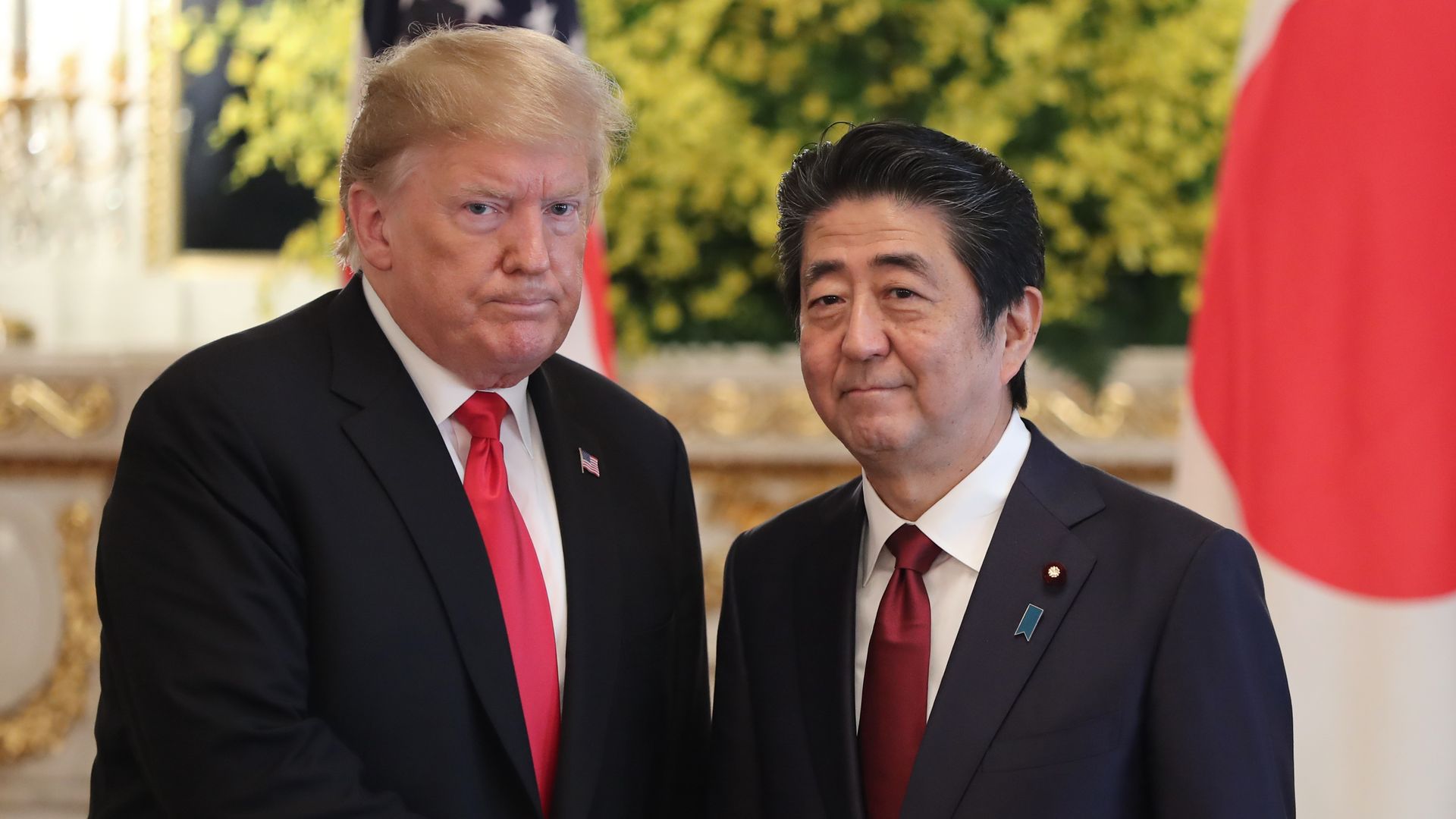
President Trump told a Tokyo news conference Monday he supports Japanese Prime Minister Shinzo Abe's efforts to potentially open a dialogue between the U.S. and Iran.
"I know that the prime minister and Japan have a very good relationship with Iran so we’ll see what happens. The prime minister’s already spoken to me about that and I do believe that Iran would like to talk — and if they’d like to talk, we’d like to talk also. We’ll see what happens ... nobody wants to see terrible things happen, especially me."
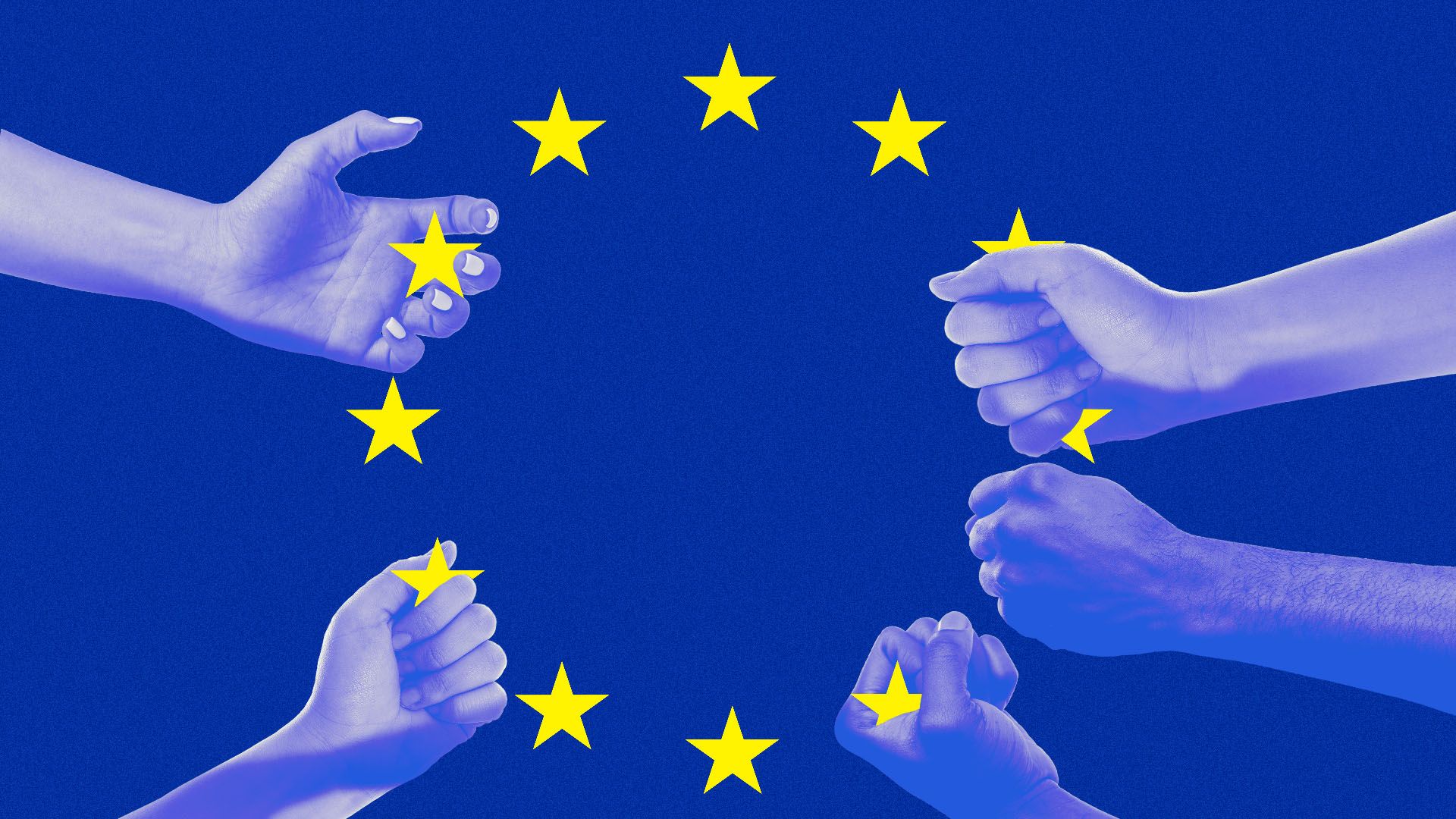
The results are in from this week's European Parliament elections, a massive, 4-day democratic exercise spanning 28 countries, 400 million voters and hundreds of parties all vying for a voice in the 751-seat assembly.
Why it matters: With nationalism resurgent, this election was critical for those who wanted to preserve and further integrate the 62-year-old European Union — as well as those who wanted it dismantled from within.
Speaking from Tokyo in her first "Meet the Press" interview ever, White House Press Secretary Sarah Sanders told NBC's Chuck Todd that President Trump and North Korean dictator Kim Jong-un "agree in their assessment" of former Vice President Joe Biden, who Trump called a "low IQ individual" in a tweet Monday evening.
President Trump tweeted a different take Saturday on North Korea from national security adviser John Bolton, who said Pyongyang's recent missile tests violated UN Security Council resolutions and sanctions must remain against the country.
"North Korea fired off some small weapons, which disturbed some of my people, and others, but not me. I have confidence that Chairman Kim will keep his promise to me, & also smiled when he called Swampman Joe Biden a low IQ individual, & worse. Perhaps that’s sending me a signal?"