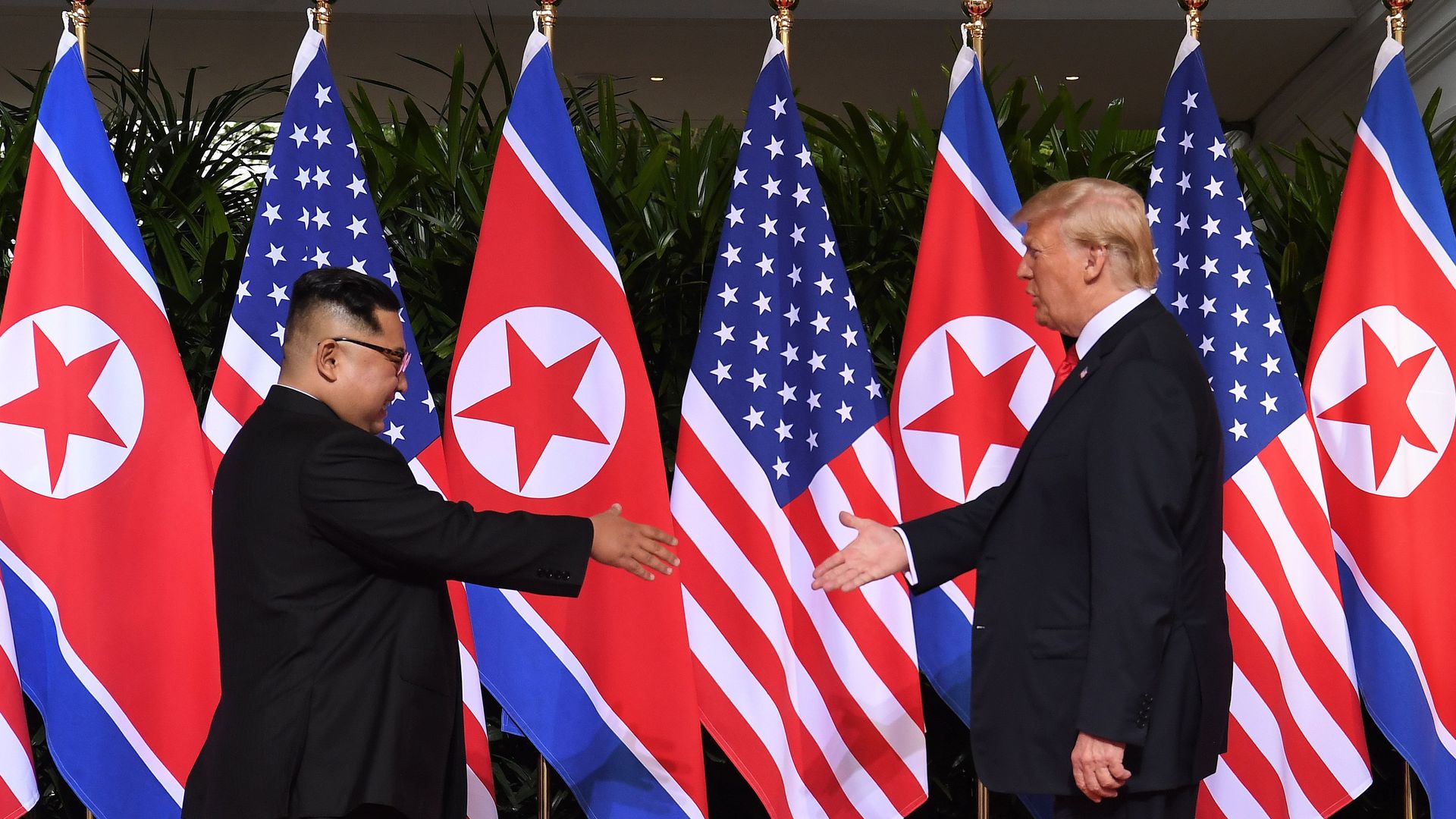
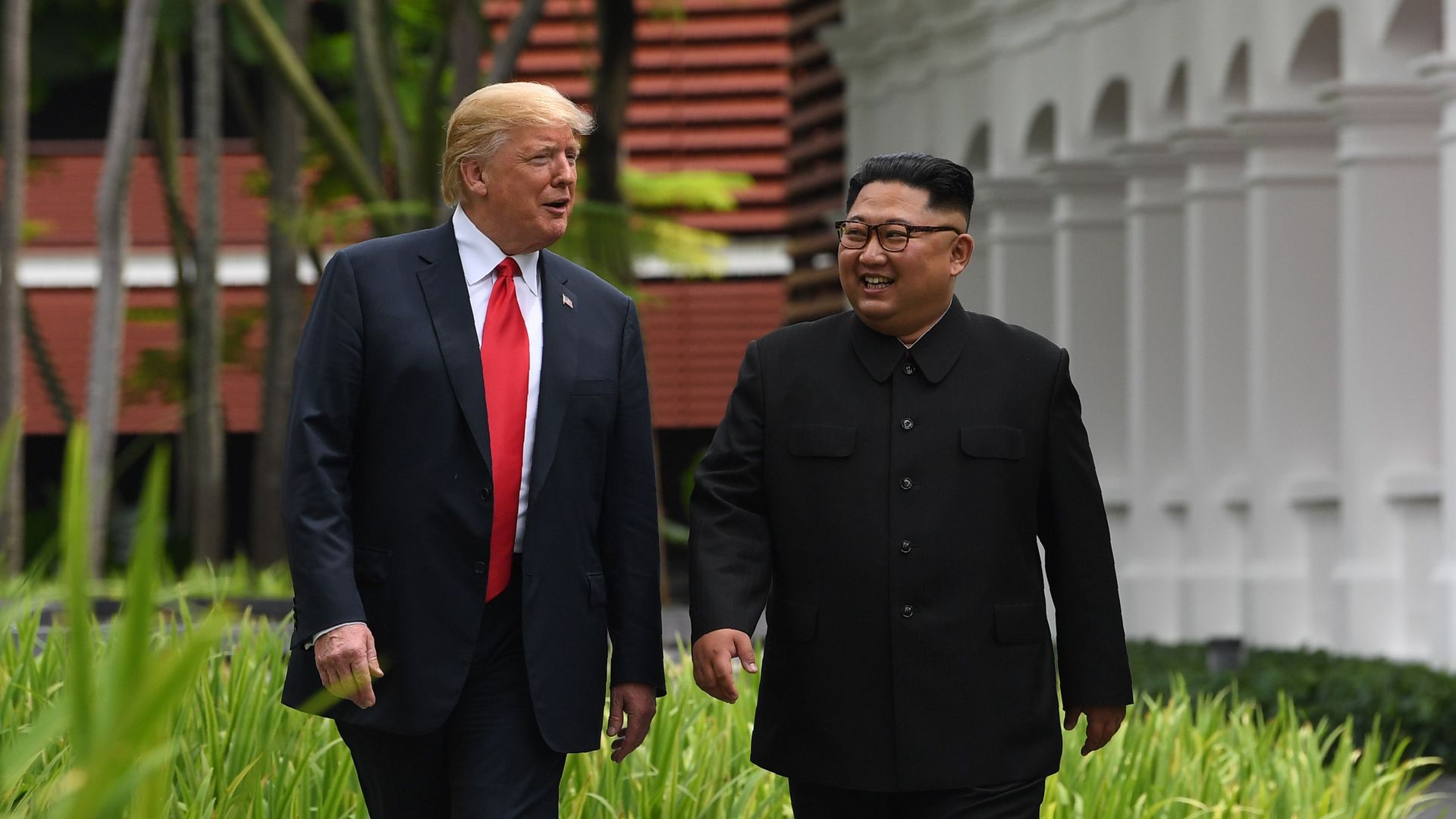
Surprise: The U.S. and North Korea are talking about another summit, this one potentially in late February.
Why it matters: In the 220 days since Trump and Kim met in Singapore, there have been speeches, snubs, and occasional threats, but no substantial progress toward denuclearization.
President Trump and North Korean leader Kim Jong-un will meet for a second summit "near the end of February," White House Press Secretary Sarah Sanders said Friday.
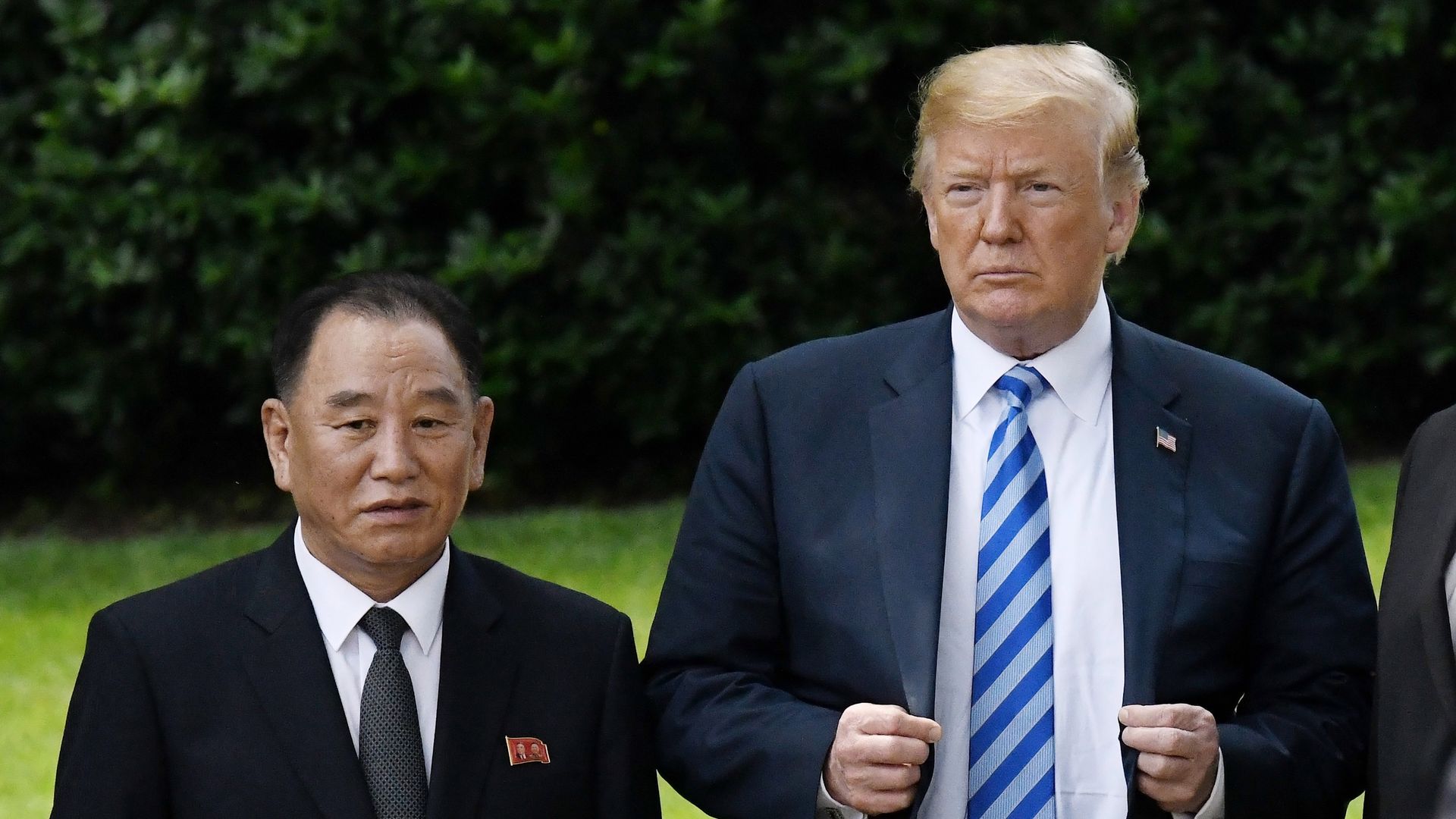
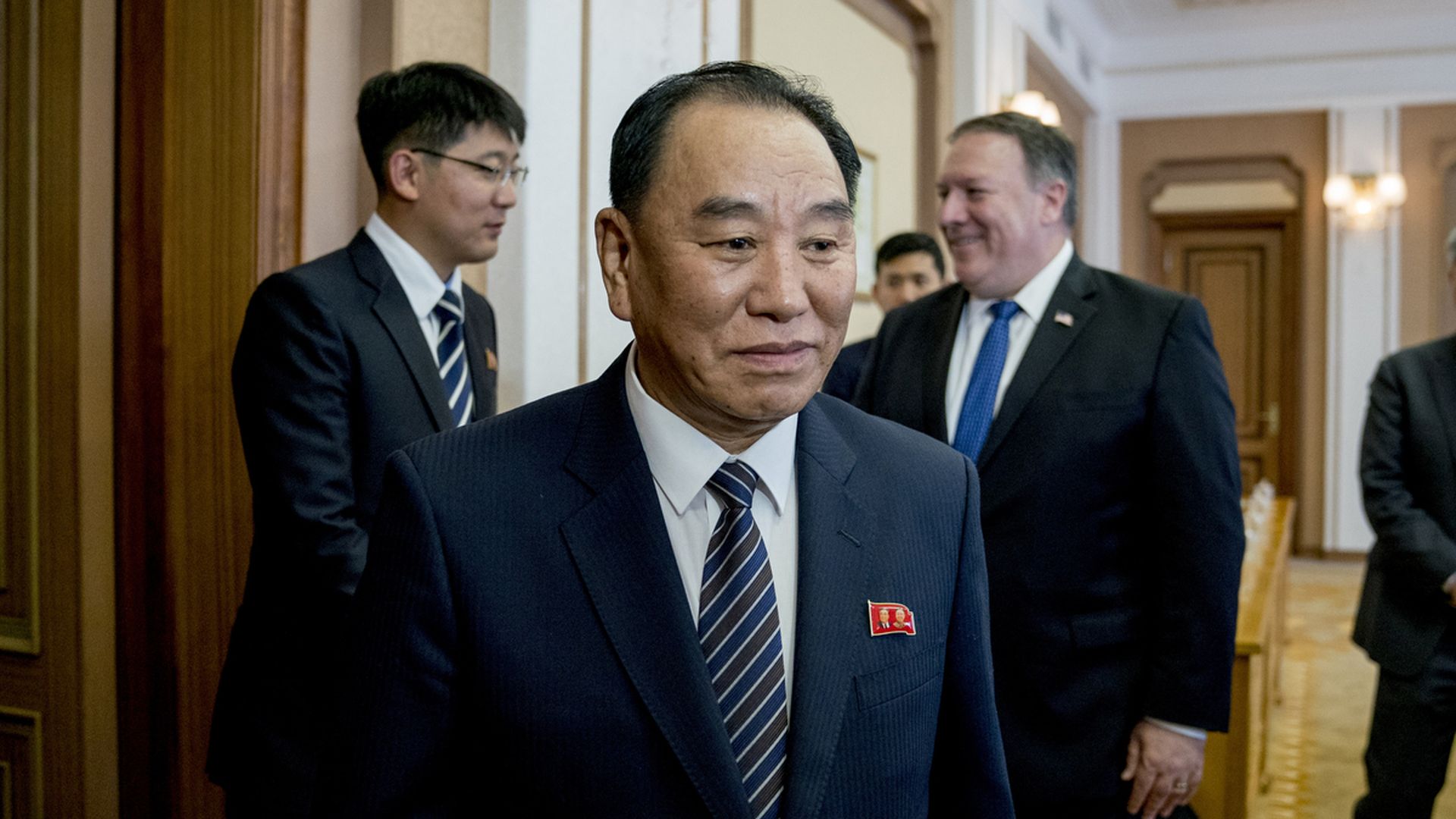
Details: The location of the summit has not been announced. Trump met for about 90 minutes in the Oval Office today with Kim Yong-chol, North Korea's lead negotiator in denuclearization talks.
Late Thursday night, the Democratic National Committee amended a lawsuit — stemming from the 2016 DNC hack — against Russia, several oligarchs, President Trump and WikiLeaks to include allegations Russia attempted to hack the DNC again, just after the 2018 midterm elections.
The big picture: The allegations aren't far fetched. The Russian international espionage apparatus has continued throughout 2017 and 2018.
President Trump will meet with Kim Jong-un’s lead negotiator in nuclear talks Friday in the Oval Office to discuss getting North Korea to a “fully verified denuclearization,” according to White House Press Secretary Sarah Sanders.
Why it matters: The meeting comes amid speculation the two sides are seeking to lay the groundwork for a possible second summit between Trump and Kim. Despite North Korea pledging it would work toward a “complete denuclearization” after the first summit, little progress has been made.
China’s Ministry of Industry and Information Technology (MIIT) released on Dec. 27 a sprawling roadmap for autonomous vehicle development that named an “Internet of Vehicles Development Commission” to lead work on AV policy.
Why it matters: AV leadership by this commission may indicate a more protectionist approach in China, given incentives to carry out President Xi’s goal of limiting reliance on foreign “core technologies.”
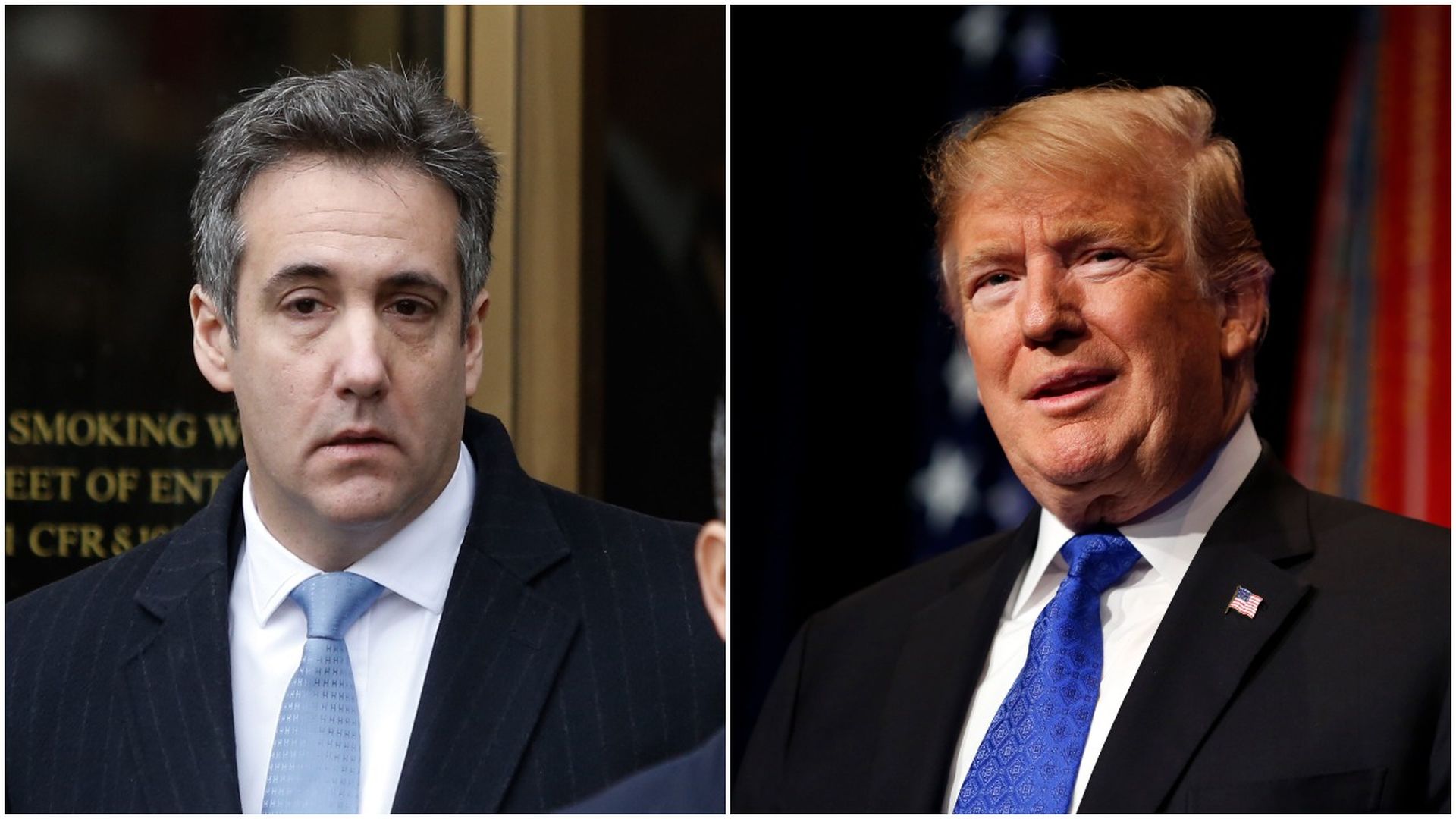
President Trump directed his former personal attorney Michael Cohen to lie to Congress about the extent of his plans to build a Trump Tower in Moscow — charges to which Cohen has since pleaded guilty, BuzzFeed News' Jason Leopold and Anthony Cormier report.
Details: The report — which cites "two federal law enforcement officials involved in an investigation of the matter" — alleges that Trump and Cohen had at least 10 face-to-face meetings about the Moscow deal during the 2016 campaign, and that Cohen provided "regular, detailed updates" to Trump's children, Donald Jr. and Ivanka. Special counsel Robert Mueller has reportedly obtained evidence that Trump directed Cohen to lie to Congress through witness interviews and internal documents and communications from the Trump Organization.
North Korea's lead negotiator in denuclearization talks with the U.S. arrived in Washington Thursday evening, amid reports that the two sides are seeking to lay the groundwork for a possible second summit between President Trump and North Korean leader Kim Jong-un, CNN reports.
Details: Kim Yong Chol is expected to meet with Secretary of State Mike Pompeo and U.S. Special Representative to North Korea Steve Biegun on Friday, according to CNN. His arrival at Washington Dulles Airport comes just hours after Trump unveiled a plan for a new missile defense strategy, which explicitly refers to North Korea as an "extraordinary threat" to the U.S.
American readers are no strangers to the notion of a hopelessly divided government or the inevitable result: gridlock. But what if gridlock isn’t an option and consensus is required on an issue of profound consequence?
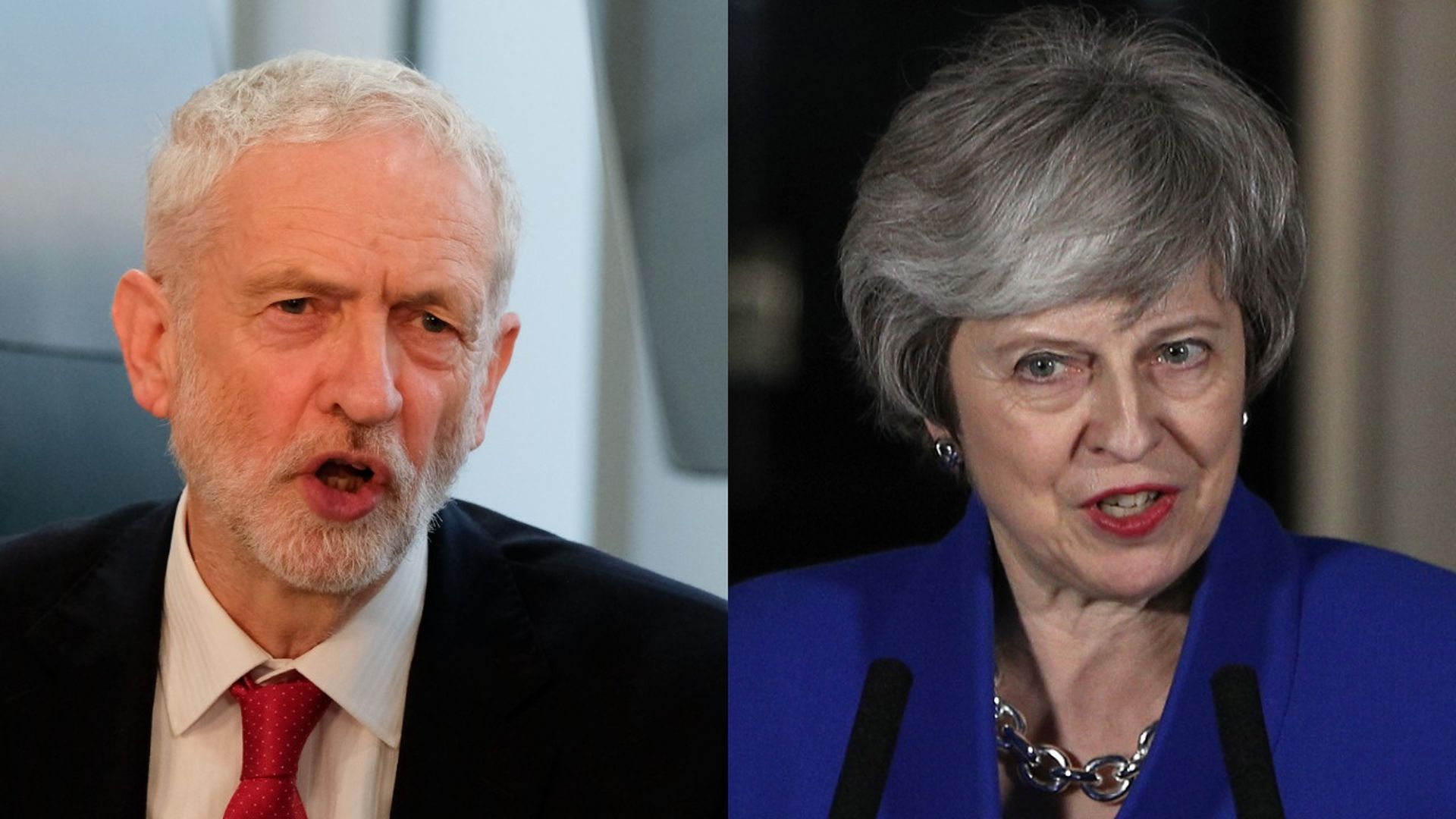
The big picture: We’re finding out now in the U.K., and it ain’t pretty.
The U.K.'s divides over a Brexit deal are often summarized in jargon unintelligible to a casual watcher of world politics — the backstop, customs unions and common markets — but the key driver is something much more familiar: political polarization.
The big picture: The two major parties are both bitterly divided between each other, and among themselves. Red lines from regional parties based in Northern Ireland and Scotland make compromise more difficult still. Those faction-driven politics have made consensus elusive on an issue that will have lasting economic and societal impacts for decades.






/2019/01/17/1547769528120.gif?w=3840)