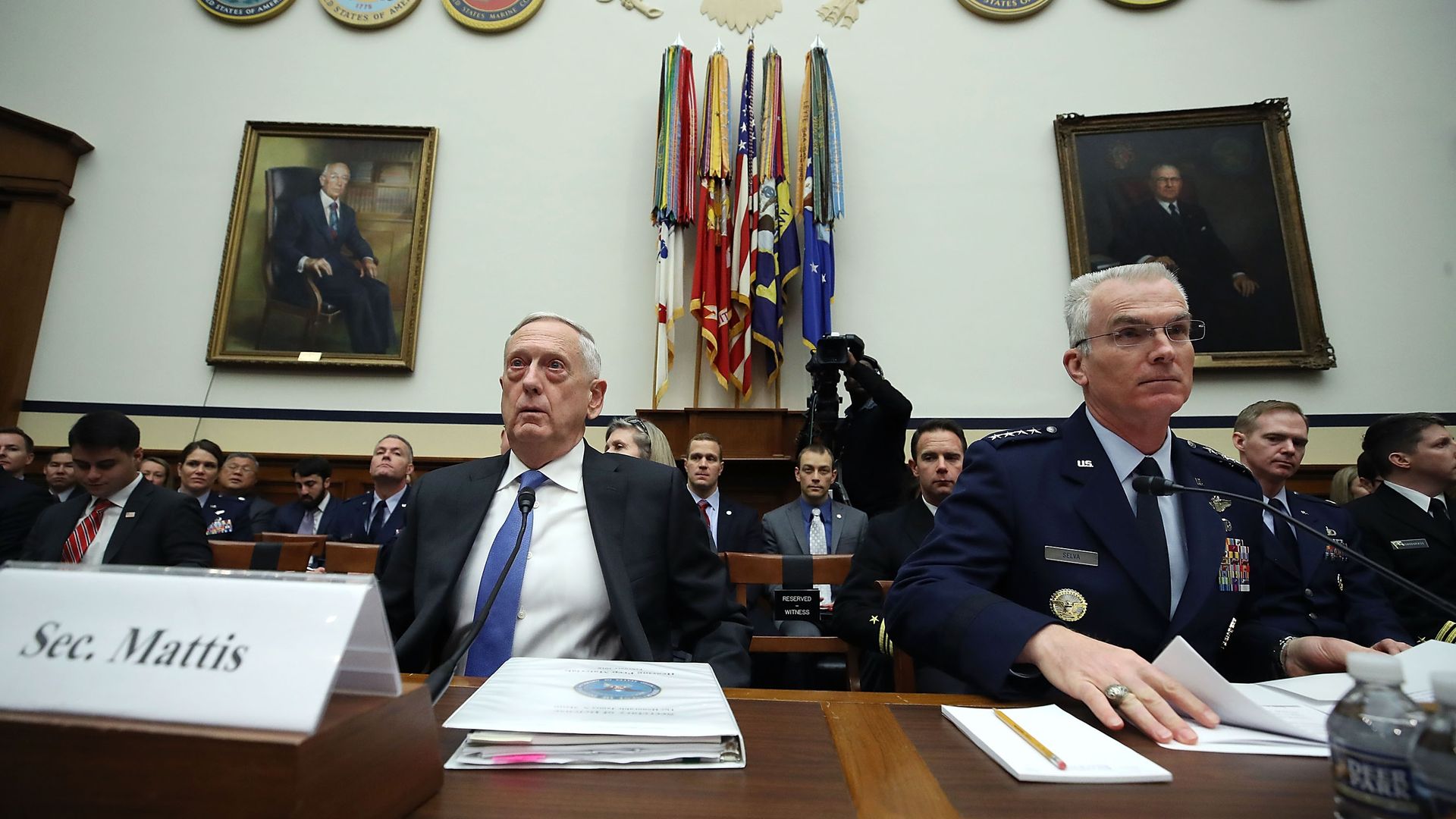
Defense Secretary Jim Mattis told the House Armed Services Committee that the administration’s Nuclear Posture Review is intended to give the U.S. leverage over Russia in a dispute over a 1987 arms treaty, the AP reports.
Key point: The U.S. has claimed that Russia violated the 1987 Intermediate-range Nuclear Forces treaty when it deployed a ground-based cruise missile banned by the treaty in 2016. Russia denies the allegation. The proposed missile would “keep our negotiators negotiating from a position of strength…I don’t think the Russians would be willing to give up something to gain nothing from us.”
The United States' trade deficit in 2017 hit $566 billion — the highest since since 2008 — spurred by a $375.2 billion gap with China and a $71.1 billion deficit with Mexico, reports the AP. President Trump has frequently singled out those two nations as he structured his "America First" economic policy around balanced trade deals, pondering tariffs against China and a renegotiation or termination of NAFTA.
Yes, but: A large trade deficit isn't necessarily a bad thing as it indicates that American consumer confidence is strong and willing to buy. Plus, there's good news for Trump's economic policies in the numbers as well: exports of goods in December were the highest since October 2014, per Reuters, indicating that a weak dollar is allowing more consumers abroad to purchase American-made products.
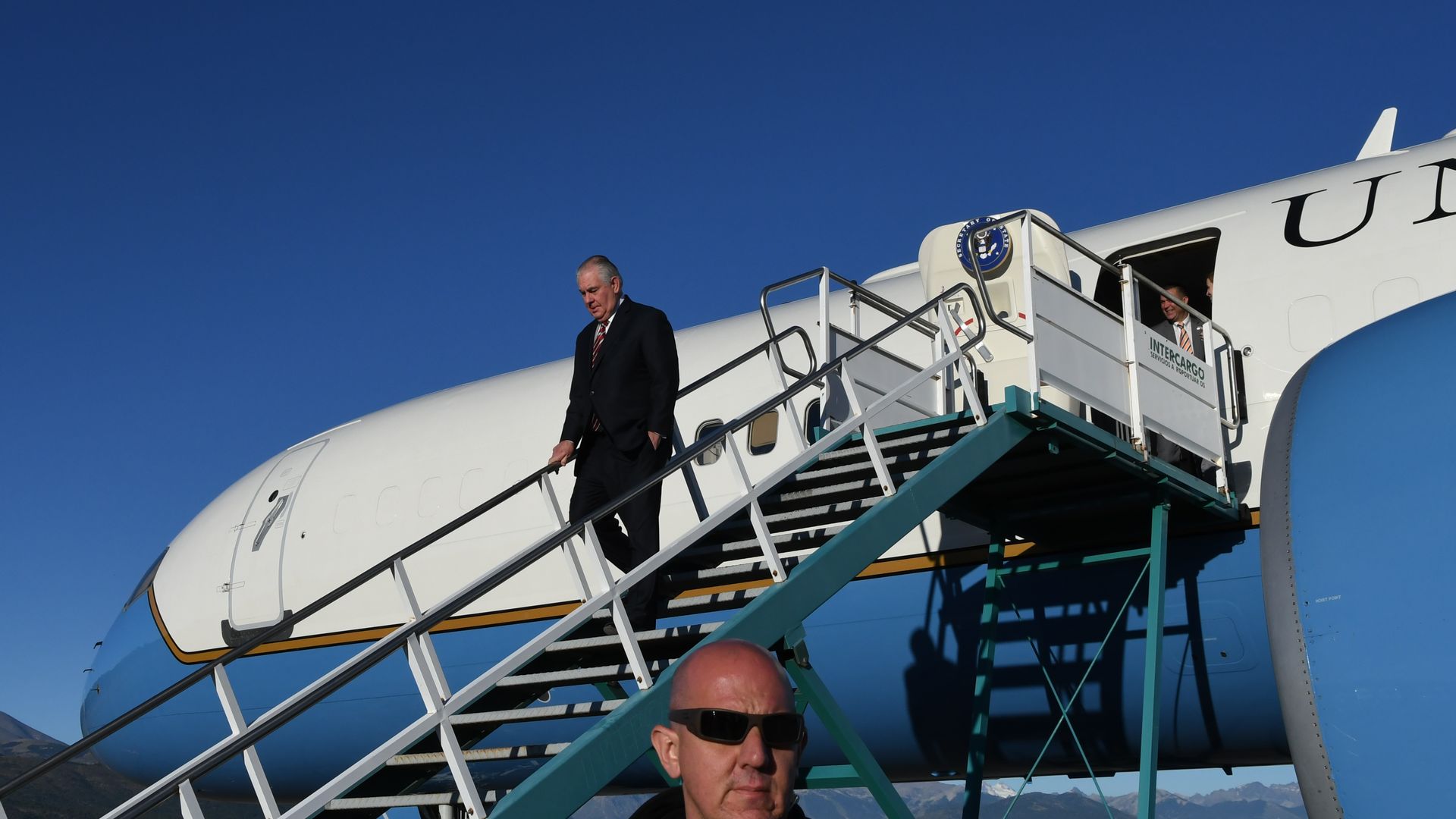
Ahead of his visit this week to South America, Secretary of State Rex Tillerson has been warning about the rising influence of China and Russia in the region. "Latin America doesn't need new imperial powers that seek only to benefit their own people,” he said last week.
The big picture: China is now the top trading partner of Brazil, the region’s largest economy, as well as Argentina and Peru, the two South American stops on Tillerson’s trip. Last month in Chile, Tillerson’s Chinese counterpart announced further plans to invest in Latin America, as part of China’s massive Belt and Road initiative.
Almost 3-in-4 Republican voters think the FBI and Justice Department are trying to undermine President Trump, according to a new Reuters/Ipsos poll released on Monday.
Why it matters: This comes in the wake of a four-page memo crafted by Republicans on the House Intelligence Committee. The poll's key finding is especially surprising given Republicans' historical support for law enforcement.
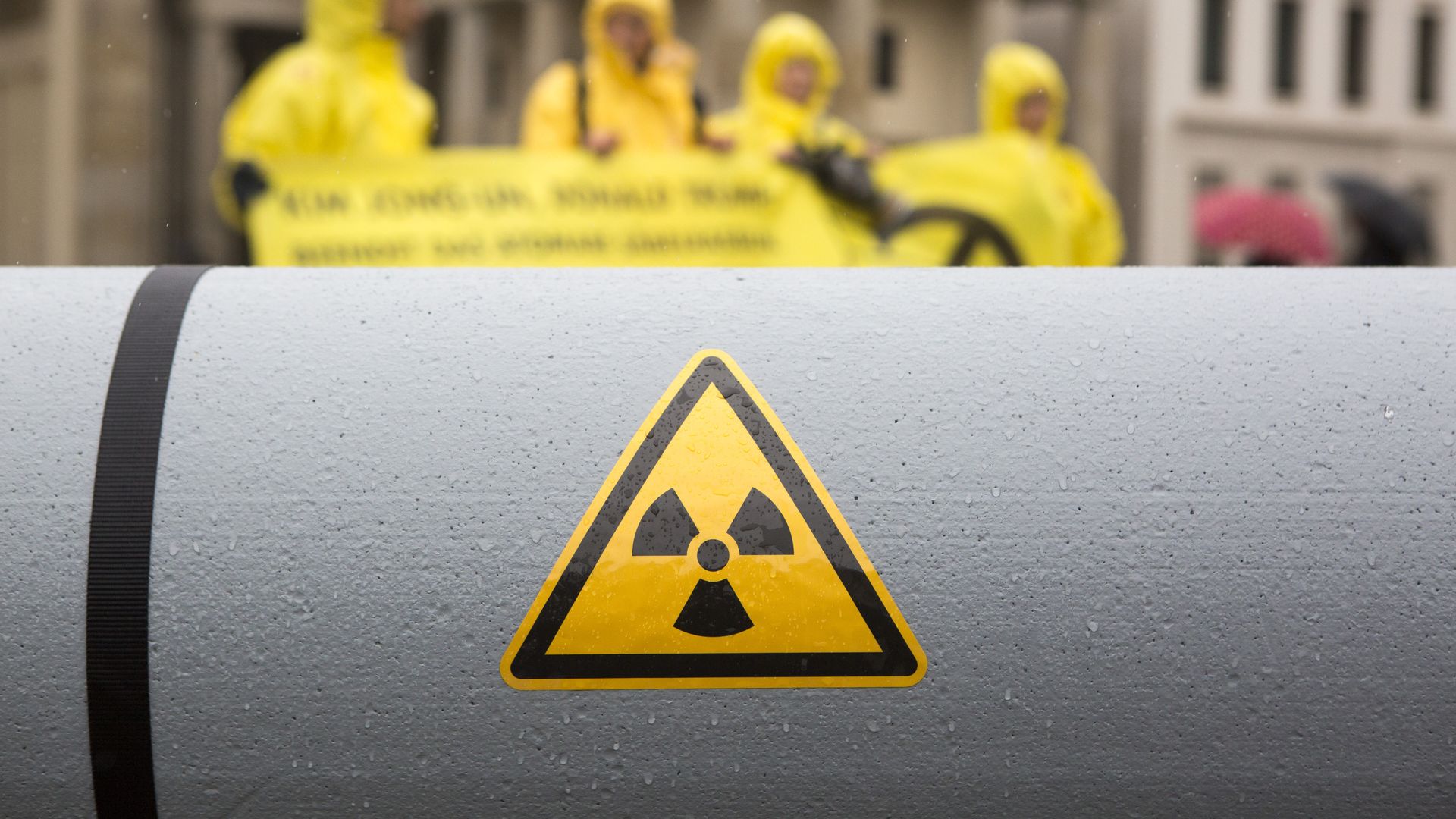
"A new nuclear policy issued by the Trump administration on Friday ... is touching off a new kind of nuclear arms race. This one is based less on numbers of weapons and more on novel tactics and technologies, meant to outwit and outmaneuver the other side," the N.Y. Times' David E. Sanger and William J. Broad write at the bottom of A1.
Why it matters: "The report describes future arms control agreements as 'difficult to envision' in a world 'that is characterized by nuclear-armed states seeking to change borders and overturn existing norms,' and in particular by Russian violations of a series of other arms-limitation treaties."