Thursday's world stories

North Korea fires second missile over Japan
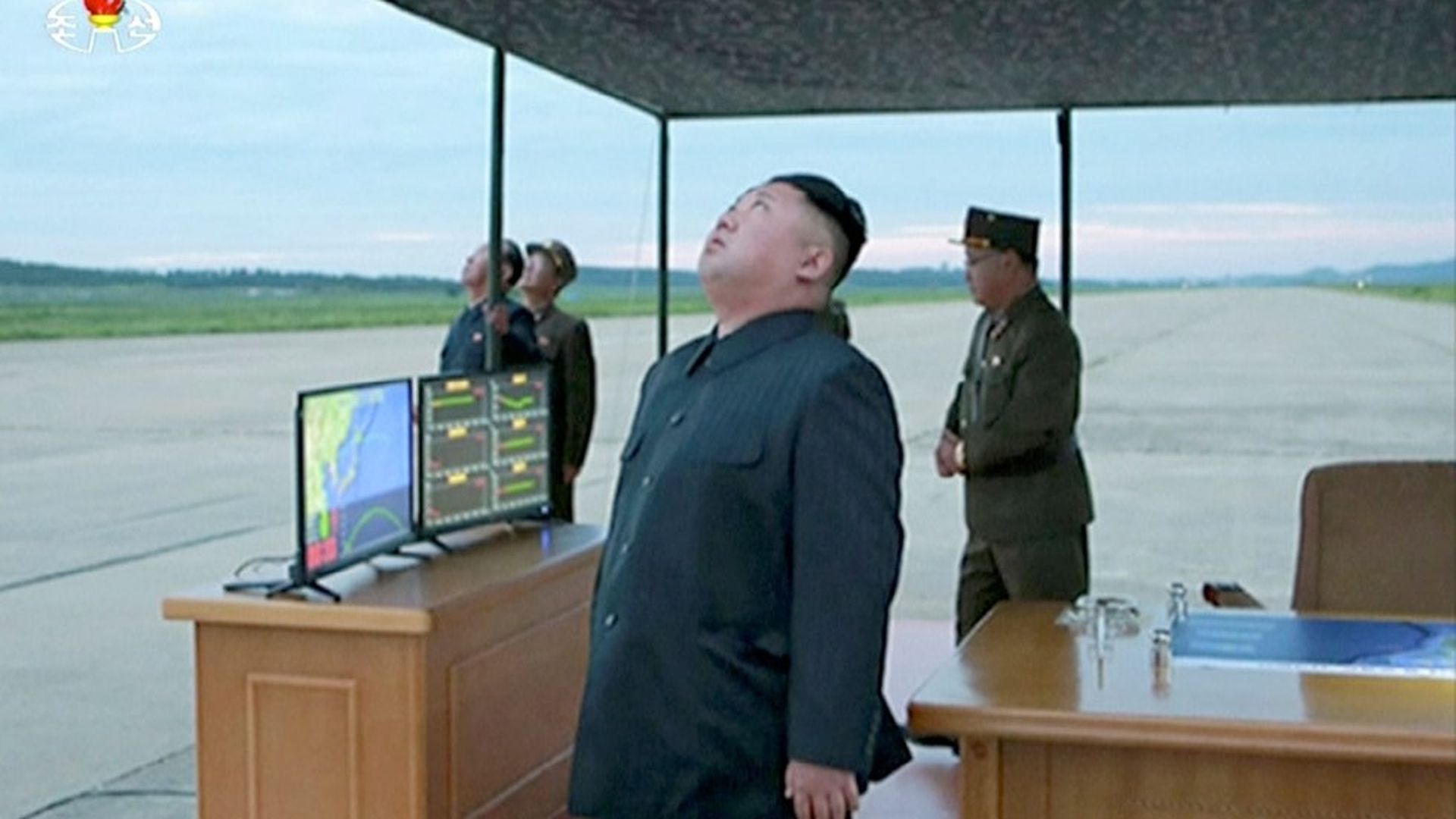
In its 15th missile test this year, North Korea fired a missile eastward from the vicinity of Sunan in Pyongyang, per South Korea's Joint Chiefs of Staff, forcing Japan to warn its residents to take shelter. It flew about 3,700 km landing in the Pacific, per the South Korean military, flying farther than any other missile the North has fired, per the NYT. U.S. Pacific Command Cmdr. Dave Benham assessed the incident to be an intermediate range ballistic missile launch.
This comes just weeks after North Korea launched for the first time what appeared to be a ballistic missile designed to carry a nuclear payload over Japan.
Be smart: This is the first missile North Korea has launched since the UN imposed its toughest sanctions yet on North Korea and comes just hours after the North said it would "sink" Japan and reduce the U.S. to "ashes and darkness." This is not North Korea coming to the negotiating table.
- During the launch, South Korea's military was conducting a ballistic missile drill in the East Sea in response to the latest provocation.
- President Moon will be presiding over a National Security Council meeting.
- The UN Security Council will host a meeting Friday over the launch.
- Cmdr. Benham said NORAD assessed the launch did not pose a threat to North America and PACOM assessed it didn't pose a threat to Guam.
- Trump has been briefed by Chief of Staff John Kelly, per White House Press Secretary Sarah Sanders.
- Secretary of State Rex Tillerson called on all nations to amp up measures against North Korea.

China takes the lead in building quantum data security networks
/2017/12/15/1513305463826.gif?w=3840)
For decades, physicists have looked to use the behavior of particles of light to securely send information. The basic science underlying quantum cryptography has been determined over the past 40 years, but a slew of papers published this summer by physicist Jian-Wei Pan establishes China as the early leader in deploying the technology on a global scale.
Why it matters: Networks using quantum keys theoretically allow for very private communications and safe transactions — because if attacked, the key would be altered and the parties would know it wasn't secure. That would be valuable for financial transactions or voting that involves transmitting information between two points. But beyond a handful of field tests, there hasn't been a commitment to develop the technology at this scale until now.

Rice unmasked senior Trump aides over UAE meeting
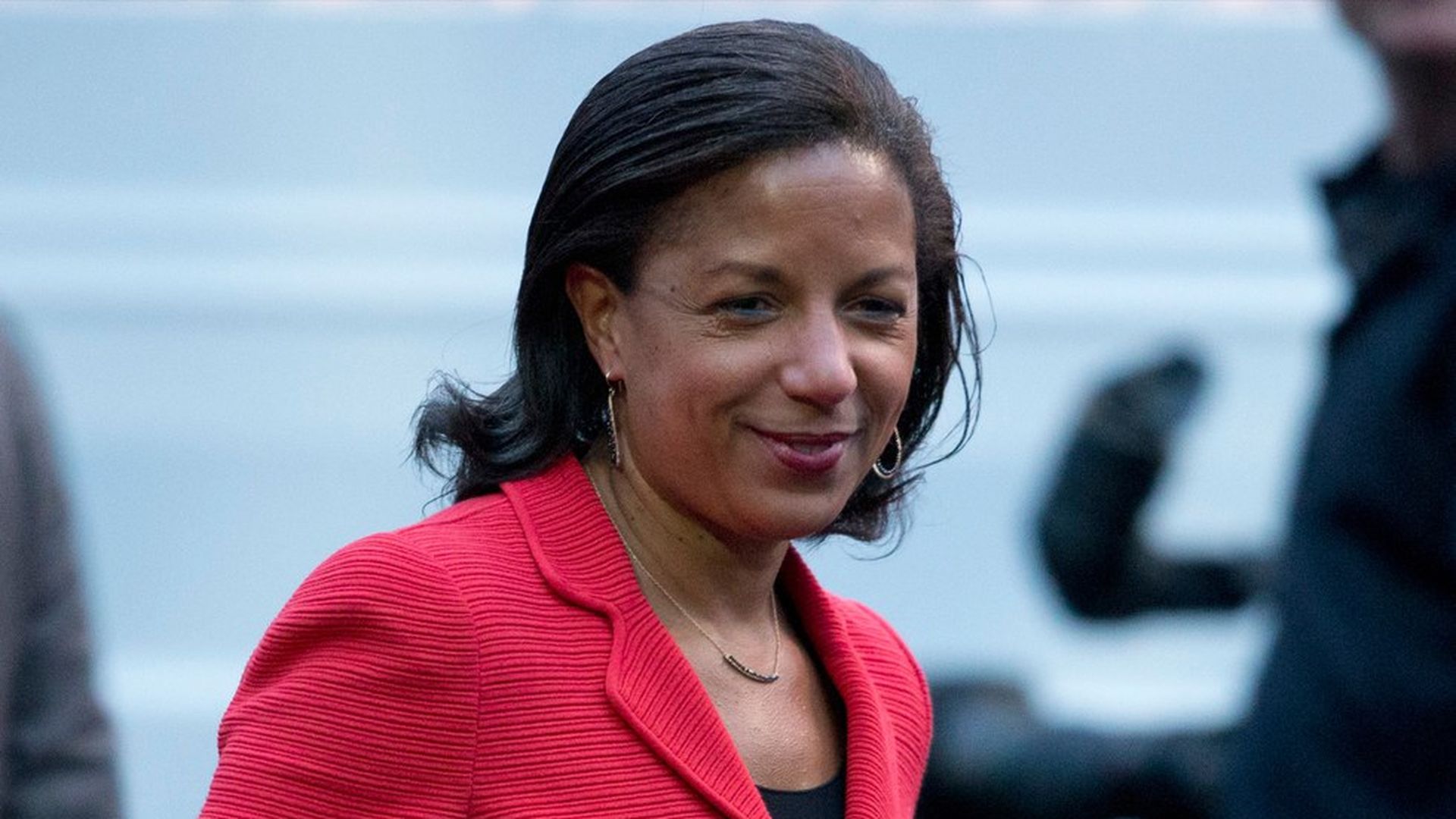
Obama national security advisor Susan Rice told the House Intelligence Committee last week that she unmasked Trump officials in an attempt to discern why they had met with the crown prince of the United Arab Emirates when he paid an unannounced visit to New York last December, per CNN.
- Her reasoning: The UAE's crown prince didn't tell the Obama administration he'd be visiting the United States — common protocol for such a visit — so Rice unmasked the Trump officials involved, whom CNN reported were Michael Flynn, Jared Kushner, and Steve Bannon.
- The meeting topic: Two sources told CNN that the New York meeting topics included Iran, Yemen, and the peace process in the Middle East.
- What's at issue: Just weeks later, the crown prince was reported to have arranged a meeting between Erik Prince, the founder of private security firm Blackwater, the brother of Betsy DeVos, and a Russian official in the Seychelles to convince Russia to pull back from Iran.
Flynn pushed private nuclear deal as national security advisor
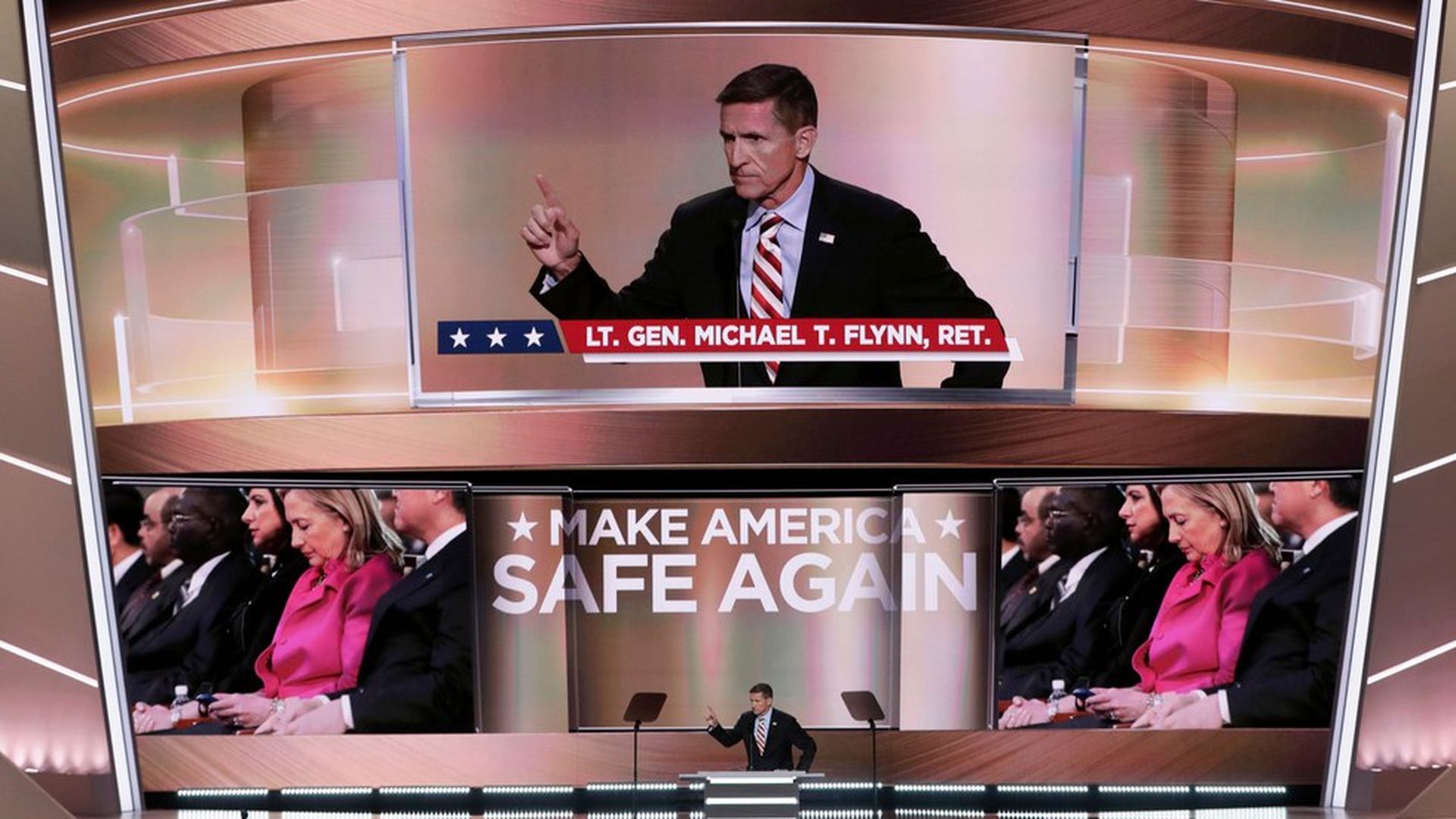
Michael Flynn worked to promote a private plan to build nuclear reactors throughout the Middle East — that, at one point, involved contributions from Russian companies — even during his tenure as President Trump's national security advisor, per The Wall Street Journal.
- Think back: This story was already in the spotlight today as House Democrats asked Special Counsel Robert Mueller to look into Flynn's failure to disclose trips related to the project on his security clearance renewal forms, claiming Flynn "appeared to break the law."
- One step farther: Flynn didn't give up on the project once he assumed a White House position, instead working to arrange meetings between the former military officers behind the project and National Security Council staff.
- Why it matters: It's just more bad news for Flynn as he increasingly finds himself at the nexus of Mueller's investigation.

Dems want Mueller to look into Flynn's trip to Middle East
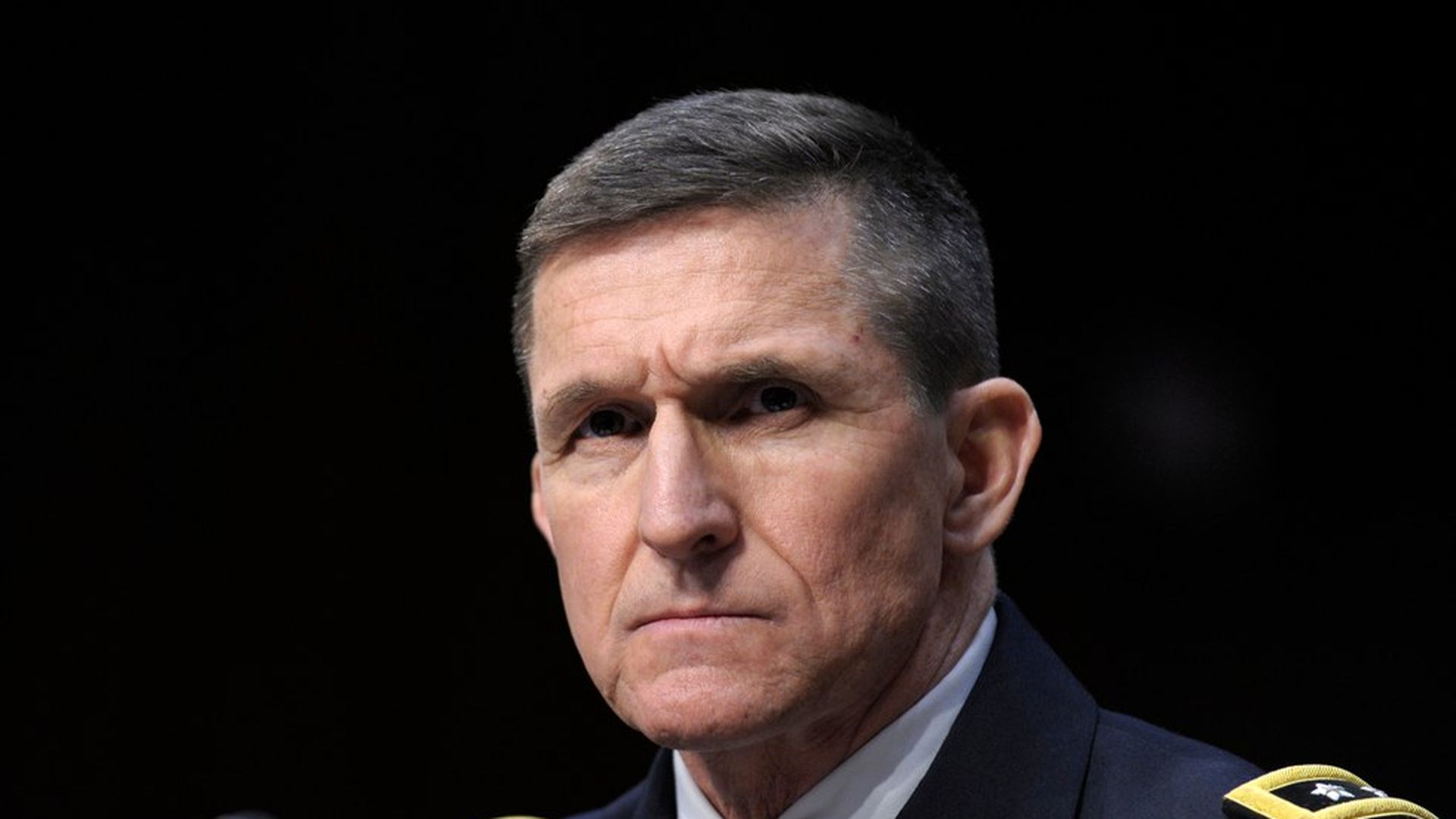
House Democratic leaders copied Special Counsel Robert Mueller on a letter yesterday stating that former national security advisor Michael Flynn appeared to break the law, per CNN. They argue that he failed to disclose a trip to the Middle East to broker a business deal with Saudi Arabia and a Russian government agency in June 2015.
- The letter was drafted by Rep. Elijah Cummings (D-MD), the top Democrat on the oversight committee, and Rep. Eliot Engel (D-NY), the top Democrat on the House foreign affairs committee.
- It was sent to Flynn's former business partners and requested documents relating to his trip.
Why it matters: Flynn is already under intense scrutiny by Mueller for his ties to Russia, his calls to the Russian ambassador during Trump's transition period, and the undisclosed work he did for Turkey last year.