Wednesday's world stories

Kremlin cancels meeting in sign of deteriorating U.S.-Russia ties

Russia's deputy foreign minister has canceled a planned meeting this Friday with the U.S. undersecretary of state, saying "the situation is not conducive to holding a round of this dialogue." This comes a day after the U.S. Treasury levied sanctions against 38 individuals involved in Russian incursions in Ukraine, including two Russian officials, and Trump welcomed the Ukrainian president to the White House.
- U.S. State Department on the cancelation: "Let's remember…these sanctions didn't just come out of nowhere… We remain open to future discussions."
- Why it matters: Trump's plan to develop "a better relationship" with Russia seems to be collapsing. Earlier this week Russia announced it would start targeting U.S. aircraft west of the Euphrates after the U.S. shot down a Syrian aircraft, and buzzed by a U.S. spy plane.
- Read more: Tillerson's plan to deal with the Kremlin.

Ohio Senator met with N. Korea to ask for Warmbier release

Sen. Rob Portman revealed that he met with North Korean officials last year in an attempt to free his imprisoned constituent, Ohioan Otto Warmbier, per The Columbus Dispatch. But, over coffee with his constituents today, Sen. Portman said, "I feel like I did not succeed in getting him home."
Portman told constituents at an event today that — with the approval of the State Department — he met with North Korea's delegation to the United Nations in New York late last year. He urged for Warmbier's release or the approval of a visit from the Swedish ambassador to North Korea, who acts as the United States' diplomatic liaison to the reclusive regime. His efforts, as well as subsequent attempts to reach out to the regime this year, proved unsuccessful.

Russia's test lab for cyberwar

Wired's July cover story reveals Russia has been cyber attacking Ukraine for years, based on six months of reporting by senior writer Andy Greenberg:
- "[H]ackers are now able to halt the gears of modern society. But, these blackouts weren't just isolated attacks. They were part of a digital blitzkrieg that has pummeled Ukraine over the past three years — a sustained cyber assault that has systematically undermined every sector of the economy: media, finance, transportation, military, politics and, energy.
- "Global cybersecurity analysts have a theory about the endgame of Ukraine's hacking epidemic: They believe Russia is using the country as a cyberwar testing ground — a laboratory for perfecting new forms of global online combat."
- "[T]he digital explosives that Russia has repeatedly set off in Ukraine are ones it has planted at least once before in the civil infrastructure of the United States."
U.S. downs third pro-Syria aircraft this month
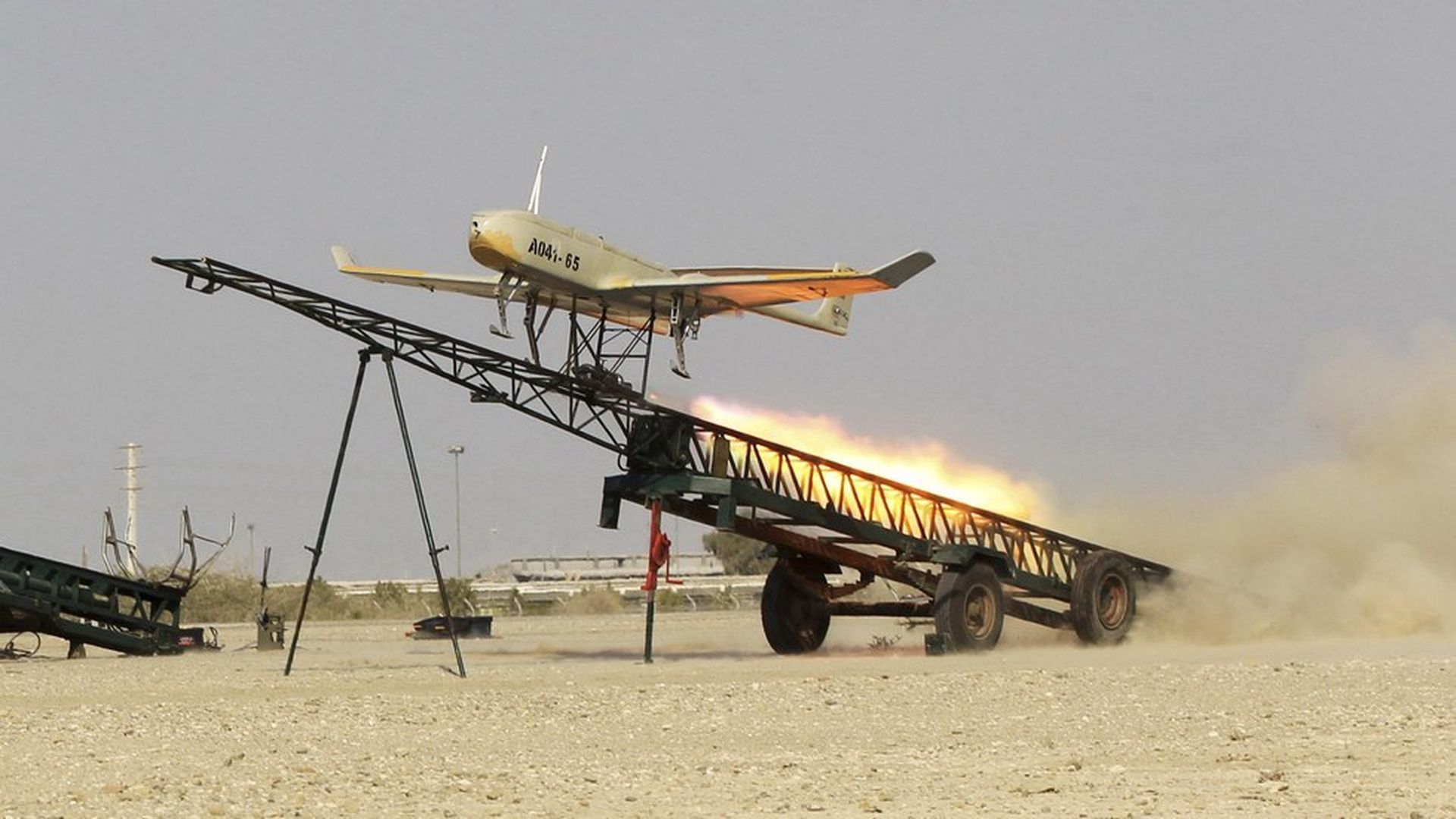
The U.S. shot down a pro-Syrian regime drone near a training base for U.S.-backed forces in al Tanf, Syria, on Monday, per the AP. This marks the third time the U.S. has downed a pro-regime aircraft this month (including a Syrian aircraft itself), marking an escalation of the conflict.
Why it matters: This suggests the U.S. isn't backing down from defending itself against hostile acts despite the Russian warning it would treat U.S. aircraft flying west of the Euphrates as targets.
Russian fighter jet flies within 5 feet of US plane

A Russian jet flew within five feet of an Air Force recon plane over the Baltic Sea, per Fox News. And it happened just one day after Russia told the United States that any U.S.-led coalition planes over Syria west of the Euphrates River were considered potential targets.
American officials told Fox News the Russian jet was "provocative" and flying "erratically," deeming the encounter "unsafe."
Sounds familiar: There have been at least 35 encounters in the Baltic region this month alone between Russian and American military assets, but yesterday's incident adds to a long list of publicly reported provocative Russian military moves during the first few months of the Trump administration.