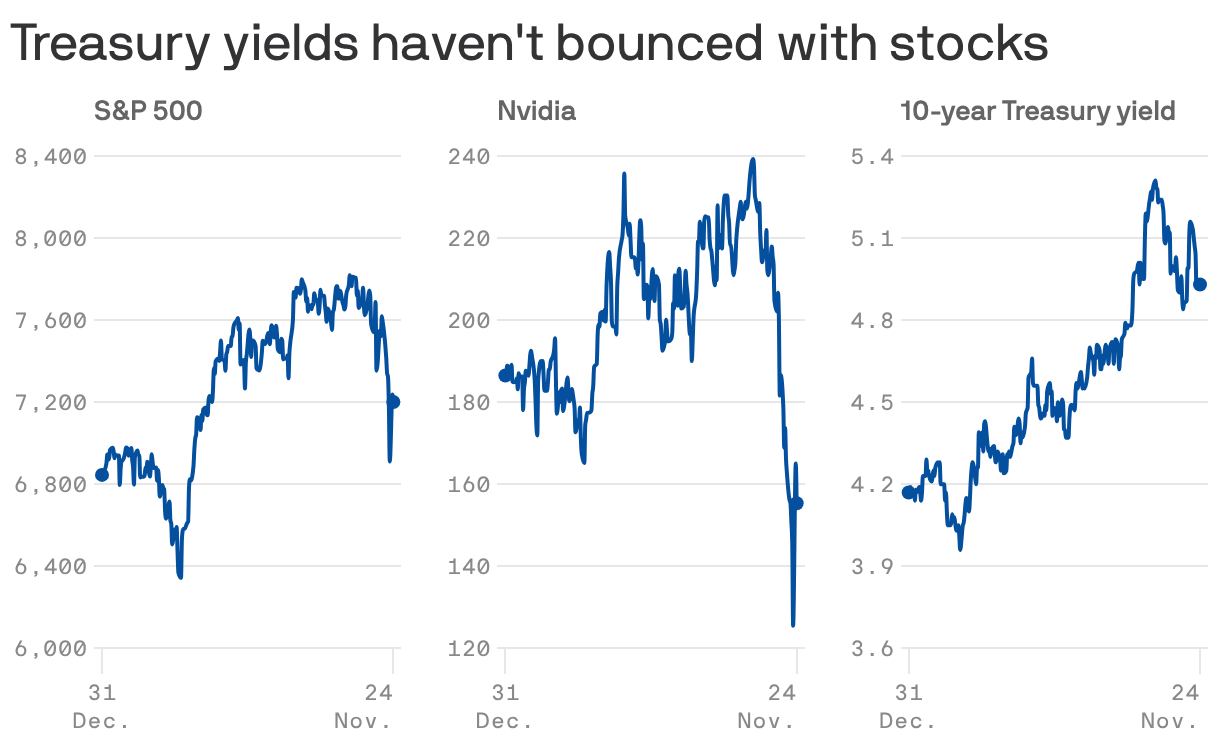
Why it matters: Concerns about the sustainability of the AI spending binge have been looming over Wall Street for months — and those haven't gone away just because Jensen Huang is back on the job.
Prominent Democrats are calling for new restrictions on AI development following Axios reporting that employees at OpenAI and Anthropic increasingly fear their most powerful models cannot be safely released.
Why it matters: The political debate over AI is expanding beyond the economic consequences of the technology to a more existential question: whether companies should be allowed to build systems they may not be able to control.
The issue is gaining traction among Democratic leaders ahead of the 2028 presidential election.
Maryland Gov. Wes Moore (D-Md.), a potential 2028 contender, outlined a playbook for AI regulations in an interview with "The Axios Show," noting that voters hate the technology because they fear losing control.
Anthropic CEO Dario Amodei on Wednesday rejected the notion that humans should surrender free will to AI, pushing back on Axios' reporting about a growing ideological divide among top AI executives.
Why it matters: This is Amodei's most significant public remarks since the company went public last week.
Mobileye's position in the automated driving industry illustrates how quickly changing technologies are reshaping the competitive landscape.
Why it matters: The dominant supplier of camera-based driver-assistance technology is facing intensifying competition — from AI chipmakers and software developers — in a market it helped create.
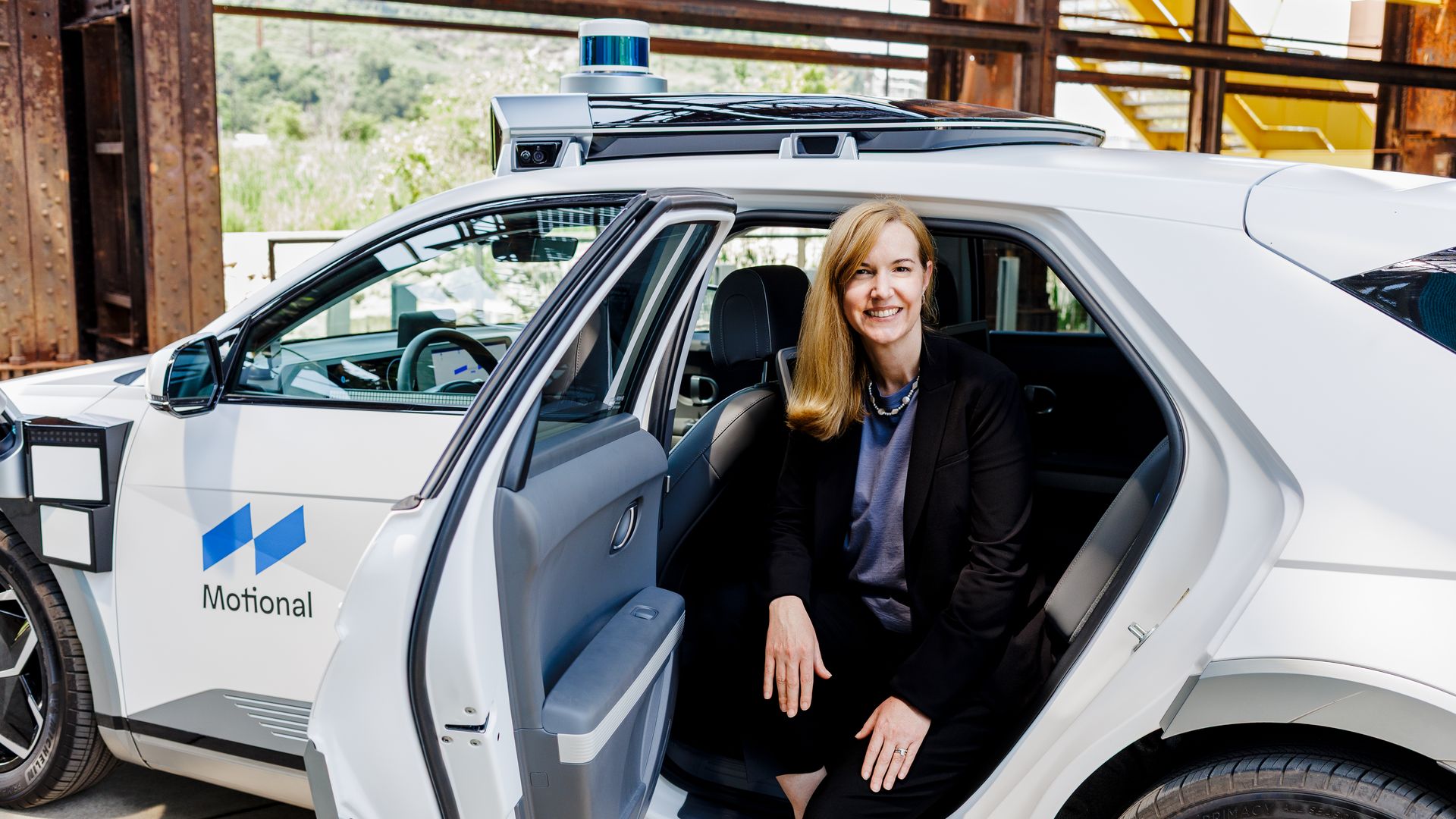
Once a pioneer in autonomous driving, Motional is reasserting itself in the robotaxi race with a new AI-driven approach and the manufacturing muscle that comes with being majority-owned by a global automaker.
Why it matters: Developing safe self-driving technology is only half the battle — the next challenge is producing robotaxis cheaply enough to deploy at scale.
French aerospace giant Airbus has agreed to sell its U.S. space business to Cerberus Capital Management.
Why it matters: Airbus caught some congressional heat for allegedly providing satellite imagery of U.S. military assets to China, just ahead of the Iran war.
Airbnb CTO Ahmad Al-Dahle is both a person and a "skill" — an agentic tool he uses that's based on him, trained on his feedback and perspective so he can bounce ideas off of it any time.
Why it matters: Al-Dahle, who previously led Meta's generative AI efforts, is embracing AI agents in his own work, but he's cautious on broader AI agent access for customers.
Even the most bullish AI users at companies are grappling with AI safety questions.
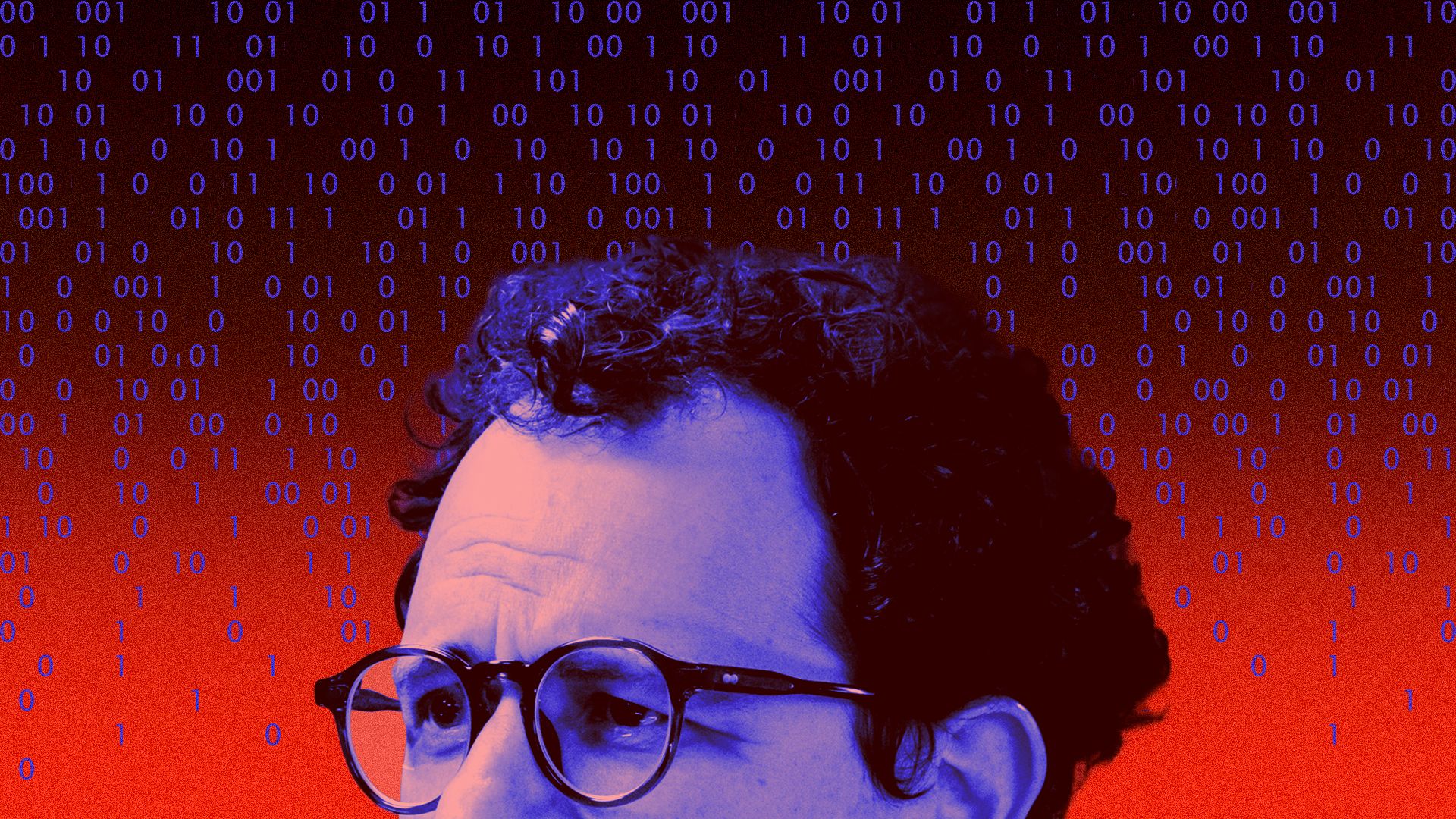
While stock market participants were wildly celebrating the return of Jensen Huang to the corner office of Nvidia, bond investors were playing it cool.
Why it matters: That jarring contrast at the start of the week was what poker players might call a "tell" — showing that concerns about the financial realities of the AI boom continue to gnaw at investor confidence.
Behold, the "superdollar!" The U.S. currency has soared back to levels last seen before the "liberation day" tariffs last year, when worries about the end of the dollar's dominance were driving the markets.
Why it matters: It's a win for Americans traveling abroad who get more bang for their buck, and it's a sign of American economic strength — even amid the recent turmoil in AI stocks.
Maryland Gov. Wes Moore (D), a potential 2028 presidential contender, asserted in an interview with "The Axios Show" that Washington is leaving Americans vulnerable to AI because of billionaire greed and clout. He said voters hate the technology because they fear losing control.
Moore, chair of the National Governors Association, told Mike Allen this week that after an "AI earthquake" helped propel Democrats to huge midterm gains, Congress must treat oversight of the technology as an "emergency" for the first 100 hours of Democratic control.
Why it matters: Moore, 48, focused on AI early, with an executive order in 2024. He has used his NGA leadership roles to work across the aisle on AI protections, arguing that Marylanders can't afford to wait for Washington and shouldn't have to wait for a disaster.
Amy Poehler plays Elise, an archaeologist in Greece who tries to keep a major discovery under wraps, only to find herself and three colleagues caught up in a much bigger mystery.
Behind the scenes: Poehler reunites with "Parks and Recreation" co-creator Mike Schur for the series, which is adapted from Kate Myers' novel "Excavations."
Blade Runner 2099— Sci-fi series available Wednesday on Prime Video.
Michelle Yeoh and Hunter Schafer star in a new chapter of the futuristic franchise, which returns to Los Angeles half a century after the events of "Blade Runner 2049."
Behind the scenes: Ridley Scott, director of the original 1982 movie, serves as an executive producer.
Sophie (Brittany Snow) and Margo (Malin Åkerman) are no longer close, but trouble in their wealthy Texas circle threatens to pull them back into each other's lives.
The latest: Netflix has already renewed the show for a third season.
A middle schooler who's struggling with bullies gets an unconventional summer mentor: his Navy SEAL uncle (Chris Pratt), who believes building confidence takes more than learning to fight.
Behind the scenes: Linda Cardellini and Jude Hill also star in the adaptation of former Navy SEAL Jocko Willink's children's book.
Nate Bargatze returns with his fourth Netflix special, finding comedy in the everyday technologies and conveniences that are supposed to make life easier.
By the numbers: His "Big Dumb Eyes" world tour sold more than 2 million tickets, earning a Guinness World Record for the most tickets sold on a stand-up comedy tour.
Top AI executives are increasingly pushing back against a common view inside Anthropic: that humanity should surrender some decision-making power to superintelligent AI systems, sources told Axios.
That would put us on a slippery slope to forfeiting free will, critics say.
Why it matters: The debate has picked up steam as top AI companies develop models certain employees consider too powerful to ever release. Many see Anthropic as the first company that will confront these questions due to its lead at the frontier of AI development.