Motional retools for the robotaxi race

Add Axios as your preferred source to
see more of our stories on Google.
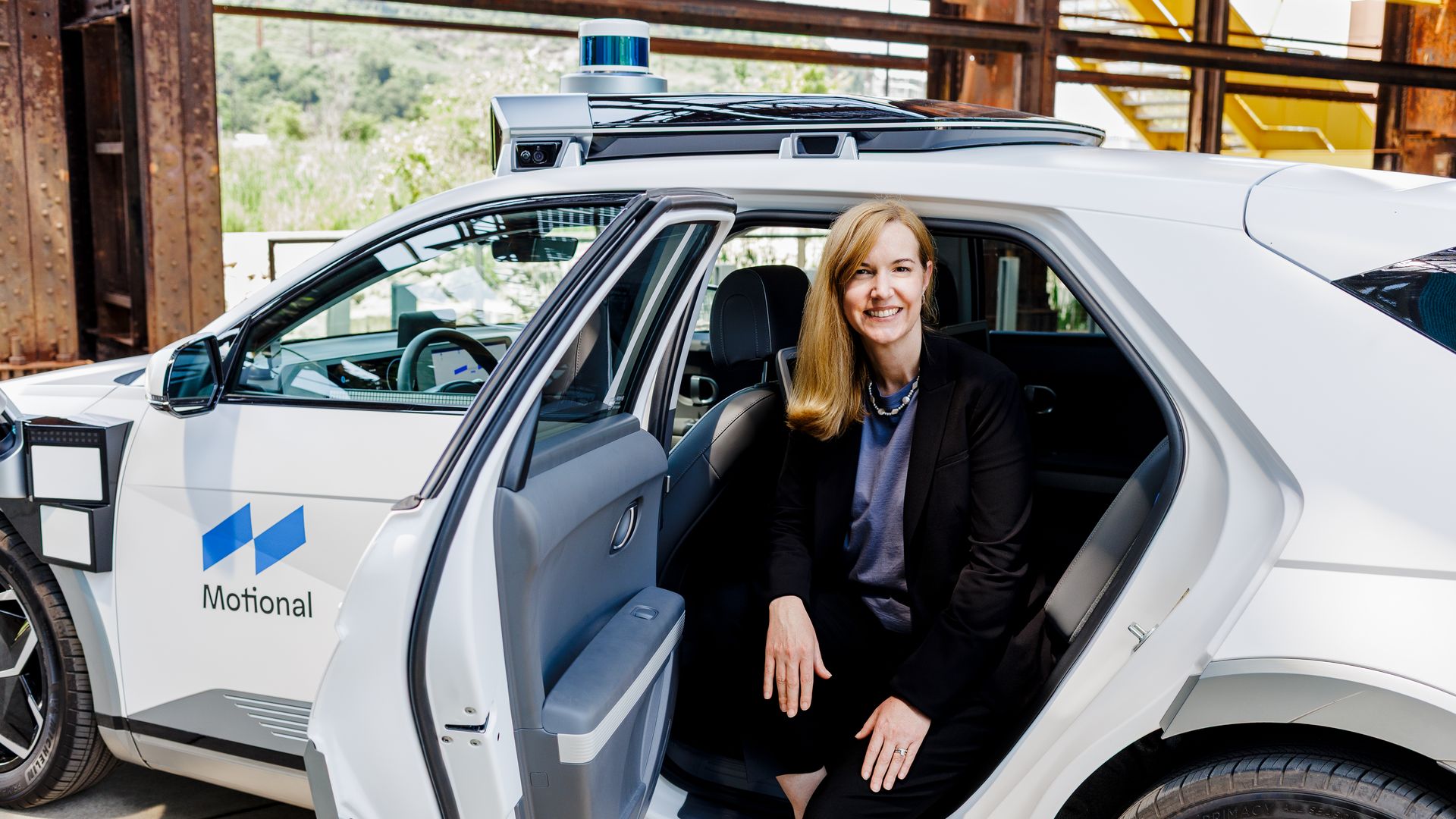
Motional CEO Laura Major in the back seat of a robotaxi. Image: Courtesy of Motional
Once a pioneer in autonomous driving, Motional is reasserting itself in the robotaxi race with a new AI-driven approach and the manufacturing muscle that comes with being majority-owned by a global automaker.
Why it matters: Developing safe self-driving technology is only half the battle — the next challenge is producing robotaxis cheaply enough to deploy at scale.
Driving the news: Motional plans to launch fully driverless rides through Uber in Las Vegas in early December, after spending two years overhauling its autonomous driving technology.
- Motional pulled back from an earlier launch plan in 2023 after concluding that its tech, while capable of operating safely, was too expensive to scale profitably.
- After restructuring, it embraced an AI-first approach, including large driving models, while building on years of experience under its belt.
Catch up quick: Motional's roots stretch back to nuTonomy, an early pioneer of driverless tech that launched a robotaxi pilot in Singapore a decade ago.
- Hyundai Motor Group and Aptiv, a leading industry supplier, formed Motional as a joint venture in 2020, incorporating Aptiv's earlier acquisitions of nuTonomy and Ottomatika.
- Hyundai took majority control in 2024 after buying down Aptiv's stake.
The big picture: Motional occupies an unusual position in the robotaxi industry, relying on deep partnerships rather than trying to do everything itself.
- Unlike more vertically integrated rivals such as Waymo and Zoox, Motional relies on Hyundai to manufacture vehicles and Uber to connect with passengers.
- Its Ioniq 5 robotaxis come off Hyundai's assembly line with autonomous driving hardware already integrated, rather than having sensors and computers installed afterward.
- Motional also benefits from sharing data with Hyundai's assisted-driving software division, 42dot, to improve its AI models.
Between the lines: Motional CEO Laura Major says that relationship gives Motional an advantage over other robotaxi companies that are also adopting Hyundai vehicles for robotaxis.
- Waymo and Avride, for example, plan to add their own self-driving hardware and software to the Ioniq 5, while Motional worked directly with Hyundai to develop a factory-ready robotaxi, including automotive certification and crash testing.
- Motional is also collaborating with Hyundai on future platforms, giving it early insight into technological advances that could help reduce costs.
- "We know there's still another step function that has to happen to get to that economic scalability in the industry that no one's gotten to yet, and that is where we are well positioned," Major told Axios.
Reality check: Motional isn't planning to flood Las Vegas with robotaxis anytime soon.
- Major says the company will keep its initial fleet small while awaiting a next-generation platform with less expensive sensors and computing hardware.
- She declined to discuss what that next vehicle might look like or when it could arrive.
What we're watching: Las Vegas is emerging as a robotaxi battleground, with Zoox and Waymo already operating driverless services, Motional preparing to join them and Tesla laying the groundwork for its own launch.
- Motional and Zoox are expected to become the first two driverless vehicle providers available through Uber in the same U.S. city.
The bottom line: Motional thinks it has the right formula. But the race to make robotaxis profitable is still anyone's to win.
