Tuesday's technology stories

Pentagon leaders observe laser-weapon tests in New Mexico
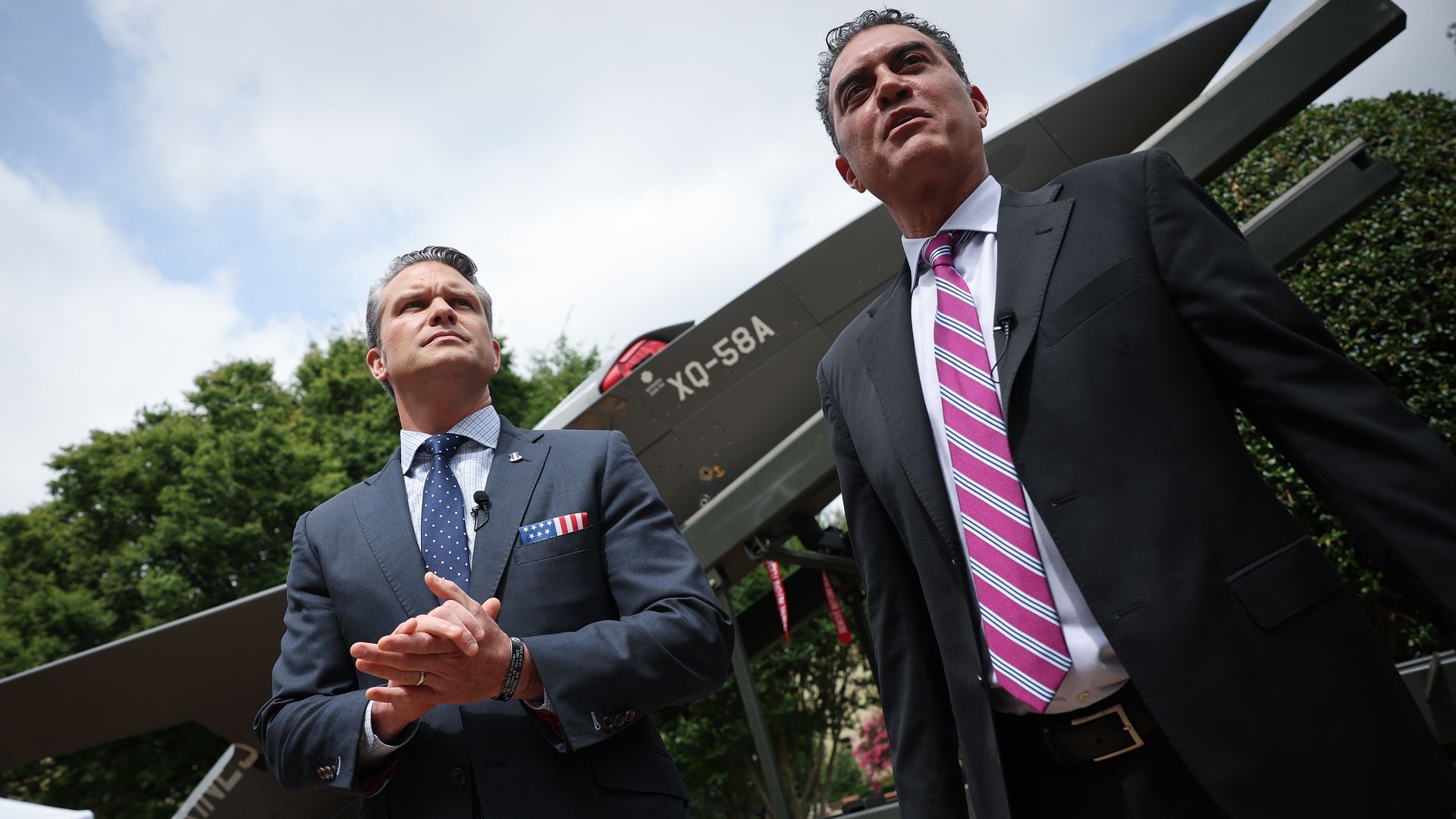
Defense Secretary Pete Hegseth and the Pentagon's chief technology officer, Emil Michael, on Tuesday attended a demonstration of laser and microwave weapons in New Mexico.
Why it matters: It's the first known instance "of a sitting U.S. defense secretary personally observing a live directed-energy weapon firing," according to Laser Wars, which broke the news.

White House quiet on OpenAI's Mythos-like model
OpenAI rolled out a cybersecurity model that rivals the capabilities of Mythos — without nearly as much fanfare or political pushback as Anthropic received.
Why it matters: The seemingly straightforward model release raises questions about what actually triggered the Trump administration's concerns about Anthropic's Fable 5 and Mythos 5.
China's AI advances collide with U.S. safety debate

One of the biggest unknowns in AI security is also one of the most consequential: China's progress toward frontier AI models.
Why it matters: The world is only months away from AI models dramatically accelerating cyber threats, Five Eyes leaders warned Monday.

SpaceX "Starfall" launches on secretive test flight

SpaceX's "Starfall" capsule launched Tuesday morning for its first test flight, a somewhat hush-hush affair for a small but potentially pivotal new bit of space tech.
Why it matters: In FAA filings, SpaceX suggests Starfall could serve two roles: Offering "access to microgravity and vacuum" for companies interested in space manufacturing, plus "point-to-point delivery of critical cargo through space on rapid timelines" — mail missiles, basically.
- The company also argues that Starfall could take the International Space Station's "successful manufacturing experiments and scale them to a self-sustaining manufacturing economy in space."

MGX raises roughly $50B for AI bets
MGX, the Abu Dhabi-backed investor in OpenAI and xAI, has raised nearly $50 billion that it will plow into the AI sector, Bloomberg reports.
- The fund raised capital from both sovereign wealth funds and investors.
Why it matters: It cements MGX as one of the largest tech funders out there.


Tech stocks slump as AI bubble fears loom
Tech stocks shriveled up Tuesday as fears about an AI bubble sapped market momentum.
Why it matters: Chatter about a bubble has been prominent in recent months but hasn't yet delivered a long-lasting blow to stocks.
Driving the news: The tech-heavy Nasdaq Composite Index fell 2.5% shortly after the opening bell.
- The broad S&P 500 index was down roughly 1%.
Zoom in: It's a particularly ugly day for chip memory and data storage stocks.
- They suffered some of the worst declines early, after a 10% overnight drop in South Korea's KOSPI index, which is dominated by memory chip makers Samsung Electronics and SK Hynix.
- In the U.S., memory chip maker Micron dove more than 10% in early trading, storage device maker Sandisk plunged more than 12% and hard disk drive makers Seagate Technology and Western Digital were both lower by roughly 8%.
The big picture: Makers of memory chips and data storage devices have been some of the biggest beneficiaries of the AI infrastructure boom, which has created unprecedented demand and soaring prices for products that were long seen as commodity inputs to tech products like laptops and cellphones.
Shares of SpaceX — which went public less than two weeks ago — briefly fell below their opening price of $150 on Tuesday.
- The company — known broadly for rockets — has become an AI play as investors bet on a lucrative future with orbital data centers.
The bottom line: It's too early to tell whether this is a serious shakeout — or just a temporary rebalancing.
Exclusive: Phishing enters automation era

Cybercriminals are increasingly automating not just phishing emails but entire attack workflows, helping fuel a nearly 15-fold increase this year in phishing attacks that bypass traditional identity verification tools.
Why it matters: The cybercriminal ecosystem is still making gains despite generally lacking the money and compute resources needed to access the most advanced AI systems.
Exclusive: Aspen Institute takes next step to stop scammers

The Aspen Institute is launching a new initiative to mobilize its national anti-scam strategy, released last year, the organization exclusively shared with Axios.
Why it matters: Scams are continuing to proliferate, creating more incentive for partnership models where companies can trade notes on what's working or not in their efforts to crack down.

Snap CEO says Specs are bet on shift back to in-person connection
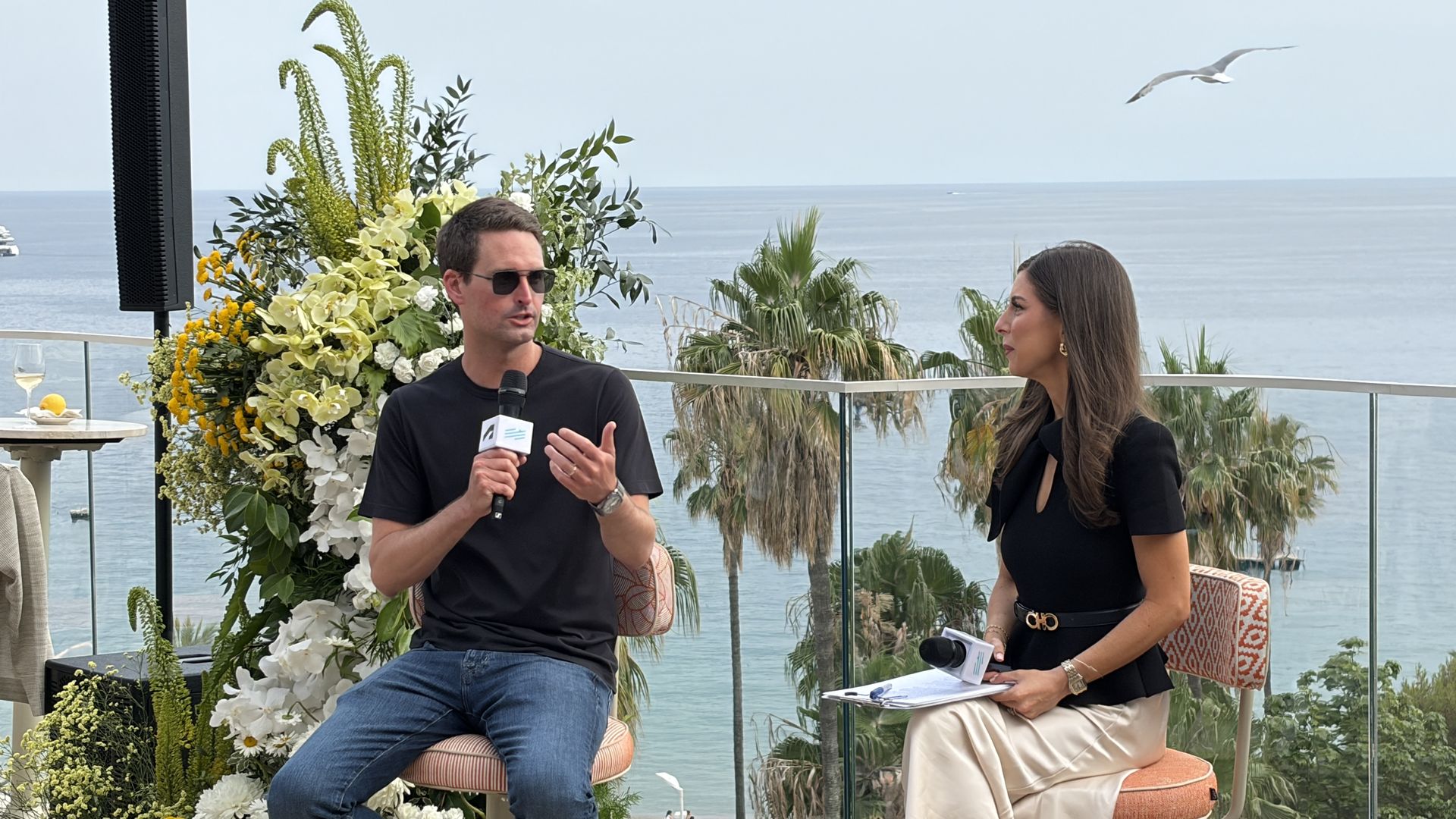
CANNES, France — Specs is a bid on the future of social networking returning to real-world interaction, Snap CEO Evan Spiegel told Axios' Sara Fischer on Monday.
Why it matters: Snap has staked its future on consumer smart glasses, even as investors pressure the company to sell the business and more companies enter the space.
People Inc. CEO accuses Google of abusing its market power

CANNES, France — People Inc. CEO Neil Vogel accused Google of abusing its market power by using the same crawler for both search and AI.
Why it matters: While some publishers want to block crawlers to protect their content from getting swept up by AI models, search traffic remains a key metric for advertising and affiliate revenue.
After $86 billion IPO, SpaceX to borrow $20 billion

SpaceX still needs money?
Driving the news: After just recently securing $86 billion in a record IPO, Elon Musk's SpaceX plans to raise at least $20 billion more by selling bonds.
Why it matters: SpaceX's public offering earlier this month spotlighted the importance of the stock market to the AI boom. But giant tech companies are also leaning heavily on the corporate bond market to source cash for AI investment.

AI lab musical chairs hits Google the hardest

Google DeepMind lost two high-profile researchers in a week marked by a flurry of departures across major AI labs.
Why it matters: The talent wars continue and have intensified at the highest levels as many AI developers believe that artificial general intelligence (AGI) is on the horizon.
Driving the news: Noam Shazeer announced last week that he was leaving Google DeepMind for OpenAI. Google previously paid more than $2 billion to acqui-hire Shazeer and part of his Character.ai team.
- Shazeer co-authored the pivotal 2017 paper "Attention Is All You Need," which introduced the transformer architecture — the "T" in ChatGPT.
- Two days later, John Jumper, who shared the 2024 Nobel Prize in Chemistry for AlphaFold, said he was also leaving Google DeepMind for Anthropic.
- Meanwhile, Barret Zoph, who left Thinking Machines in January after "alleged misconduct," rejoined OpenAI and is now departing the company for a second time.
- Nvidia also acqui-hired the team behind Essential AI, including AI researcher Ashish Vaswani.
The big picture: Even as companies race to automate more of AI research itself, they're placing extraordinary value on a tiny number of humans who know how to direct that work.
- Plus, one or two key hires can also help spur further hiring while a major departure can spur further defections.
Yes, but: Not all of the recent personnel moves are the same.
- Shazeer and Jumper are genuine lab-to-lab defections.
- Essential AI is more along the lines of the expected consolidation of startups.
- Zoph's latest departure remains unexplained.
Between the lines: The most coveted researchers offer more than technical knowledge contained in papers or code.
- They bring judgment about which ideas to pursue, experience running enormous experiments and the ability to recruit other sought-after scientists.
- For top researchers, deciding where to work often involves a complicated calculus: potential financial rewards, access to computing power, each company's prospects of leading the field, and whether its leadership will wield that power responsibly and in ways that align with their own beliefs.
- On the financial front, Anthropic and OpenAI have the advantage of forthcoming IPOs, which could have greater upside than can be offered by the other major players, which are already publicly traded.
- The other factors are more subjective, with perceptions around leadership and responsibility varying from person to person.
What we're watching: Many in the industry see just a short window until the models start getting better on their own, often called recursive self-improvement.
- The competition for top talent could intensify as researchers decide where they want to be during a period many view as pivotal for AI development.