Snap CEO says Specs are bet on shift back to in-person connection

Add Axios as your preferred source to
see more of our stories on Google.
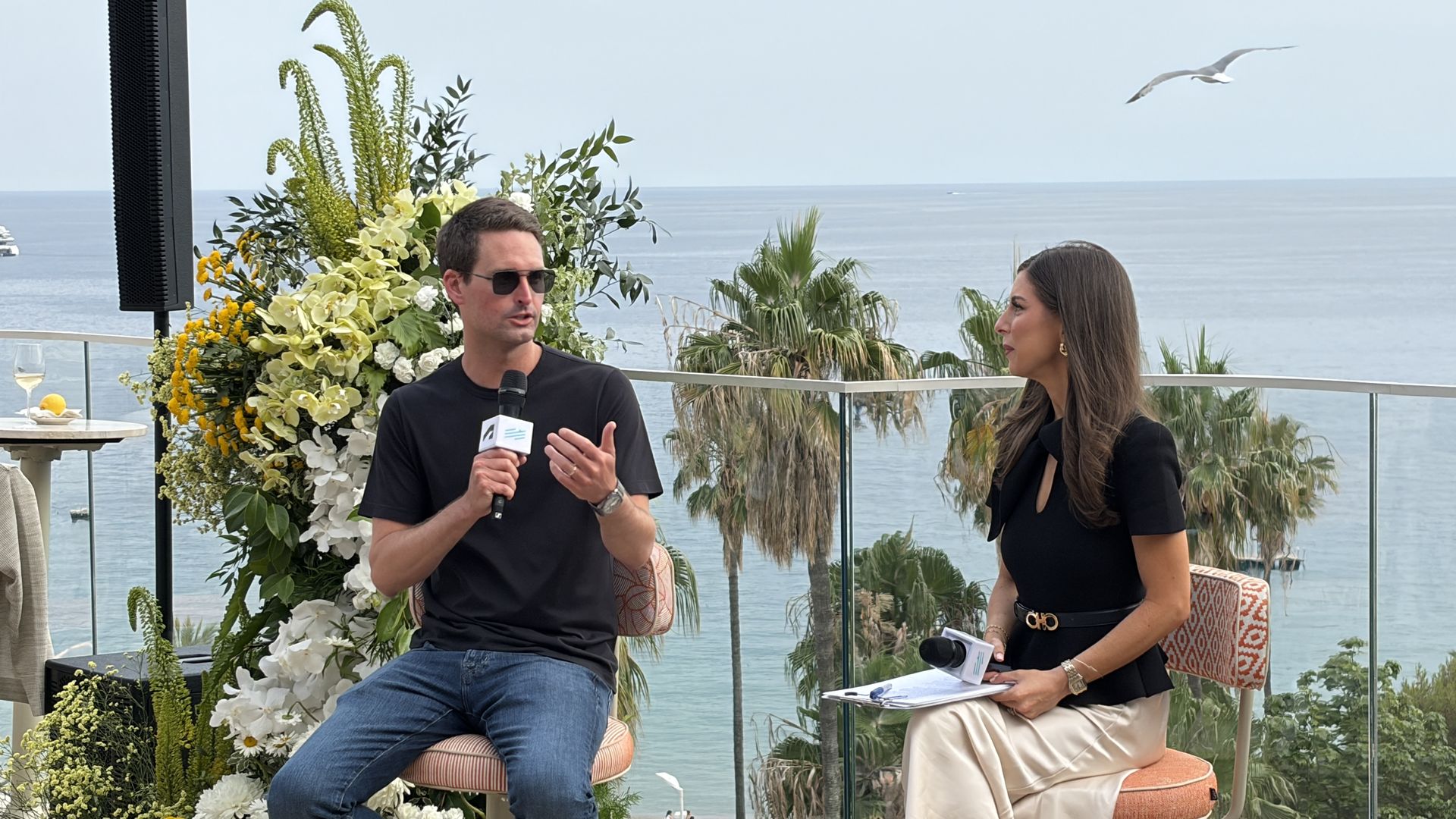
Snap CEO Evan Spiegel speaks to Axios' Sara Fischer in Cannes, France on June 22, 2026. Photo: Christine Wang/Axios
CANNES, France — Specs is a bid on the future of social networking returning to real-world interaction, Snap CEO Evan Spiegel told Axios' Sara Fischer on Monday.
Why it matters: Snap has staked its future on consumer smart glasses, even as investors pressure the company to sell the business and more companies enter the space.
What he's saying: "What we've been working on is trying to make computing more human, and that continues a lot of the work that we've been doing since we started Snapchat," Spiegel said.
- "Things like ephemeral messaging made conversations feel more like face-to-face conversations, stories put sharing in chronological order — the same way we've told stories for thousands of years," he said.
- "So, the idea behind Specs is really to bring computing into the real world, because unless we can bring computing off of screens and into the world, it's going to be really hard to make it feel more fun."
- While Snap initially focused on the developer community for the Specs launch, Spiegel said the company will host consumer-oriented events in the fall.
Catch up quick: Snap launched pre-orders for its long-awaited Specs augmented reality glasses last week at $2,195, entering a crowded field of wearable technology.
- Unlike competitors Meta and Google that have partnered with Ray-Ban and Warby Parker, respectively, Snap is building both the frames and the software.
- Spiegel explained the company prioritized the customer experience and "worked backwards from that to arrive at the Specs frame design."
- For now, Specs remains a wholly owned subsidiary of Snap and is funded by cash from the parent company's core business. Spiegel didn't rule out a future where the two are separate companies or raising capital to fund a huge acquisition or accelerating Specs' growth.
The big picture: Social media companies are grappling with growing concerns over digital wellbeing and how screens affect socialization.
- Spiegel said computing is "typically a single player experience, whether you're using a computer or staring down at a phone, it's something you typically do alone by yourself, even if you are connecting with people around the world."
- "What's really inspiring to me is this idea that the future of a social network is actually returning to in-person interaction, but empowered through computing, and that's the big shift from screens to being able to use see-through glasses," he said.
Zoom in: Spiegel called Snapchat's Promoted Places a "smash hit" that can drive revenue but also encourage users to engage with the real world and their social circles.
- "It's the only map that people are really using to browse to see what their friends are up to, to see what's happening. It's fun," he said.
- For advertisers, Promoted Places allows Snap to measure incrementality "very carefully" since Snap Map's 450 million global monthly active users are sharing their location.
What's next: Snap is nearing the 1 billion user mark, with 956 million MAUs in the first quarter.
- Spiegel said he's "semi-seriously considering" a suggestion from a friend who is a part-owner of the Los Angeles Dodgers that the Santa Monica, California-based company throw a party at Dodger Stadium and invite Snapchatters.
- "Y'all gotta invite me! Y'all cannot leave me out," Flavor Flav shouted from the audience.
