President Trump reached the point last week of viewing Anthropic as a national security threat, he said in an exclusive interview for "The Axios Show," though he signaled that relations have improved since.
Why it matters: National security concerns and personality clashes landed AI heavyweight Anthropic in the middle of a government crackdown with domestic and international repercussions.
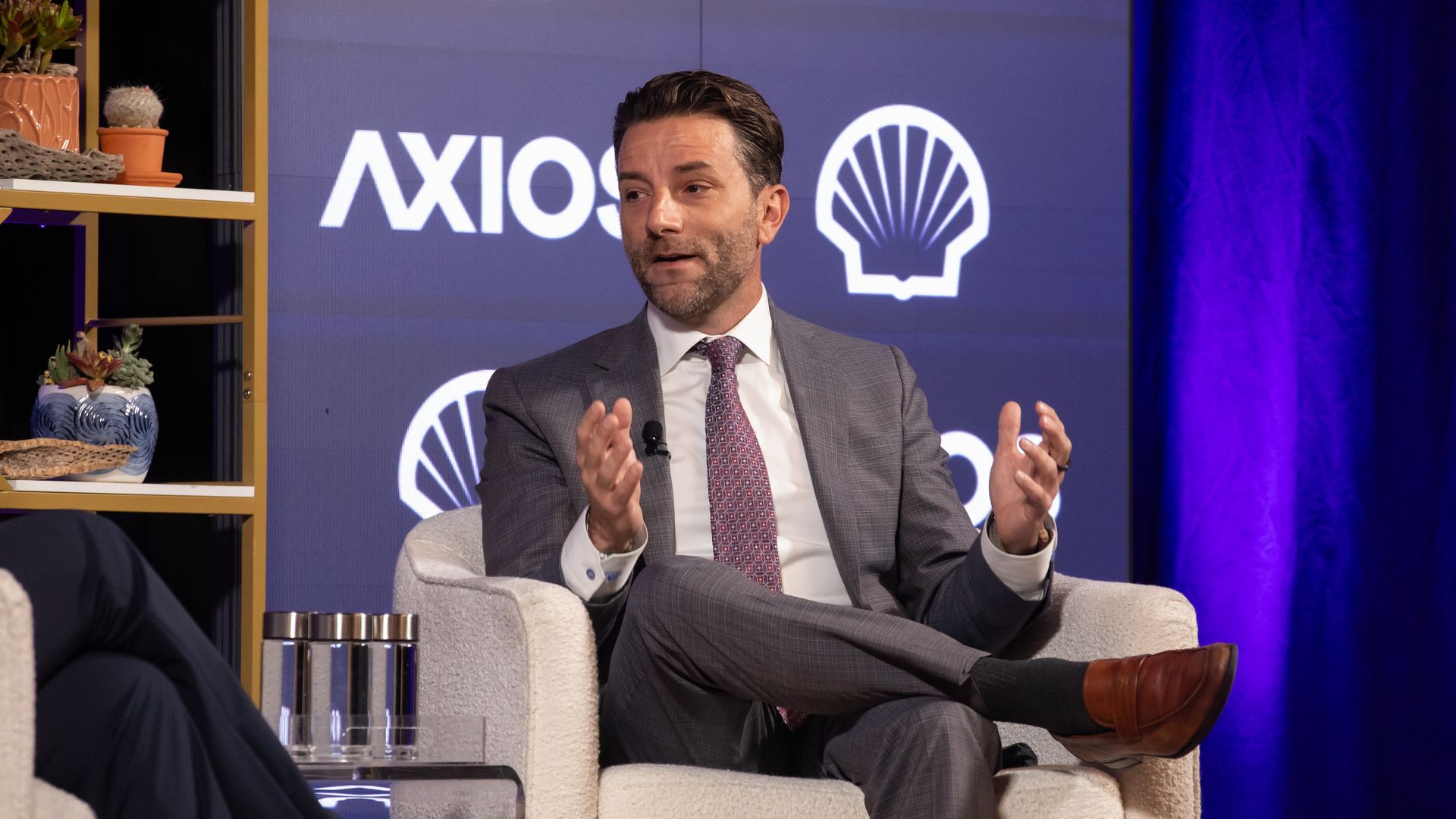
PHOENIX — Arizona's power grid took more than 100 years to build. Now the state needs to double it in just four to five years, leaders said at an Axios Live event.
The big picture:Data centers, new residents and factories are pouring into Arizona — and the electric grid is struggling to keep up.
"What took our utilities 100-plus years to build, need[s] to double that within the next four to five years," said Kevin Thompson, a member of the Arizona Corporation Commission, which oversees the state's utilities.
Axios' Jessica Boehm, Jeremy Duda and Amy Harder moderated discussions with Thompson; Maren Mahoney, director of the Arizona Governor's Office of Resiliency; and Danny Seiden, president and CEO of the Arizona Chamber of Commerce and Industry. The June 16 event was sponsored by Shell.
By the numbers: Arizona's biggest utility, APS, runs about 8.3 gigawatts of power — enough to keep millions of homes and businesses running. But companies are already asking for nearly 17 gigawatts of new power. The other major utilities face the same problem, Thompson said.
The rule Thompson's commission has set: Companies that need the power have to pay for it. Regular households won't foot the bill.
Big tech companies are playing along, Thompson said. One deal in Tucson even required the company to post a $25 million guarantee in case the project fell through.
Between the lines: Data centers that were once seen as power and water guzzlers are now helping pay for the infrastructure they need.
This is seen as a key factor in offsetting costs for everyday customers.
Yes, but: This growth is changing how and when Arizonans use electricity.
More people are charging electric cars at night, which is pushing the state's busiest power hours later into the evening.
Also, data centers that use less water end up using more electricity instead.
Context: Foreign investors used to ask Arizona, "Do you have the talent?" Seiden said. "Now it's energy" — and right behind it, water.
Arizona's electrical grid is reliable, its water management is among the best in the country and Arizona State University is home to one of the nation's largest engineering programs, Seiden said. The ASU programs feed companies like TSMC, which is putting $165 billion into Arizona chip factories.
To keep residents informed, the chamber is urging companies planning new data centers to hold community meetings before breaking ground, citing Intel in Chandler as the model.
The bottom line: Arizona has a strong case for why companies should establish data centers there, the panelists agreed. Whether it can build the power, water and trust to back it up is the real test.
Mahoney said companies are looking for "fast power," which Arizona can provide if it can expand and "build out" the grid.
Content from the sponsor's segment:
In a View from the Top conversation, Shell's Mobility Americas senior vice president Barbara Stoyko talked about the company's push to build EV charging hubs across the country.
"I thought permitting a gas station was hard. It turns out EV stations are even harder," she said — mostly because a single hub can pull as much electricity as 1,200 homes.
In Houston, the surprise has been who's pulling up to charge: "Our No. 1 customer is Waymo," Stoyko said. "Who thought that we would be actually servicing a customer that's not even human?"
Why it matters:Intel has been scrambling to reinvent itself as a chip foundry, making components for external customers — and its moment might've finally arrived in the form of a global shortage that's jolting device prices.
Federal regulators on Thursday ordered grid operators across a vast swath of the country to show how they will speed connection of AI data centers to transmission systems.
Why it matters: The Federal Energy Regulatory Commission's orders aim to enable the AI boom, but without making power grids less reliable or raising consumer costs.
A conservative group seeking stricter rules on AI is organizing a day of protest against data centers across the country next month, the group told Axios exclusively.
Why it matters: Republicans in Washington are trying to pay attention to Americans' concerns over AI's impacts while supporting U.S. advancements in the technology.
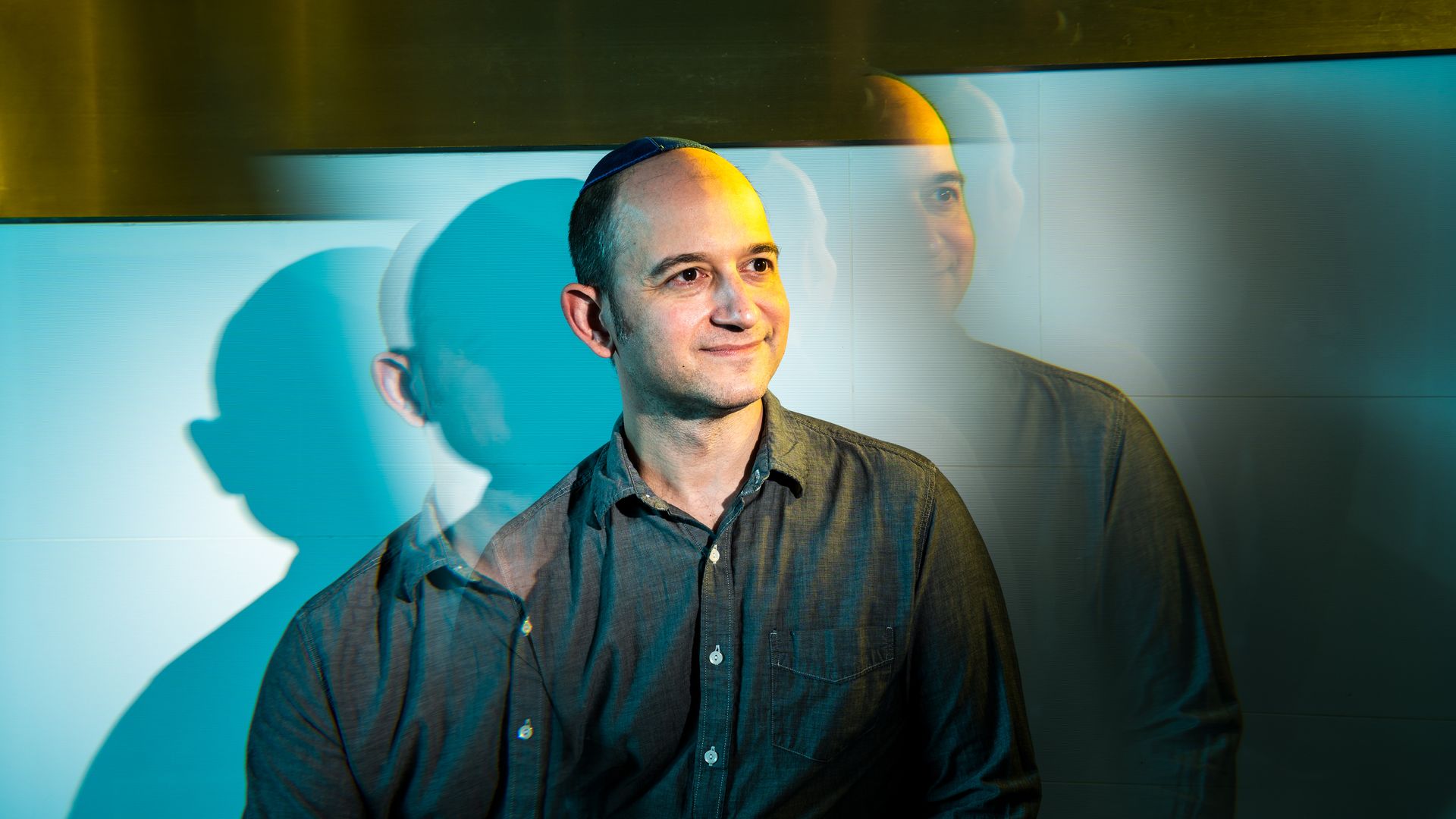
Dean Ball, who helped shape the Trump administration's early policies on AI, is heading to OpenAI, he told Axios exclusively.
Why it matters: A leading AI company that has so far proved more deft at navigating Washington than its competition just got someone who knows government on their side.
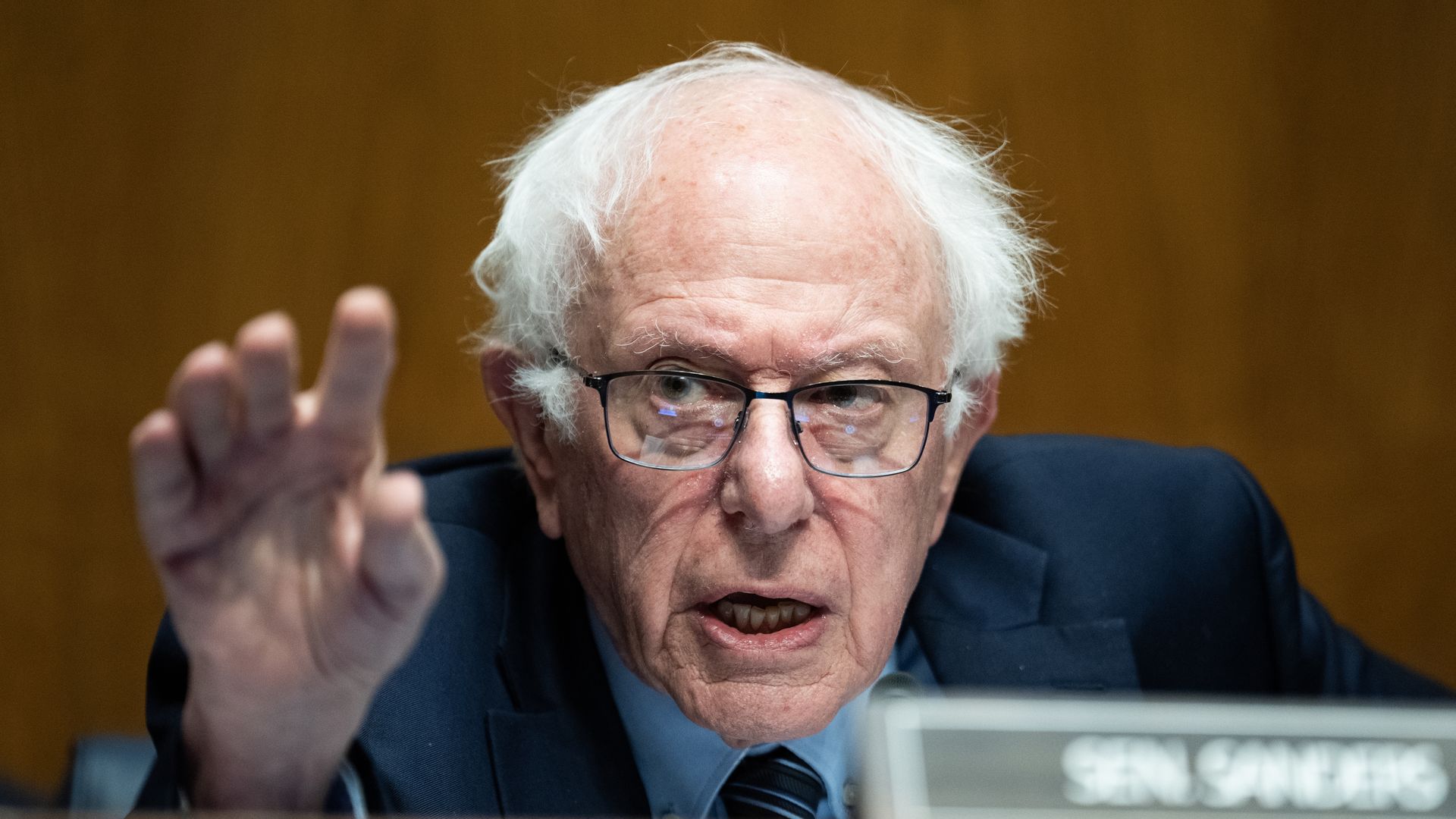
Sen. Bernie Sanders (I-Vt.) on Thursday unveiled his plan for the U.S. government to take 50% equity stakes in large AI companies.
Why it matters: This is a supercharged version of what members of President Trump's administration already are discussing — all of which would be unprecedented — and a tacit acknowledgment that AI may eventually cause major labor disruptions.
Gradial, a Seattle-based startup that deploys AI agents to automate enterprise marketing workflows, has raised $65 million in Series C funding, CEO Doug Tallmadge exclusively tells Axios.
Why it matters: The AI era is motivating brands to rethink their marketing operations as the current systems can be slow and burdensome.
Google DeepMind is borrowing from cybersecurity as it prepares for more powerful AI agents, treating them less like software tools and more like potential insider threats.
Why it matters: AI companies are racing to use agents for coding, research and cyber defense, but the same autonomy that makes them useful could also let them evade monitoring, misuse sensitive access or quietly sabotage the work they're assigned to do.
U.S. Sen. Josh Hawley (R-Mo.) blasted AI giants — including Amazon — and touted his support for key union priorities in a speech Tuesday at the closed-door Teamsters national convention in Las Vegas, Axios has learned.
Why it matters: A Republican featured as a speaker at a Teamsters event serves as a stark illustration of how the political lines are blurring for Big Labor, once a dependable political ally for the left.
The world's first human trial of whether a drug can essentially make a person's cells younger sets up a reality check for one of the longevity field's most promising theories.
Why it matters: The early-stage clinical trial will signal whether "cellular reprogramming" can be performed safely in humans, a prerequisite for any future claim that a treatment can slow or even reverse biological aging.
We can't speak for the rockets, but the SpaceX IPO has been a masterpiece of engineering.
Why it matters: The offering was structured in a way that deftly manages the mechanisms of supply and demand that markets rely on to determine a company's true value.
Like its AI policy, the Trump administration's AI team is taking shape on the fly.
Why it matters: Departures among key White House officials, combined with rapid advances in technology, are shaking up who's taking the lead on AI policy in the administration.
The Trump administration entered office promising to get government out of the AI industry's way. It hasn't worked out that way.
Why it matters: The White House says AI shouldn't be regulated, but it's shaping the industry through case-by-case interventions without clear rules, creating major uncertainty.
PHOENIX — This desert region has become a bellwether for the nation's data center growth as the tech sector grapples with rising temperatures and scarce resources.
Why it matters: Arizona is an extreme microcosm of thechallenges the AI boom is running into across the country as tech companies race to build data centers demanding massive amounts of power and testing local water supplies.
Few AI use cases elicit more outrage than writing: Using AI makes writing duller ... dumber ... robotic. It kills thinking ... creativity ... originality. It produces sameness and slop!
Why it matters: All that's true — if you, as the teacher or writer, allow it to be true. Lazy AI outsourcing means lazy thinking and writing. Used with persistence and skill, AI can enhance both your thoughts and expression.
I'm thinking and writing more and better than ever. But I want to be frank and useful about what I've learned about writing and the limits I've hit since turning myself into an AI lab rat: