Cybercriminal groups are now using spyware tools once utilized mainly by spies and law enforcement to hack into iPhones, new research shows.
Why it matters: Anyone with an iPhone can now be the target of invasive malware that siphons off personal text messages, photos, notes and calendar data.
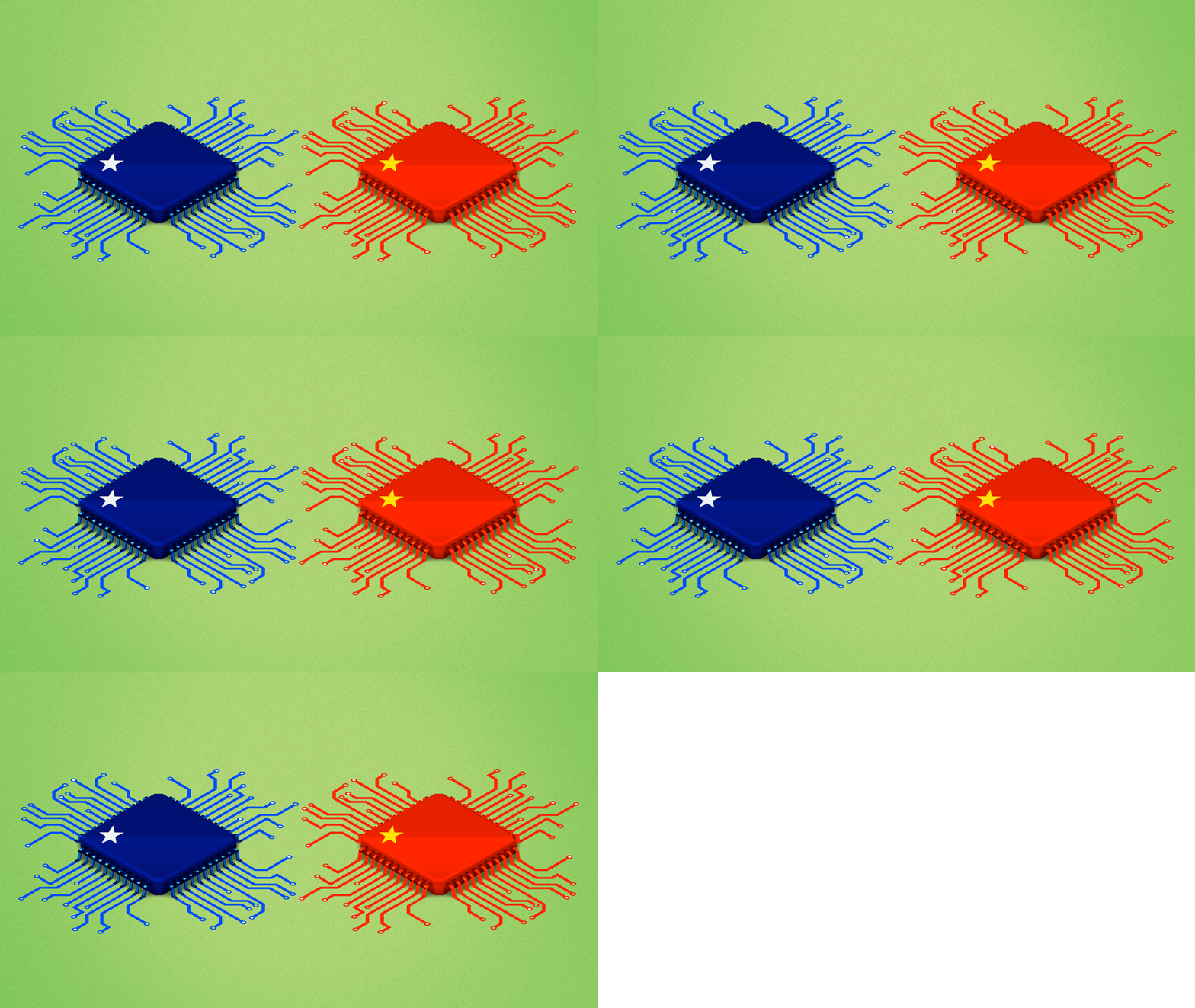
A new AI chip smuggling case is challenging industry claims that smuggling to China isn't happening on a massive scale.
Why it matters: The Trump administration recently gave the green light to sell some AI chips to China, embracing industry arguments that Beijing has its own advanced technology and it's best for U.S. firms to enter the market and compete.
The Trump administration's highly anticipated recommendations for Congress on AI offer lawmakers a list of priorities rather than a concrete legislative plan.
Why it matters: Though the framework marks a starting point from the White House, it will be incredibly hard for Congress to pass anything like it — even with Republicans in control.
If you only read the headlines, you might guess that global trade came to a standstill in the last year as the U.S. put into place a new tariff regime. You would be 180 degrees wrong.
The big picture: Trade flows proved surprisingly robust last year, with the imposition of high U.S. tariffs changing the patterns and volumes, but not upending the basic reality of a deeply interconnected world economy.
That's the upshot of two reports out this week, one from the World Trade Organization and the other from the consulting firm McKinsey.
That was the question buzzing yesterday after The Wall Street Journal reported that the humble bookseller is in talks to raise $100 billion for a fund that would buy manufacturing companies "and seek to use AI technology to accelerate their path to automation."
What we know, based on sources familiar with the situation:
Democratic state lawmakers across the U.S. are quietly coordinating AI policy and comparing notes on industry lobbyingin a private Signal group chat called "Frontier AI Legislators," multiple members told Axios.
Why it matters: The group shares and tweaks bill language and swaps insights about industry pressure, aiming to help shape national standards for AI as Congress and the White House try to land their own plans.
Iranian hackers tied to a recent U.S. cyberattack have been running a broader intimidation campaign that involved issuing death threats and suggesting they have ties to a Mexican cartel to "commit acts of violence," the Justice Department said Thursday.
Why it matters: The campaign shows Iran's cyber playbook is moving beyond hacking companies and is now pairing cyberattacks with tactics to coerce targets and shape narratives.
Sliding headfirst into the giant maw of the MRI machine, I finally stopped being afraid of AI.
Why it matters: A health scare can be a reset — a reminder to slow down and think about how you want to spend your days. I'd been so consumed by the anxiety economy around AI that I'd lost track of what it was costing me.