Companies across corporate America are experimenting with generative AI to see if it can make them better, smarter and more productive — with mixed success.
Why it matters: C-suite AI proponents have been pushing a "use it or get left behind" mentality, but it's often up to the rank and file to figure out how to actually implement AI in their day-to-day work.
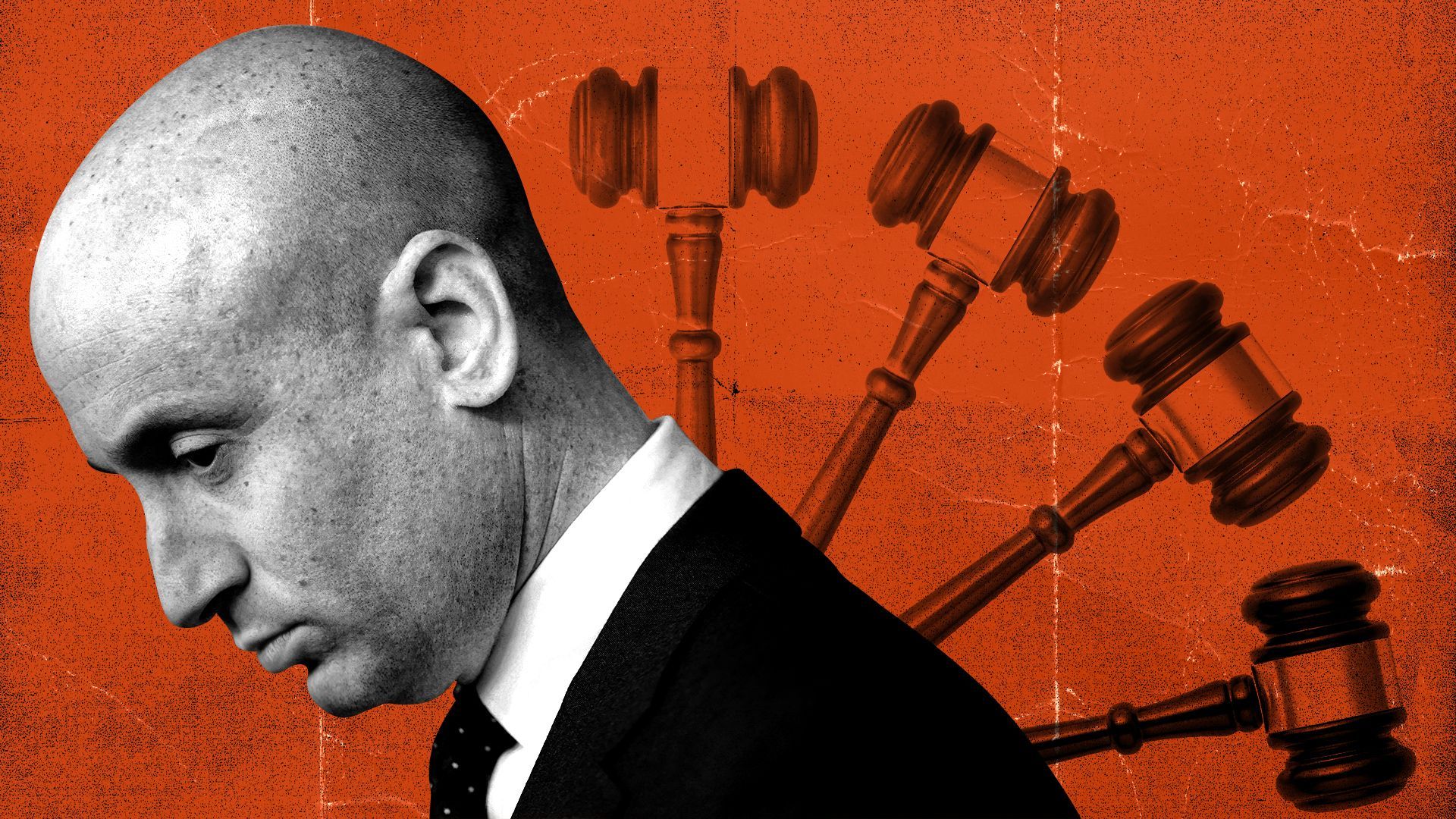
Deputy Chief of Staff Stephen Miller is setting policy from inside the White House, but a legal group he co-founded is shaping policy from the outside, through legal complaints and lawsuits against corporations and even the Trump administration itself.
Why it matters: The group — America First Legal — is the latest example of how Miller has amassed power in the new administration.
Data: Congressional Research Service; Chart: Jacque Schrag/Axios
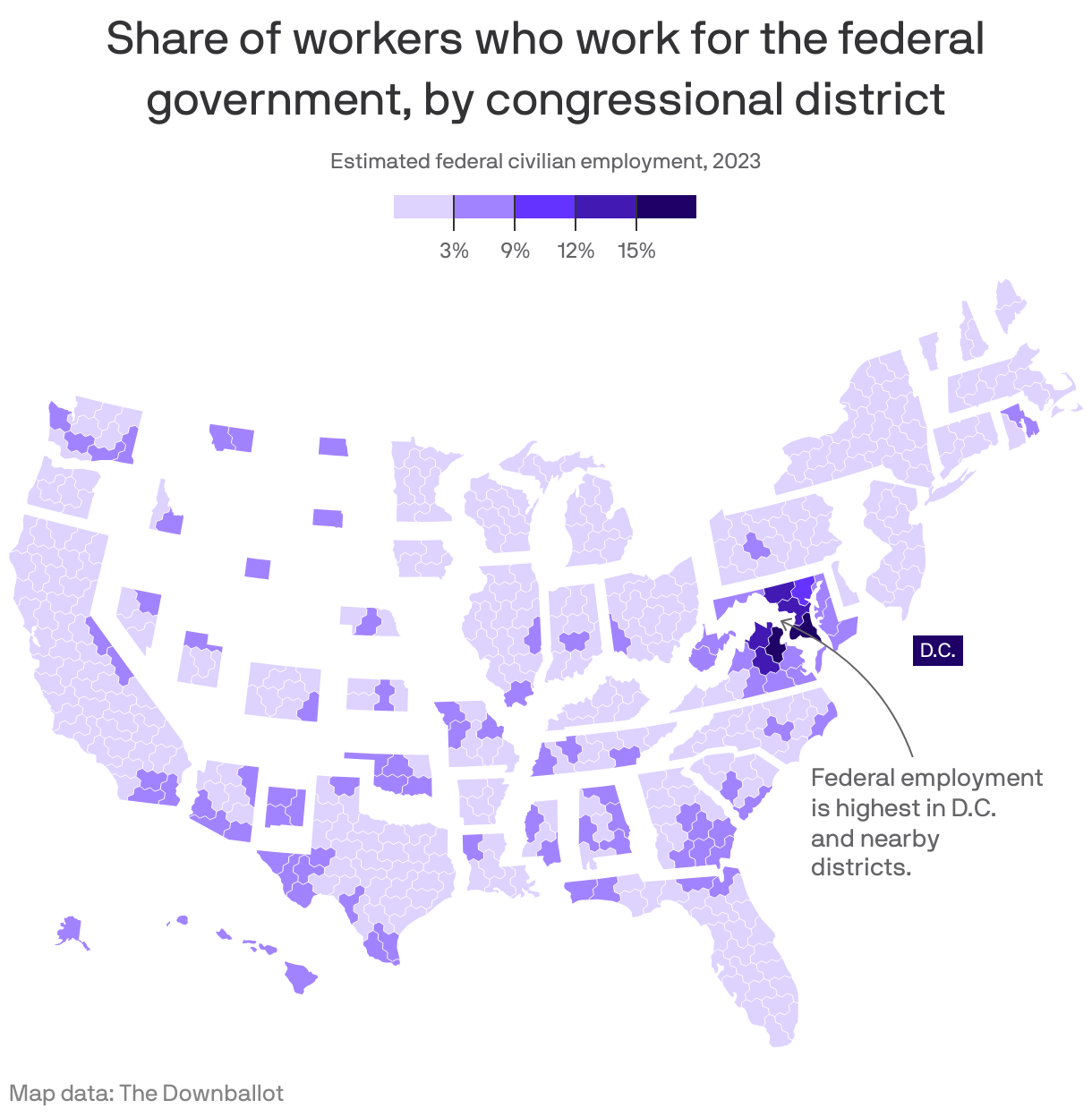
At first glance, it seems like DOGE's work to slash the federal workforce mainly impact the solidly Democratic areas in the Washington, D.C. metro area. Then you dig a little deeper.
Why it matters: Of the 60 congressional districts with the most federal workers, a slight majority are actually represented by Republicans — many of whom are publicly cheering on Elon Musk's hack-and-slash efforts.
New York, Seattle and San Jose had the most overall AI job openings this past January, by one estimate.
Why it matters: Amid lots of consternation about AI taking people's jobs, at least some people are finding new roles working with the emerging technology.

/2025/02/24/1740430525459.gif?w=3840)

/2025/02/25/1740496872424.gif?w=3840)
/2025/02/25/1740496840201.gif?w=3840)

/2025/03/07/1741388703103.gif?w=3840)