OpenAI announced on Wednesday it has completed its long-anticipated funding round, raising $6.6 billion in the largest venture capital deal of all time, which values the company at $157 billion.
The intrigue: OpenAI is planning to shift to a for-profit structure and investors can ask for their money back if it hasn't completed those changes in two years, Axios has learned.
Tesla CEO Elon Musk has been promising self-driving taxis for years. Skeptics and true believers will find out soon whether he can deliver.
Why it matters: With new competitors eating into Tesla's electric vehicle market share, Musk is now betting the company on artificial intelligence, including robotaxis.
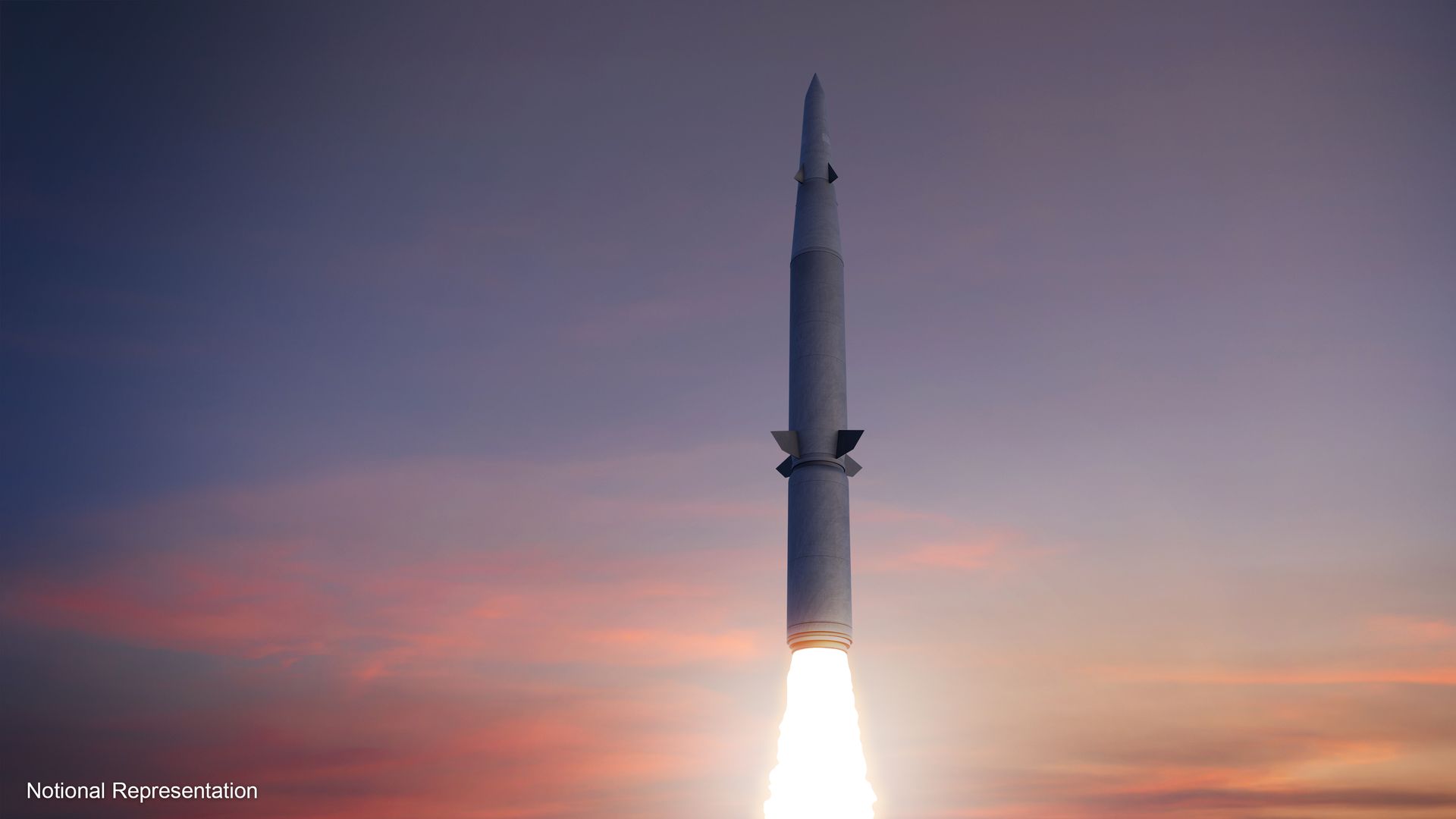
The U.S. and Japan are moving forwardwith hypersonic missile defense, selecting Northrop Grumman to further develop the Glide Phase Interceptor, meant to knock down attacks as they skirt through Earth's atmosphere.
Why it matters: Hypersonic weapons are widely feared for their speed — at least Mach 5, traveling miles in seconds — and maneuverability.
What do militaries and the rich and famous have in common? A taste for business jets.
Aircraft once the domain of world-touring rockstars are now being converted into spy planes of the future, outfitted with sensors that discern electronic signals, troop movements and more.
Why it matters: Just like Ukrainians building drones from parts found online, more buyers are turning to everyday outlets to beat supply-chain woes and red tape.
OpenAI's developer release on Tuesday of a powerful new speech technology highlights the rapidly changing dynamics within the ChatGPT creator — a shift that some say is putting the release of products above safety concerns.
The big picture: OpenAI is in the midst of a transformation from a nonprofit lab to an increasingly product-focused company seeking to attract and please investors.
One in five American adults who have encountered online scams have ended up falling for one of them and losing money, according to a new Consumer Reports report.
Why it matters: Scams are now a normal part of nearly everyone's online experience — and new AI tools are already making them easier to believe and fall for.
One in five American adults who have encountered online scams have ended up falling for one of them and losing money, according to a Consumer Reports survey out today.
Why it matters: Scams are now a normal part of nearly everyone's online experience — and new AI tools are already making them easier to believe and fall for.
By the numbers: Overall, 46% of American adults said they've encountered a scam or cyberattack, according to the report from Consumer Reports, Aspen Digital and the Global Cyber Alliance released today.
Black and Hispanic Americans were more likely to lose money: one-third of Black respondents and 30% of Hispanics said they lost money to a scam, compared with 13% of white Americans.
A new set of critical securityflaws in Linux operating systems may not be as critical as previously believed.
Why it matters: The new bugs, when taken together, could give an attacker the ability to remotely execute commands on vulnerable Linux systems.
Linux is a popular open-source operating system used by everyone from software developers to major corporations.
State of play: Researcher Simone Margaritelli discovered a chain of flaws in Linux last week that could allow hackers to install a new printer and execute code whenever they successfully "print" something from the new device.
At least one of those flaws was given a 9.9 out of 10 severity score.
🚔 The Justice Department has charged three men with carrying out Iran's hack-and-leak attack against former President Donald Trump's re-election campaign. (Washington Post)
🗳️ Senate Intelligence Chair Mark Warner (D-Va.) is urging the Cybersecurity and Infrastructure Security Agency to ramp up its efforts to help state and local governments detect and respond to online disinformation campaigns. (NBC News)
🚀 NASA has bought Clearview AI's controversial facial recognition tech, according to a government procurement contract. (404 Media)
@ Industry
👀 Proofpoint is considering potential strategic mergers and acquisitions and plotting a possible return to the public markets in the next 12 to 18 months. (CNBC)
📕 The Codebook Book Club is officially kicking off this month! Yay!
Our first pick is "Sandworm" by Wired reporter Andy Greenberg.
Why it matters: The book, released in 2019, details the NotPetya malware incident — in which Russian hackers ended up infecting hundreds of companies around the world with ransomware.
It was one of the first major incidents to highlight how vulnerable the world's biggest companies are and was a turning point in our understanding of what cyber warfare can actually look like.
Here's an excerpt in case you're curious or haven't read it yet.
Cerebras, the AI chipmaker and Nvidia competitor, filed for an IPO. (Axios)
A California law — one of many new AI regulations in the state — will require AI makers to publicly share "high level summaries" of the data they used to train their models, beginning on Jan. 1, 2026. (National Law Review)
Liquid AI, an MIT spinout, debuted its non-transformer models, which it says perform on par with other leading generative AI models while requiring less memory. (VentureBeat)
After privacy controversies stymied its signature Recall feature, Microsoft is looking to reboot its AI PC effort with improvements, the addition of some new AI tricks and broader chip support.
Why it matters: The addition of built-in AI functions could give the PC industry a much-needed boost, but only if Microsoft can deliver the right combination of features — and security — to entice businesses and consumers.
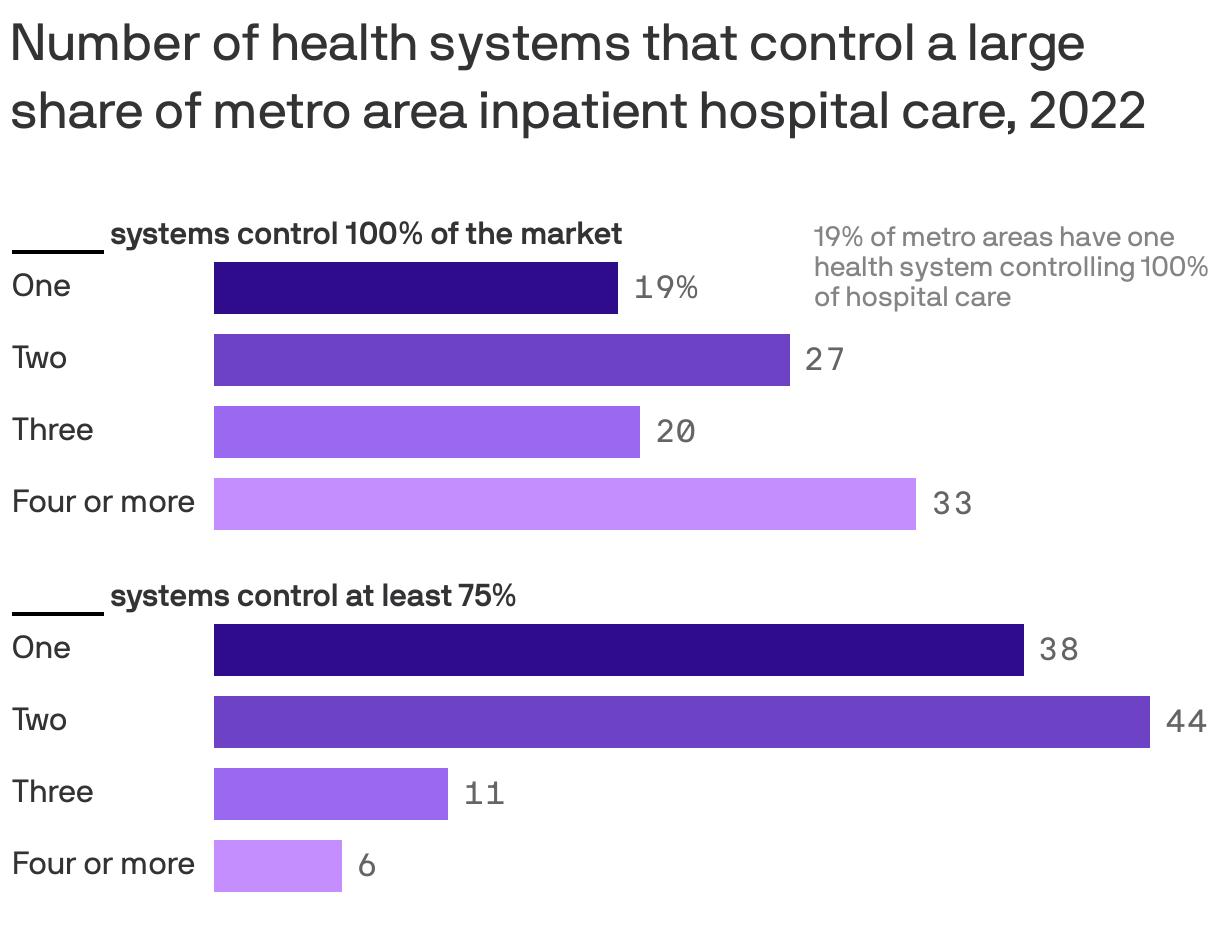
Hospital mergers and acquisitions have left nearly half of the metropolitan areas in the U.S. with just one or two health systems controlling all inpatient care, according to a new KFF study.
Why it matters: Hospital consolidation is seen as a big driver of rising health costs and has become a prominent focus of Congress and antitrust regulators.

/2024/10/02/1727885243433.gif?w=3840)