The creators of the new live-action "Halo" streaming series braced themselves for fans who might not be ready to see new versions of characters they’d seen in games for 20 years, the show’s executive producer Kiki Wolfkill tells Axios.
Why it matters: As video game adaptations into film and TV become more common, creators have to anticipate how divergence from a game’s established fiction will go over with players.
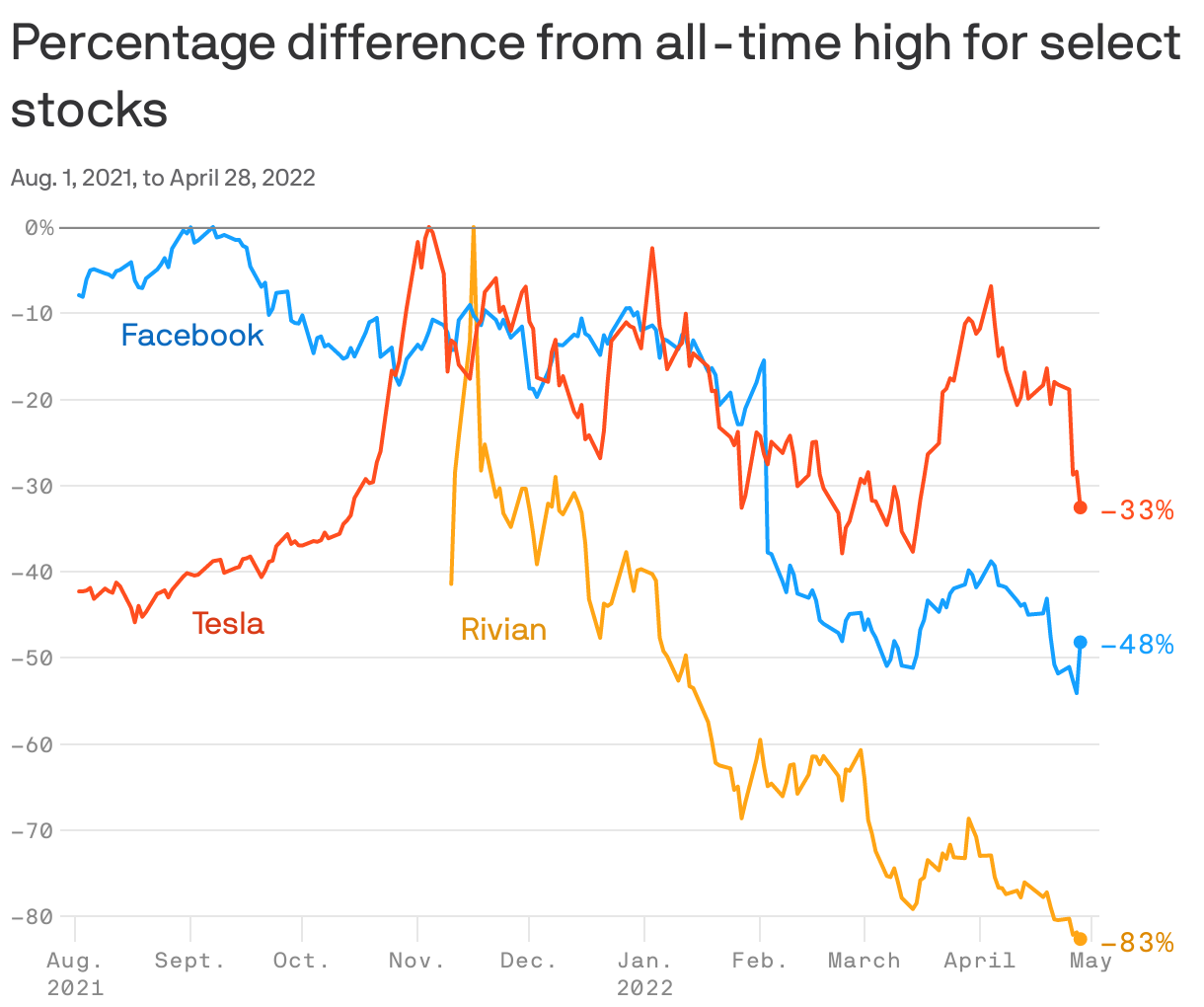
Amazon reported a weak first quarter Thursday with an overall loss of $3.8 billion thanks to excess capacity, higher shipping costs, and a $7.6B write-down of the firm's investment in electric-vehicle maker Rivian.
Driving the news: Amazon continues to grow, but the reported loss, along with a pessimistic forecast for revenue growth next quarter, drove shares down about 10% in after-hours trading.
Apple on Thursday beat expectations with its quarterly earnings, but warned that revenue for the current quarter will take a significant hit due to ongoing chip shortages as well as COVID-related production challenges.
Why it matters: Apple is a bellwether for the tech industry thanks to both its size as well as the fact that it is a key buyer of other components, including displays and memory chips.
The recent decline in Tesla stock, possibly caused by worries about Musk's successful bid for Twitter, has raised concerns that he barely has the liquidity to raise the $21 billion he needs to provide in cash to pay for his new platform.
By the numbers: If you exclude stock that Musk has pledged to secure loans, the value of his freely-sellable Tesla shares is only about $11 billion. In order to find the extra $10 billion, he might have to exercise some of his stock options. That's expensive, since he'd need to pay income tax, rather than lower long-term capital gains tax, on such sales.
Over 4 million people have used Snapchat's in-app technology that helps young users find local political races to run in, CEO Evan Spiegel announced at the top of his keynote presentation to Snapchat partners Thursday.
The big picture: The number was revealed the annual "Snap Partner Summit," where the company typically debuts new products. The presentation had a heavy focus on ways new technologies could be used to promote the company's values, like civic engagement, accessibility and inclusivity.
Decentralized autonomous organizations (DAOs) might be this bright new future for how people organize each other, or they might be another way for rich people to manufacture consent.
Why it matters: DAOs present an alternative method for people to coordinate activity toward shared goals. It's a little bit democracy, a little bit oligarchy, and it's fluid. To decide the question above, it helps to understand how they work.
Twitter on Thursday reported mixed first-quarter earnings, missing Wall Street expectations on revenue but adding users. It also admitted to over-counting some monetizable daily active users between Q1 2019 and Q4 2021.
Why it matters: Analysts were expecting the tech giant to post weak results, given that its board finalized a takeover deal with Elon Musk this week. This could be Twitter's last earnings report as a publicly traded company.
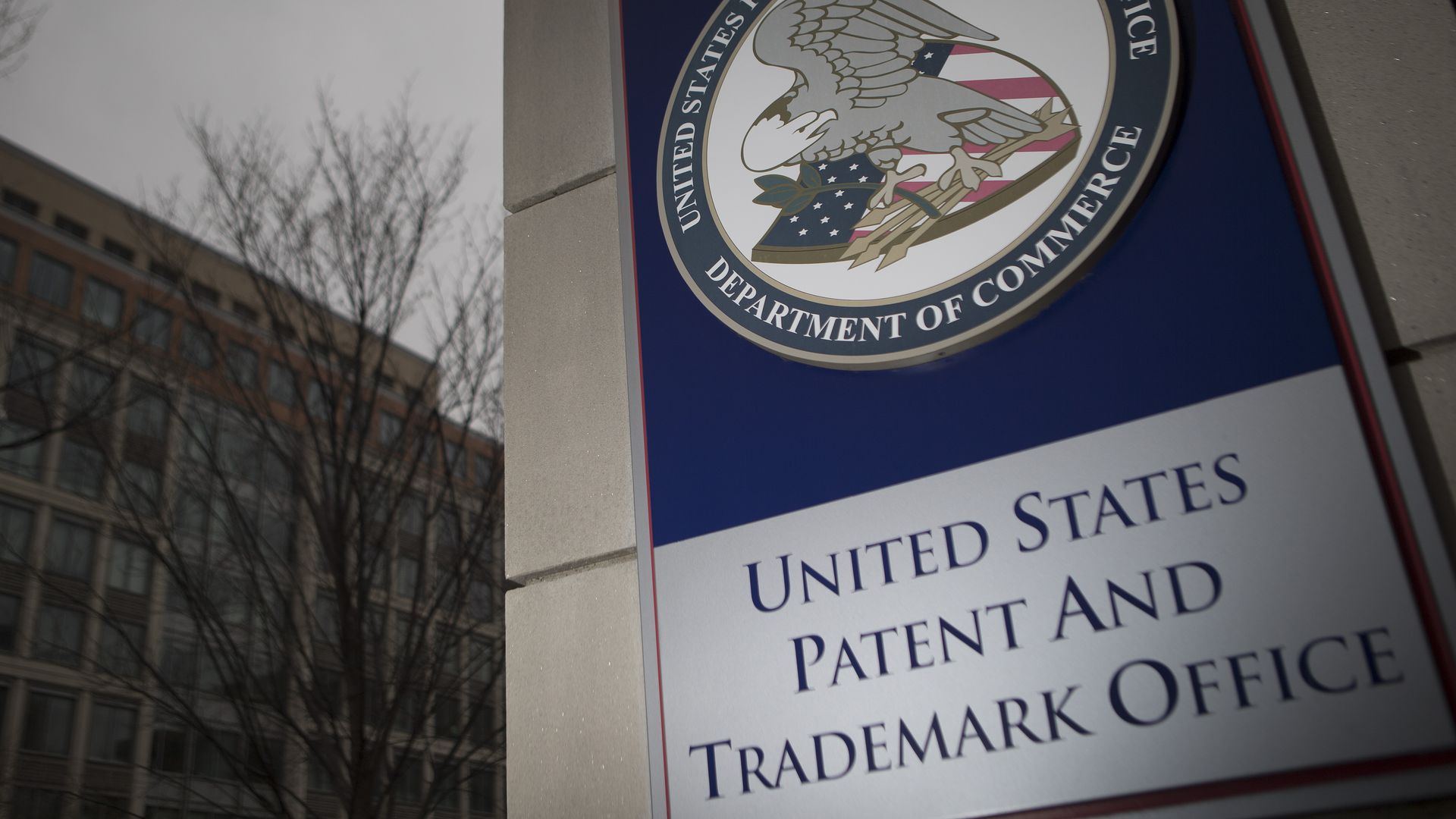
Google sees an opportunity for reform in the U.S. patent system, through the office's new, Silicon Valley-bred leader.
Driving the news: KathiVidal, an attorney who has represented major technology companies, was confirmed as director of the U.S. Patent and Trademark Office (USPTO) earlier this month.
Elon Musk's pledge to allow any speech on Twitter that doesn't break the law would open the door to a pandemonium of objectionable and harmful content — from gory videos to efforts to mislead voters to promotions of phony COVID cures.
Why it matters: Even much smaller social networks that aimed to minimize content moderation have found that an "anything goes if it's legal" policy quickly devolves into a miasma of violence, spam, fraud and bullying.
After two years of unprecedented growth in social media and streaming, a post-pandemic reality is beginning to set in.
Why it matters: Huge revenue gains during COVID inspired media and tech titans to take big bets. As growth stalls, Wall Street wants them to pivot from promise to profit.