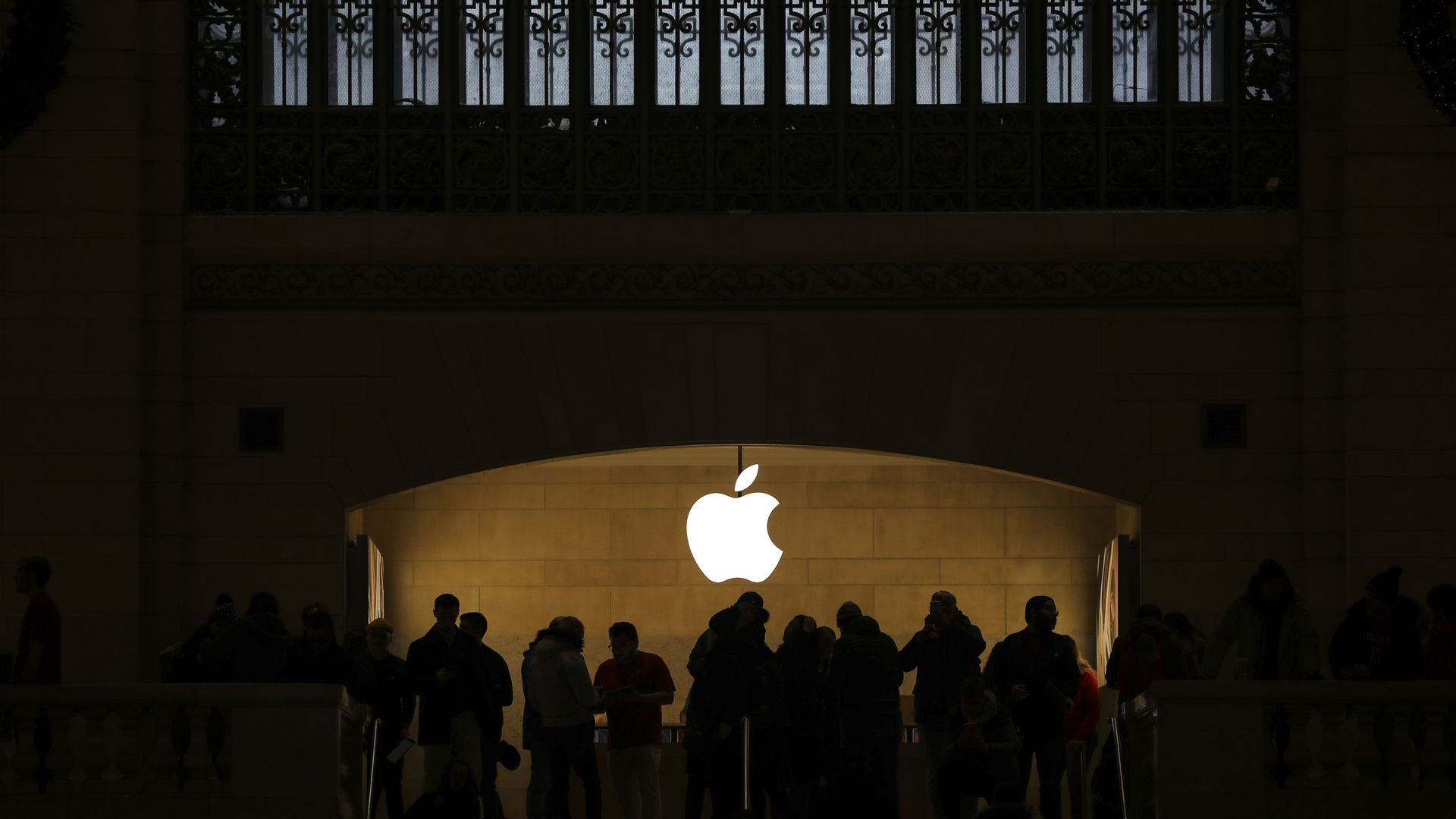
Workers at Apple's flagship retail store in New York City's Grand Central Terminal have taken steps toward forming a union, per a website update by organizers.
Why it matters: If organizers were successful, this would be the first Apple retail store to unionize, per the Washington Post, which first reported on the move Saturday.
Tutoring companies are swarming to grab some of the tens of billions of federal dollars doled out to America's schools meant to help kids to catch up after pandemic-related setbacks.
Why it matters: Many of these companies have unproven methods and offer online tutoring — the same type of learning that left kids behind in the thick of the pandemic, the Wall Street Journal reports.
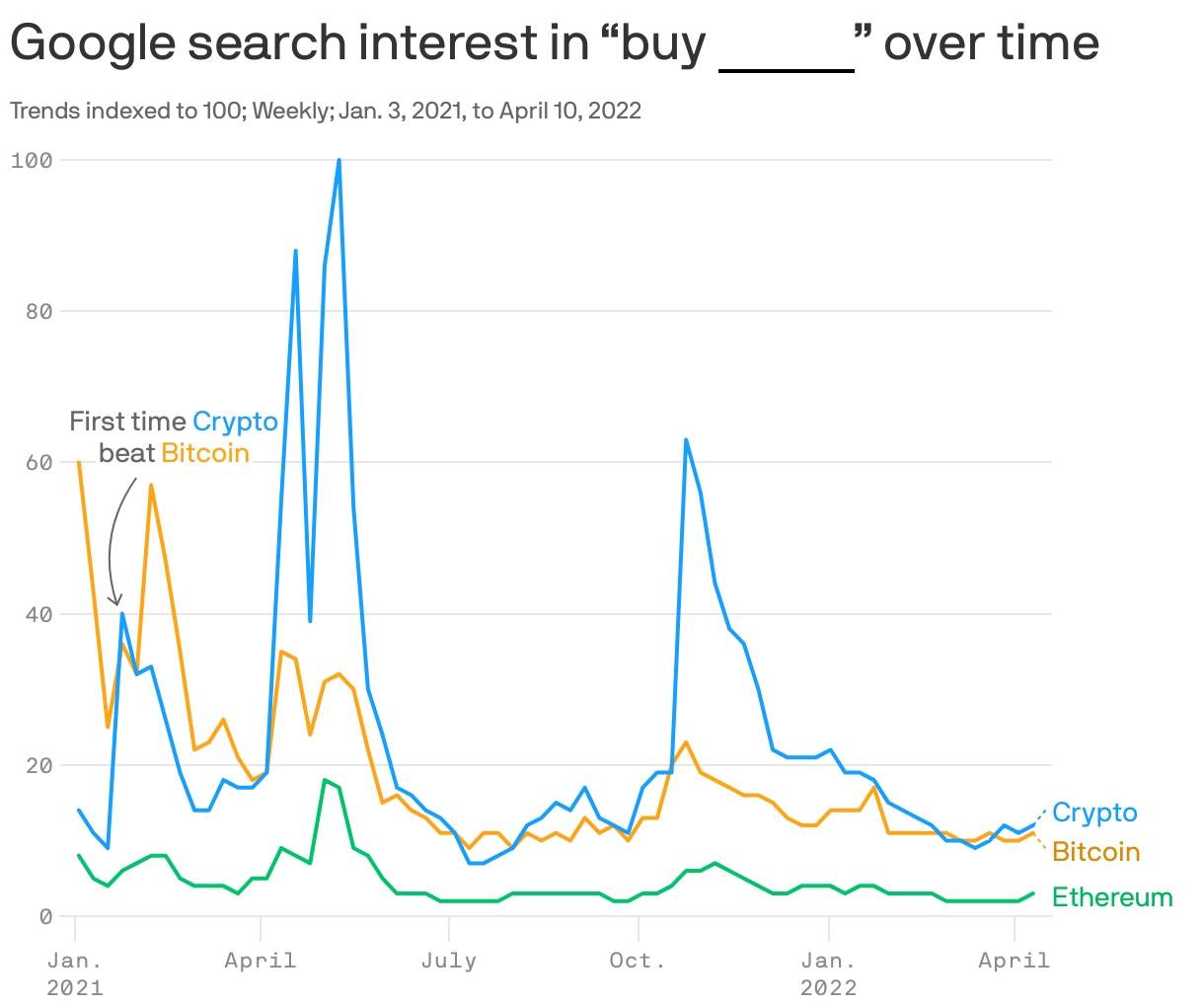
There's a vibe shift afoot on the blockchains. "Buy crypto" is edging out "buy bitcoin" in Google searches.
Why it matters: Bitcoin has always dominated the crypto market, but if the public is becoming more conscious that there are other options out there, it could threaten Bitcoin's hegemony.
Uniswap Labs, a maker of cryptoinfrastructure apps, has released a tool to help web3 platforms simplify the buying experience for their users.
Why it matters: One of the reasons so many people remain on the sidelines in crypto is the complexity. New tools to help reduce friction in the user experience will simplify the process, making it more like the web2 experience they are familiar with.
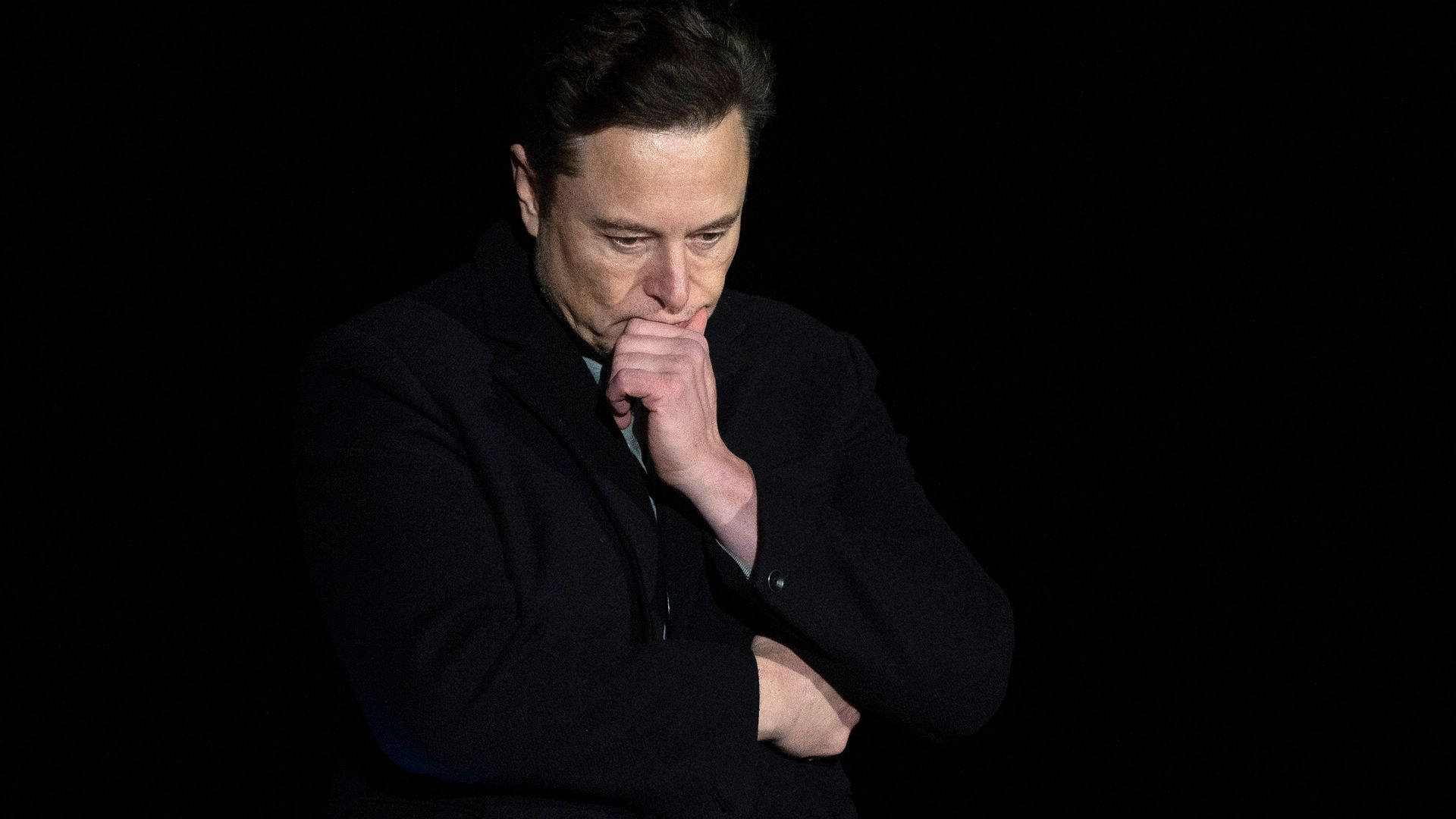
Why it matters: The "poison pill," as it's called in corporate terms, gives Twitter's existing shareholders time to purchase additional shares at a discount, thus diluting Musk's ownership stake.
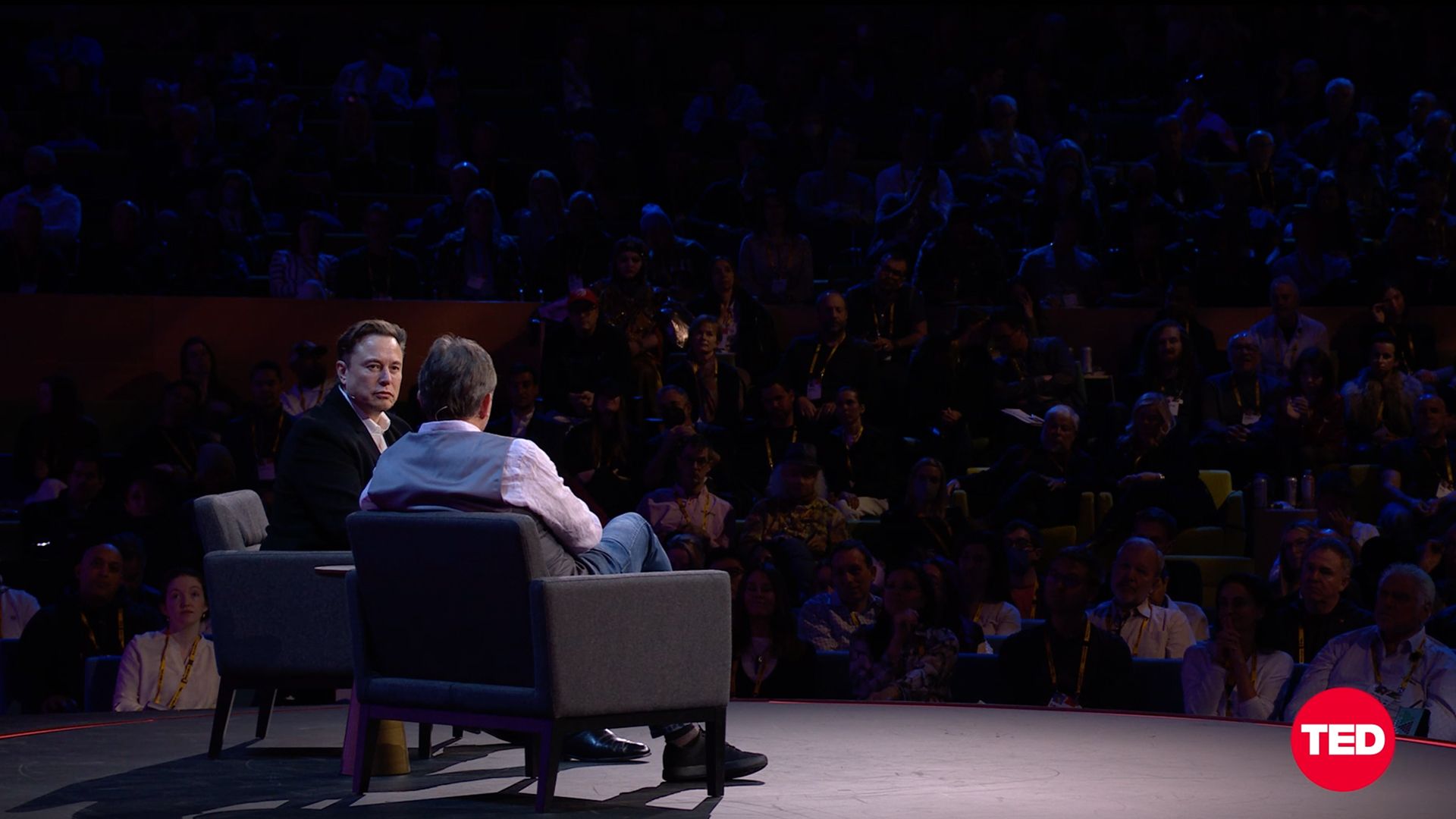
Elon Musk opened up on Thursday about his experience growing up with Asperger's syndrome,or autism spectrum disorder.
Why it matters: Most adults with "invisible disabilities" such as Asperger’sconceal them professionally to avoid stigmas and potential discrimination, research has found.
President Biden is putting Asian economies at the center of a new economic accord, at a time when globalization has become anathema, and geopolitical tensions are reshaping the world order.
Why it matters: Regional heavyweights like India, Australia, Japan, and South Korea are linchpins in the Indo-Pacific Economic Framework (IPEF), which (at least for now) has pointedly excluded China.
Stunning stat: 92% of executives at medium to large firms think workers who turn cameras off during meetings don't have long-term futures at the company, according to a new survey from Vyopta, a software company.
Why it matters: The data adds grist to the worry that hybrid and remote employees have expressed about the post-pandemic world — that those who choose to work from home some, most or all of the time will be out-of-sight, out-of-mind for bosses.
A lot of people with long internet memories rolled their eyes Thursday at Elon Musk's announcement that he wants to make Twitter a free-speech haven, because they have seen the movie and know how it ends.
The big picture: In the past, online free-speech havens have either been forced to reverse course and add rules — or they've turned into free-fire zones enjoyed chiefly by extremists and trolls.
Elon Musk doesn't seem to have much of a vision for how to actually run Twitter, if his takeover bid succeeds. He's not alone.
Why it matters: A small group of tech moguls believe America is in the midst of what they call a "free speech" crisis, and they're investing time and money to change the terms of public discourse. But so far, they've made more headlines than progress.
The chaos surrounding Elon Musk's hostile takeover bid is starting to wear on Twitter employees already buffeted by two weeks of ups and downs resulting from Musk's volatile efforts to change the company.
Why it matters: Former CEO and co-founder Jack Dorsey spent years cultivating a culture of transparency at Twitter, empowering employees to speak freely on Slack and demand answers to tricky questions. While company leaders are trying to honor that tradition, there's not much they can legally say at this point.








/2022/04/14/1649963083030.gif?w=3840)