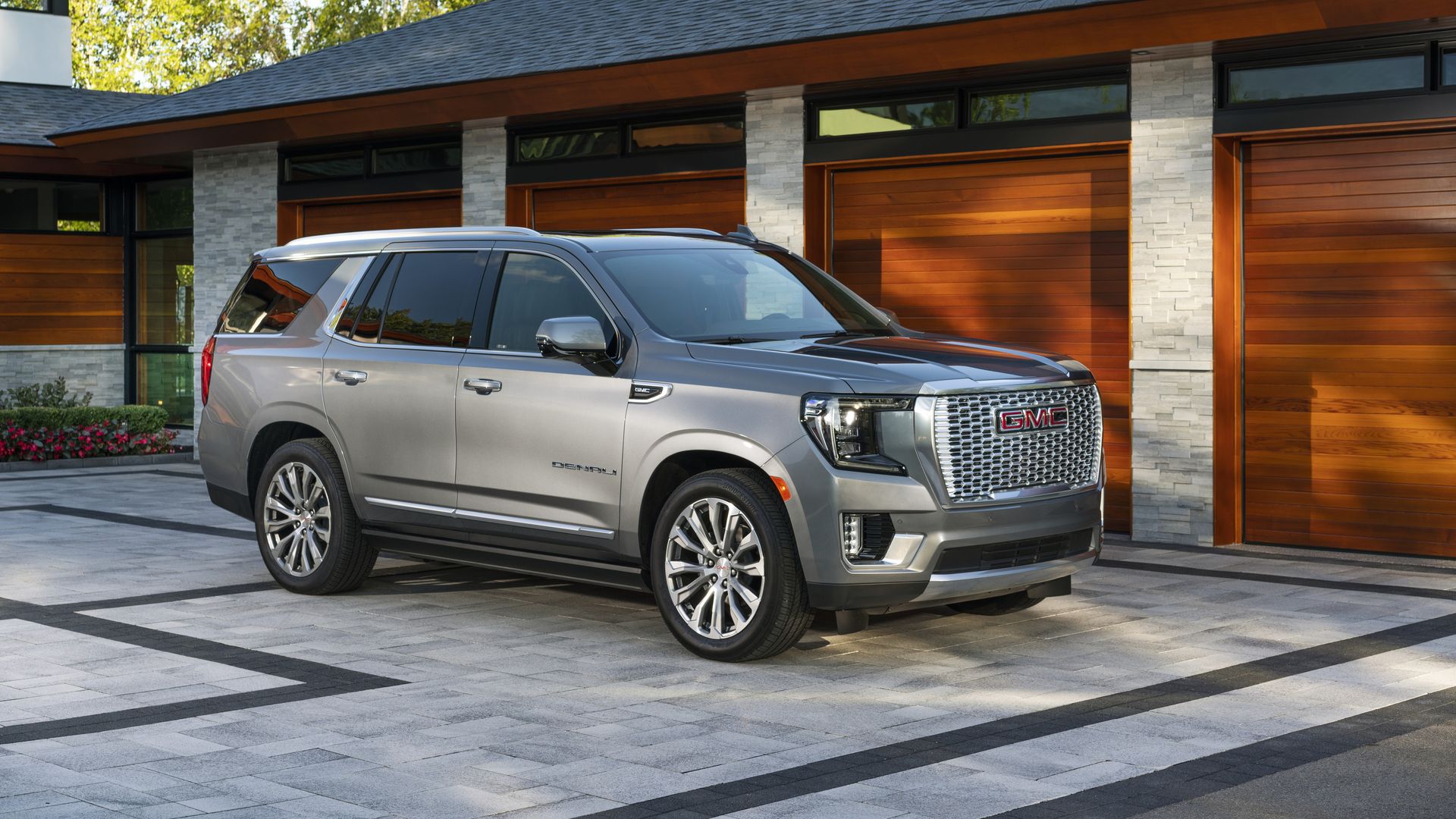
This week I'm driving the GMC Yukon Denali, which was redesigned for the 2021 model year.
The big picture: The Yukon, along with GM's other full-size SUVs (the Cadillac Escalade and Chevrolet Tahoe and Suburban), are the company's moneymakers, hauling in about $10,000 profit per vehicle, analysts estimate.
Without them, GM wouldn't have the capital to invest in future technologies like electric, self-driving cars.
General Motors is finding love on Wall Street, something it hasn't experienced in a very, very long time.
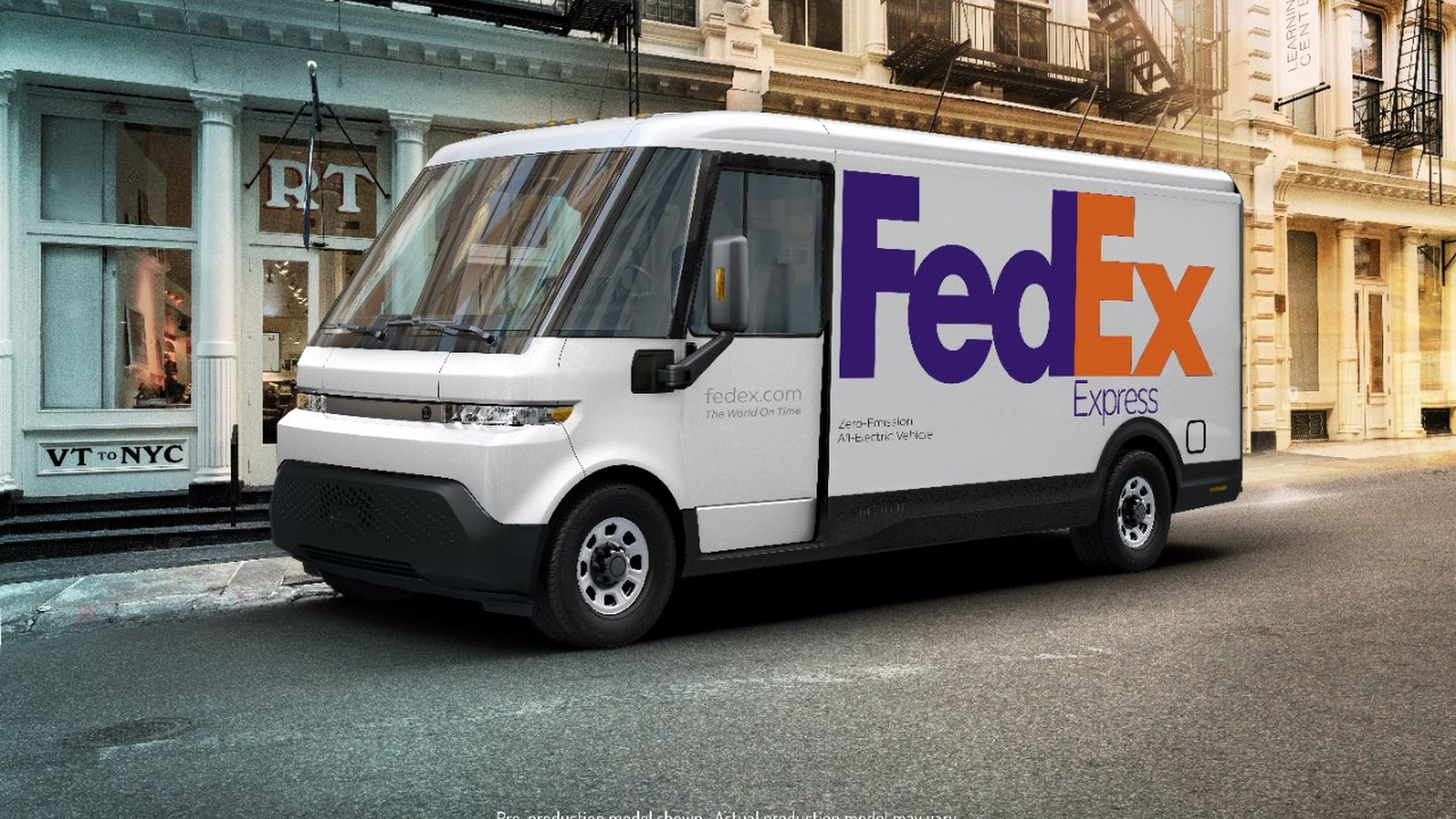
What's happening: Investors are beginning to give credence to the Detroit automaker's electric vehicle strategy — or they're looking for a cheaper way to participate in the Tesla-inspired run-up in electric vehicle stocks.
What began as a free alternative to World Book and Encyclopedia Britannica has become one of the biggest repositories of basic information and a testament to the power of the open web.
Why it matters: Almost no one has a traditional set of encyclopedias anymore. As Wikipedia turns 20 today, it's worth taking a look at the rise of the massive site and the impact it has had.
There were few surprises as Samsung unveiled the Galaxy S21 family on Thursday, but it's always interesting to see where the Korean electronics giant puts its energy with each successive generation of flagship gear.
Why it matters: In the U.S. and many places around the world, Samsung is the single biggest phone rival to Apple and its Galaxy S family is the iPhone's most direct competitor.
Federal Communications Commission chairman Ajit Pai says online platforms should be forced to explain their practices in the much the same way he required of broadband providers like Comcast and AT&T.
The big picture: Pai paired those transparency requirements with his 2017 repeal of net neutrality rules. Open-internet proponents feared the repeal would lead to ISPs blocking websites or deliberately slowing traffic, but bipartisan concern has largely shifted to the power of platforms like Google and Facebook to shape what people see online.
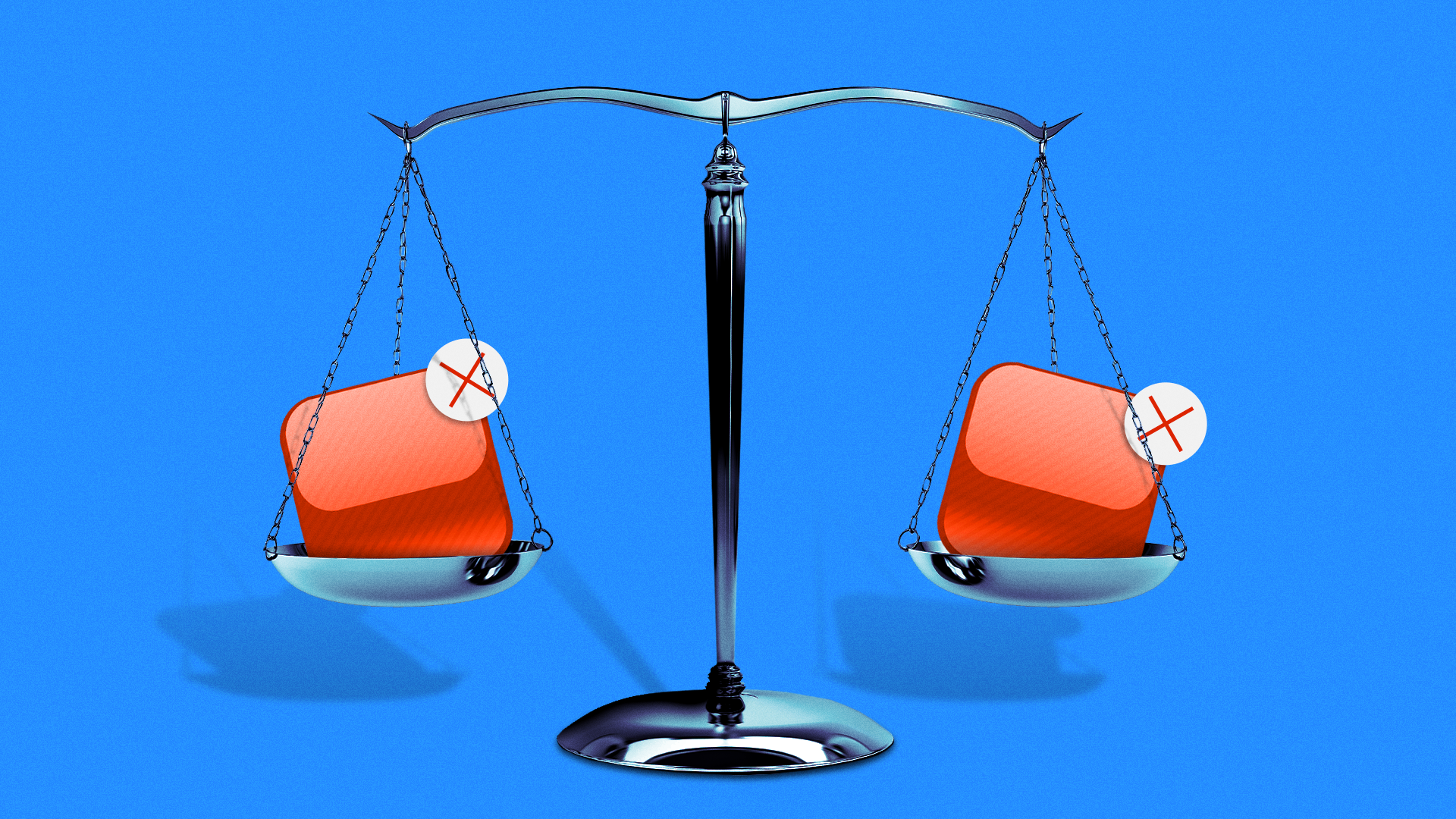
The Capitol riot and tech firms' sweeping attempt in its wake to dislodge the online far right are kicking up efforts to have the courts settle knotty questions about online speech and power.
Why it matters: Legal battles could force the people angry at Big Tech to bring more rigor to arguments that have often devolved into messy sideshows.
Grocery delivery company Instacart says it will provide a $25 stipend to its workers who take time off to get vaccinated for COVID-19 in the U.S. and Canada starting on February.
Why it matters: Some companies in retail and services are beginning to announce incentives to get their workforces vaccinated sooner rather than later — both for the workers' safety and the companies' own bottom lines.
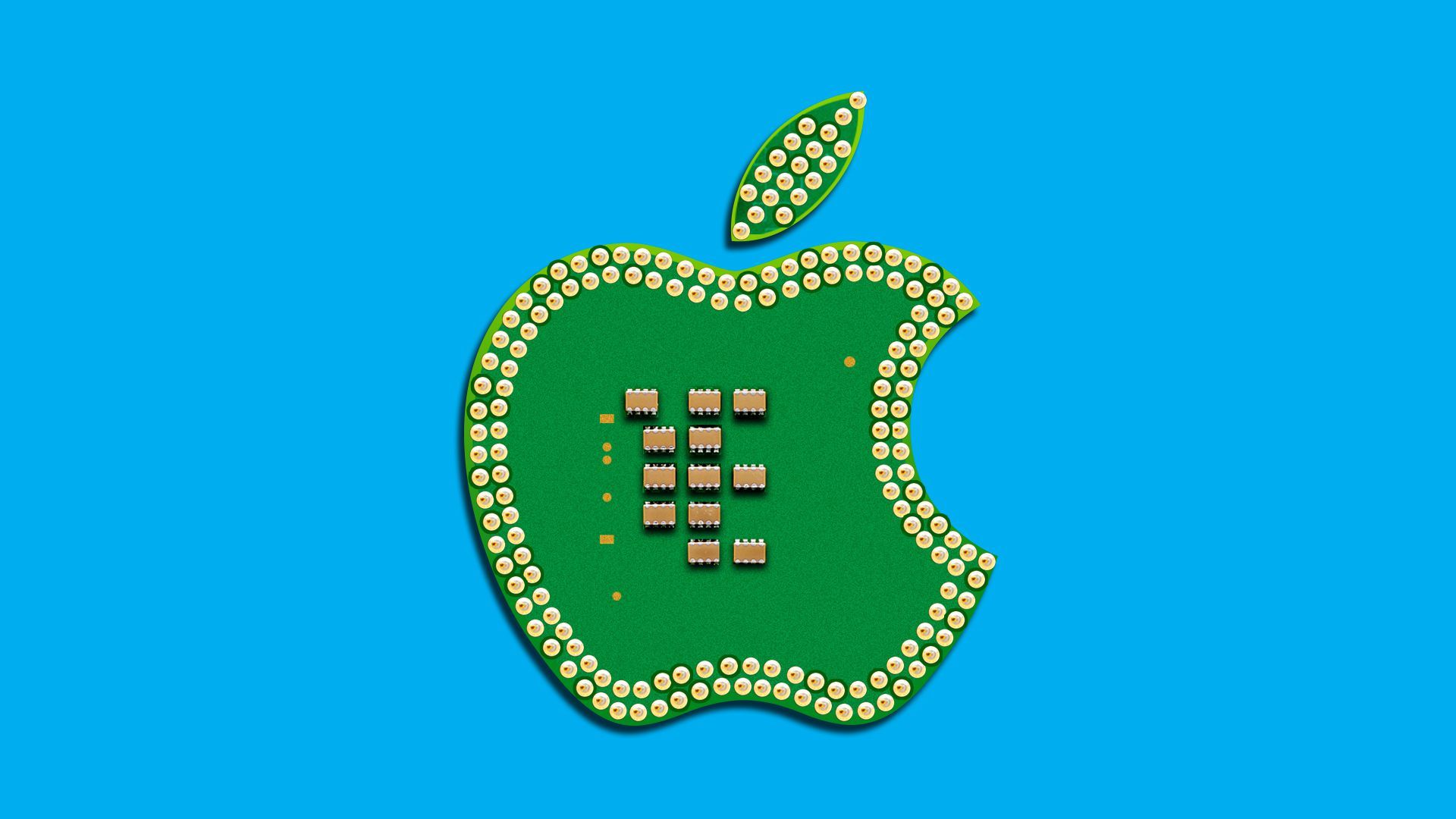
Although most eyes were on the impeachment and other Washington goings-on, Wednesday was a big day for the chip industry, which produced a 10-figure deal and a major leadership shakeup.
The big picture: Legacy chip players Intel and Qualcomm have watched other companies eat into the business lines that got them where they are. They're now seeking to seize control of their own fates.
Google has completed its acquisition of connected fitness device maker Fitbit, the search giant announced in a blog post Thursday.
Why it matters: Google's successful purchase of Fitbit comes as antitrust regulators around the world scrutinize large tech companies for their acquisitions, past and present.
Silicon Valley's leading lobby, the Internet Association, is struggling to manage the competing interests of the companies it represents just as the industry faces a tide of bipartisan anger.
Why it matters: Tech will fight policy battles around antitrust, content moderation and privacy without a unified industry voice.
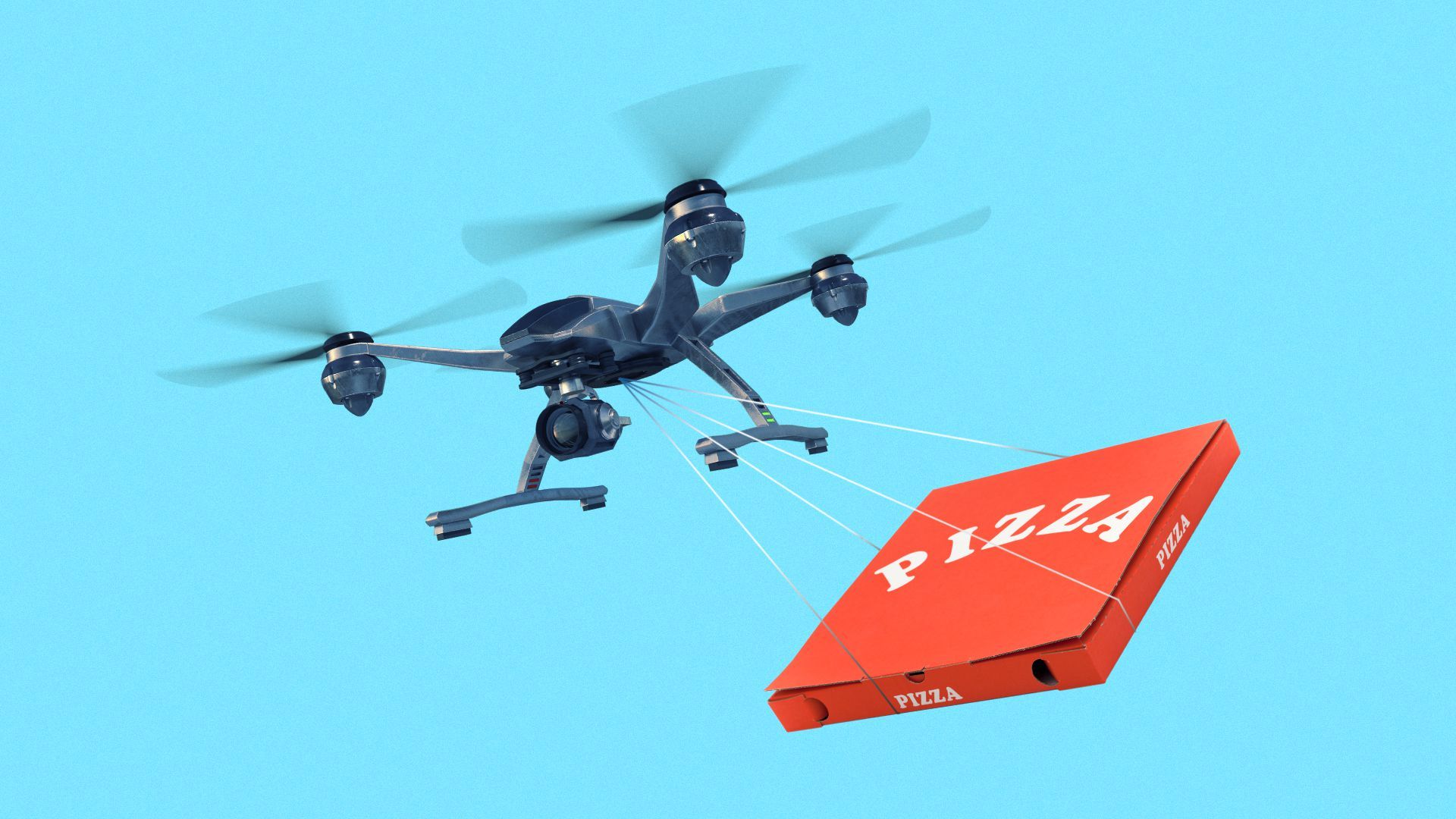
The Federal Aviation Administration has released new and looser rules for flying drones over highly populated areas and at night, effectively laying a welcome mat for future aerial deliveries of takeout food, Amazon packages, prescription drugs — you name it.
Why it matters: While the prospect of Jetsons-style convenience with less street gridlock is tantalizing, there are still plenty of logistical hurdles, and it will take some time for cities to figure out how to manage low-altitude air traffic as routinely as they do today's road traffic.
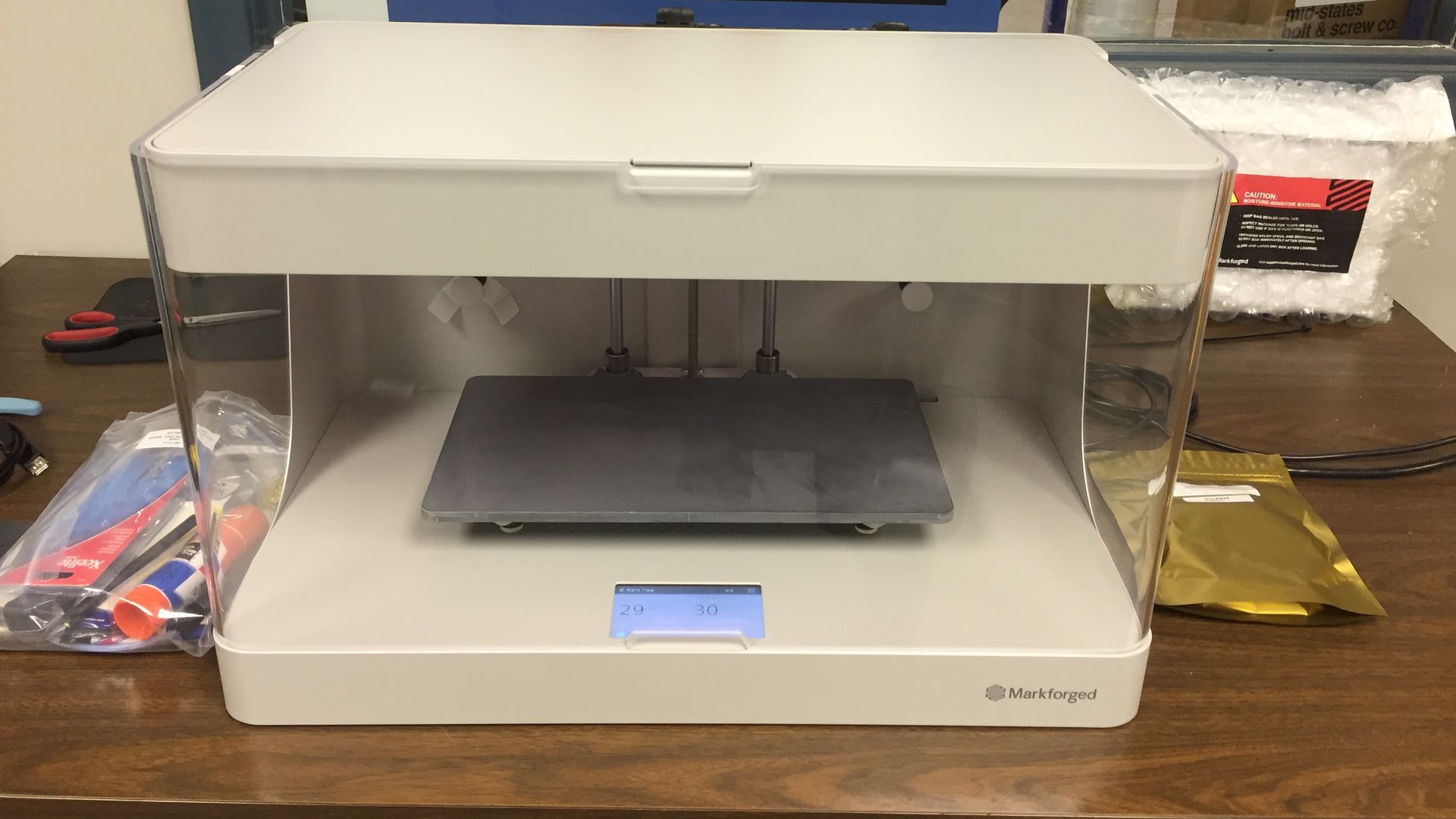
A 3D-printer platform is sending out machines to hundreds of manufacturers in Michigan as part of an effort to create a network that can print out personal protective equipment on demand.
Why it matters: Networked 3D printers can serve as a rapidly scalable backup system for PPE — and showcase the potential of a new method of manufacturing.