Until now, the vast majority of information collected about us has remained untouched — there was just too much to make sense of it all.
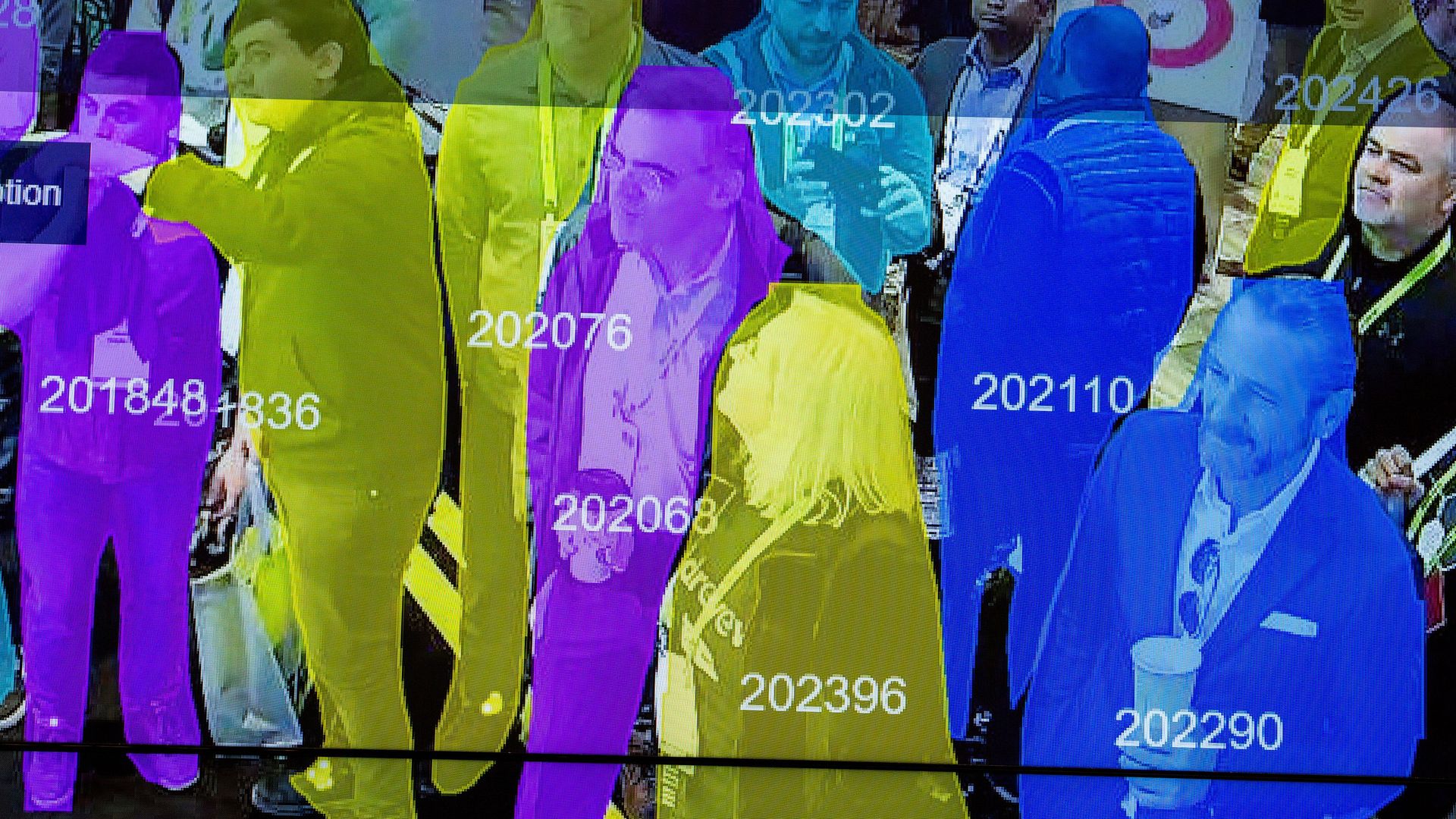
What's happening: Artificial intelligence allows data that might once have gone unnoticed to now be detected, analyzed and logged in real time. It's already started supercharging surveillance at work, in schools and in cities.
Boosters of surveillance technology argue that it can make cities safer, improve traffic, speed up airport and stadium lines, make workers more productive and safeguard valuable company property.
The big picture: People are willing to be watched in certain cases. Most people trust the police to use facial recognition responsibly, according to a new Pew Research survey, but the majority don't trust tech companies or advertisers to do the same.
Advanced surveillance technology is being deployed despite flaws that risk perpetuating racial biases in the criminal justice system.
The big picture: Even with recent improvements in the tech, people of color are more likely to be misidentified by facial recognition software — an error that can have life-changing results. And predictive systems can reinforce biased over-policing of neighborhoods of color.
The point of surveillance is to track and influence people's behavior — in the political sphere, at school, in the subway or in the workplace. Just how new technologies affect someone's behavior and thinking at work depends on each individual, what they are doing and the goals of those who are surveilling.
Some designers, researchers and activists are trying to fool facial recognition technologies with fashion.
What’s happening: The protests in Hong Kong have drummed up new interest in anti-surveillance fashion, according to designers Adam Harvey and Scott Urban.
On Friday, Google disclosed that the U.S. Department of Justice has asked for documents about prior antitrust investigations, confirming the tech giant is a target of the agency's recently announced probe into the industry.
A new study suggests Americans trust law enforcement more than advertisers or tech companies to use facial recognition responsibly, though many are skeptical of all three groups.
Why it matters: There is a growing debate over the appropriate use of facial recognition, while few laws exist in the U.S. over how and where the technology can be used. Even some tech companies say it is time for Congress to set some rules.
Fall's big electronics show, IFA Berlin, kicked off with a flurry of announcements of new consumer tech.
Why it matters: Not only is IFA one of the world's biggest consumer electronics trade shows, but its early fall timing makes it a key launch point for devices that will arrive before the holidays.
Many of Apple's latest products and services share a common goal for the company: increasing customers' dependence on the iPhone. As Apple prepares to unveil its latest generation of iPhones on Tuesday, this "ecosystem" strategy is more pronounced than ever.
Why it matters: With the smartphone market stalling, Apple needs to find other ways to make money while also maintaining its share of the market. This approach serves both goals.