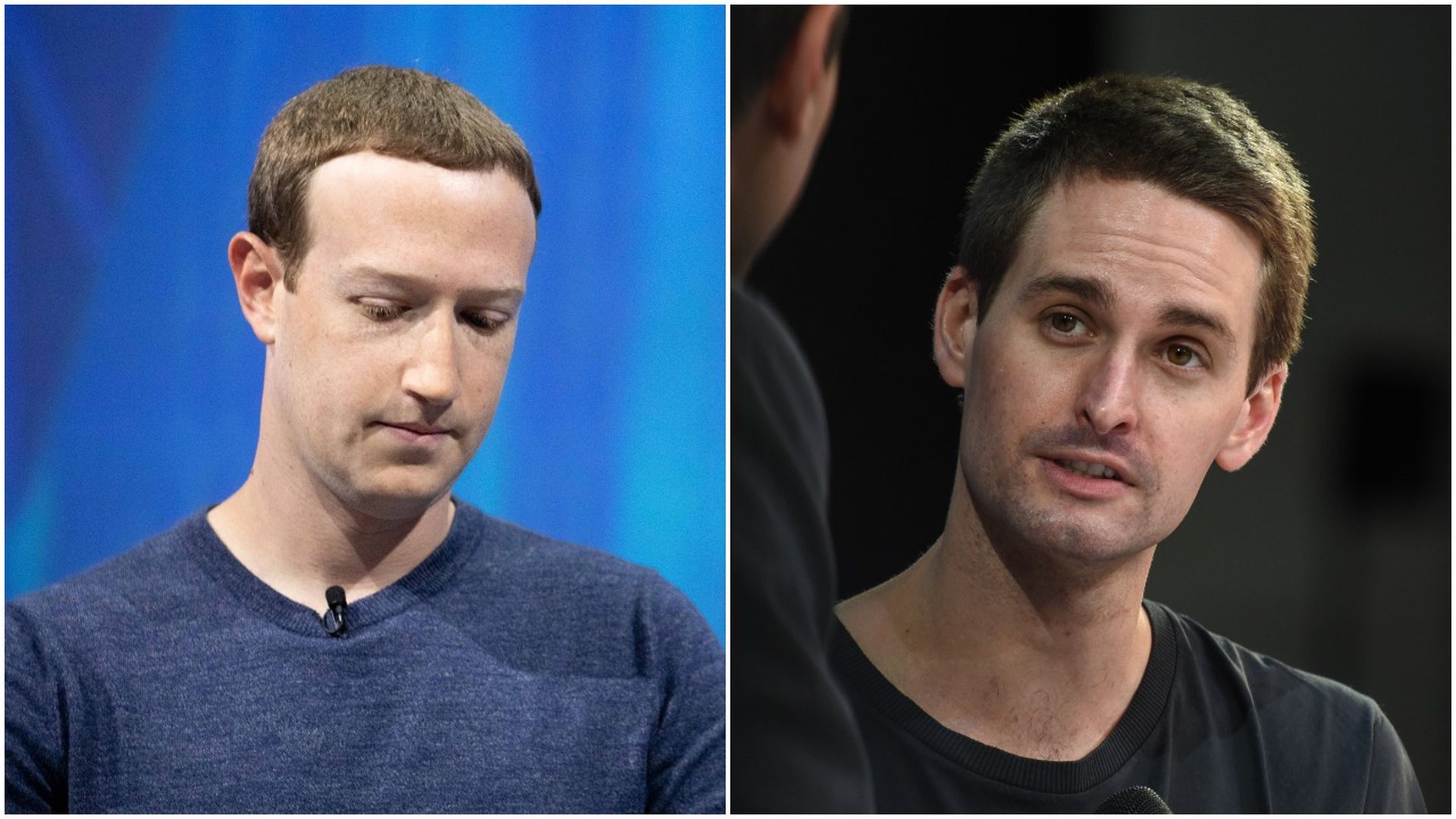
After Mark Zuckerberg's famous $3 billion offer for Snapchat in 2013, Facebook tried again three years later, The Wall Street Journal's Georgia Wells and Maureen Farrell report.
The big picture: CEO Evan Spiegel and other Snap executives reportedly dismissed informal overtures from Zuckerberg and Facebook COO Sheryl Sandberg, who never specified prices. Snap's stock hit its all time low of $4.85 per share Friday, after going public last year at $17. Facebook, meanwhile, is closing out 2018 the way it started — "under attack for betraying users' trust and oversharing their personal information," Axios' Scott Rosenberg writes.
For more than a year, we have reported exceedingly pessimistic forecasts about the future of jobs: Robots and automation, we've written, are likelier than not to wipe out a large portion of current U.S. employment by 2030 or so. But there are ways to both cushion the blow of automation and meet the challenge posed by China.
Driving the news: The problem isn't only that companies seem likely to automate at a faster and faster pace, but that the U.S. and other advanced economies are doing little to get prepared. Meanwhile — in a tech race against the U.S. — China is in a headlong push to deploy as much advanced robotics as it can.
Reid Hoffman — co-founder of LinkedIn, Greylock partner and co-author of the new "Blitzscaling: The Lightning-Fast Path to Building Massively Valuable Companies" — joins a venture-capital roundtable for Barron's.
What's next: "People think cloud computing is already big, so they move on. But combining multiple sources of data with VR and AI techniques has stunning implications. Would you rather have your average radiologist or a trained AI program read your films? This transformation is just beginning."