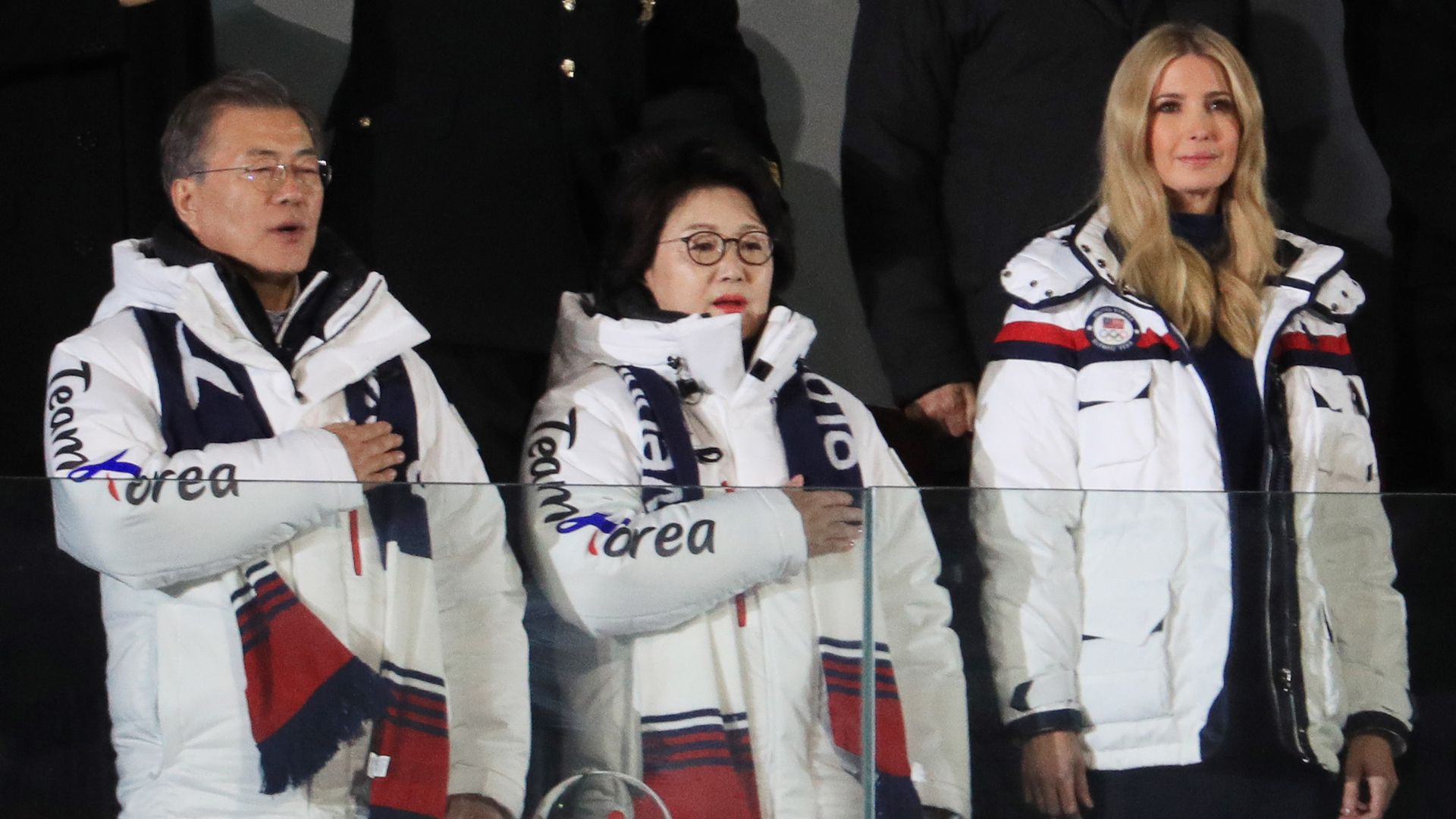
Notwithstanding Pyeongchang’s proximity to the North Korean border, a mere 40 miles, the Winter Olympics concluded without incident. That in itself is no small achievement.
South Korean President Moon Jae-in earned a diplomatic gold medal by enticing Pyongyang to join the festivities rather than disrupt them. North and South Korean athletes carried the torch in the opening ceremonies. The North Korean cheerleaders retained their enthusiasm even as the joint women’s hockey team lost every game. And North Korea’s leader, Kim Jong-un, sent a high-level delegation that included his sister.
What’s next: There may be a meeting between the North and South leaders, which wouldn't hurt. But after two weeks of sprints, jumps and triple axels, relations between Washington and Pyongyang haven't changed much.
Following reports that Michigan State University improperly handled reports of sexual assault by Larry Nassar while he worked at MSU, the Department of Education has announced a Title IX investigation into the university's response.
"The crimes for which Dr. Nassar has been convicted are unimaginable ... Every student across every campus should know that I am committed to ensuring all students have access to a learning environment free from sexual misconduct and discrimination and that all institutions that fall short will be held accountable for violations of federal law."
Live from NYC, join us for a conversation with leading entrepreneurial voices on the workforce revolution, featuring 2-time NBA champion Draymond Green.
The United States finished 4th in the medal count of the 2018 Winter Olympics. Its 23 was well short of Norway, which led the way with 39. By comparison, the U.S. had impressive finishes in the first decades of the Winter games, but was then largely non-competitive until a resurgence in the early 2000s. That's when more snowboarding events — an American specialty — were added to the program.
Worth noting: The number of available medals has exploded in recent years. The first Games in 1924 had 16 events. By 1984, there were 39. This year: 106.
Eating dog meat is a long-standing tradition in China, South Korea and some other Asian countries. But the practice has garnered increased attention throughout the 2018 Winter Olympic Games in South Korea and has pushed at least one athlete, American freestyle skier Gus Kenworthy, to adopt a Korean puppy, the Wall Street Journal writes.
Why it matters: Some athletes from around the world have raised concerns about the controversial practice during the Olympics. In South Korea alone, there are about 17,000 farms that breed more than 2.5 million dogs a year and slaughter them for human consumption, according to the Humane Society International.