Thursday's science stories

Axios BFD: All eyes on AI and regulation
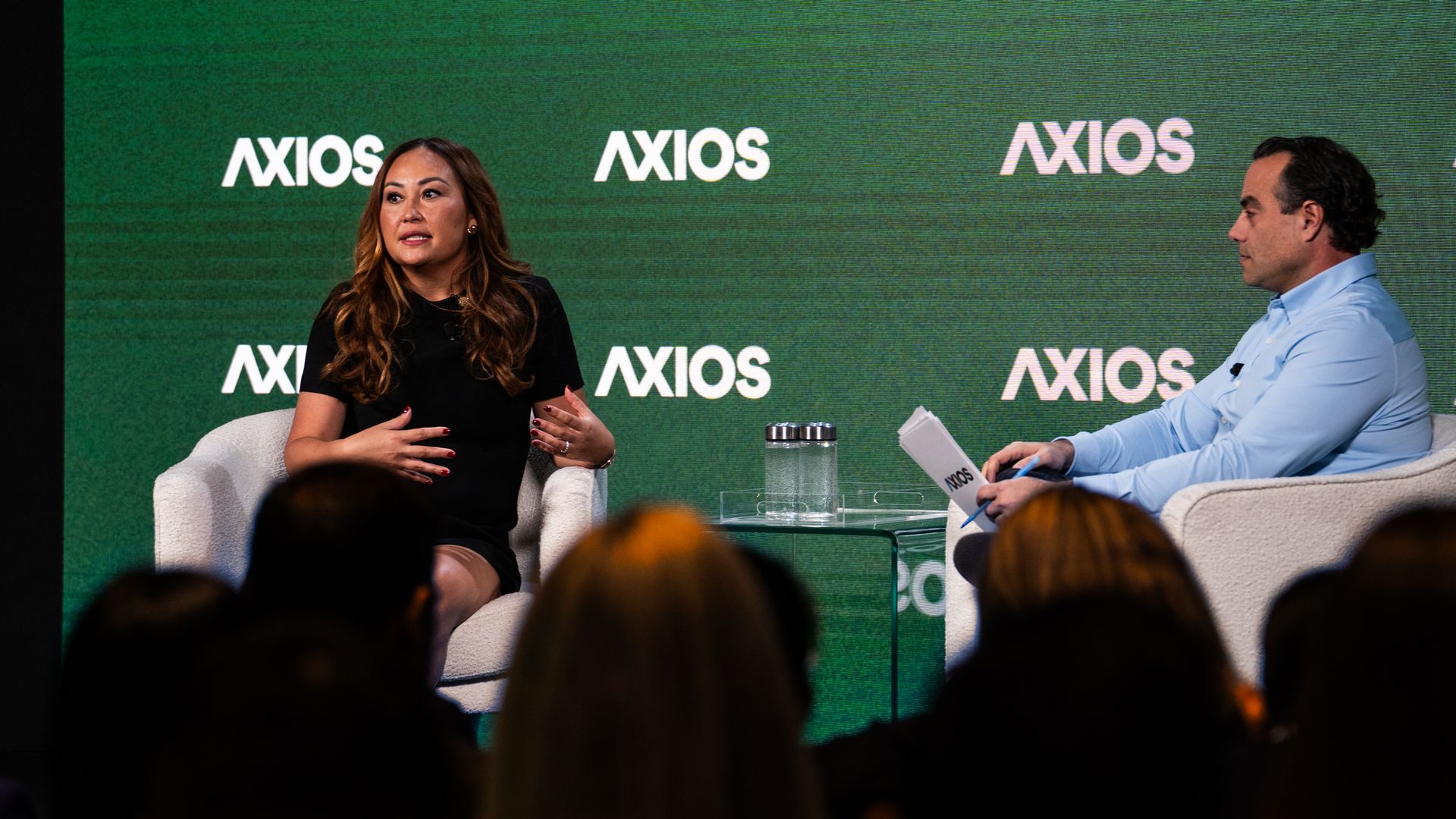
NEW YORK — Artificial intelligence and shifting markets were top of mind at the Axios BFD summit on Nov. 18, as was adapting to changing political headwinds.
Why it matters: Rates, regulations and AI are transforming how money moves, with decisions by power players playing an outsized role in determining market stability and economic opportunity in the United States and beyond.
- The event was sponsored by Bayer and the Center for Audit Quality.
Here are seven key takeaways:
- Sequoia Capital's Roelof Botha told Axios' Dan Primack that SpaceX has a "bigger chance of being the most valuable company" than OpenAI. "SpaceX, by itself, is responsible for 80% of all mass moved into orbit last year. It dominates that particular industry," whereas OpenAI has trade competition.
- Coinbase President and COO Emilie Choi exclusively told Axios' Dan Primack her company contributed to President Trump's White House ballroom project to "keep good relations with" the administration.
- Private credit is less susceptible to hidden problems than public markets, Blue Owl Capital's Marc Lipschultz said, and isn't as likely to be spooked by hidden "cockroaches." "Our documents, our covenants, our restrictions on what that company can do are far, far tighter than the public market equivalent," he said.
- Investors shouldn't worry about sports gambling scandals, said Gerry Cardinale, founder and managing partner of RedBird Capital Partners, despite NBA and MLB investigations and arrests involving athletes and games.
- Hugging Face CEO Clem Delangue warned it is large language models, and not AI, that are the bubble waiting to burst in the year ahead.
- Affirm's Max Levchin shared the company's mindset toward its prospective and existing borrowers: "You behave like an adult, and we'll treat you like one, and if you can't play by the rules, we're not interested in transacting with you."
- On the heels of Skims' $5 billion valuation, founding partner and entrepreneur Emma Grede reiterated to Axios' Madison Mills that being "an overnight success" is a myth.
Content from sponsored segment:
The Center for Audit Quality CEO Julie Bell Lindsay told Axios publisher Nicholas Johnston that CAQ expects the Securities and Exchange Commission to issue a proposal soon on quarterly reports and whether they will remain mandatory.
- "Auditors are not one-trick ponies," she said. "It's the data analysis. It's the professional skepticism. It's the independence."
Bayer Pharmaceuticals worldwide COO and Bayer U.S. president Sebastian Guth shared that the corporation is focused on cancer, cardiovascular and women's health care because those conditions affect almost everyone.
- "The biopharmaceutical industry is the crown jewel of American industries," Guth said, but "China is catching up."
Go deeper: Watch the full interviews on YouTube.

Time partners with Galactic to launch prediction market platform

Time is partnering with Galactic to launch a prediction market platform, executives from both companies told Axios. It will leverage Galactic's Predictor.io platform to bring its real-time journalism to predictors around the globe.
The big picture: More media companies are inking prediction market deals as a way to expand their audiences and earn licensing revenue.

Why the Middle East is a hub for AI investment
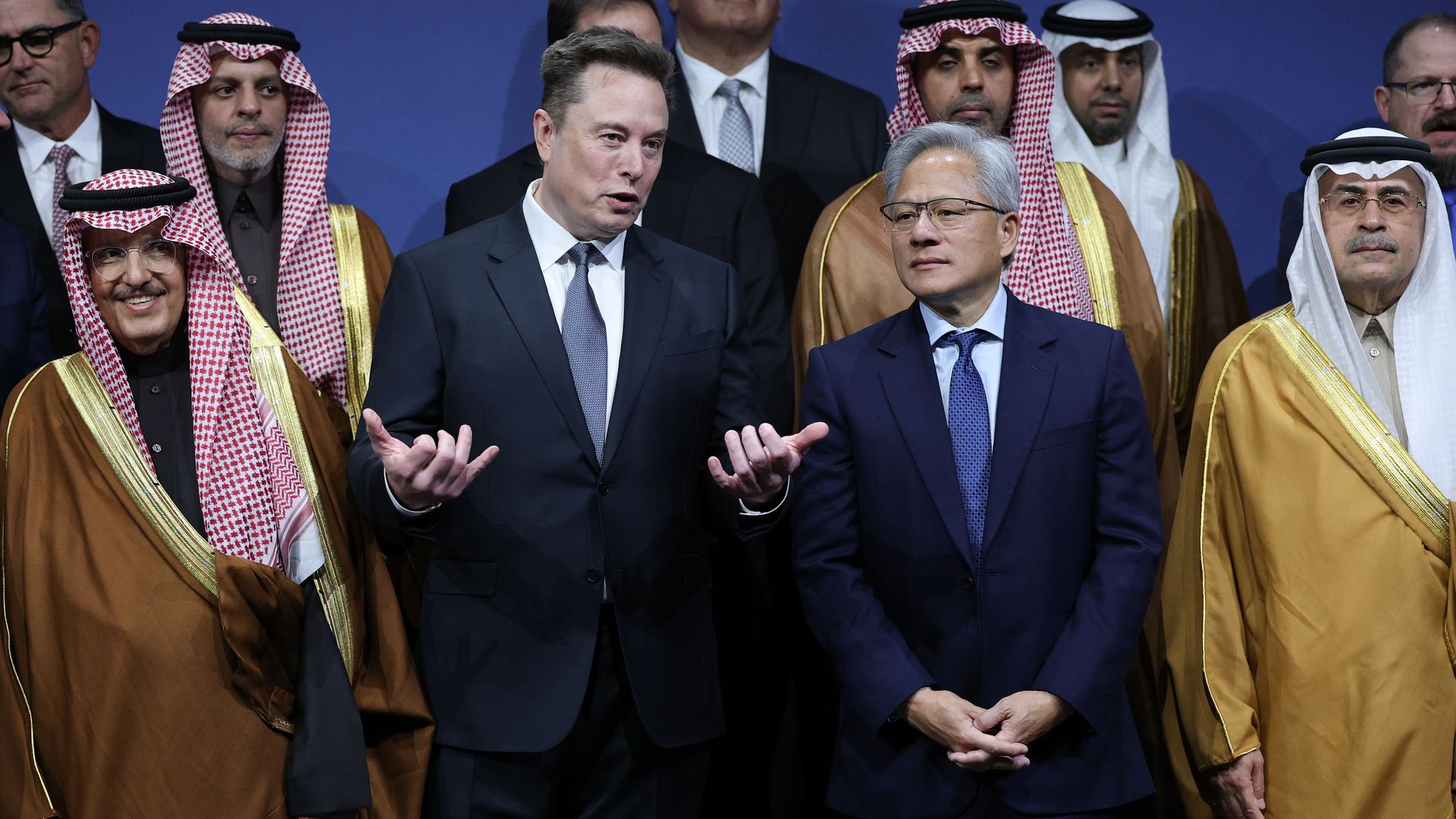
The Middle East is fast becoming not just a deep-pocketed investor in AI but a hot spot for data centers, highlighted by a new wave of Saudi deals announced Wednesday.
Why it matters: Allowing these deals is part of a strategic effort to ensure Saudi Arabia and other countries in the Middle East adopt U.S. technology rather than AI systems from China.

Nvidia CEO says "everybody's jobs will be different" amid AI boom
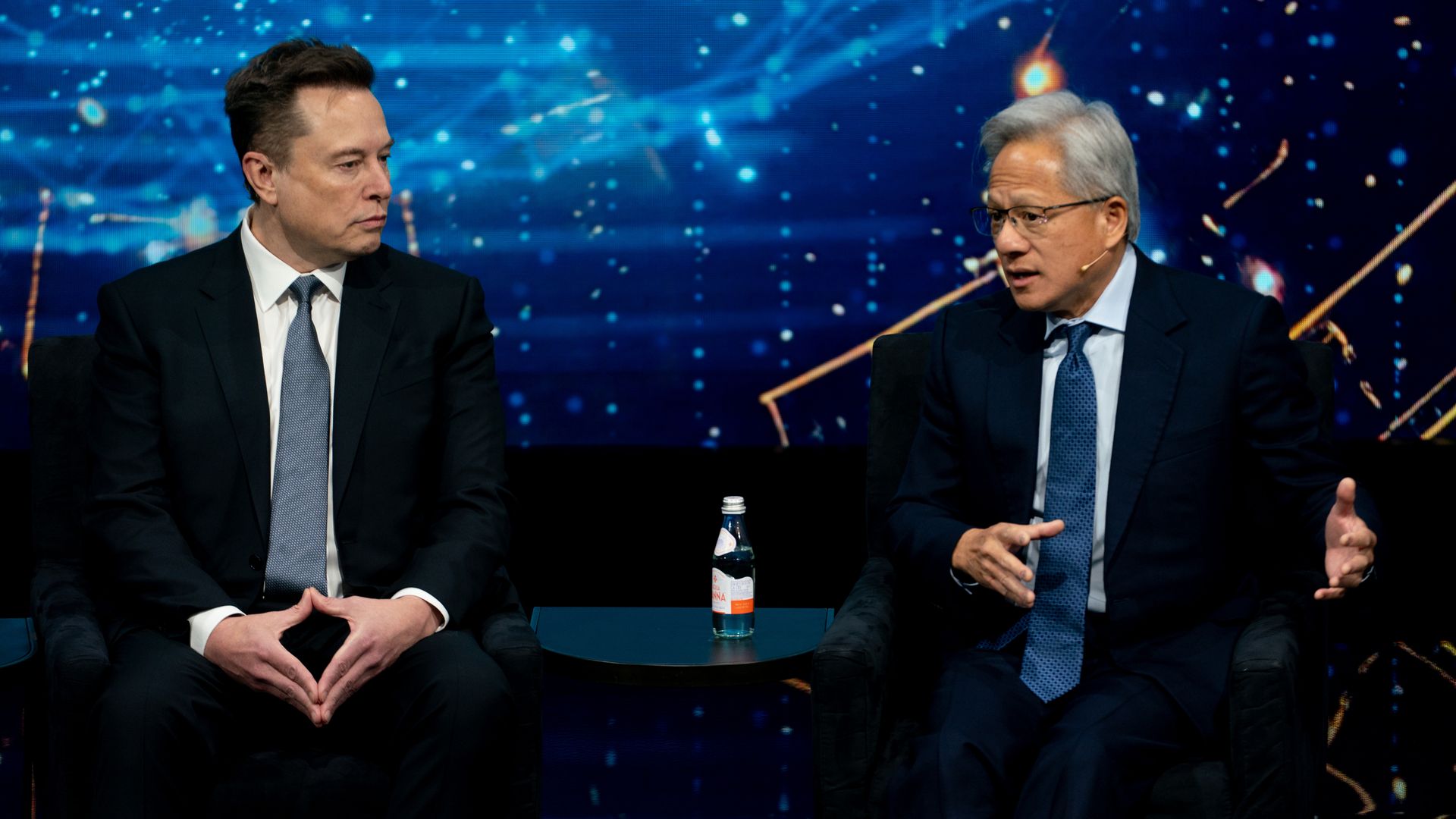
Nvidia CEO Jensen Huang acknowledged on Wednesday that "everybody's jobs will be different" as a result of AI.
Why it matters: It's an indication of just how disruptive AI may be, coming from the CEO of the company that sits at the center of the AI boom.

Data center CEO: AI speeds fusion by "two or three decades"
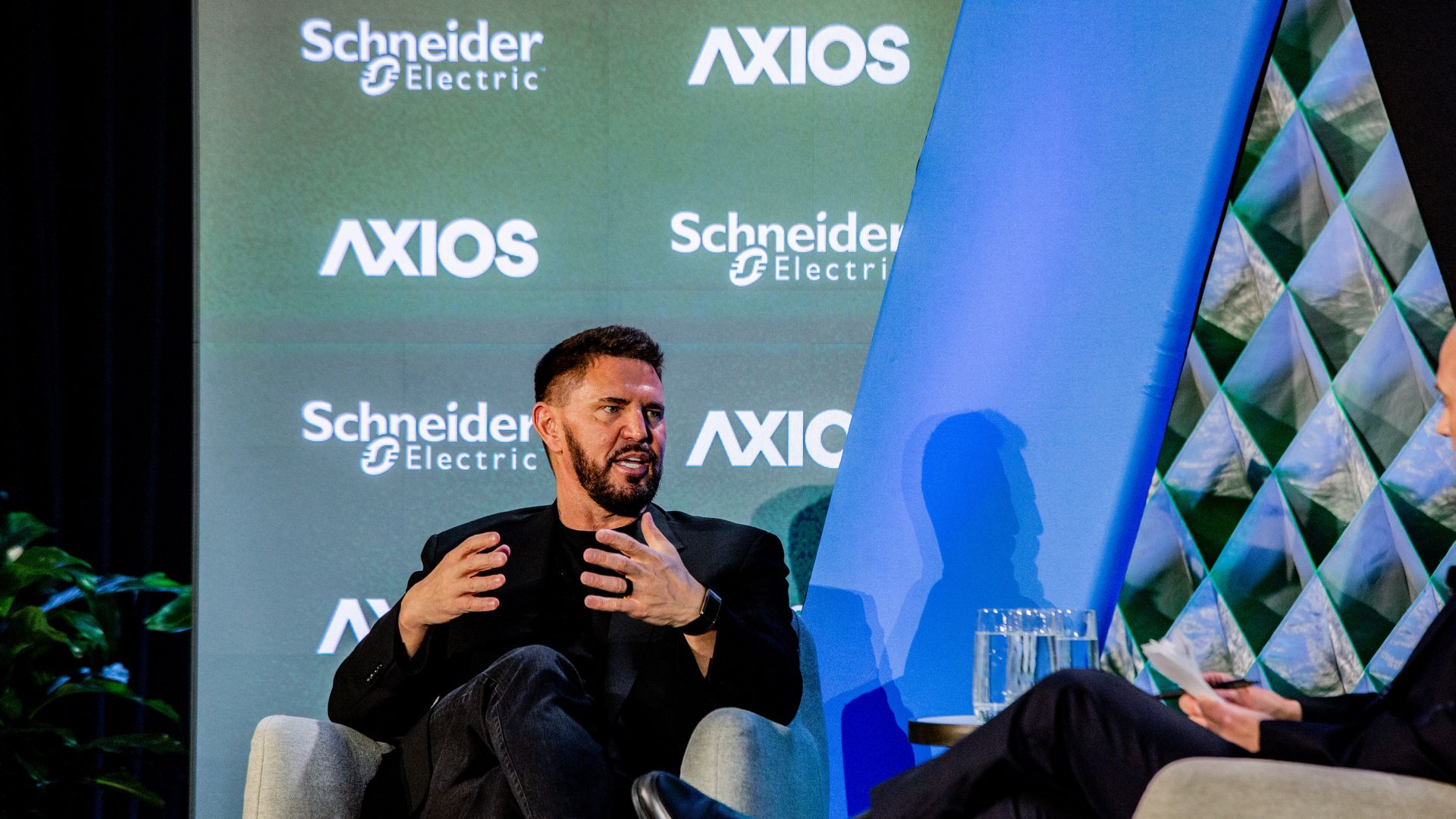
LAS VEGAS — AI energy needs will accelerate commercial fusion power by "two or three decades," said Rob Roy, founder and CEO of data center heavyweight Switch.
Why it matters: Tech and data center heavyweights are helping fund and signing power deals with fusion startups, in addition to other nuclear agreements.

Global warming is like a human fever, influential scientist says
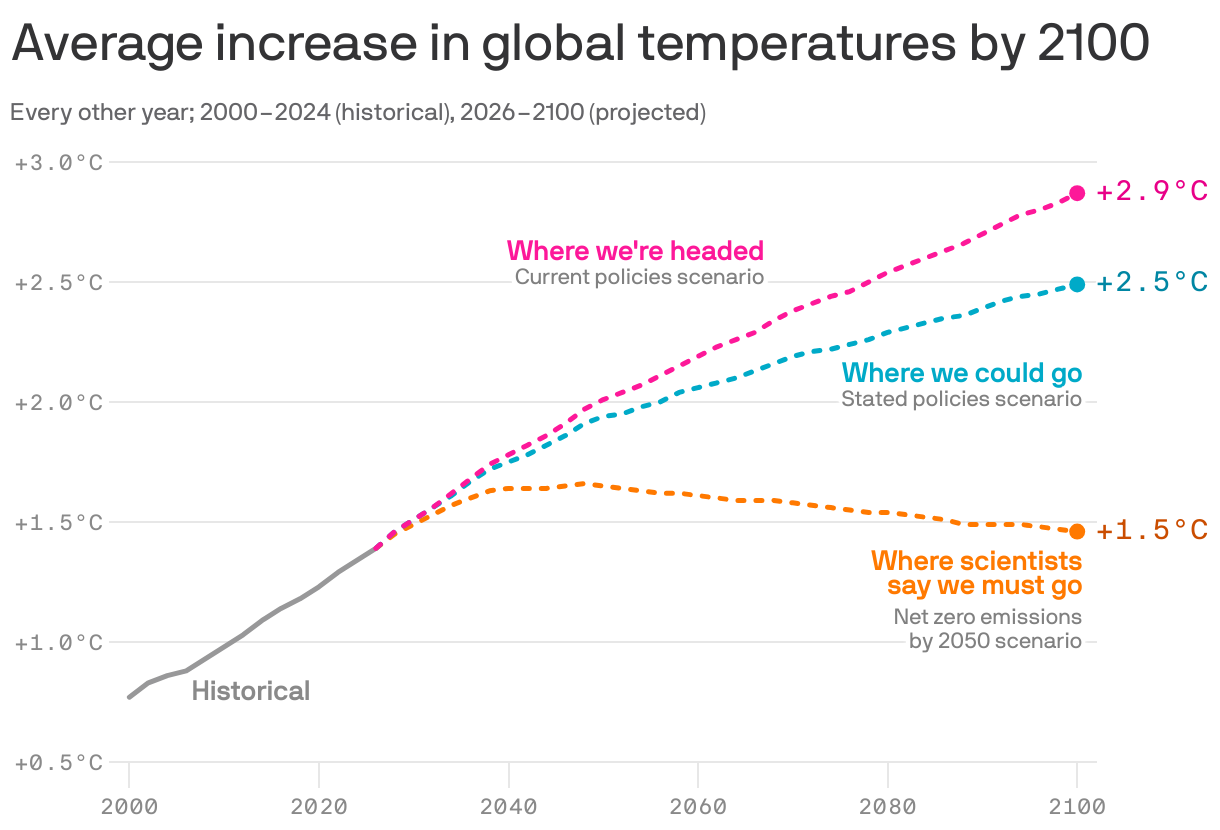
Global warming is like a fever, says well-known climate scientist Katharine Hayhoe — even a small rise is serious.
Why it matters: Adapting to the warming already underway is a top focus at the United Nations climate talks underway now in Belém, Brazil.

"Bubble" misses AI's capacity for change, investors say
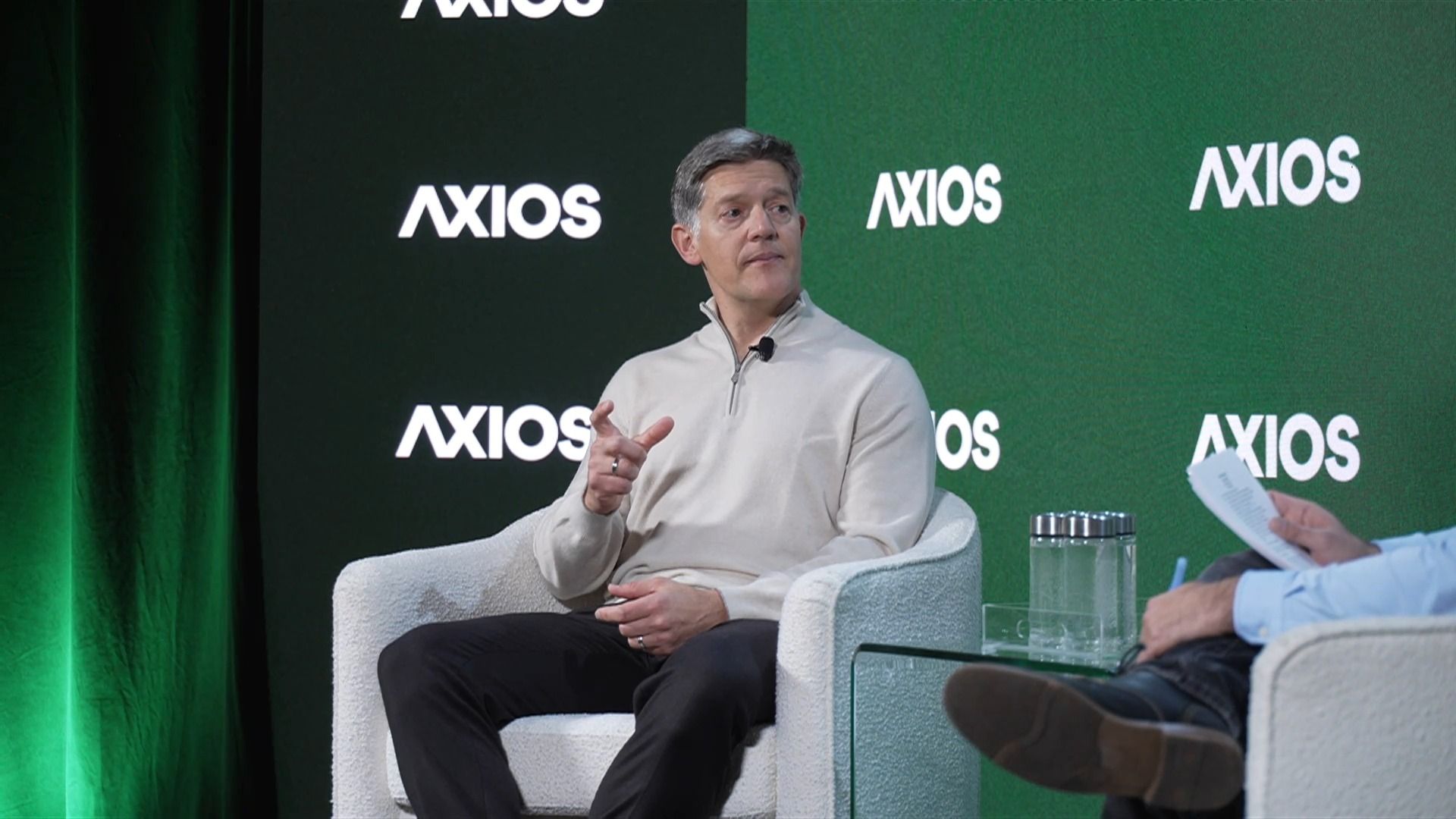
AI is far too transformative for society — and disruptive to legacy industries — to fixate on a near-term bubble, some of the world's top private investors said at Axios BFD on Tuesday.
The big picture: Financial markets may be nervous now. But the people who invest billions for the long term believe in what they're seeing.
- "I was in Silicon Valley in '98, '99. I saw what happened with the dotcom era. I saw what happened with mobile, saw what happened with cloud computing. This surpasses all of them and more," said Sequoia Capital partner Roelof Botha, one of the world's top venture capitalists.
- "You have so many industries that are relatively ossified and ripe for disruption," Botha said. "And AI isn't just a new distribution mechanism or a new interface. It is fundamentally a set of capabilities that can upend industries."
Case in point: Creatives fear the impact AI could have on entertainment and the arts, but those who are using it right now to change businesses say rejecting it isn't the answer.
- "The reality is, the world's not going to stop and AI is coming, so you have a choice, you could put your head in the sand or you can embrace it," said Gerry Cardinale, managing partner of RedBird Capital Partners, which helped finance the Skydance acquisition of Paramount.
- "I don't think AI is going to replace Robert Plant and Jimmy Page. I just don't think that's happening. And, and similarly it's not gonna replace Ben Affleck and Matt Damon. However, it has to be harnessed."
Reality check: Even those deepest in AI and the world of large language models (LLM) concede that there could be some froth, as Google CEO Sundar Pichai did when he told the BBC Tuesday there was some "irrationality" in the market.
- "I think we're in an LLM bubble, and I think the LLM bubble might be bursting next year," said Hugging Face CEO Clem Delangue, whose company helps people build models for AI.
- But even so, Delangue said, LLMs are "just a subset of AI" when it comes to broader applications across science, technology and media.
The bottom line: "'The bubble' is a pejorative term," Sequoia's Botha said.
- In the long run, he said, it's the fundamental change to the way so many industries operate that matters.