Friday's science stories

Axios BFD: Biotech leaders examine AI's role in R&D
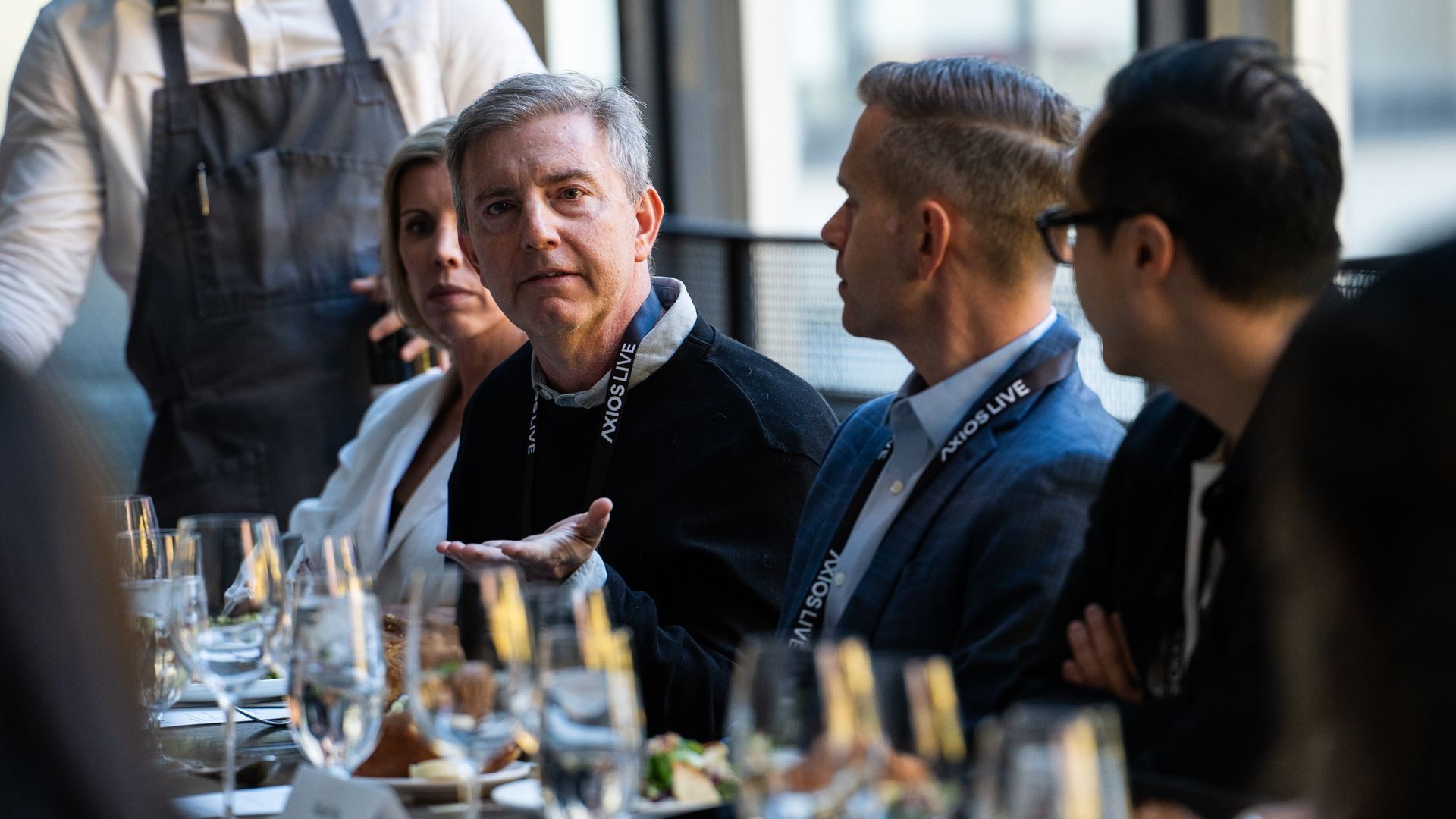
NEW YORK — Key players in biotech research at the Axios BFD summit on Nov. 18 discussed new drug development ideas and how the industry can adapt and grow amid major technological shifts.
- Axios' Katherine Davis and Claire Rychlewski moderated the roundtable discussion, which was sponsored by Bayer.
Why it matters: AI's role across the drug discovery process continues to grow, and companies are looking for ways to apply the technology to improve patient outcomes.
- However, no drug discovered exclusively by AI has reached the marketplace to date.
Five key takeaways from participants in the roundtable …
- Products like GLP-1s are bellwethers for progress, Enveda CXO Daniel Wee said. "A lot of analysts would have written off [obesity treatment as] slower than it is, but having something like the GLP-1s show what the potential of a great drug can do."
- Direct-to-consumer platforms can potentially educate patients about drug indications, said Alexander Kerman, head of life science at Ubie Health. As more pharmaceuticals hit the market with various uses in mind, it's important that the public understands how to access and use them safely.
- The promise of AI in biotech advances isn't in small improvements, RA Venture partner Jacob Oppenheim said. It's in discovering entirely new ways to fight diseases.
- If the tech industry, like AI, becomes too centralized by certain owners, "and we're beholden to those owners … we're going to lose, as a society," warned Procept, Partners LLC founder Shawn Knopp.
- Clinical trials are king when it comes to predicting and evaluating results, Wee said: "It's going to be incredibly hard to refute what happens when you give someone a drug versus what a model says. We'll take the person every time."
Sponsored content:
Simon Rosof, Bayer Pharmaceutical's senior vice president and head of product and pipeline, noted how AI has streamlined the company's ability to screen gene-driven diseases.
- "We've seen the ability to already screen more than 5,000 gene-driven diseases, and get that down to five actionable pipeline targets in a matter of a single 90-day sprint."
- In the past, the process took close to a year, Rosof said.
Brian Cantwell, Bayer Pharmaceutical's vice president of digital strategy and product operations, addressed the challenge of patients researching and finding health care options via tools like ChatGPT, which lack physician oversight.
- "How do we create that single entry point … so that they can very quickly understand the options available to them, consult with a health care professional, and then ultimately make the best possible decision with the right treatment at the right price that they can afford?" he asked.

VCs are funding the AI-powered robot revolution

Physical Intelligence, a San Francisco-based developer of AI software for robots, has raised $600 million led by Alphabet's CapitalG at a $5.6 billion valuation.
Why it matters: There's tons of talk about how AI could lead to a white-collar jobpocalypse, in a reversal of the 1980s and 1990s factory automation boom. "Learn to plumb, not to code."
- But VCs are pumping a ton of cash into marrying AI and robotics, which suggests that all collar colors could get singed.

Exclusive: Mayors forge global partnership on AI and sustainability

The mayors of Phoenix and Melbourne, Australia, are leading a global commitment with eight other mayors to ensure that companies build AI systems more sustainably.
Why it matters: Mayors are on the front lines of the global data center boom. They respond to residents' concerns, rising energy prices, water management issues and other infrastructure demands.
Axios BFD: All eyes on AI and regulation
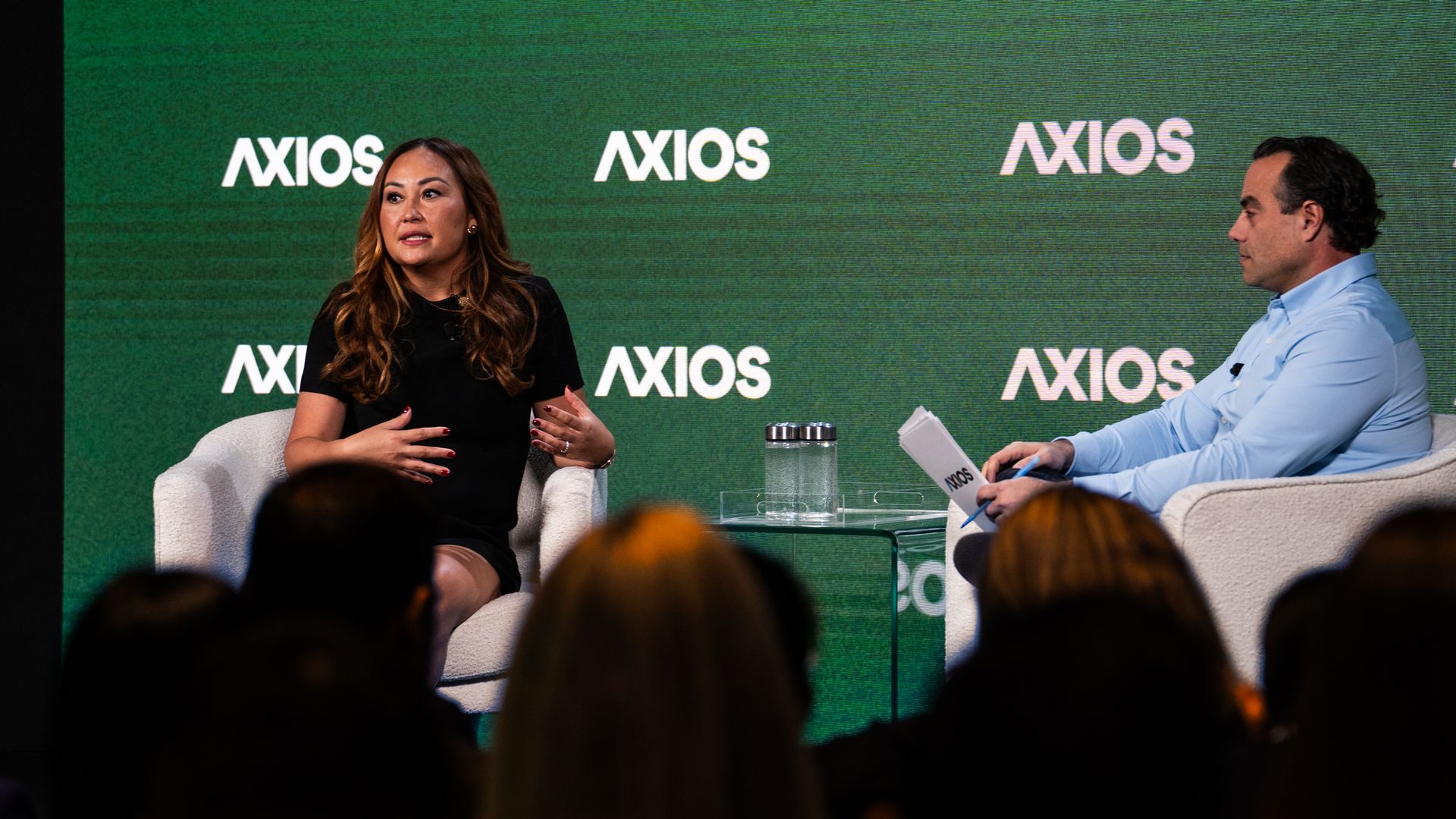
NEW YORK — Artificial intelligence and shifting markets were top of mind at the Axios BFD summit on Nov. 18, as was adapting to changing political headwinds.
Why it matters: Rates, regulations and AI are transforming how money moves, with decisions by power players playing an outsized role in determining market stability and economic opportunity in the United States and beyond.
- The event was sponsored by Bayer and the Center for Audit Quality.
Here are seven key takeaways:
- Sequoia Capital's Roelof Botha told Axios' Dan Primack that SpaceX has a "bigger chance of being the most valuable company" than OpenAI. "SpaceX, by itself, is responsible for 80% of all mass moved into orbit last year. It dominates that particular industry," whereas OpenAI has trade competition.
- Coinbase President and COO Emilie Choi exclusively told Axios' Dan Primack her company contributed to President Trump's White House ballroom project to "keep good relations with" the administration.
- Private credit is less susceptible to hidden problems than public markets, Blue Owl Capital's Marc Lipschultz said, and isn't as likely to be spooked by hidden "cockroaches." "Our documents, our covenants, our restrictions on what that company can do are far, far tighter than the public market equivalent," he said.
- Investors shouldn't worry about sports gambling scandals, said Gerry Cardinale, founder and managing partner of RedBird Capital Partners, despite NBA and MLB investigations and arrests involving athletes and games.
- Hugging Face CEO Clem Delangue warned it is large language models, and not AI, that are the bubble waiting to burst in the year ahead.
- Affirm's Max Levchin shared the company's mindset toward its prospective and existing borrowers: "You behave like an adult, and we'll treat you like one, and if you can't play by the rules, we're not interested in transacting with you."
- On the heels of Skims' $5 billion valuation, founding partner and entrepreneur Emma Grede reiterated to Axios' Madison Mills that being "an overnight success" is a myth.
Content from sponsored segment:
The Center for Audit Quality CEO Julie Bell Lindsay told Axios publisher Nicholas Johnston that CAQ expects the Securities and Exchange Commission to issue a proposal soon on quarterly reports and whether they will remain mandatory.
- "Auditors are not one-trick ponies," she said. "It's the data analysis. It's the professional skepticism. It's the independence."
Bayer Pharmaceuticals worldwide COO and Bayer U.S. president Sebastian Guth shared that the corporation is focused on cancer, cardiovascular and women's health care because those conditions affect almost everyone.
- "The biopharmaceutical industry is the crown jewel of American industries," Guth said, but "China is catching up."
Go deeper: Watch the full interviews on YouTube.

Time partners with Galactic to launch prediction market platform

Time is partnering with Galactic to launch a prediction market platform, executives from both companies told Axios. It will leverage Galactic's Predictor.io platform to bring its real-time journalism to predictors around the globe.
The big picture: More media companies are inking prediction market deals as a way to expand their audiences and earn licensing revenue.

Why the Middle East is a hub for AI investment
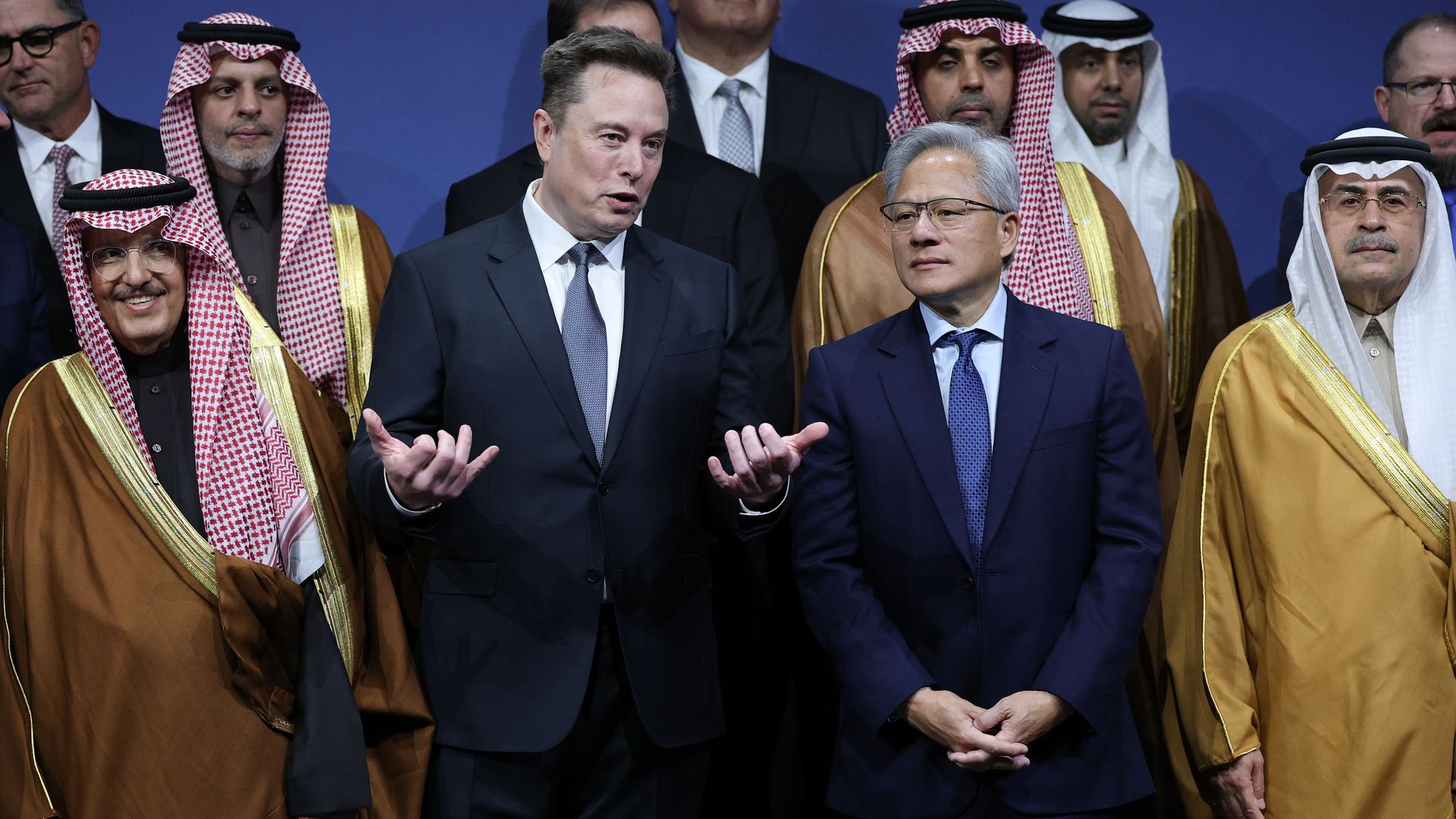
The Middle East is fast becoming not just a deep-pocketed investor in AI but a hot spot for data centers, highlighted by a new wave of Saudi deals announced Wednesday.
Why it matters: Allowing these deals is part of a strategic effort to ensure Saudi Arabia and other countries in the Middle East adopt U.S. technology rather than AI systems from China.