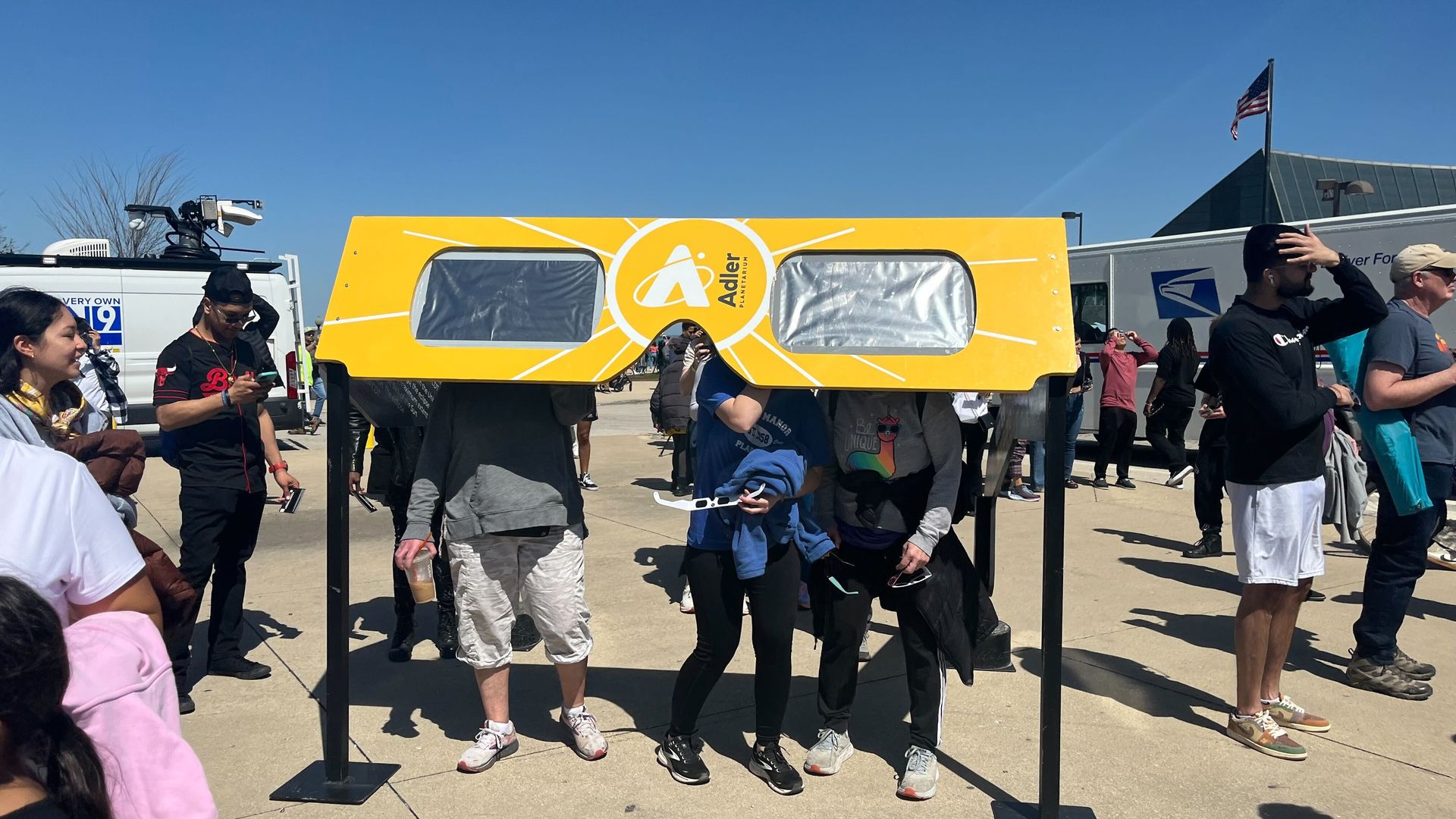
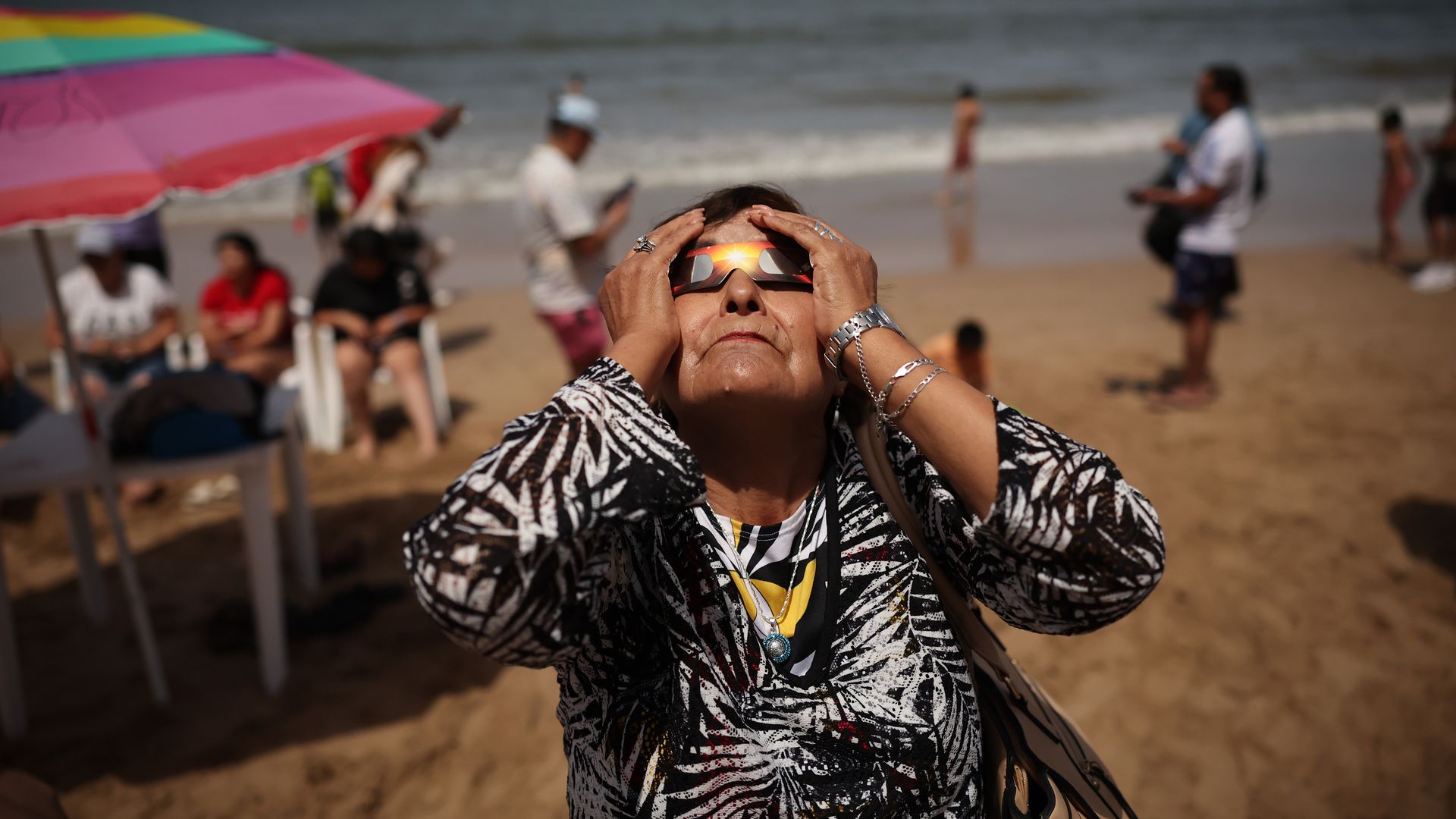
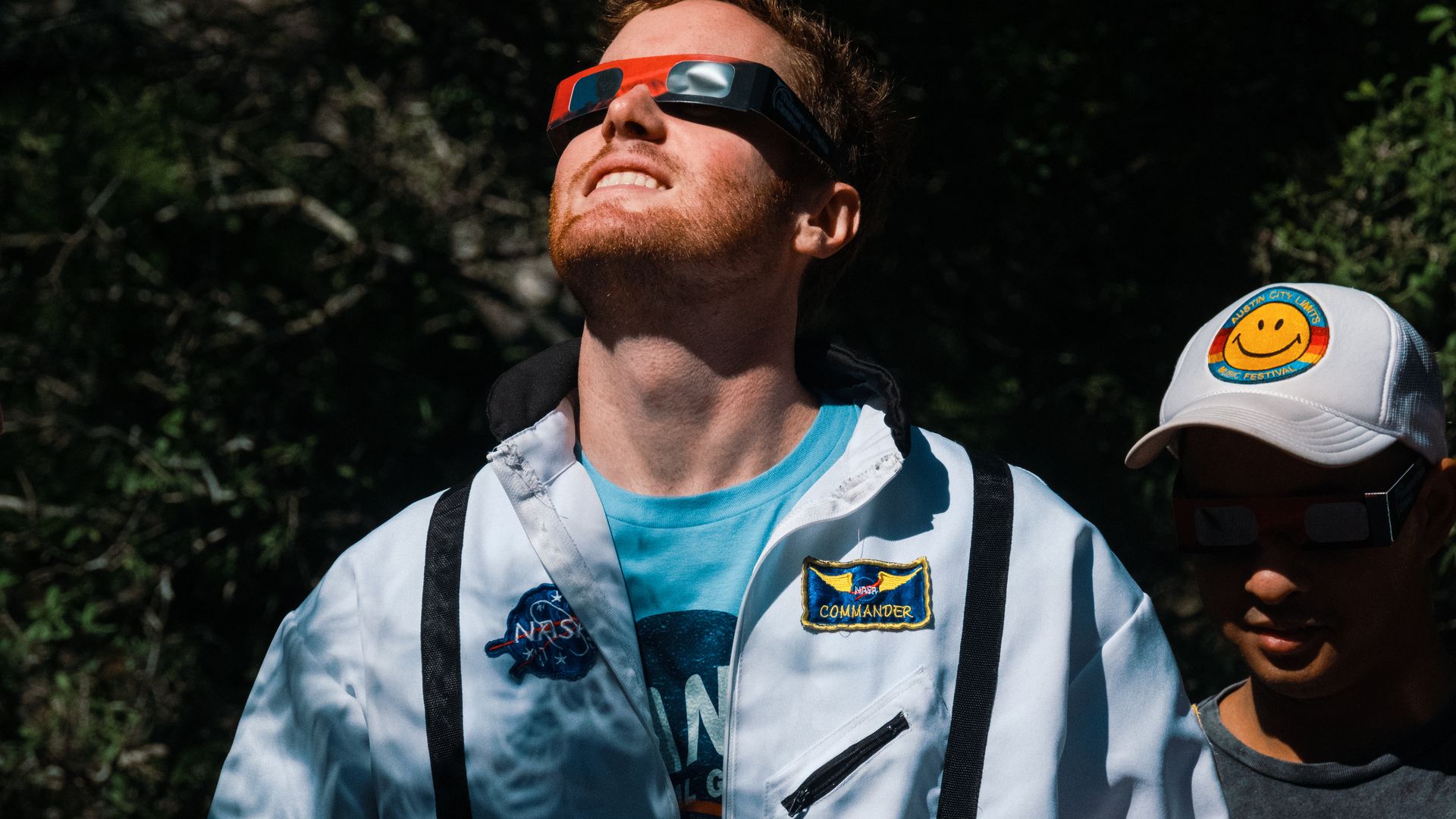
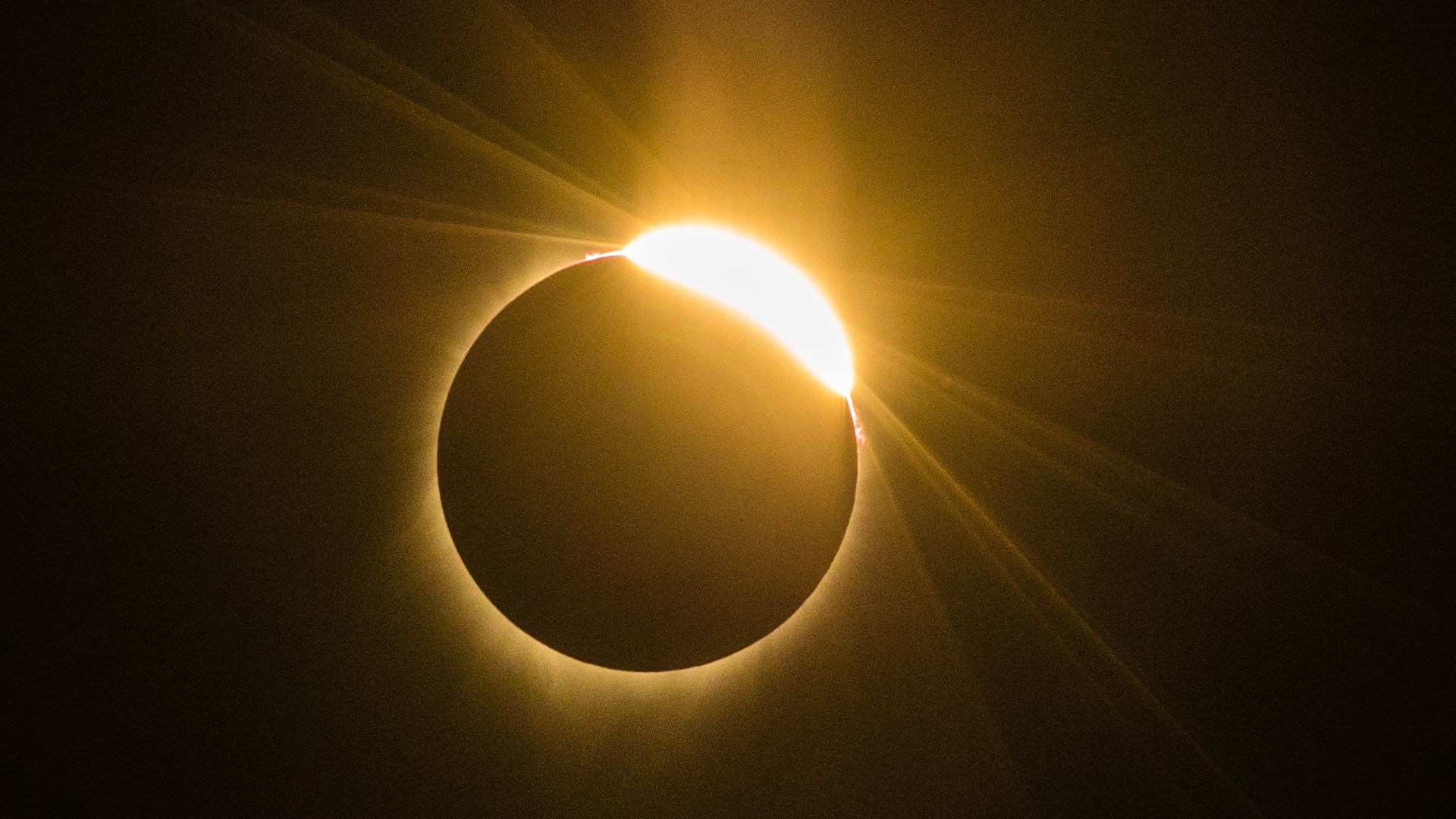
Get your eclipse glasses ready and set a reminder: Monday offers a rare, brief chance to see a solar eclipse for most of the country.
Why it matters: You'll have to wait until 2044 to spot a total solar eclipse in the contiguous U.S. if you miss this celestial event, according to NASA.
Why it matters: NASA warns "it is not safe to look directly at the Sun without specialized eye protection for solar viewing" except during the brief total phase of a total solar eclipse.
On Monday, most people in the U.S. should be able to see the Moon partially or totally block the Sun, weather permitting, according to NASA.
Why it matters: It will be the first total solar eclipse visible in the U.S. since 2017, and in many ways, it will overshadow that previous celestial event.