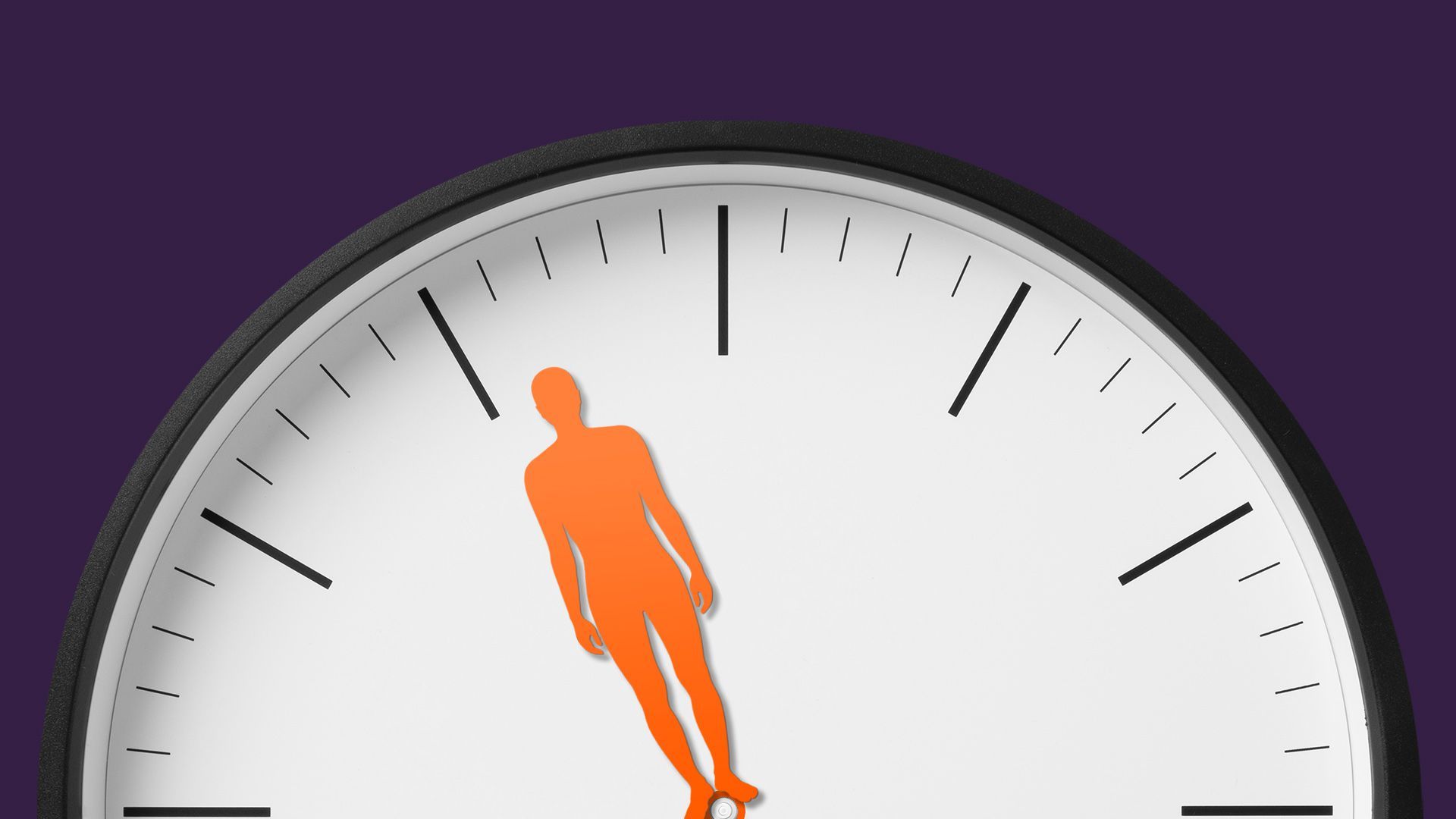
The body's internal clock affects the immune system in ways scientists in the burgeoning field of circadian immunology are beginning to unwind.
Why it matters: Leveraging the circadian clock's effects on the immune system could help to improve the effectiveness of some treatments for a range of diseases and conditions, a new book and scientific review suggest.
Climate scientists are now able to tell whether climate change fuels temperature extremes in real-time, and even ahead of time, using forecast models, historical data and peer-reviewed scientific research.
Why it matters: Presented in a compelling visual format accessible to the lay public and TV meteorologists alike, a new product known as the "Climate Shift Index," or CSI, was unveiled this week by Climate Central, a nonprofit research and journalism organization. The product signals a shift in thinking about the ties between daily weather and long-term climate change.
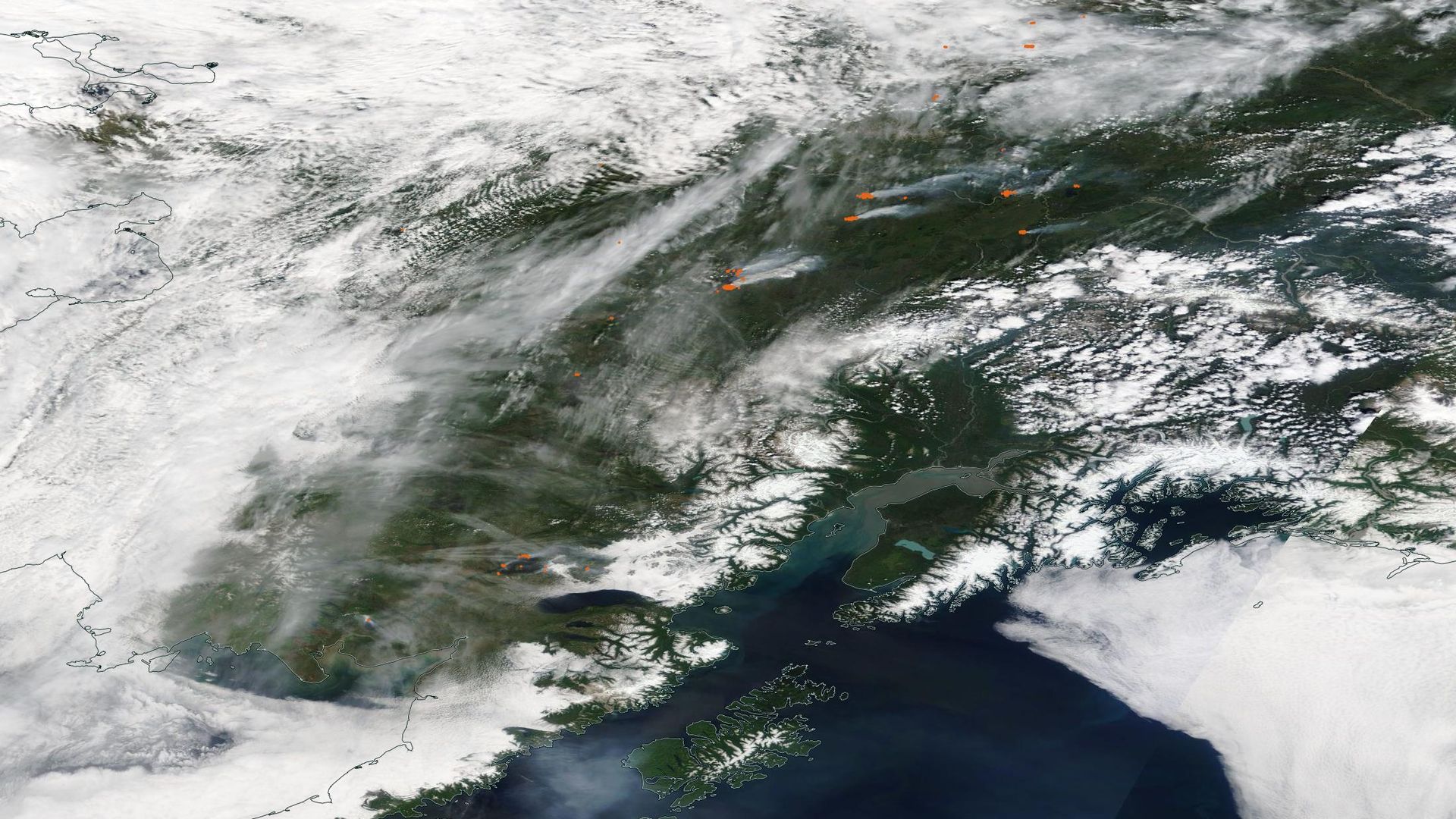
Alaska is experiencing its worst start to the wildfire season, with more than 1 million acres of land already burned.
Why it matters: Tremendous amounts of carbon and other greenhouse gases are locked away in Alaska's permafrost, but warming temperatures and increased fire activity may be freeing more of these gases by melting this frozen layer.
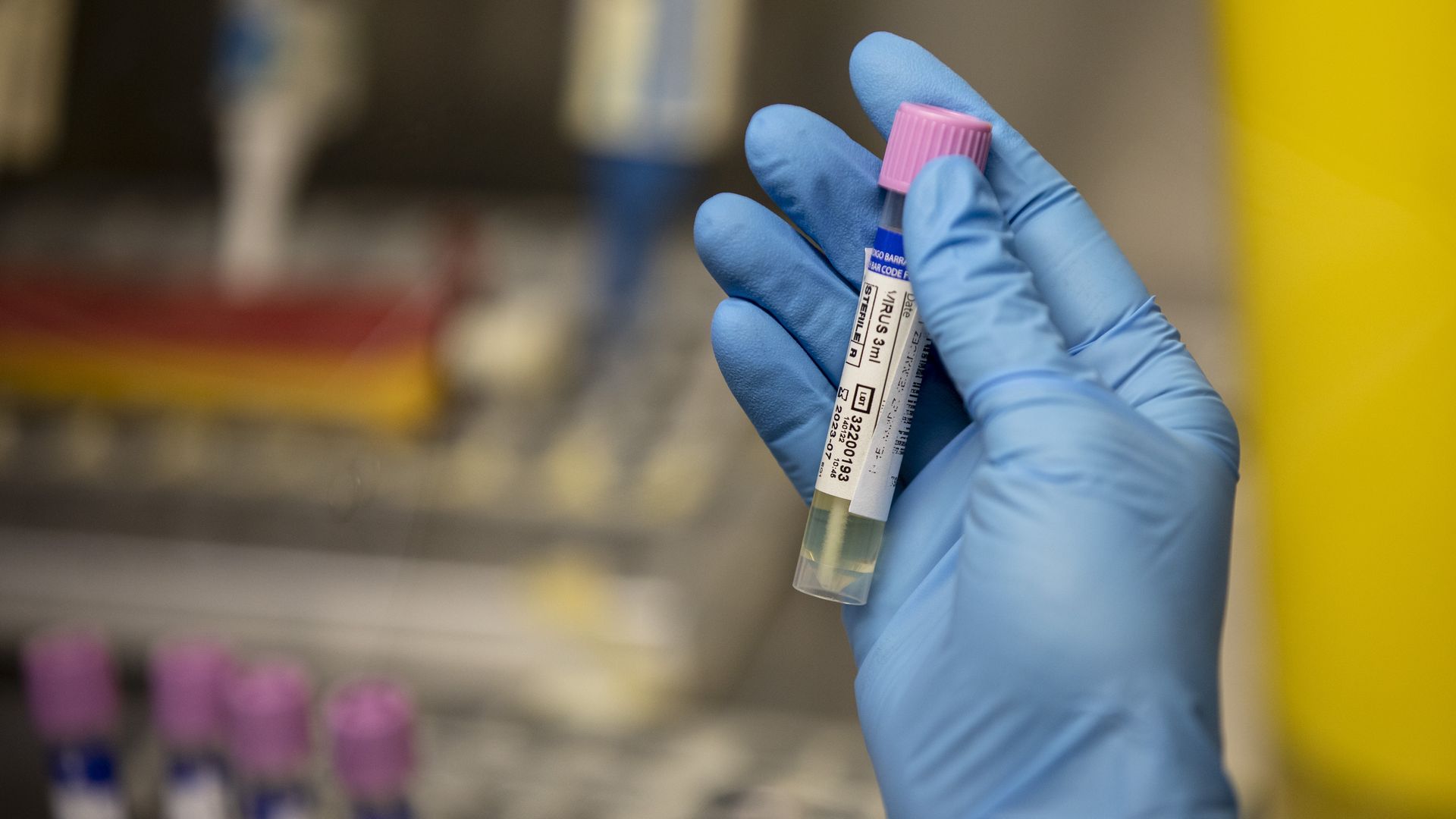
The Department of Health and Human Services (HHS) announced Wednesday that it has begun shipping monkeypox tests to five commercial laboratory companies in a bid to boost access to testing for the disease.
Why it matters: A lack of testing has kept public health officials in the dark about the scope of the outbreak in the U.S.


/2022/06/24/1656033371113.gif?w=3840)