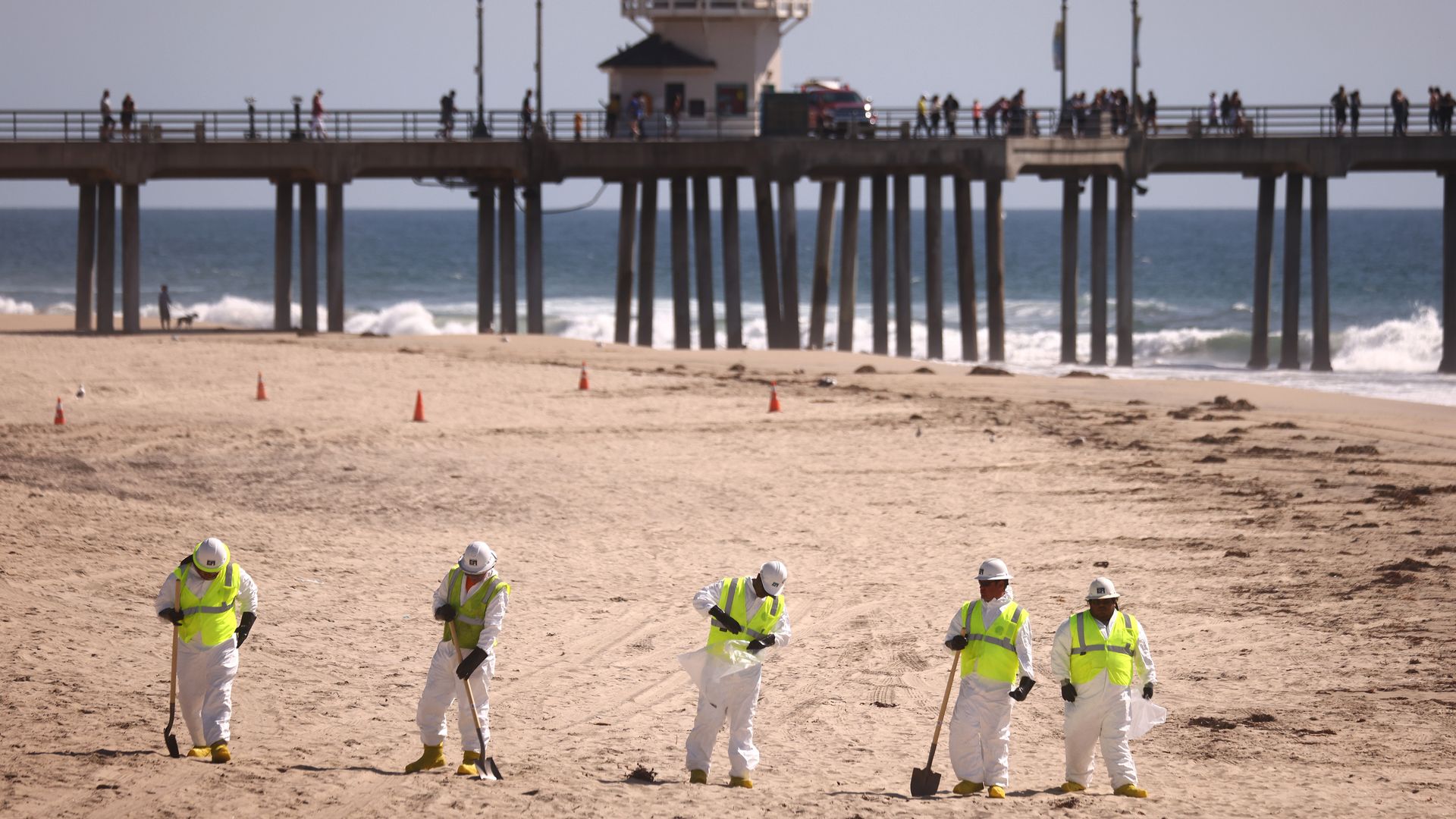
A Southern California coastal area closed since one of the largest oil spills in the state's recent history struck over a week ago reopened Monday, as cleanup efforts continue.
The latest: Huntington Beach's reopening Monday came sooner than many expected, after water quality tests came back with no detectable levels of oil associated toxins in the ocean water, AP reports.
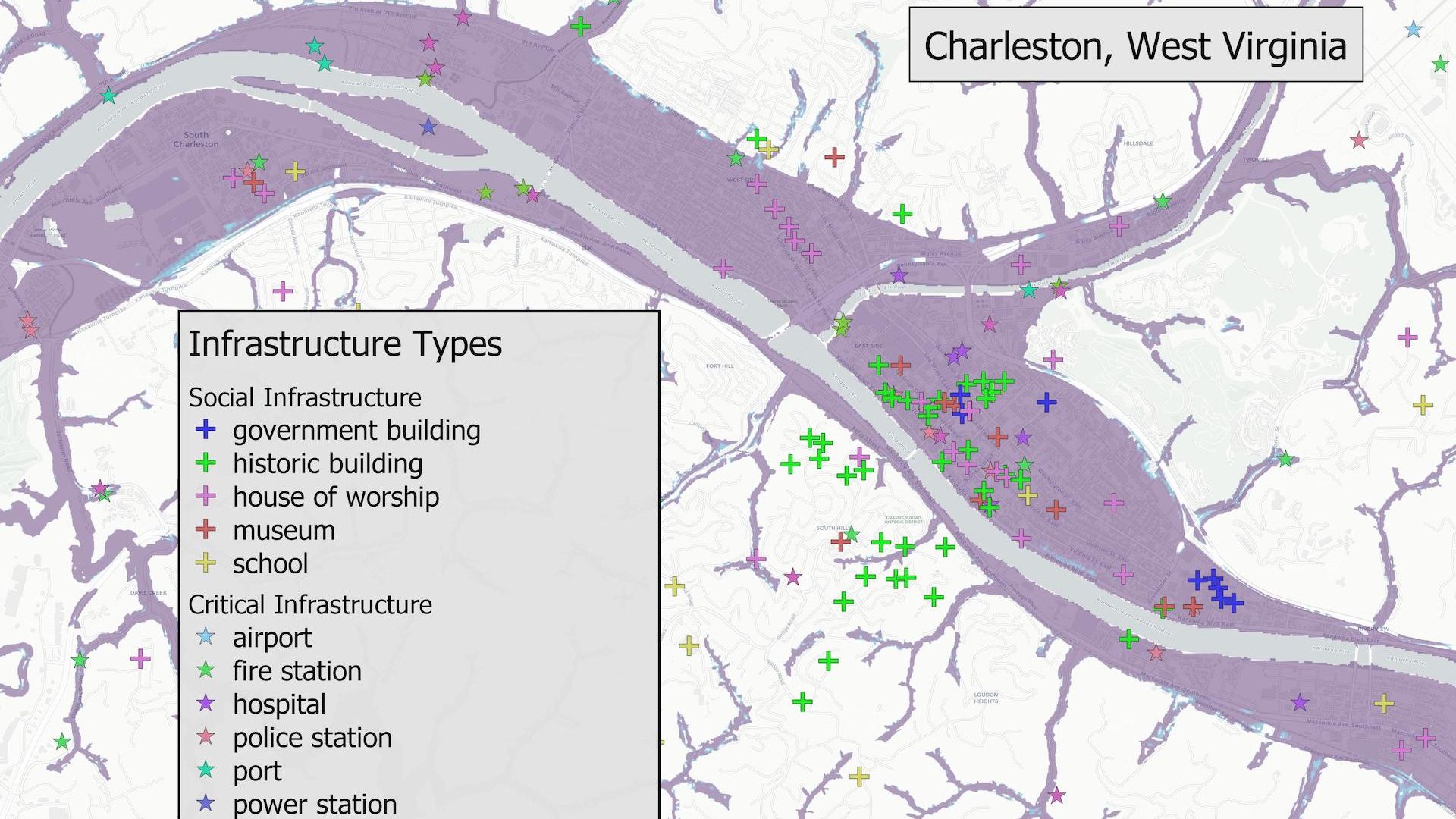
About 25%, or 1 in 4 units of critical infrastructure, such as police stations, airports and hospitals, are at risk of being rendered inoperable due to flooding, a comprehensive new report finds. The report points to climate change for heightening risks.
Why it matters: The new national inventory of flood risk during the next thirty years, which takes into account climate change-driven increases in sea levels and heavy precipitation events, is the first of its kind.
A growing part of the U.S. will face an increased risk of critical infrastructure, like emergency services and hospitals, being rendered inoperable due to severe flooding linked to climate change over the next 30 years, a report out Monday from the First Street Foundation shows.
The big picture: Hospital systems are increasingly being disrupted due to climate-fueled weather disasters like more intense hurricanes, flooding, heatwaves and, in some cases, cold snaps, and have to harden their infrastructure.