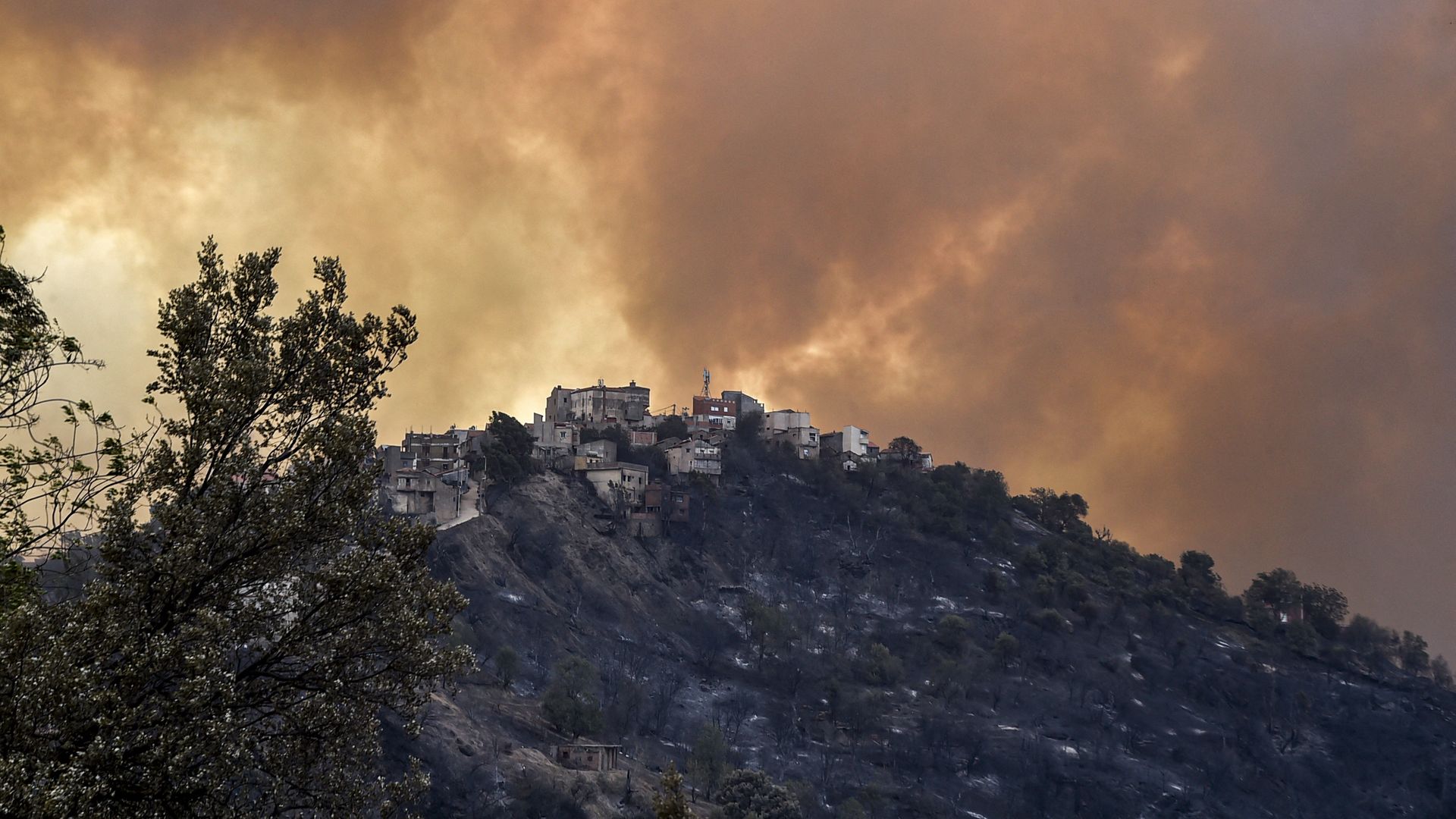
Wildfires in Algeria have killed at least 65 people, including 28 soldiers who died while trying to save residents, Reuters reported Thursday.
Why it matters: The Algerian wildfires are far from an isolated incident. Extreme weather, driven by human-caused climate change, is driving wildfires all over the world, including the U.S., Russia, Canada, Greece, Italy and Turkey.
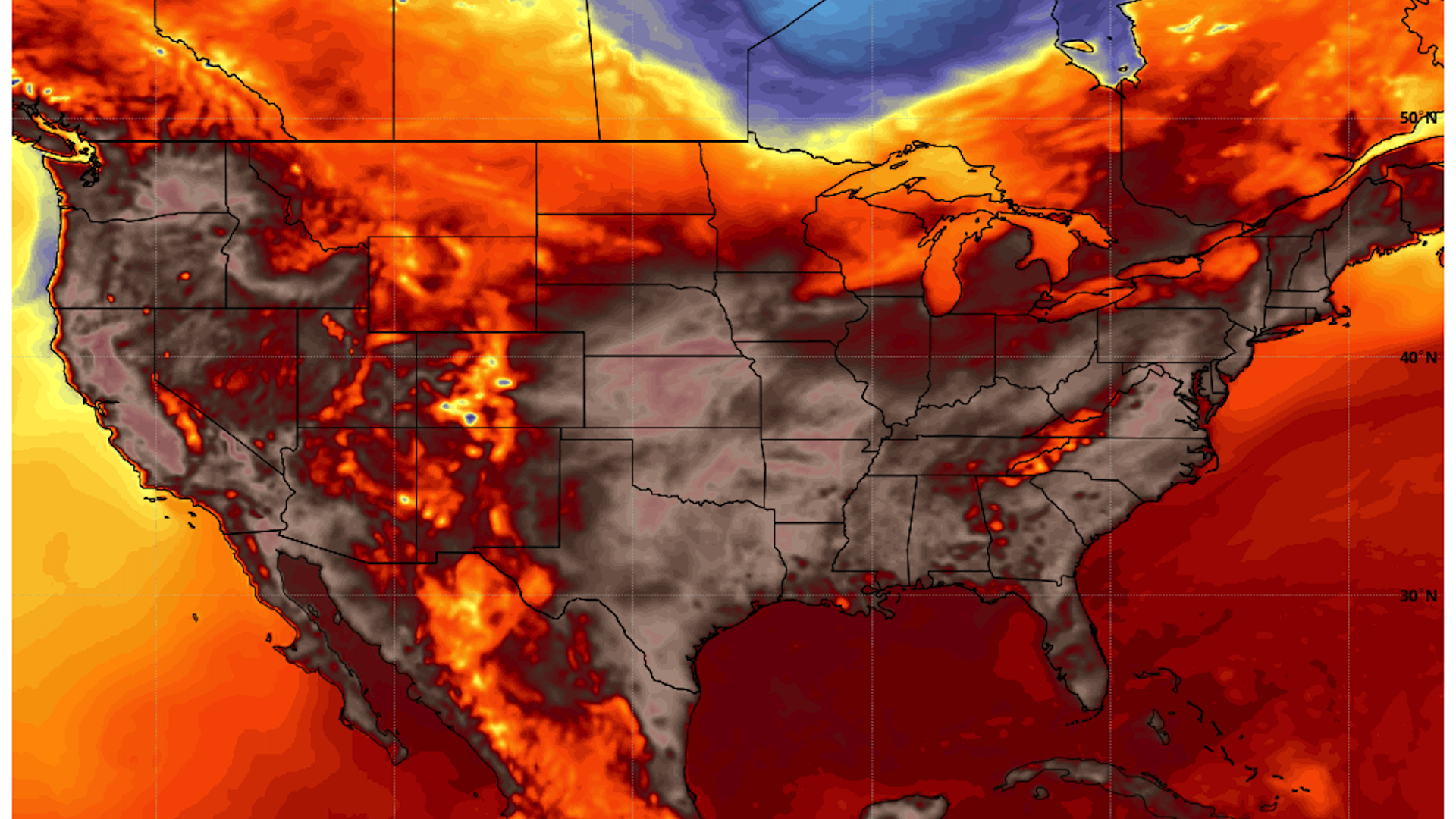
Extreme heat and wildfires are plaguing the U.S. and Europe, along with northern Africa. Thursday marks the peak of the latest heat wave in the Mid-Atlantic states, with Washington, D.C. likely to reach or eclipse 100°F Thursday, with a heat index closer to 105 or 110°F.
Why it matters: Heat waves and wildfires are two clear manifestations of the growing risks and impacts of global warming, a conclusion reinforced by the authoritative U.N. IPCC's report published Monday.
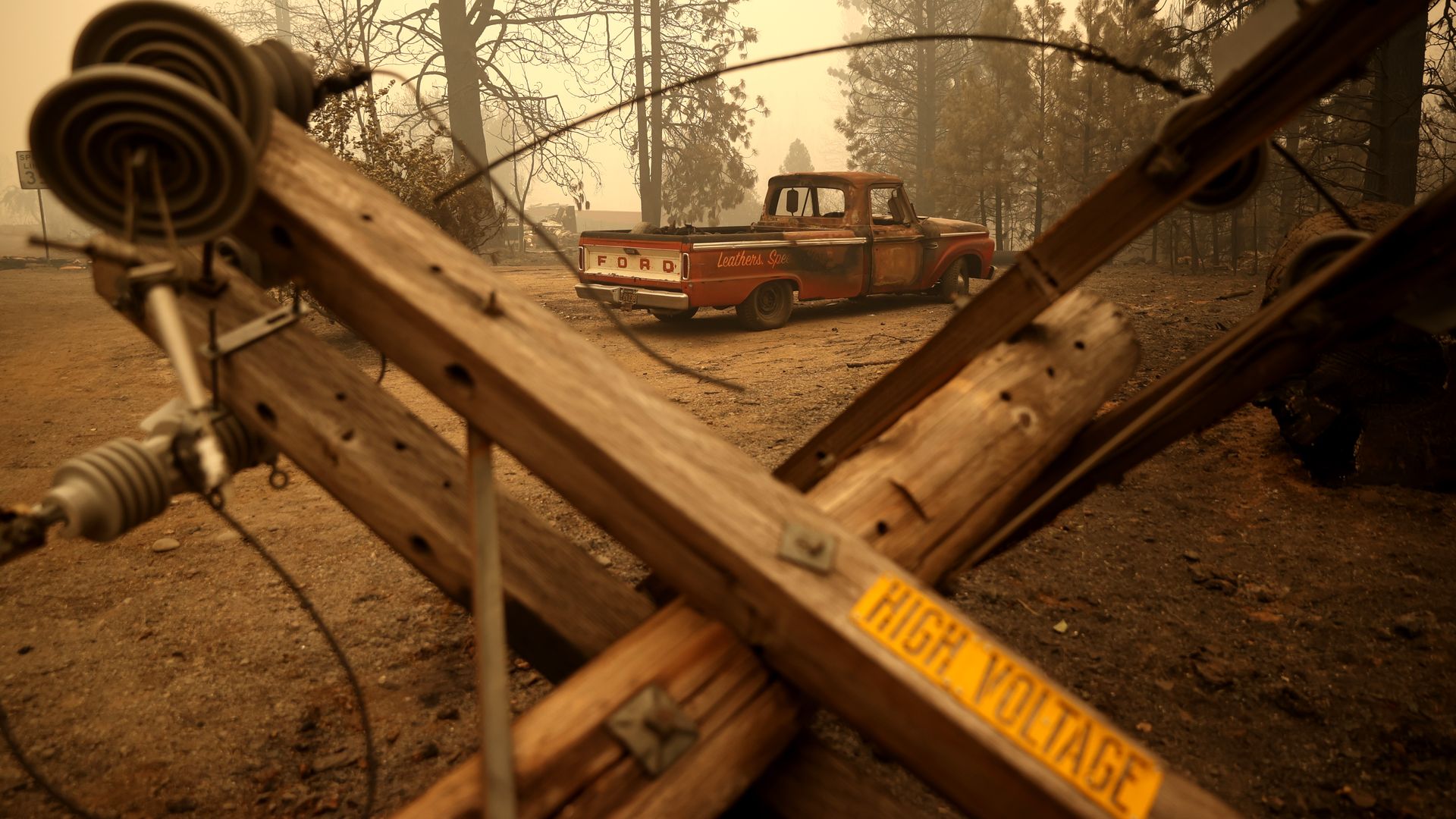
Fresh evacuation orders were issued in California and Montana on Wednesday, as firefighters in U.S. Western states battled 105 large fires — and authorities warned more wildfires could ignite as a dangerous heat wave looms.
Driving the news: The National Interagency Fire Center said Wednesday fire managers could see an "[i]nitial attack and large fire activity could increase in the Northern California, Northwest, portions of the Great Basin and Northern Rockies areas due to hot, dry and windy conditions and the potential for lightning."
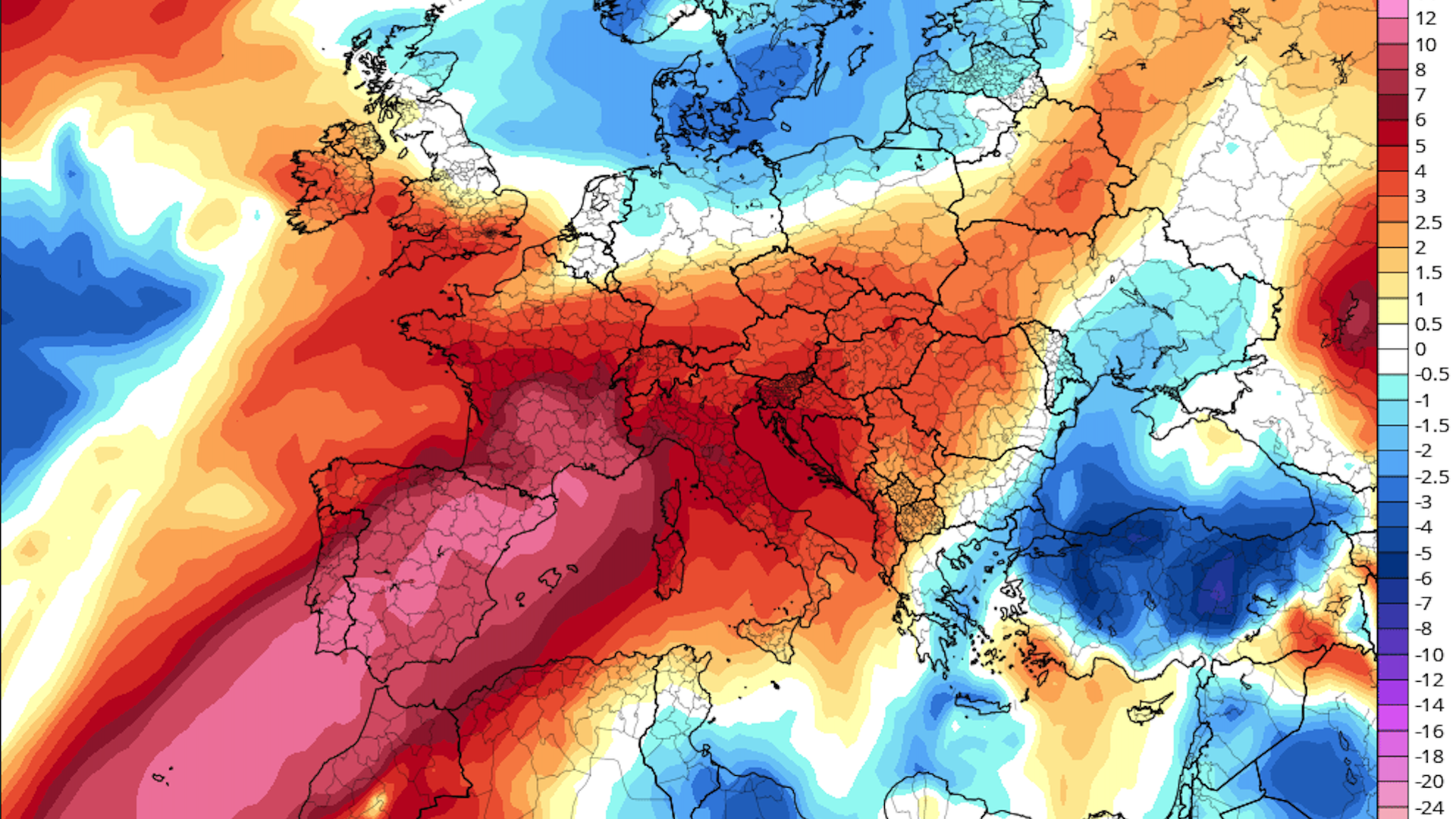
A weather station in Sicily may have set an all-time high temperature record for all of Europe on Wednesday, when the temperature climbed to a scorching 48.8°C (119.8°F) amid a regional heat wave that has shown few signs of relenting.
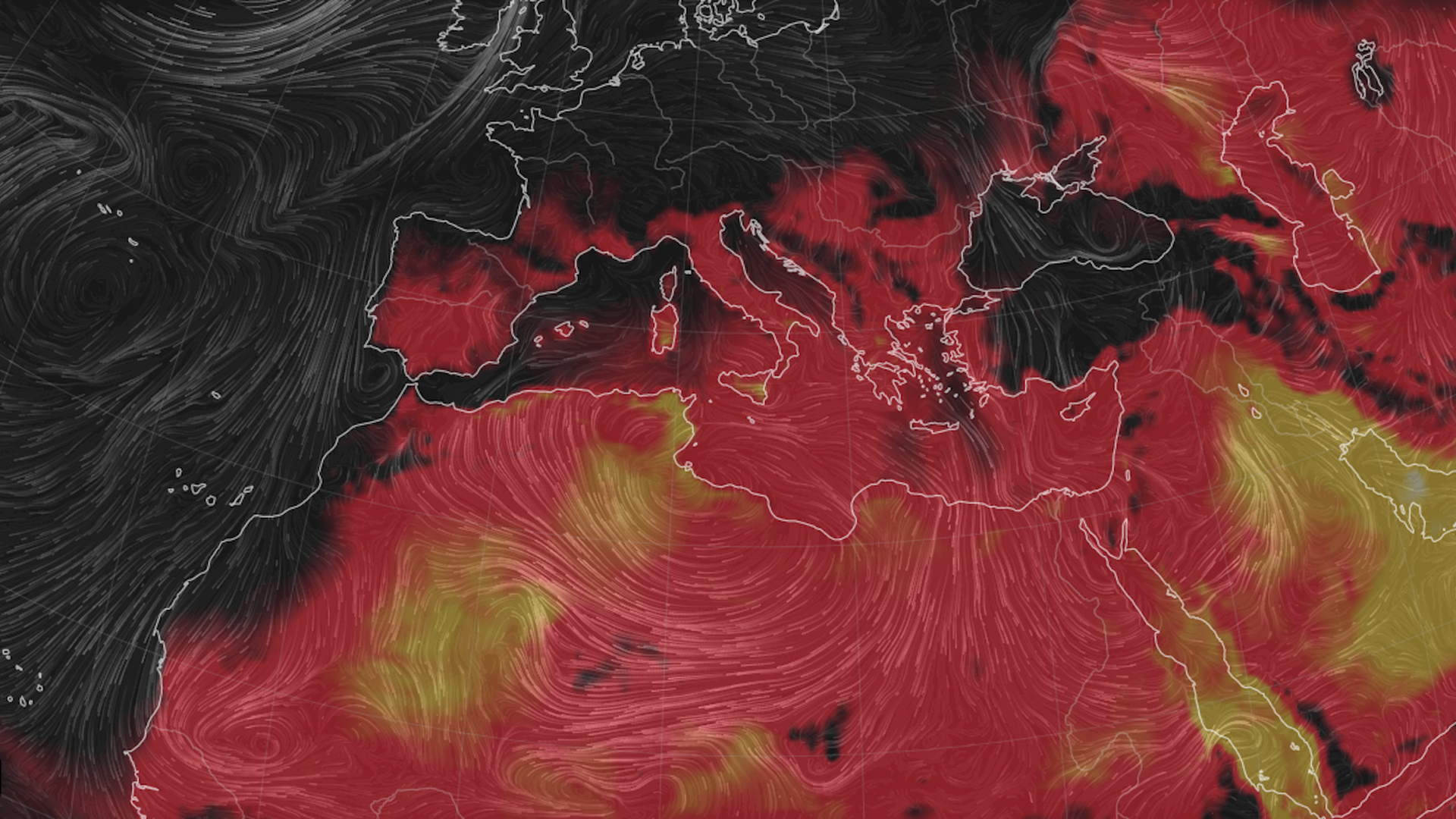
The big picture: The intense heat wave continues to roast the Mediterranean and northern Africa. The hot and dry weather has played a large role in creating the conditions conducive for explosive and devastating wildfires in Turkey and Greece.
Nearly 200 million Americans are under heat advisories or excessive heat warnings as dual "heat domes" affect the Pacific Northwest, Central states and East Coast.
Why it matters: Extreme heat can kill, and it can also greatly aggravate wildfire conditions, making it even harder for thousands of firefighters to contain California's Dixie Fire, the state's second-largest on record.
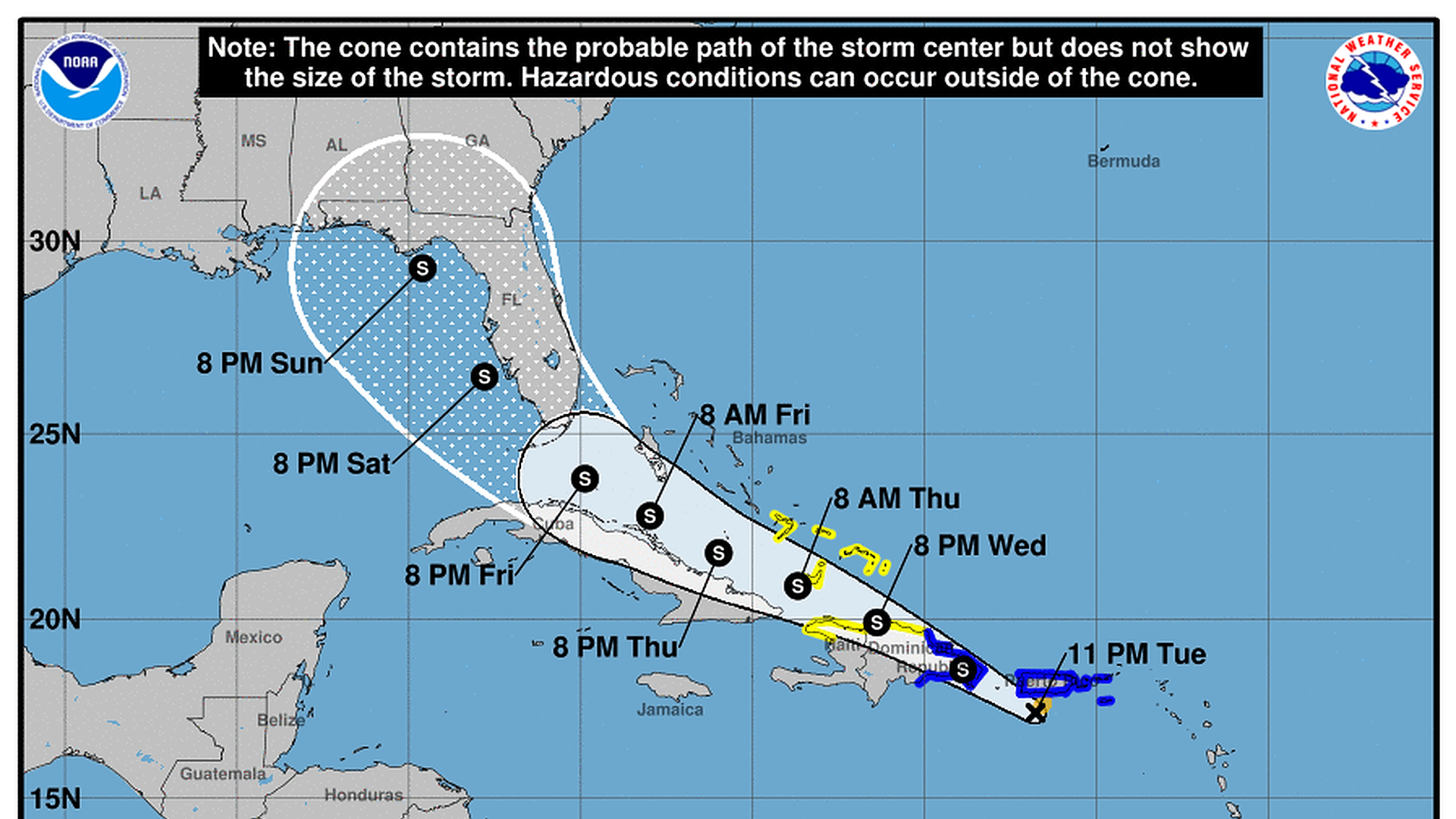
Tropical Storm Fred formed south of Puerto Rico late Tuesday — and Florida is in its path, according to the five-day forecast.
State of play: Fred is the sixth named storm of this Atlantic hurricane season. The storm system could intensify over the eastern Gulf this weekend, possibly to a hurricane, though the National Hurricane Center said it's too early to tell for sure.
The "most important" step Americans should take to prepare for peak hurricane season is to get vaccinated against COVID-19 in case they have to evacuate, the White House said Tuesday.
Why it matters: The statement followed President Biden's meeting on hurricane preparedness with senior FEMA officials and others, who advised him of the measure — hours before Tropical Storm Fred formed near Puerto Rico. Florida is in the path of the storm, which could possibly intensify into a hurricane.