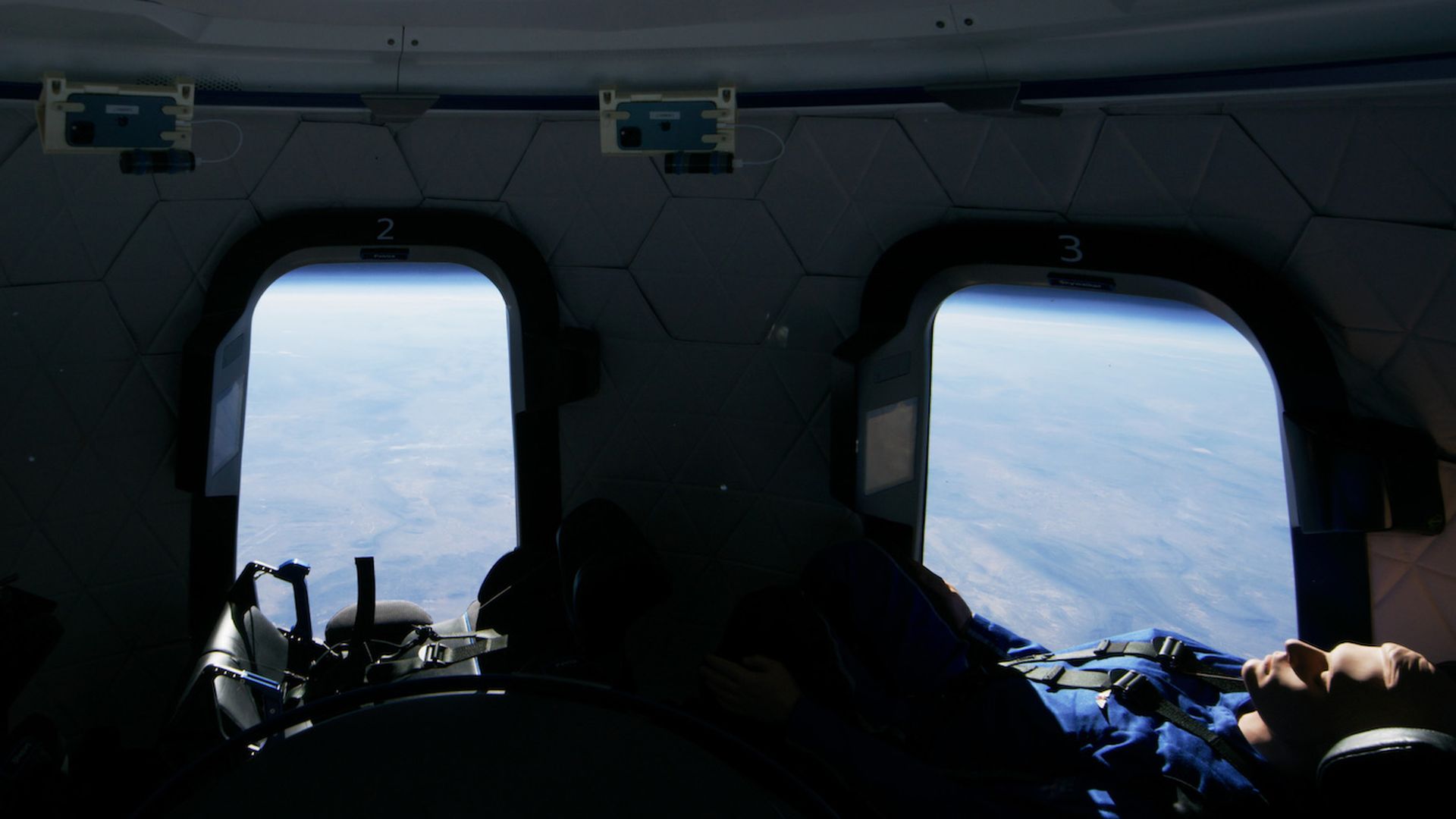
Jeff Bezos' space company Blue Origin is planning to launch people to the edge of space for the first time in July, and one seat will go to the highest bidder.
Why it matters: The flight would mark the start of Blue Origin making good on its promise to send paying customers to suborbital space, opening a new market for space tourism.
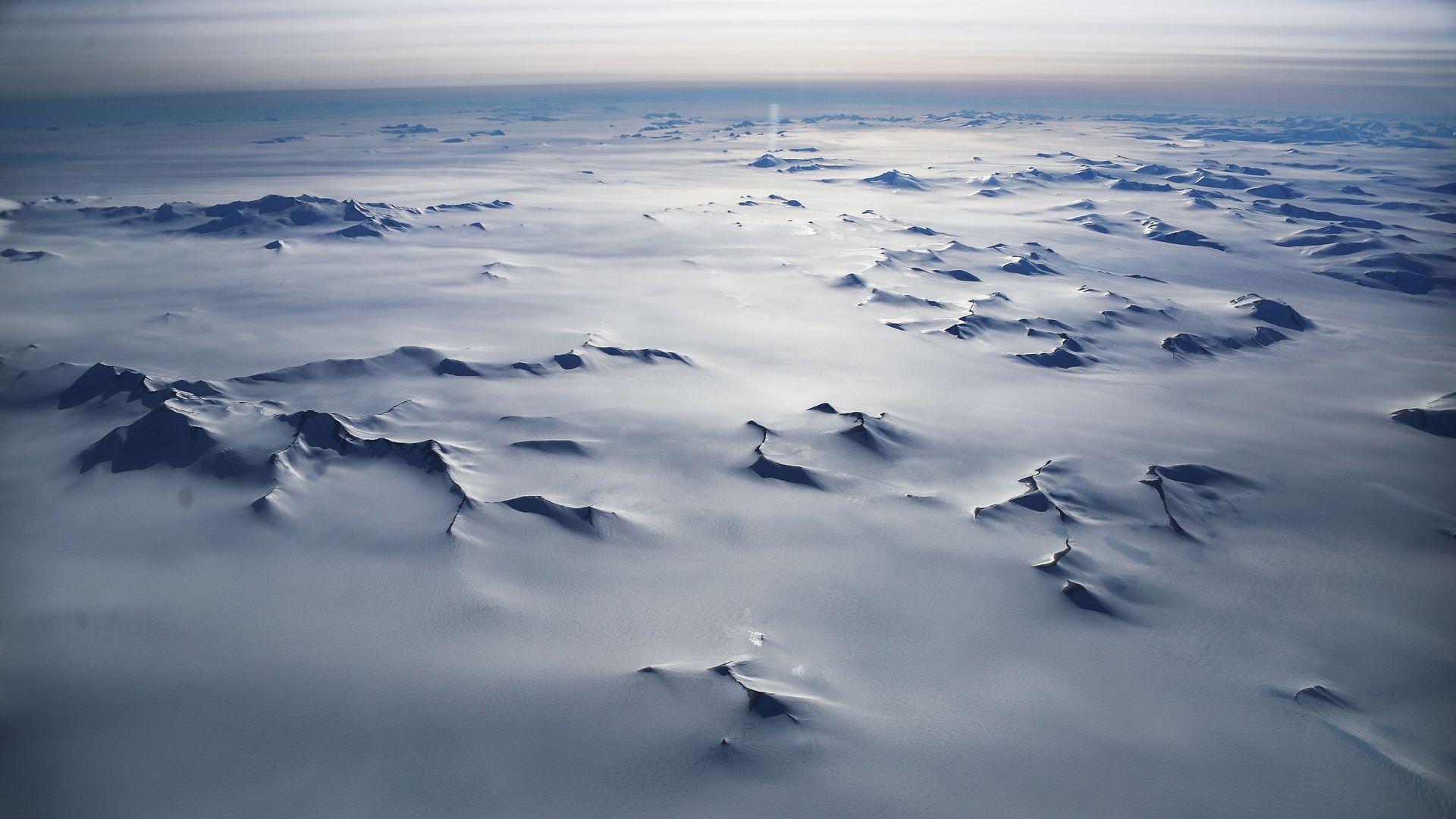
The world runs a growing risk of triggering accelerating and potentially unstoppable sea level rise from the Antarctic ice sheet if greenhouse gas emissions are not strictly curtailed. However, this fate can be avoided if the Paris Agreement's targets are met, according to two new studies published Wednesday.
Why it matters: At stake is the viability of coastal megacities like Shanghai, Manila and New York City, as well as entire nations like the low-lying Maldives. The severity of sea level rise depends largely on the pace and extent of ice melt from the world'stwo largest ice sheets: Antarctica and Greenland.
At least three people have died as a powerful storm system continues to lash much of the South, spawning tornadoes, causing flash flooding and leaving over 250,000 homes without power overnight.
Driving the news: Powerful winds and rain damaged homes, downed power lines and tress and saw boat rescues from Texas to Virginia on Tuesday, AP notes, and the threat remains for several states.
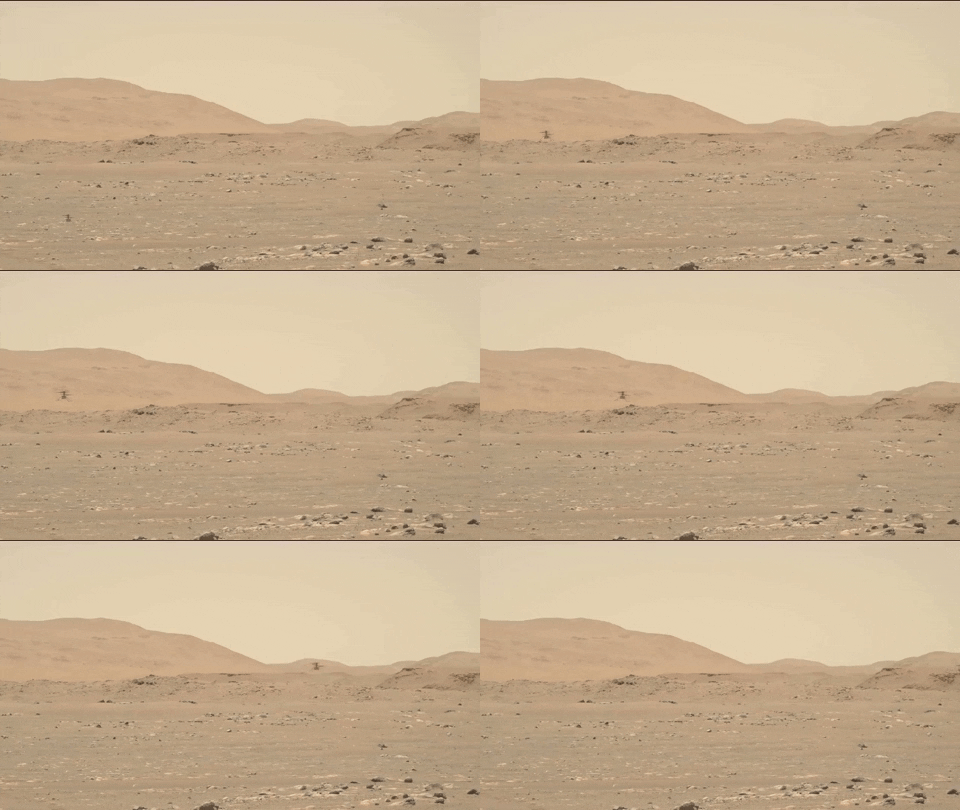
NASA's little helicopter on Mars passed its first tests with flying colors, and now it's about to embark on the next phase of its mission on the Red Planet.
Why it matters: The 4-pound helicopter named Ingenuity has quickly become a fan-favorite robot on Mars. NASA is using it to prove out technology that could one day help the agency further explore the Red Planet and other objects.
The Hubble Space Telescope has caught sight of a huge planet forming around a star 370 light-years from Earth.
Why it matters: Named PDS 70b, the planet is the youngest ever directly imaged by the powerful telescope and could help scientists learn more about how worlds grow up around their stars.
The public fights between Jeff Bezos and Elon Musk over their space companies point to a broader truth in the space industry: There isn't enough money to go around.
Why it matters: The promise of commercial human spaceflight still hinges on billions of dollars of investment from the U.S. government.