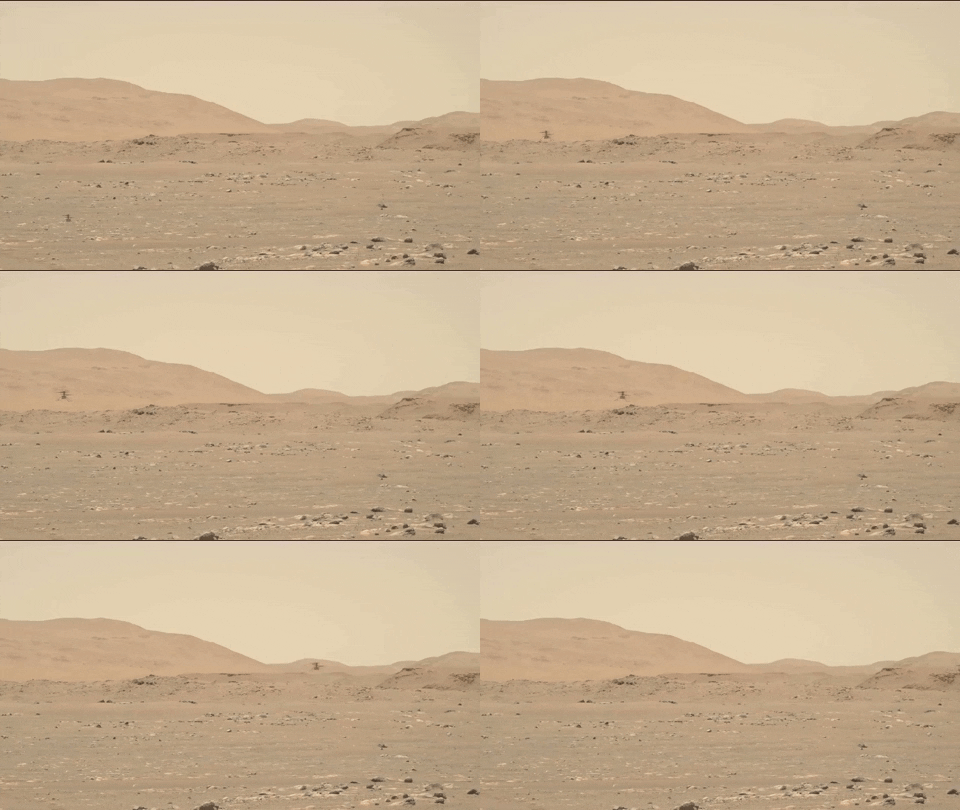
NASA's little helicopter on Mars passed its first tests with flying colors, and now it's about to embark on the next phase of its mission on the Red Planet.
Why it matters: The 4-pound helicopter named Ingenuity has quickly become a fan-favorite robot on Mars. NASA is using it to prove out technology that could one day help the agency further explore the Red Planet and other objects.
The Hubble Space Telescope has caught sight of a huge planet forming around a star 370 light-years from Earth.
Why it matters: Named PDS 70b, the planet is the youngest ever directly imaged by the powerful telescope and could help scientists learn more about how worlds grow up around their stars.
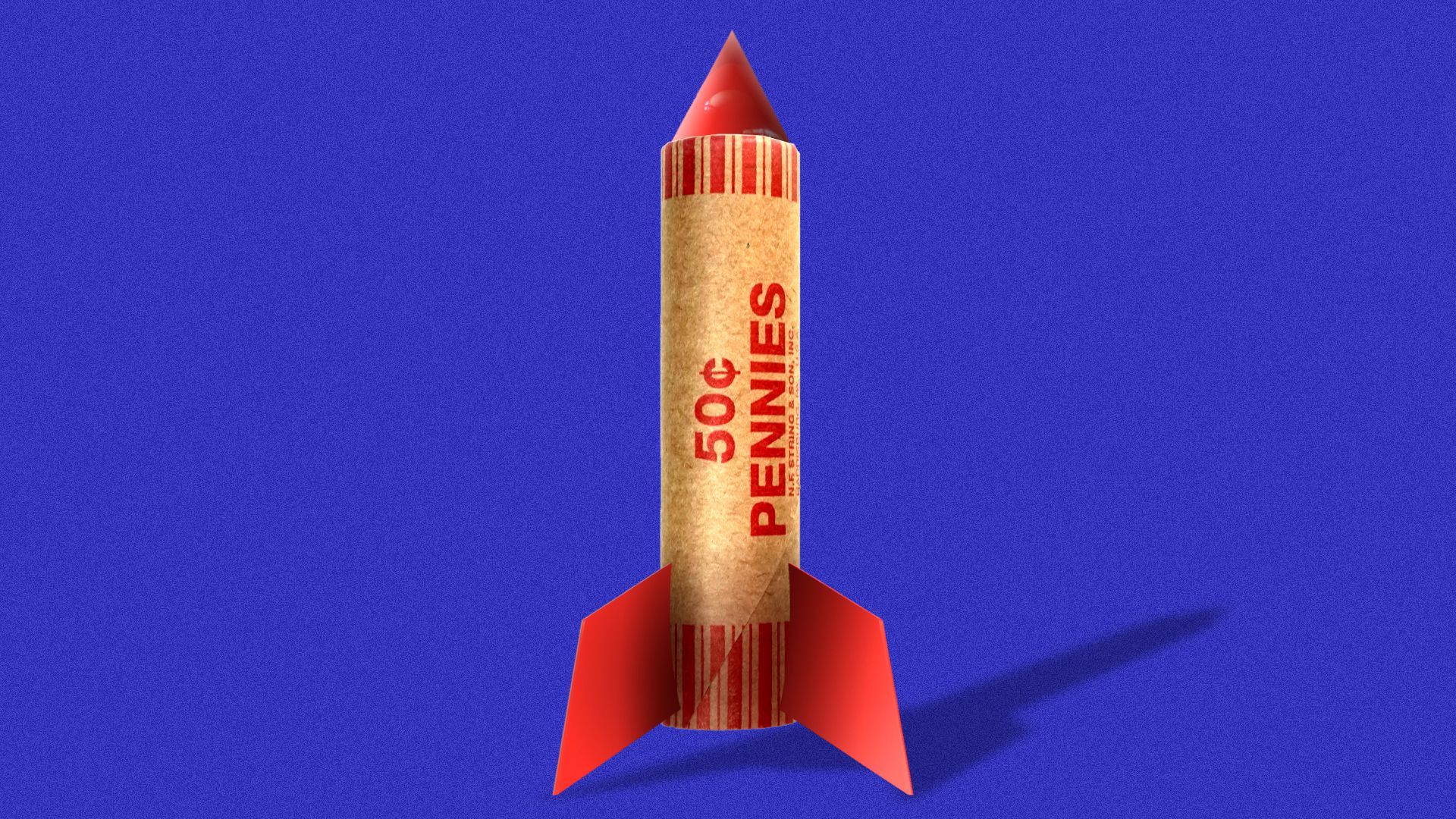
The public fights between Jeff Bezos and Elon Musk over their space companies point to a broader truth in the space industry: There isn't enough money to go around.
Why it matters: The promise of commercial human spaceflight still hinges on billions of dollars of investment from the U.S. government.
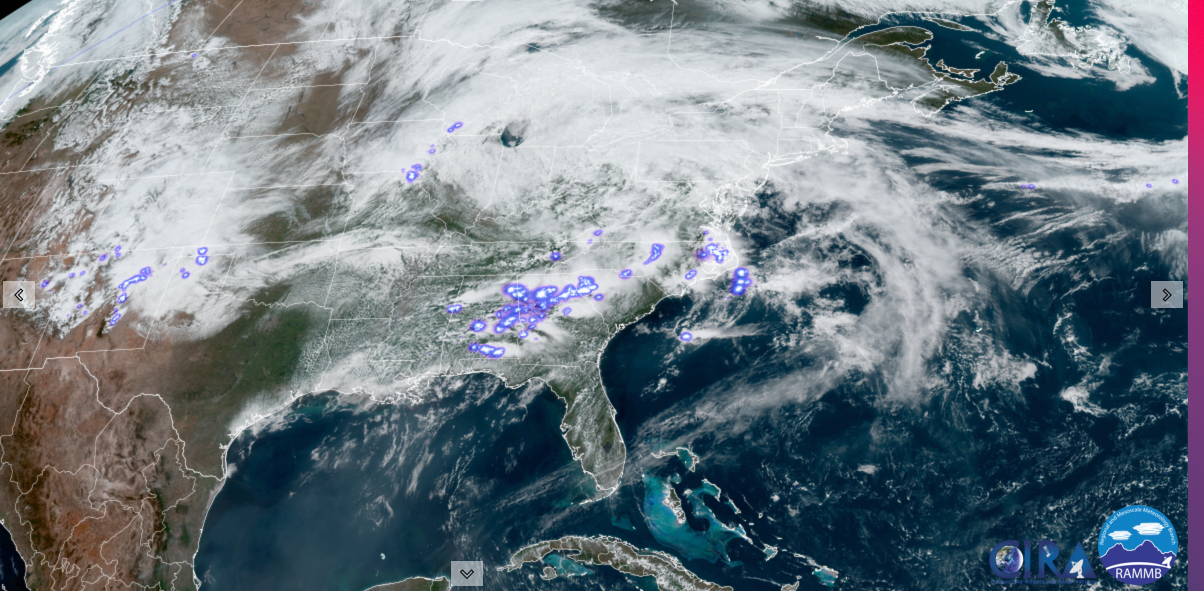
Satellite image of the southeastern U.S. on May 3, with satellite-detected lightning strikes included in purple. (CIRA/RAMMB)
This weekend's extreme weather conditions, that included damaging thunderstorms and tornadoes in several Southern states, will continue through the first half of this week, reports the Washington Post.
Why it matters: More than 100 million Americans are facing an "elevated threat of thunderstorms" on Monday, some of which could prove severe, per the Post.
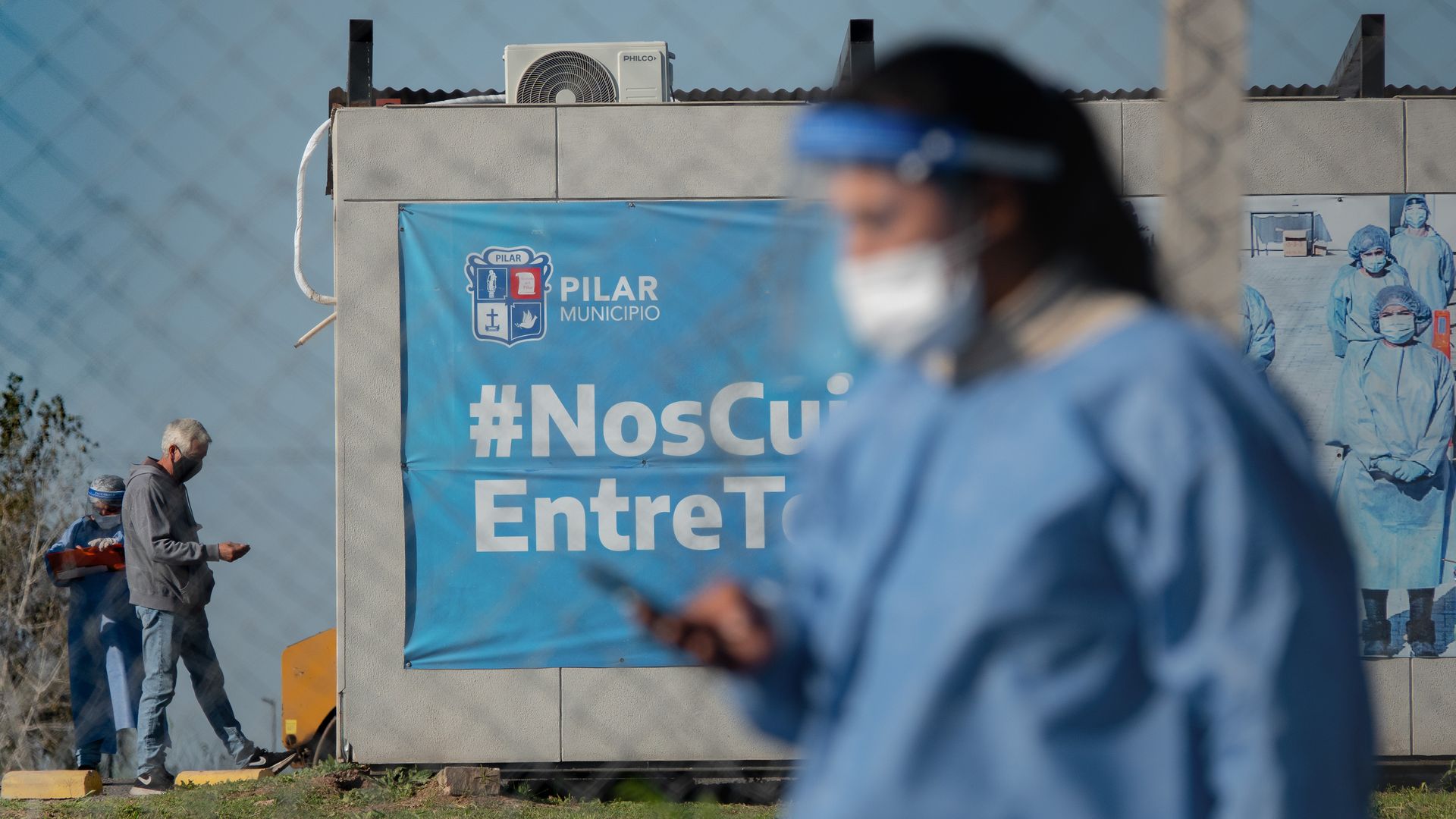
Argentina surpassed 3 million COVID-19 cases since the pandemic's start Sunday amid reports of hospitals operating at capacity.
The big picture: Argentina's government last week imposed new restrictions following new national records for cases and deaths in April. Argentine health workers told Reuters hospitals are "full" and the "stalled" vaccine rollout needed to be stepped up to curb the spread. "The health system does not support one more patient," one health worker said.