NASA staged a successful test of its massive Space Launch System rocket, designed to take people to deep space destinations like Mars one day.
Why it matters: This test was the SLS' last big milestone before its first test flight, potentially launching later this year. The rocket is billions of dollars over budget and years behind schedule.
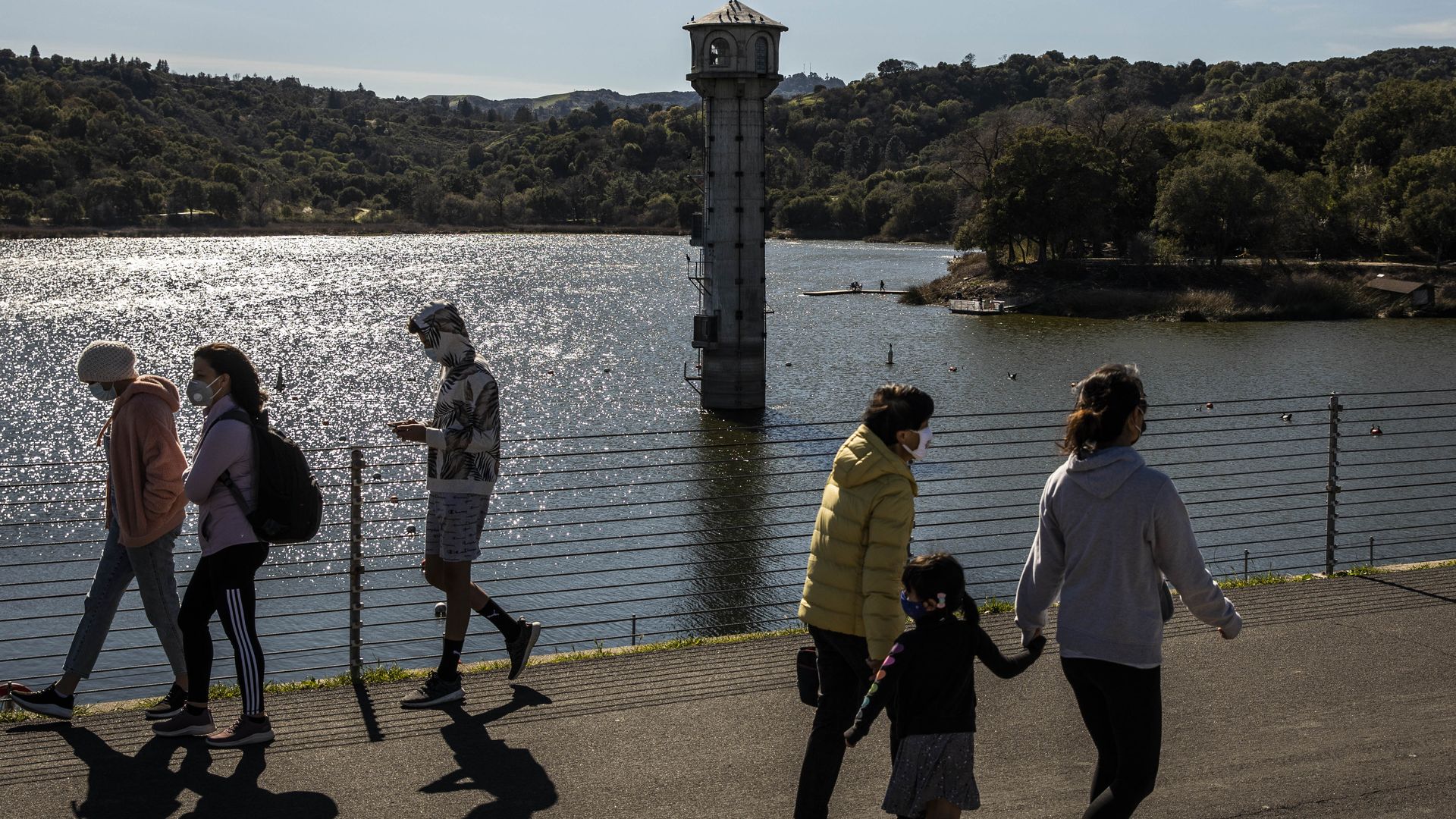
Almost a half of the United States — a tract of land stretching from the Pacific Coast to the Great Plains and upper Midwest — is experiencing moderate to exceptional drought conditions, the National Oceanic and Atmospheric Administration said Thursday.
Why it matters: Conditions have prompted weather and agriculture officials to warn of water cutback in California, increased wildfires in the Southwest and damage to wheat crops around the country, according to AP.
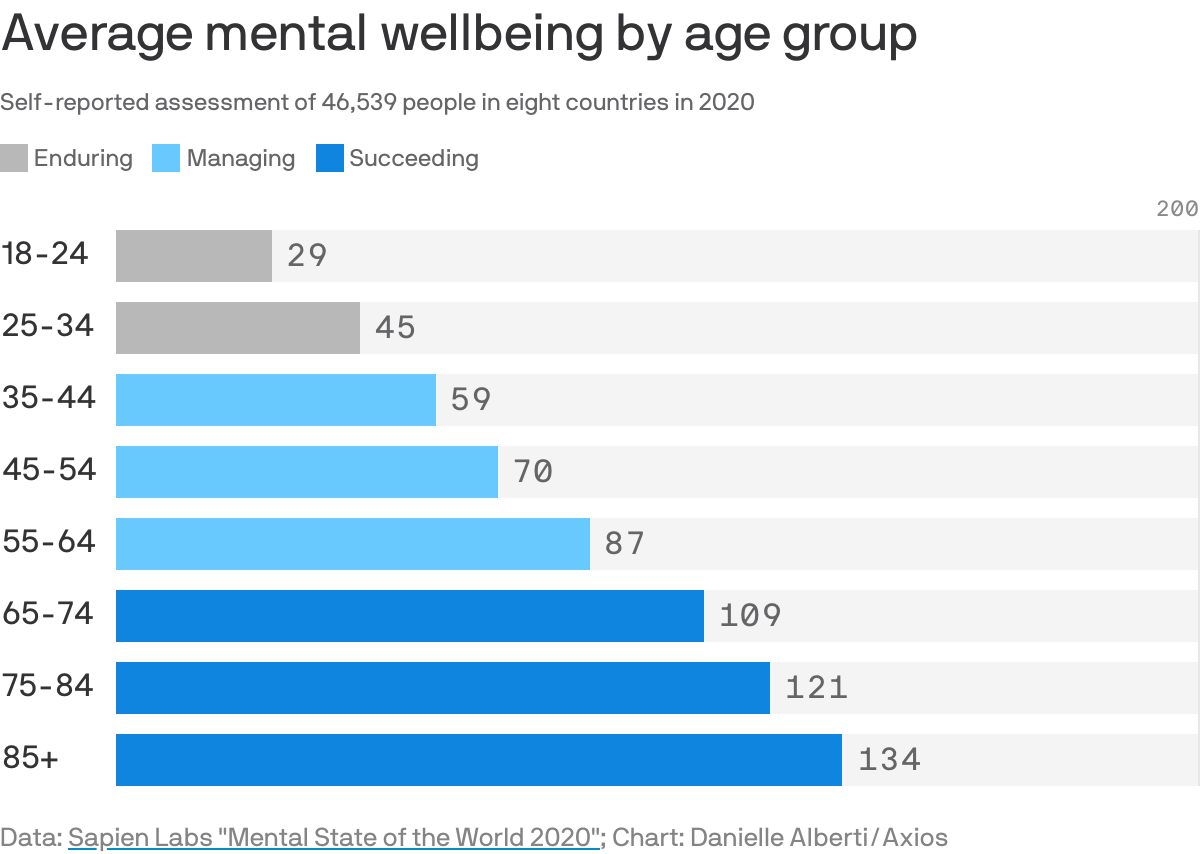
A new survey of people in eight countries finds that mental wellness took a dive in 2020, with the worst effects found among the young.
Why it matters: Few people's mental health escaped unscathed from the effects of the pandemic, but the gap between the state of the young versus older adults could mean serious problems down the road.
A new study concludes that the first-known interstellar object to pass through our solar system is probably a piece from another planet.
The big picture: The finding throws cold water on the theory — raised by one prominent astrophysicist — that the object was really an alien artifact, but it will help scientists learn about the makeup of planets beyond our corner of the galaxy.
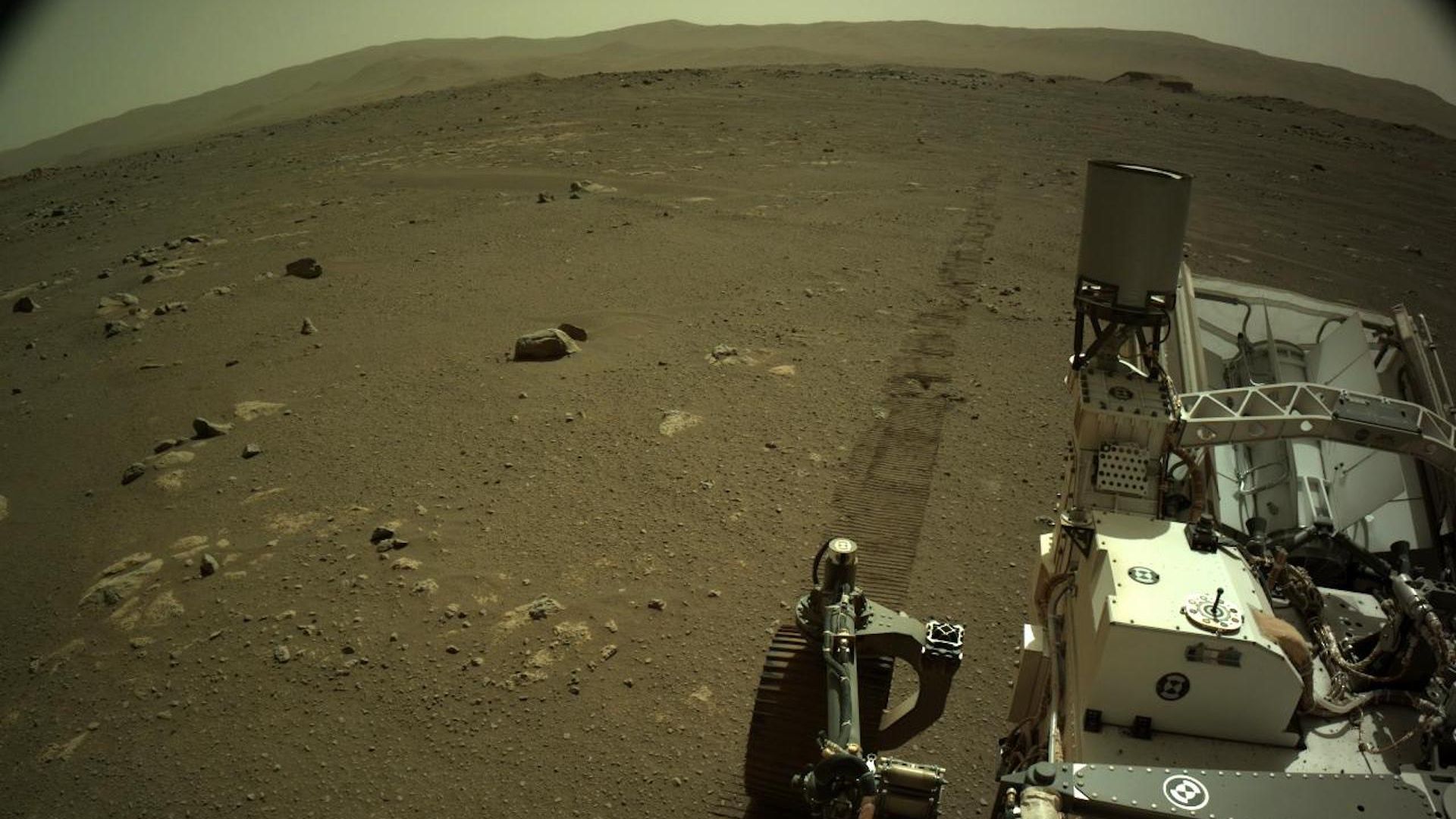
For the first time, NASA has captured the sound of one of its rovers driving along the surface of Mars.
Why it matters: These audio recordings can be used for scientific as well as engineering purposes, like diagnosing possible problems with the rover as they pop up.
Human stem cells can be grown in the lab into balls of cells that resemble embryos in the earliest stages, researchers report today.
Why it matters: The models of the earliest days of human development could help to determine how pregnancies are lost and which genetic mutations can lead to birth defects. They could also be used to screen the effect of drugs on human development and improve IVF therapy success rate.
Some people with "long COVID" say their symptoms have gotten better after they received a vaccine, the Washington Post reports.
The big picture: The evidence so far is largely anecdotal, but further research could help determine whether vaccines can offer some help to the millions of people worldwide who are suffering through long-term illness that science doesn't understand very well.