People around the world are having their dreams invaded — and sleep sabotaged — as the coronavirus pandemic upends our daily lives.
What's happening: "Waking life itself for many has taken on an odd, dreamlike air. For populations unexpectedly and indefinitely confined to their homes, timekeeping no longer seems staked to the orderly movements of the sun, but tied to a cloud selected at random," writes the N.Y. Times' Caity Weaver.
A population of asteroids captured from other stars could be lurking in our own solar system, a new study contends.
Why it matters: Interstellar asteroids and comets represent astronomers' best chances of studying an object from another star system at close range, potentially revealing how unique (or average) we are in the process.
The FCC last week updated its rules around the mitigation of space junk for the first time since 2004, imposing more limits on companies that wish to send their wares to orbit.
Why it matters: Experts are increasingly worried about the number of satellites launching to orbit and how they could contribute to the creation of space junk.
SpaceX's plan to launch NASA astronauts to the International Space Station at the end of May will happen under the long shadow of the coronavirus pandemic.
Why it matters: Instead of a triumphant show of American astronauts launching from American soil for the first time since the end of the space shuttle program in 2011, they will likely take flight amid crowd restrictions and a plea to stay away.
Addressing the coronavirus without paying attention to climate change and biodiversity crises would be a mistake, given the ways in which all three are interrelated, an expert in wildlife conservation told "Axios on HBO."
Why it matters: If we fail to recognize the connection, we are likely to see more difficult-to-tackle diseases jump from animals to humans, the Wildlife Conservation Society's Joe Walston said in an interview.
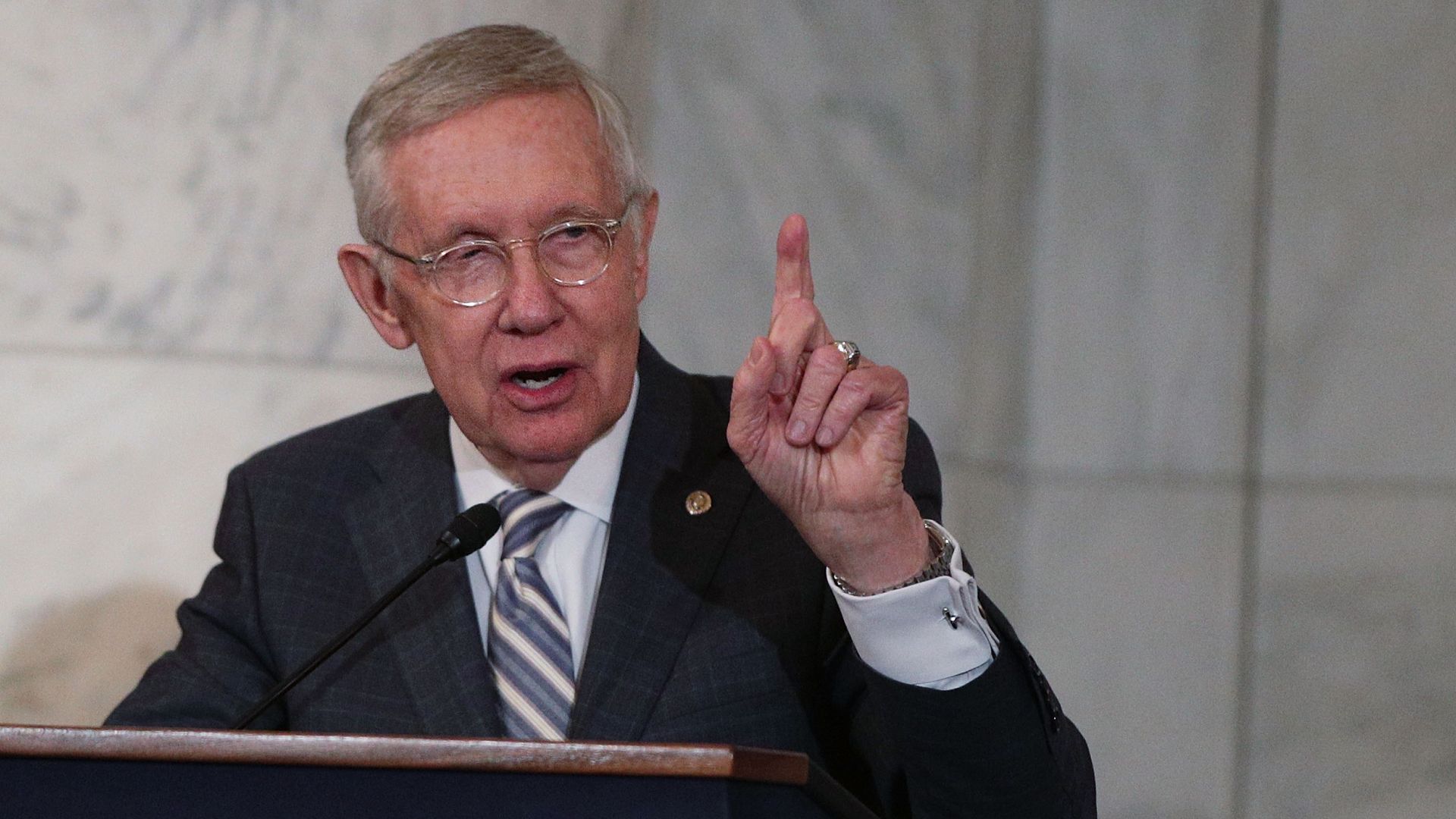
Former Senate Majority Leader Harry Reid tweeted Monday that Americans "deserve to be informed" about UFO information following the Pentagon's official release of three Navy videos showing "unidentified aerial phenomena."
Why it matters: Reid devoted funding in 2007 to a $22 million program to investigate unidentified flying objects. The Pentagon confirmed its existence in 2017.



/2020/04/28/1588095225695.gif?w=3840)