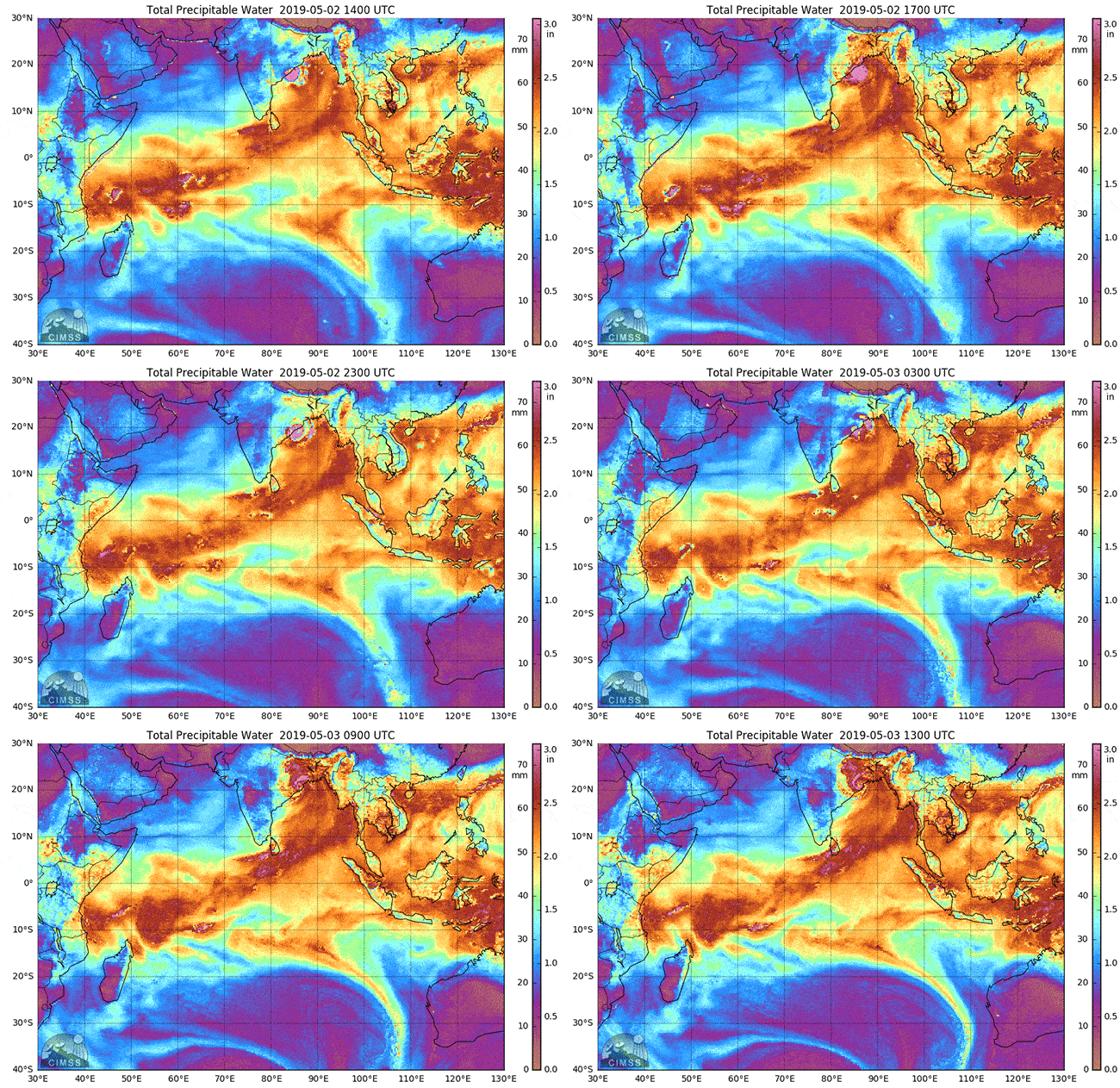
Total precipitable water showing a surge of moisture from Cyclone Fani headed into northeast India. Image: University of Wisconsin/CIMSS
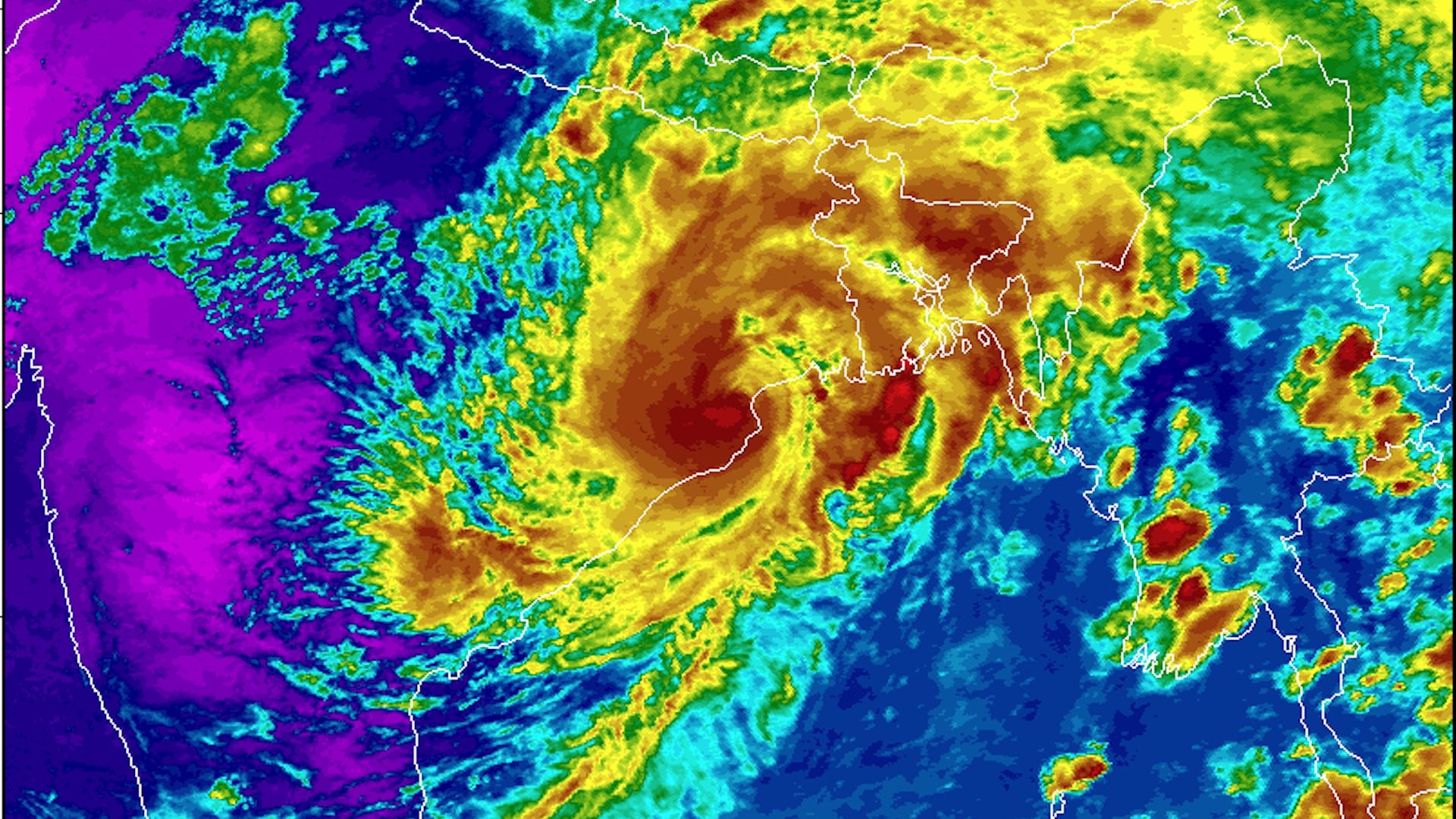
Cyclone Fani barreled ashore in India as a Category 4 storm early Friday, bringing extreme winds and storm surge flooding to the city of Puri and points to the north and east, but a threat looms for a more far-flung location: the Himalayas.
The big picture: This is climbing season on Mt. Everest and other peaks nearby, as dozens of elite — and some not-so-elite — climbers attempt to summit the tallest mountains in the world. Although Fani is tracking toward the northeast, along India's coast toward Kolkata and Bangladesh, the storm is also pushing a surge of moisture-laden air from near the equator toward the Himalayas. This could result in heavy snows that may endanger climbers.

Tropical Cyclone Fani made landfall near the city of Puri, India, early Friday morning as a fierce Category 4 storm. Reuters reports "extensive" damage in the city. Media reports indicate about 1 million people evacuated coastal areas of Odisha state before the cyclone hit.
The big picture: The Bay of Bengal has a devastating history of deadly storms. The most tragic was the Great Bhola Cyclone in November of 1970 — with an estimated 300k-500k death toll that makes it the deadliest tropical cyclone in history.
Scientists hunting for gravitational waves — ripples in the fabric of space and time sent out by cataclysmic collisions — have had a busy month.
The impact: The LIGO and Virgo observatories tasked with detecting these waves began their newest observing run on April 1, and they've already found evidence of 5 possible gravitational wave signals. The observatories are 40% more sensitive following upgrades made since the last observing run ended.
Figuring out whether a planet is habitable will take more than just understanding its orbit. According to a new study in the journal Science, scientists will also need to study a world’s atmosphere, magnetic field and even geological composition in order to really know if it’s capable of hosting life.
The big picture: Researchers have been hunting for habitable exoplanets using space and ground-based telescopes for years, but assessing whether a world can support life or not is difficult.
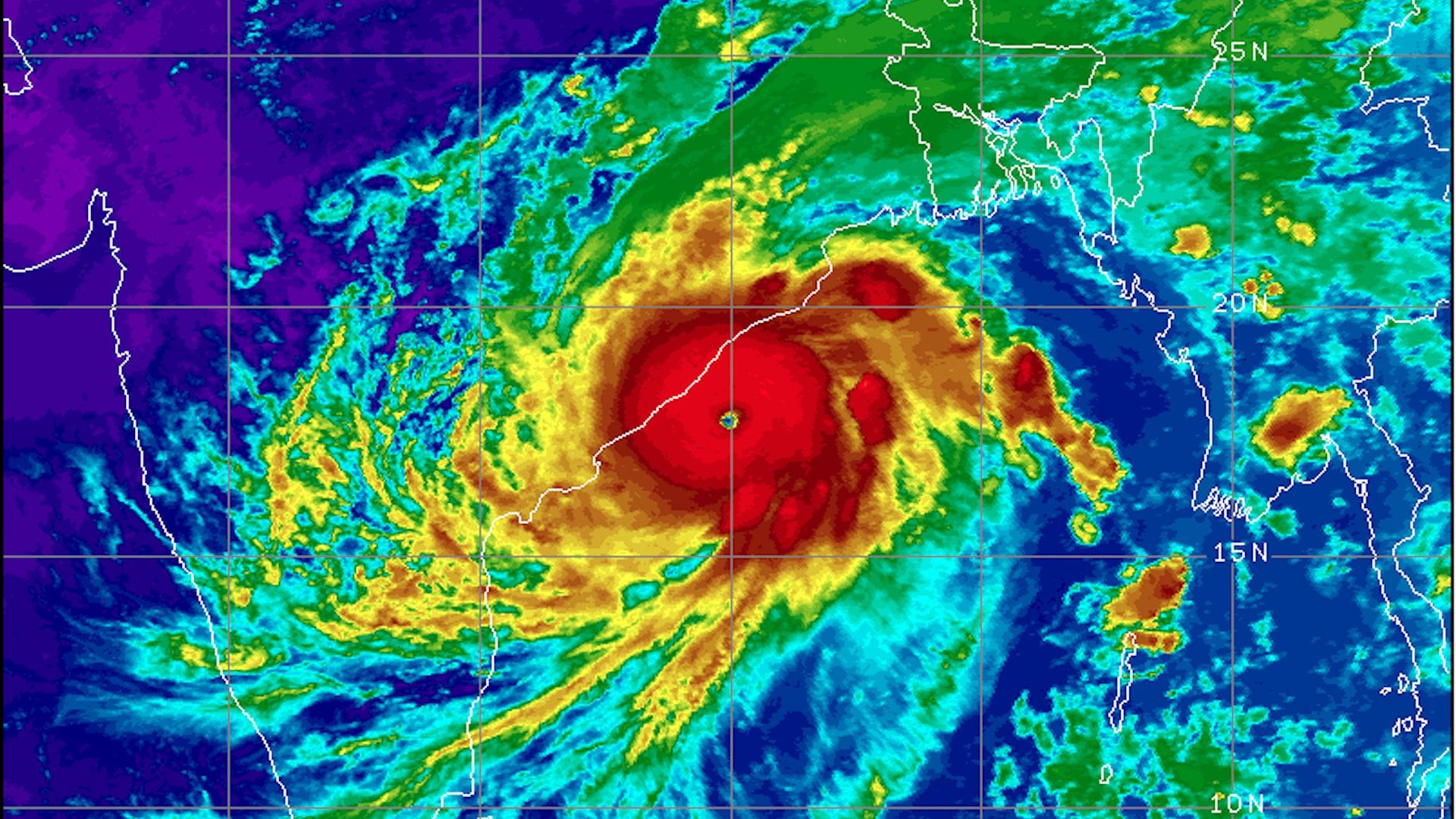
Cyclone Fani intensified into a monstrous, high-end Category 4 storm in the western Bay of Bengal on Thursday as it wobbled closer to the Indian coastline. It is forecast to cross the Odisha coast as a Category 3 cyclone between Gopalpur and Chandbali, near Puri, on Friday, according to the India Meteorological Department (IMD).
The big picture: Based on reporting from the Joint Typhoon Warning Center, Cyclone Fani had maximum sustained winds of 155 mph, along with higher gusts as of Thursday morning eastern time, placing it just below Category 5 status. However, the storm's winds then began to weaken slightly as it interacted with the coastline and an area of slightly cooler ocean waters.
Blue Origin successfully launched (and landed) the 11th uncrewed test of its suborbital New Shepard launch system Thursday in Texas. This was the 5th launch for this particular rocket and capsule.
Why it matters: This most recent launch paves the way for the Jeff Bezos-founded company to launch people to space. According to Blue Origin, those crewed launches could begin as early as the end of the year. Eventually, Blue Origin hopes to fly groups of paying passengers on tourist trips to the edge of space on a regular cadence.
Dan and Axios' Kim Hart discuss how West Coast billionaires have led a revival of Florida's Cape Canaveral area, including what role NASA will play going forward.
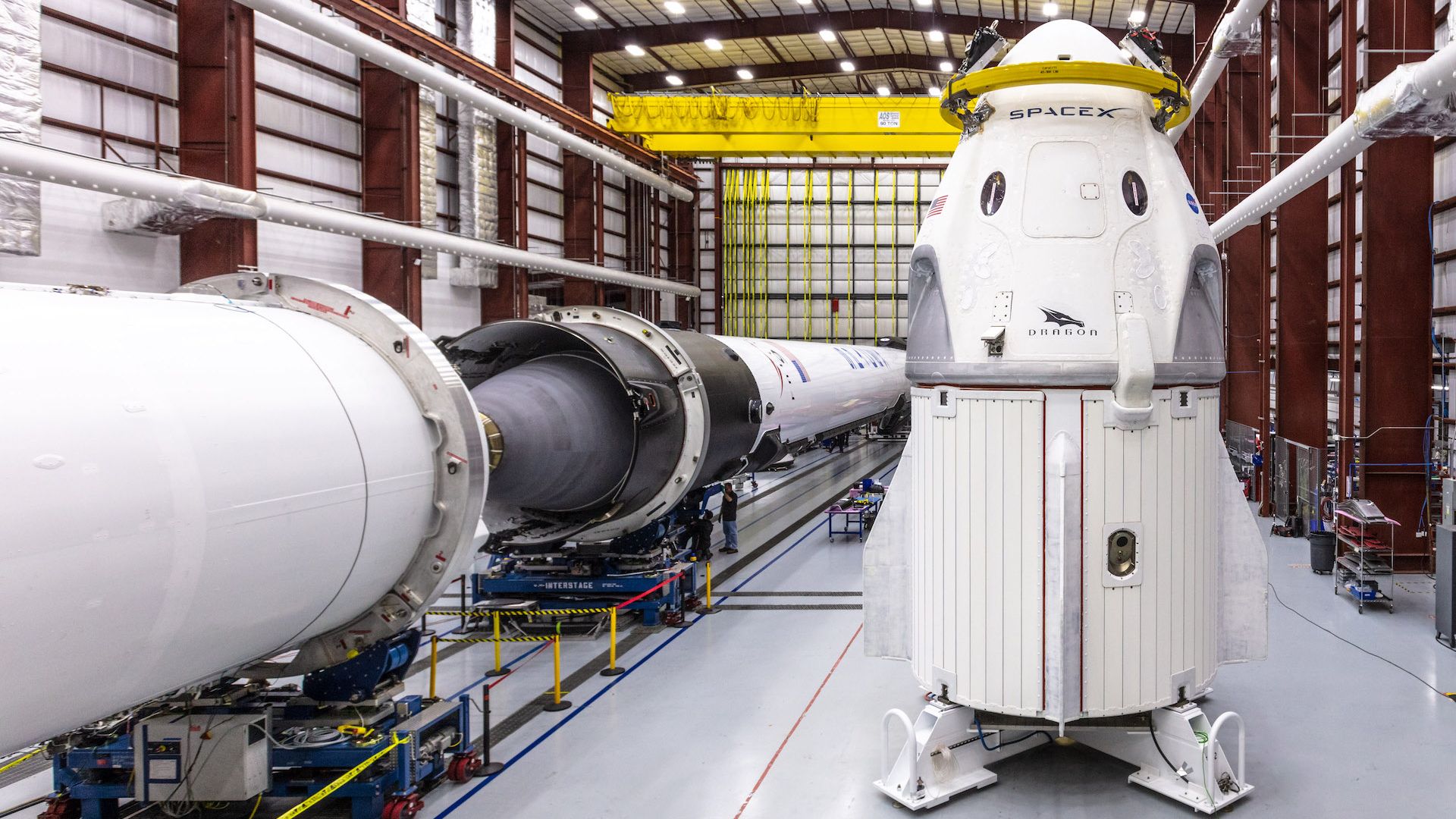
SpaceX confirmed today that its Crew Dragon capsule was destroyed during a ground test of the vehicle on April 20, after its history-making uncrewed flight to the International Space Station in March.
Why it matters: Before this accident, the Crew Dragon was expected to start flying NASA astronauts to and from the space station as early as this summer, ending the space agency's reliance on Russian-made rockets. This mishap throws that schedule into doubt, possibly delaying the return of human spaceflight to the U.S.