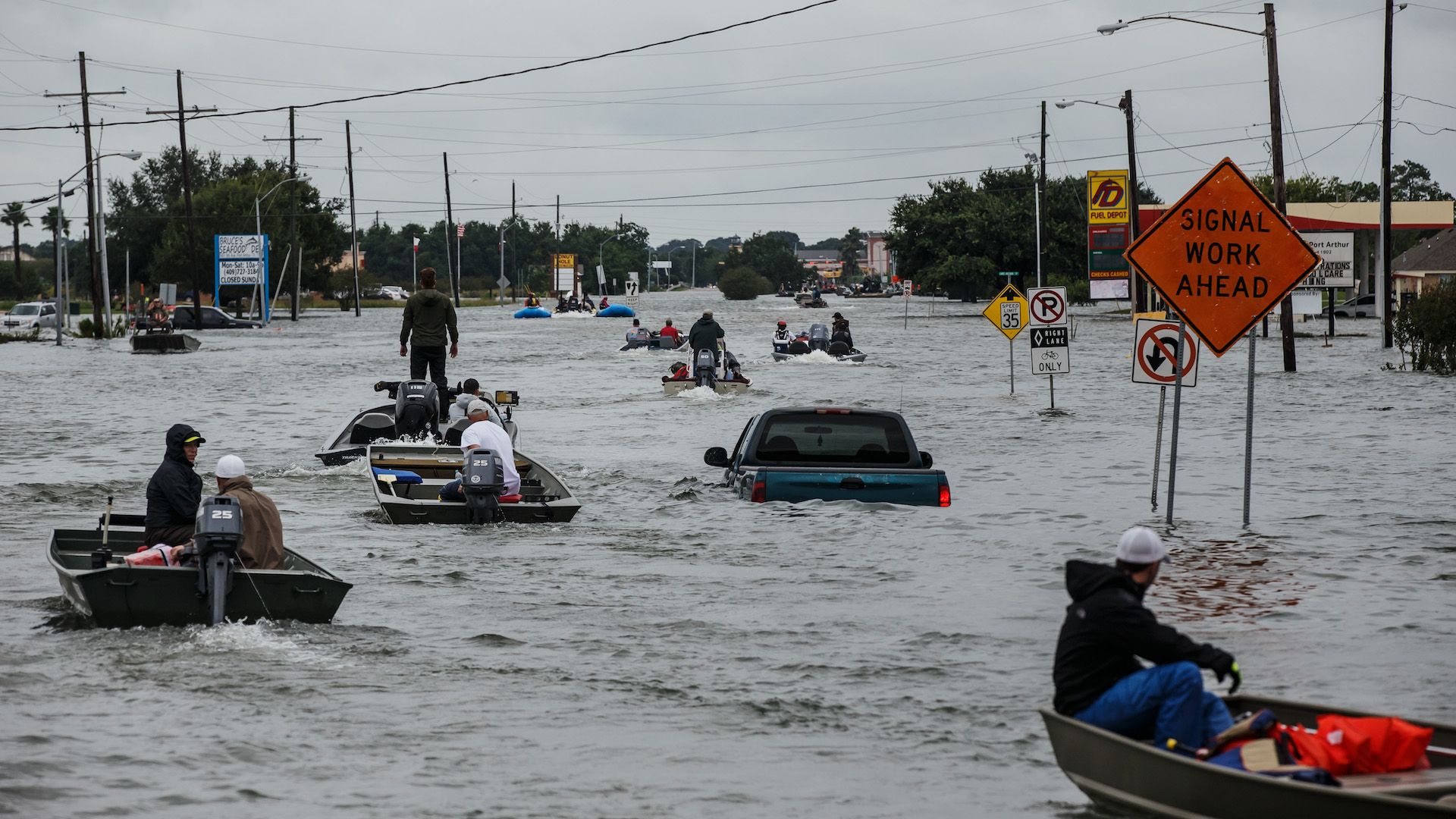
Last year, Hurricane Harvey dumped more than 5 feet of rain on the Houston area in just a few days making it the heaviest rainstorm the U.S. has ever recorded. Now, a new study shows that multiple factors, each of them climate change-related, are raising the risk of similar, meandering hurricanes in the U.S. and other parts of the globe.
Why this matters: Hurricanes are nature's most powerful and destructive storms, inflicting billions in damage each year. In the U.S., inland flooding, not coastal storm surge, is now their deadliest threat, and new data suggests this problem is going to get worse as the climate continues to warm.
Americans rank monitoring Earth's climate and detecting asteroids and other objects that could hit the planet as top priorities for NASA, according to a new Pew Research Center survey. Lowest on the list: returning astronauts to the Moon — a top priority for the White House.
For the future: Half of the 2,541 Americans surveyed think people will be routinely traveling to space as tourists in the next 50 years. But 58% of respondents said they wouldn't want to orbit Earth.
NASA's new administrator Jim Bridenstine told the Washington Post that the administration is in talks with private companies to take over the International Space Station in 2025. “We’re in a position now where there are people out there that can do commercial management of the International Space Station,” he said.
The bottom line: Corporations have accessed and used space alongside governments since the 1960s — but now companies are on the front lines of innovation.